Welcome to the Cone of Silence... Or Is It a Cave?
Let’s paint a picture. A potential customer, wallet slightly trembling with anticipation, walks into your beautiful high-end audio store. They’ve read the reviews, they’ve seen the glossy photos, and they’re ready to be convinced that a pair of speakers costing more than their first car is a perfectly rational life choice. You lead them to the demo room, the hallowed ground where magic is supposed to happen. You hit play, and… the sound is swallowed by a room with the acoustics of a shipping container. The lighting feels like a dental office, and the only seating option is a wobbly stool you borrowed from the stockroom.
Suddenly, that $15,000 amplifier doesn’t sound so magical. The sale is on life support.
Your demo room isn’t just a room; it’s your single most powerful sales tool. It's the stage where your products perform. If the stage is poorly set, the performance will flop, no matter how talented the actors (or how well-engineered the tweeters). This guide is for you, the purveyor of sonic perfection, on how to build a demo room that closes deals, not doors.
Beyond the Boxes: The Art of Acoustic and Aesthetic Harmony
Anyone can stack expensive equipment in a room. A true audio destination creates an environment. This is where you separate the big-box stores from the bespoke listening sanctuaries. It’s about controlling what the customer sees and hears, long before the music even starts.
Taming the Room: Acoustics 101 (Without the PhD)
You sell five-figure speakers; you already know that the room is the most critical, and often most-neglected, component in any system. Your customers, however, may not. Your demo room is your chance to show them what’s possible. It shouldn't sound like a cavernous cathedral or your grandma’s overstuffed, sound-absorbing living room. It needs to be a balanced, controlled, and realistic space.
- First Reflections are the Enemy: The first sound waves that bounce off your side walls, ceiling, and floor are sonic assassins. They smear the soundstage and ruin imaging. Place absorption panels at these first reflection points. A simple trick? Have someone slide a mirror along the wall while you sit in the listening chair. Wherever you can see the speaker's tweeter in the mirror is where a panel should go.
- Bass Traps are Non-Negotiable: Every rectangular room has issues with bass. It builds up in the corners, creating a boomy, undefined low end. Installing bass traps in the corners of your room is the single best thing you can do to tighten up the sound. It's the difference between a thud and a musical note.
- A Little Diffusion Goes a Long Way: While absorption kills sound energy, diffusers scatter it. This keeps the room sounding alive and spacious without nasty echoes. A nice diffuser on the back wall not only looks cool and professional but does wonders for the depth of the soundstage.
You don't need a degree in acoustical engineering. You just need to address the basics to create a sound that is clear, controlled, and breathtakingly realistic.
Setting the Mood: Lighting, Seating, and Ambiance
Your demo room is not a laboratory for sound wave analysis; it’s a luxury listening lounge. The goal is to make the customer feel relaxed, comfortable, and inspired. They should be thinking, “I want my living room to feel like this,” not, “Am I about to be interrogated?”
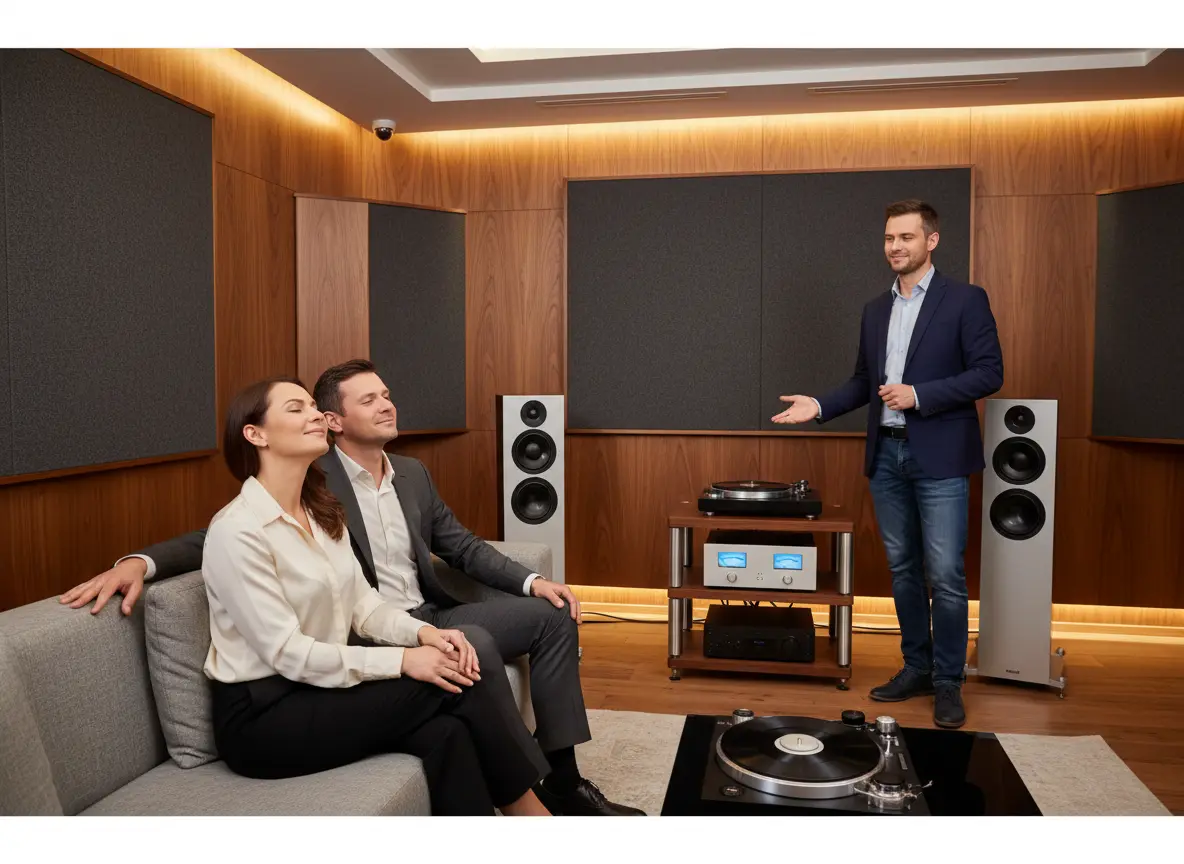
Comfort is key. The central listening chair is the throne. It should be the most comfortable seat in the entire store. It’s where your customer will sit for 30, 60, or even 90 minutes while making a massive purchasing decision. A rickety chair screams, “We cut corners,” which is the last message you want to send. Invest in a quality, comfortable sofa or armchair. Position it perfectly in the sweet spot.
Next, kill the fluorescent lights. Harsh, overhead lighting is clinical and stressful. Use warm, dimmable lights. A few well-placed lamps can create a cozy, inviting atmosphere. Finally, manage the clutter. No stray cables, no stacks of boxes in the corner. A clean, organized space allows the customer to focus on what matters: the emotional connection to the music.
Managing the Experience: From First Chord to Final Handshake
You’ve treated the room and set the mood. Now it’s about protecting the sanctity of the experience. The demo is a delicate bubble of auditory bliss, and the number one threat to that bubble is… a question about your return policy.
The Uninterrupted Audition
Picture this: you’ve just cued up a breathtaking high-resolution recording. The customer is leaning back, eyes closed, completely immersed. The soundstage is holographic. And then, another customer pokes their head in and asks, "Do you guys sell Bluetooth adapters?" The spell is broken. The immersion is gone. Your salesperson is now mentally juggling a five-figure sale with a five-dollar one.
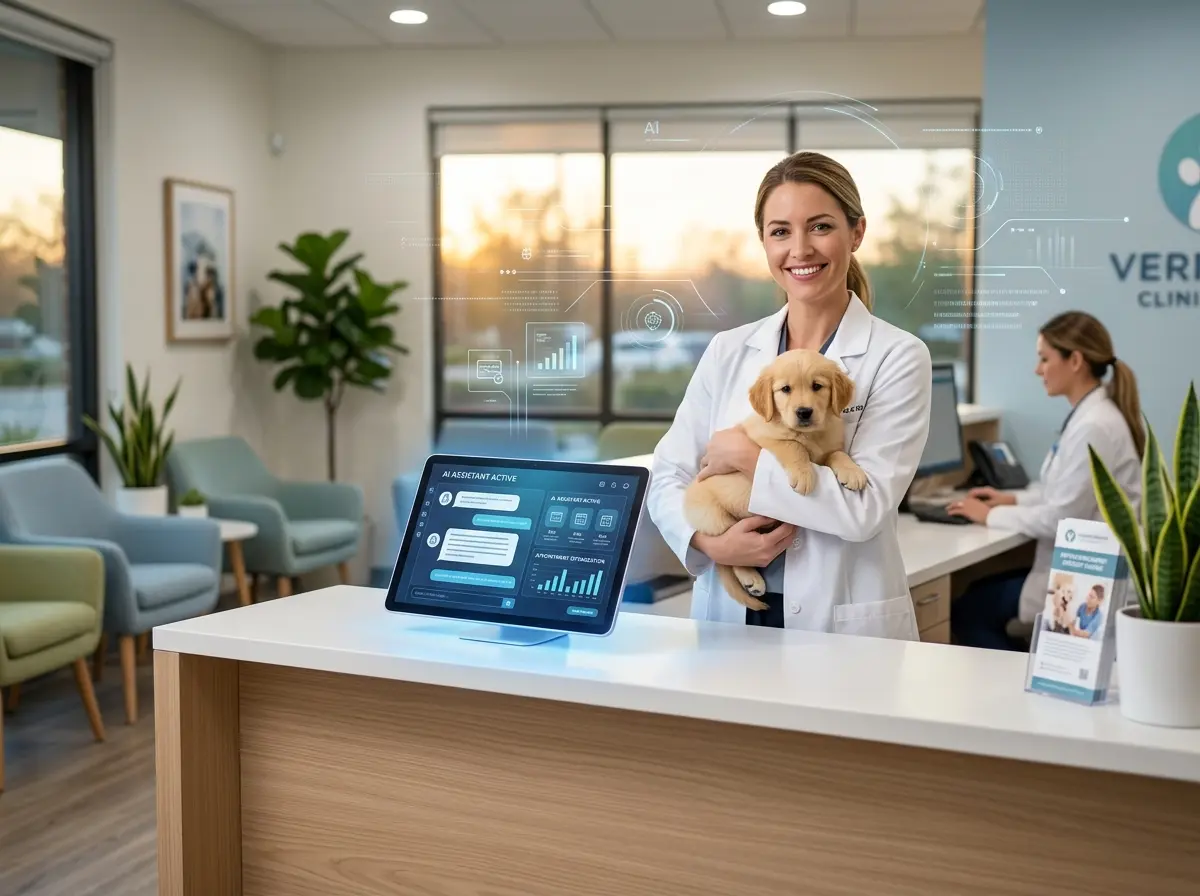
This is where modern problems require modern solutions. An assistant like Stella, positioned at the front of your store, acts as the perfect gatekeeper for your high-value spaces. While your audio expert is deep in a demo, Stella can greet new arrivals, answer frequently asked questions about store hours or brands you carry, and even promote upcoming events. This ensures your dedicated sales staff can remain 100% focused on the customer in the chair, providing that seamless, uninterrupted experience that justifies a premium price tag. No more vibe-killing interruptions.
The Tech and The Touch: Perfecting the Demonstration Itself
With the environment and the experience secured, it's time for the main event. How you actually conduct the demo is a performance in itself, a blend of technical prowess and psychological nuance.
Curating the Perfect Playlist
Please, for the love of all that is holy, expand your demo playlist beyond the same three "audiophile-approved" tracks from 1978. While that recording of a lone saxophone in a Swedish jazz club might have incredible dynamics, it's utterly meaningless if your customer primarily listens to Led Zeppelin or Taylor Swift. The "wow" moment doesn't come from hearing a perfect recording of unfamiliar music; it comes from hearing their favorite song in a way they've never heard it before.
The best question you can ask is, "What's a song you feel like you know by heart?" Pull it up on a high-quality streaming service like Qobuz or Tidal. When they hear the subtle vocal inflections, the distinct separation of instruments, or the true depth of the bass on a track they’ve heard a thousand times, their brain lights up. That's the moment they're sold. Have a versatile list ready, but always be prepared to pivot to the customer's tastes.
A/B Testing Without the A/B-S
Rapidly switching between different components can be more confusing than helpful. The brain can’t process the changes that quickly, and the process itself—fiddling with cables and remote controls—is clumsy and breaks the flow. Instead of a chaotic A/B/C/D comparison, try a more curated approach.
Start with a complete, well-matched system that sounds fantastic on its own. Let the customer listen to a few tracks and establish that as a baseline of excellence. Then, offer to swap out a single component. "That sounded great, right? Now, let me show you what happens when we introduce this upgraded DAC." By changing just one thing, the improvement becomes clearer and more impactful. It turns the demo from a confusing mess into an educational and compelling journey.
Silence is Golden (and Sells Speakers)
This is perhaps the hardest, yet most important, rule of all. Once the music is playing... stop talking. Let the system do its job. Your job is not to narrate the experience by pointing out every single sonic detail. It's to facilitate a personal, emotional connection between the customer and the music. The urge to fill the silence is strong, but you must resist. Let them get lost in the sound. Watch their body language. A tapping foot, a nodding head, or closed eyes are all signs that the magic is happening. When the track ends, let the silence hang for a moment before you ask a simple, open-ended question: "So, what did you think?" Their answer will tell you everything you need to know.
A Quick Reminder About Stella
While you're meticulously crafting this audio nirvana in the back, your front door doesn't stop. An AI retail assistant like Stella is the perfect employee to ensure every single person who walks in gets a warm welcome and has their basic questions answered, freeing up your expert staff for the high-value demos that truly drive your business.
Your Room is Your Resume
Your demo room is a physical manifestation of your store's philosophy. It tells customers you care about the details, you understand the art of listening, and you are committed to providing the best possible experience. A great demo room doesn't just demonstrate equipment; it demonstrates your expertise and builds trust.
So, here’s your homework. This week, go sit in your demo room for 20 minutes. Don't fidget or work. Just sit. Is it comfortable? Is it quiet? Is it a place you’d want to spend a Saturday afternoon? Identify one thing you can improve—better lighting, a more comfortable chair, a single acoustic panel—and do it. Start building the sanctuary your incredible products deserve. Your customers, and your sales reports, will thank you.