Are Your Mannequins Working Hard or Hardly Working?
Ah, mannequins. The silent, stoic, and often tragically dressed sentinels of your storefront. They stand there, day in and day out, holding a pose with more dedication than a Buckingham Palace guard. But let’s be honest: are they actually selling anything? Or are they just expensive, vaguely human-shaped coat racks wearing last season’s forgotten stock?
If you cringed a little at that last part, you’re in the right place. Underestimating the power of a well-styled mannequin is one of the most common missed opportunities in fashion retail. They are your 24/7 visual brand ambassadors, your frontline storytellers, and your most reliable (and quietest) employees. When styled correctly, they don’t just display clothes; they sell an entire look, an aspirational lifestyle that customers want to buy into. It’s time to stop treating them like plastic afterthoughts and start leveraging them as the powerful sales tools they are. Let's turn those blank stares into cold, hard cash.
The Psychology of the Perfectly Posed Plastic
Before you start throwing scarves and jackets at the nearest torso, let’s get inside the shopper's head. Effective mannequin styling isn’t just about making clothes look pretty; it's about connecting with your customer on a subconscious level. It's part art, part science, and part knowing that nobody wants to look like they were dressed in the dark.
Stop Treating Them Like Coat Racks
Your mannequins are aspirational figures. When a customer sees a thoughtfully styled mannequin, they don’t just see a dress; they see themselves at a garden party, on a dream vacation, or acing a job interview. They are a blank canvas onto which shoppers project their desires. This is why giving your mannequin a “persona” is so effective. Is she “Uptown Chic Chloe” or “Boho Festival Felicity”? Define her story, and then dress her for the part. This narrative approach is backed by data: effective visual merchandising, with mannequins at its core, can boost sales by as much as 30%. A mannequin with a story sells more than a mannequin with a price tag.
The Rule of Threes (and Other Compositional Cheats)
Avoid the lone soldier mannequin standing awkwardly in the corner. Humans are naturally drawn to patterns and compositions, and in design, things that come in threes are just… better. Grouping your mannequins creates a more dynamic and engaging scene. Here are a few quick tips:
- Create a Triangle: Arrange three mannequins in a triangular formation, with the center one slightly forward or featuring the most eye-catching outfit. This creates a clear focal point.
- Vary Poses and Heights: Don’t line them up like they’re waiting for a bus. Use different poses—one with a hand on the hip, one looking off to the side—to create a sense of movement and interaction.
- Use Props Sparingly: A well-placed handbag, a book, or a pair of sunglasses can complete a look and add context. But be careful not to overdo it. The goal is to enhance the outfit, not to create a garage sale on your display platform.
It’s All About the Angles
The physical position of your mannequin can subtly guide a customer’s journey through your store. A mannequin positioned just inside the entrance and angled slightly inward acts as a silent greeter, inviting shoppers to come further inside. Poses should feel natural and highlight the best features of the garment. A hand on the hip can showcase the drape of a skirt, while a slight turn can reveal an interesting back detail on a blouse. Think of it as choreography; every pose and position should have a purpose.
Keeping It Fresh (Without Losing Your Mind)
You’ve created a masterpiece. Your mannequin group looks like they just stepped out of a high-fashion photoshoot. Now what? The biggest mistake retailers make is letting that perfect display become a permanent fixture. Stagnation is the enemy of sales.
The Two-Week Rule and The Power of Data
A mannequin display has a shelf life of about two weeks. After that, it becomes part of the scenery, and regular customers will walk right past it without a second glance. This is called "display blindness," and it's a real sales killer. But changing your displays every two weeks can feel like a chore if you don’t know what to feature. Should you highlight new arrivals? A slow-moving item you want to push? This is where data-driven decisions come in.
While your human staff is busy helping customers and folding sweaters, your friendly robot assistant, Stella, is gathering priceless insights at the front of your store. She greets every customer and often gets asked about specific products or promotions. If dozens of shoppers have asked Stella about the new collection of linen trousers, that’s your cue! You have real-time data telling you exactly what’s on your customers' minds, making your next mannequin styling decision a no-brainer.
The Nitty-Gritty of Nailing the Look
Alright, you understand the psychology and the strategy. Now for the hands-on work. The small details are what separate a professional, compelling display from an amateur one. God, and profit, are in the details.
Layering Like a Pro (Not Like a Stressed Toddler)
Layering is your secret weapon. It adds visual interest, shows the versatility of your pieces, and—most importantly—it sells multiple items at once. A customer might come in for the jacket but leave with the t-shirt and scarf, too. Follow a simple formula for foolproof layering:
- The Base: Start with a simple, foundational piece like a camisole, t-shirt, or thin blouse.
- The Mid-Layer: Add texture and dimension with a cardigan, an unbuttoned shirt, or a vest.
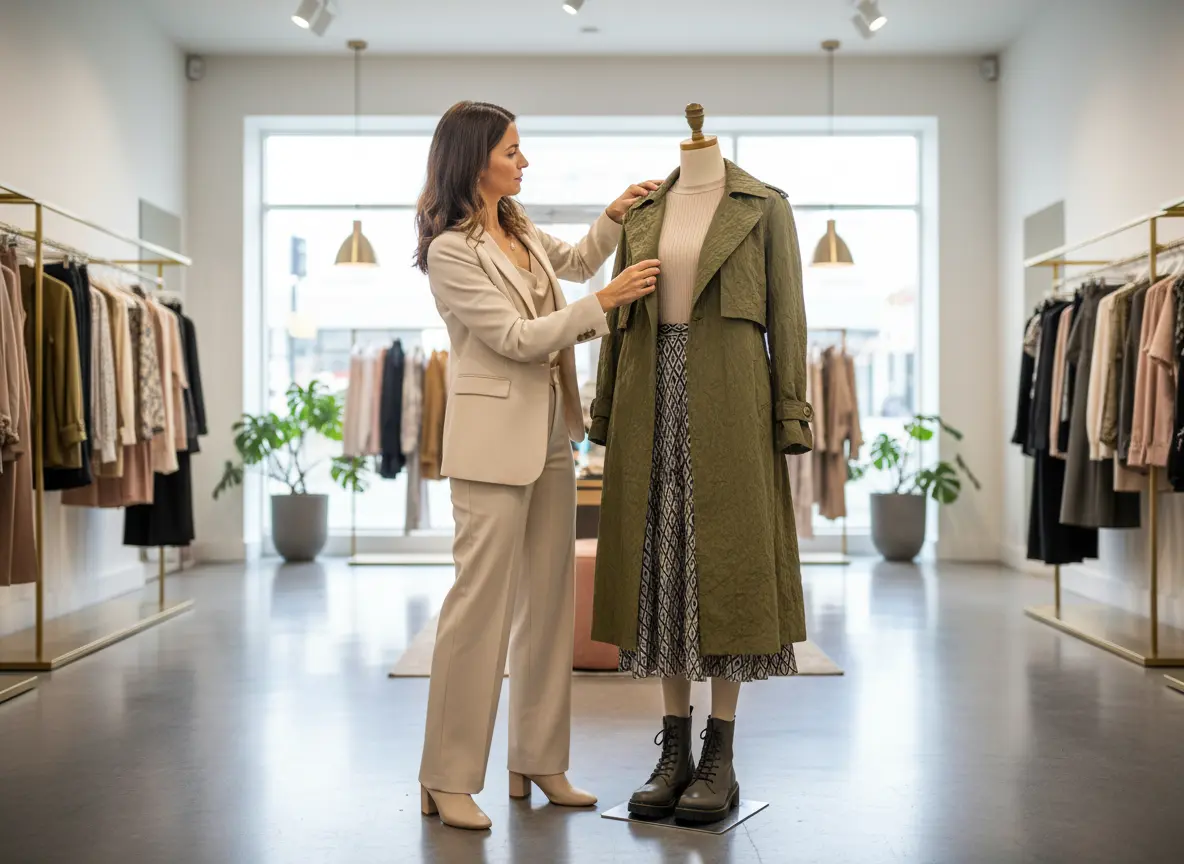
- The Outer Layer: Top it off with the hero piece, like a blazer, trench coat, or denim jacket.
Remember to accessorize! A belt to cinch the waist over a cardigan or a necklace peeking out from under a collar can tie the whole look together.
Steaming, Pinning, and Other Unsexy Necessities
There is no greater sin in visual merchandising than a wrinkled garment. It looks sloppy and cheap, and it screams, "We couldn't be bothered." Always, always steam every single piece of clothing before it goes on a mannequin. It takes five minutes and makes a world of difference. Furthermore, clothes are not designed to fit rigid plastic bodies perfectly. Use pins—discreetly, from the back—to tailor the fit. Cinch a waist, shorten a sleeve, or remove excess fabric to create a clean, flattering silhouette. It’s the behind-the-scenes magic that makes the clothes look their absolute best.
The Headless Horseman vs. The Full Glam
Not all mannequins are created equal. The type you choose should align with your brand’s identity.Headless or abstract mannequins are modern, minimalist, and put all the focus on the clothes. They are versatile and won't go out of style.Realistic mannequins with faces, hair, and makeup can create a very strong, specific persona. They can be incredibly effective for telling a story but require more upkeep—wigs need to be styled, and makeup trends can quickly look dated.There’s no right answer here. A sleek, contemporary boutique will likely benefit from abstract forms, while a vintage shop might have a lot of fun with retro-styled, realistic models. Choose the style that speaks your brand’s language.
A Quick Reminder About Stella
While you're busy turning your mannequins into style icons, who's greeting the customers walking through the door? That's where Stella, the AI retail assistant, shines. She ensures every shopper feels welcomed and informed about your latest promotions, freeing you and your team up to provide fantastic service and, of course, perfect those displays.
Conclusion: Your New Hardest-Working Employee
Your mannequins are more than just plastic bodies. They are a direct reflection of your brand, a crucial first impression, and a powerful tool for driving sales. By telling a story, focusing on the details, and keeping your displays fresh and relevant, you can transform them from passive decorations into active, revenue-generating assets.
So, go on. Take a good, hard look at your plastic employees. Are they pulling their weight? Are they inspiring your customers? With a little strategy, a lot of steam, and maybe a few well-placed pins, you can ensure they are your store's most effective (and refreshingly silent) salespeople. Now go put them to work.