Confessions of a Retailer: The Irresistible, Occasionally Maddening Power of "Free"
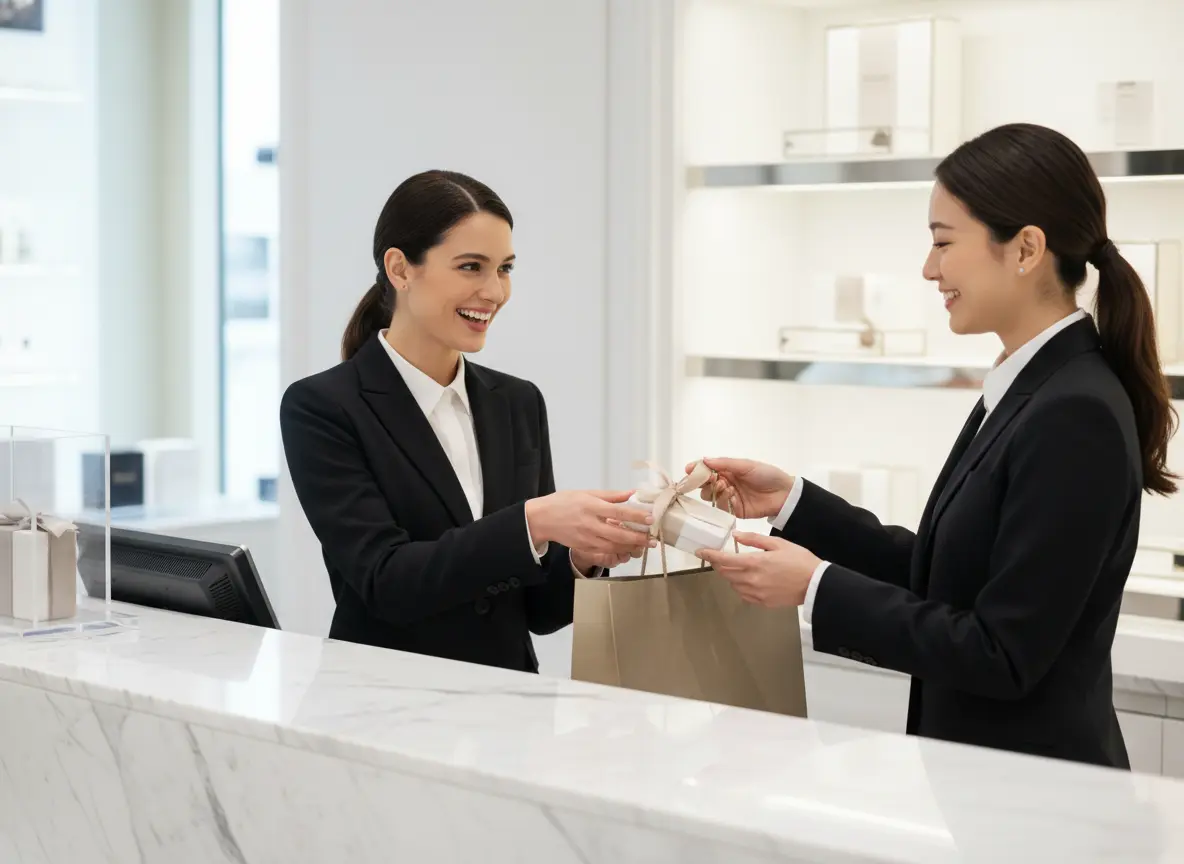
You know the moment. A customer is meandering through your store, basket in hand, mind in that delicate "should I or shouldn't I?" limbo. They’re teetering on the edge of a purchase, but something is holding them back. Then, they see the sign. Or maybe your cashier mentions it. The four most powerful words in the retail universe: Free. Gift. With. Purchase.
Suddenly, their eyes light up. The internal debate is over. The "should I" wins by a landslide. They not only buy the item they were considering but toss in a few more things to meet the threshold. It’s like magic. But it’s not magic, is it? It’s psychology. And if you’re not wielding this psychological superpower correctly, you’re not just giving away free stuff—you’re giving away profit. Let's be honest, you’re in the business of selling, not running a charity for slightly-too-small scented candles. So, let’s break down the beautiful, manipulative science of the GWP and figure out how to make it work for your bottom line, not against it.
The Alluring Psychology of "Free"
Why does a simple “free” offer turn rational human beings into impulse-buying machines? It’s not just about getting something for nothing. It’s about how our brains are wired to trip over themselves when faced with the concept of zero cost. Understanding these triggers is the first step to crafting an offer that’s truly profitable.
The Zero-Price Effect: Why "Free" Breaks Our Brains
Behavioral economists, the people who study why we buy dumb things, have a name for this phenomenon: the Zero-Price Effect. In his book Predictably Irrational, Dan Ariely demonstrated that we perceive "free" as being in a category all its own. In one study, people chose a free Hershey's Kiss over a high-end Lindt truffle that cost just one cent. One cent!
Why? Because a transaction, even for a penny, forces our brain to engage in a cost-benefit analysis. We weigh the pros and cons. But "free" requires no sacrifice. There is no perceived downside, so we grab it without thinking. For you, the retailer, this means a "Buy One, Get One Free" offer is often psychologically more powerful than a "50% Off Two Items" deal, even if the math works out the same. The word "free" short-circuits the logical part of the brain and goes straight for the emotional, "Ooh, shiny!" center.
The Reciprocity Principle: I Gave You Something, Now You... Buy More?
Humans are social creatures, hardwired with a sense of reciprocity. When someone gives us something, we feel a subconscious obligation to give something back. In retail, your "free gift" isn't just a product; it's a gesture. It creates a micro-moment of positive connection. The customer thinks, "Oh, how nice of them!" and in return, they feel better about their purchase, are more likely to complete the transaction, and might even be compelled to spend a little more to "earn" the gift.
This isn’t a cynical trick; it’s the foundation of good relationships. You’re not just exchanging goods for money; you’re creating a positive experience that makes customers feel valued. That feeling of being given a "bonus" can transform a simple transaction into a memorable brand interaction.
Perceived Value vs. Actual Cost: The Ultimate Balancing Act
This is where the real art comes in. The most successful GWP promotions feature a gift that has a high perceived value to the customer but a low actual cost to you. Think about it: a deluxe sample of a new, high-end face cream might only cost you $1.50 to produce, but its perceived value, based on the full-size product's price, could be $15 or $20. That's a massive win.
On the other hand, offering a cheap, unbranded pen with a $100 purchase has a low cost and an even lower perceived value. It doesn't delight; it cheapens the entire experience. The goal is to find that sweet spot where the customer feels like they're getting an amazing, exclusive deal, while you're secretly smiling at your healthy profit margin.
Not All Free Gifts Are Created Equal
Let’s get brutally honest. We’ve all been on the receiving end of a truly terrible GWP. It’s the kind of item that goes directly from the shopping bag into the donation pile, or worse, the bin. Don't be that store.
The "Tote Bag of Disappointment" vs. The "Must-Have Mini"
The "Tote Bag of Disappointment" is any generic, low-quality item that has no real connection to your brand or your customer's interests. It's the flimsy canvas bag with a poorly printed logo, the plastic keychain, the off-brand lip balm. These items scream "we had to give away something."
The "Must-Have Mini," however, is a strategic choice. It’s often:
- Aspirationsal: A smaller version of a popular or luxury product, giving customers a taste of the good stuff.
- Useful: It solves a problem or complements the main purchase. (e.g., a free shoe cleaning kit with a pair of expensive leather boots).
- Exclusive: A limited-edition item or a sample of a product that hasn't been released yet. This creates urgency and FOMO (Fear Of Missing Out).
The perfect gift makes the customer feel smart and special, not like they just helped you clear out your promotional junk drawer.
How a Robot Can Be Your Ultimate Hype-Machine
So you’ve designed the perfect offer. How do you make sure every single person who walks through your door knows about it without plastering your walls with neon signs? This is where having a tireless, friendly, and non-intrusive brand ambassador comes in handy. Imagine a customer walks in, and instead of being ignored or immediately jumped on by a salesperson, they're greeted by Stella, your in-store robot assistant.
She can say, "Welcome! Just so you know, today we're giving away an exclusive travel-size version of our best-selling serum with any purchase over $75." Suddenly, the GWP isn't just a sign on a counter; it's a personal invitation. Stella can expertly upsell by pointing out how close a customer is to the threshold ("I see you have the moisturizer—if you add the matching cleanser, you’ll get that free serum!"). She never gets tired, never has a bad day, and can track which promotional messages get the most engagement, giving you priceless data for your next campaign.
Crafting a GWP Strategy That Actually Makes You Money
A GWP without a strategy is just a giveaway. To make it a profit driver, you need a plan. It’s not complicated, but it does require you to think beyond just "free stuff."
Step 1: Define Your Goal (It’s Not Just "Giving Stuff Away")
Why are you running this promotion in the first place? Be specific. Your goal will determine the entire structure of the offer. Are you trying to:
- Increase Average Order Value (AOV)? This is the classic goal. The threshold is key here.
- Move Slow-Moving Inventory? The GWP itself could be the item you need to get rid of. "Buy any two sweaters, get this scarf for free!"
- Introduce a New Product? Offer a sample of the new item as the gift. It's a risk-free trial for the customer and a brilliant marketing move for you.
- Drive Store Traffic During a Slow Period? A truly killer, limited-time GWP can get people off their couches and into your store on a Tuesday afternoon.
Without a clear goal, you can't measure success. And if you can't measure it, you can't manage it.
Step 2: Set a Smart Threshold
The spending threshold is the most critical element for an AOV-focused GWP. If you set it too low, you’ll be giving away margin for sales you would have gotten anyway. If you set it too high, you’ll discourage participation. The sweet spot? Data from the NPD Group suggests setting the threshold 10-15% above your current Average Order Value.
If your AOV is $65, setting the threshold at $75 is perfect. It feels achievable for a customer who was already planning to spend around that much, encouraging them to add one more small item to their cart. Use your POS data to find your AOV and experiment from there.
Step 3: Promote It Without Being Annoying
Your amazing offer is useless if no one knows about it. You need a multi-channel promotion strategy.
- In-Store Signage: Clear, concise, and visually appealing signs near the checkout and next to relevant products. Don't make customers hunt for the details.
- Digital Marketing: Announce it in your email newsletter, on your social media channels, and on your website's homepage banner. Create a sense of excitement and urgency.
- Personal Interaction: This is where your staff—and automated helpers like Stella—shine. A friendly, low-pressure mention of the offer can be the final nudge a customer needs. "Did you know you're only $10 away from getting our free gift today?" is helpful, not pushy.
The key is to make the promotion feel like an exciting event, not a desperate plea for sales.
A Quick Reminder About Stella
While you're strategizing your next killer promotion, remember that execution is everything. Stella is the in-store robotic assistant designed to engage every customer, perfectly communicate your offers, and gather insights on what works. She's your 24/7 brand ambassador who never forgets to mention the "free gift with purchase."
Conclusion: Stop Giving, Start Strategizing
A "Free Gift with Purchase" offer is one of the most effective tools in your retail arsenal, but only when wielded with intelligence and strategy. It's a delicate dance between generosity and profitability, psychology and finance. By understanding the "why" behind its power and meticulously planning the "how," you can transform your GWP from a simple expense into a powerful engine for customer loyalty and sales growth.
So, take a look at your current promotional calendar. Are you just giving away tote bags? Or are you delighting customers, moving inventory, and boosting your AOV? It’s time to stop thinking of it as a giveaway and start treating it like the strategic, profit-driving powerhouse it can be.