Let's Be Honest: Your "Uniform Policy" Might Be a Joke
You’ve spent countless hours agonizing over your product mix, your store layout, and the precise shade of greige for the walls. You’ve A/B tested email subject lines and debated the merits of a BOGO sale versus a 25% discount. But let me ask you a question: when was the last time you thought—really thought—about what your staff is wearing?
If your uniform policy is some vague, dusty sentence in a forgotten handbook that says something like “wear a black shirt, I guess,” then we need to talk. Because that pile of assorted, faded black t-shirts your team calls a uniform isn't just a pile of laundry. It’s a walking, talking (and sometimes slouching) representation of your brand. And frankly, it might be telling your customers that you’re just as tired and uninspired as that ten-year-old band shirt your newest hire wore yesterday.
Staff uniforms aren't a frivolous expense or a tool for crushing souls. They're one of the most cost-effective marketing and operational tools you have. Let’s break down why that "dress code" deserves a promotion.
The Unspoken Power of a Good Uniform
Before a customer even asks for help, they’re forming an opinion. Your staff's appearance is a massive part of that first impression, setting the tone for their entire shopping experience. A cohesive look communicates professionalism and intent, while a free-for-all suggests chaos.
It’s Not a Dress Code, It’s a Brand Statement
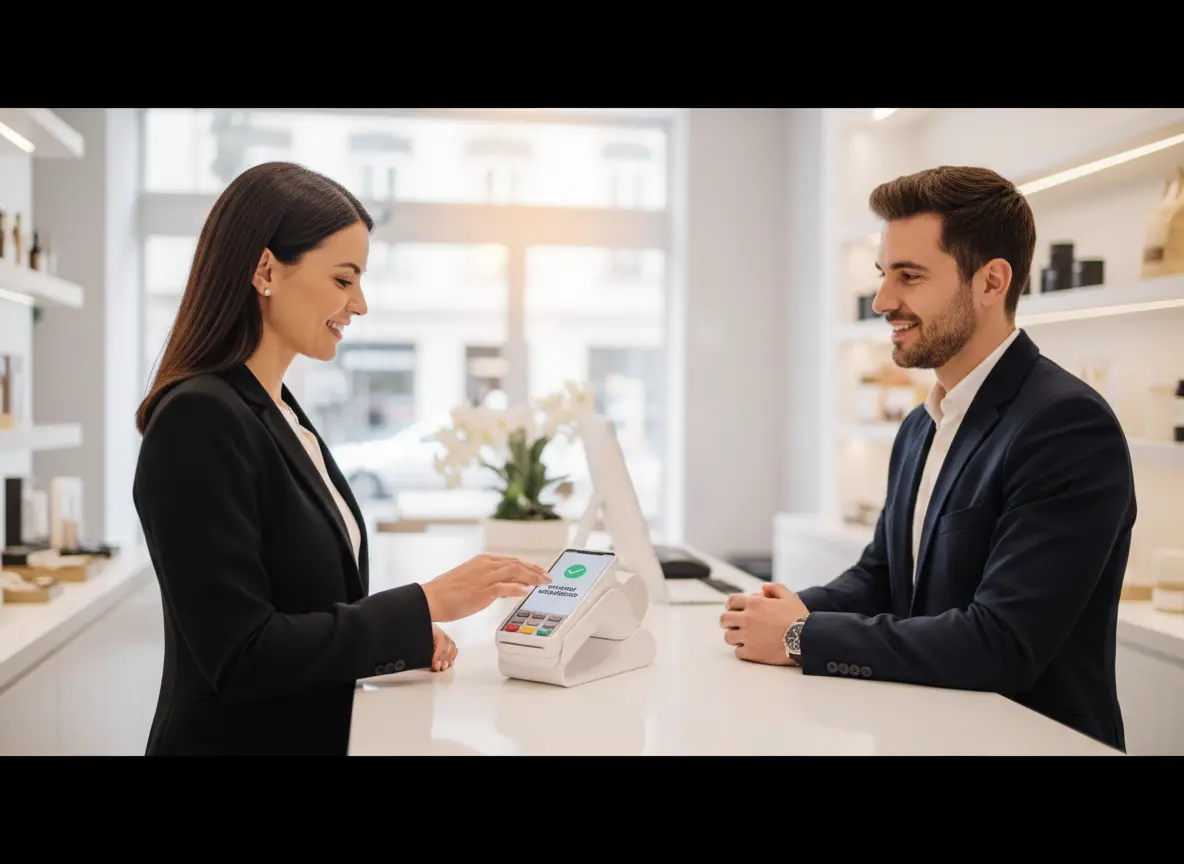
Think of your favorite brands. The Apple employee in their clean, simple blue t-shirt instantly communicates a modern, helpful, no-fuss vibe. The team at a high-end boutique in tailored blazers tells you you’re in for a luxury experience. Their uniforms are walking billboards. They aren’t just clothes; they are a deliberate extension of the brand identity. What does your team's attire say about you? Does it say, “We are a professional, trustworthy establishment,” or does it scream, “We found this person in the parking lot and gave them a name tag”? A consistent uniform turns your team into brand ambassadors, reinforcing your store's identity with every customer interaction.
Solving the "Can You Help Me?" Conundrum
We’ve all been there: standing in an aisle, desperately scanning the crowd, trying to figure out who works here and who’s just a very enthusiastic shopper rearranging the shelf display. This moment of friction is a sales killer. A study by PWC found that nearly 80% of American consumers point to speed and convenience as one of the most important elements of a positive customer experience. Making a customer hunt for help is the opposite of convenient.
A clear, professional uniform is the universal sign for "I can help you." It removes ambiguity and empowers customers to seek assistance confidently. No more awkward tapping a stranger on the shoulder only to be met with a confused stare. That simple visual cue can be the difference between a frustrated customer walking out and a happy customer walking to the checkout.
Fostering a Team, Not Just a Roster
Beyond customer perception, uniforms have a tangible impact on your staff. When everyone is dressed in the same professional attire, it fosters a sense of unity and shared purpose. It subtly flattens hierarchies and encourages a more collaborative environment. It’s no longer about individual fashion choices; it’s about being part of a collective team working toward a common goal. Plus, let’s not forget the small but significant benefit for your employees: you've just eliminated the "what do I wear to work today?" dilemma from their morning routine. You’re welcome.
Making First Impressions Count (Before a Human Even Says "Hi")
Your team's professional appearance sets the stage, but what happens when that well-dressed team member is in the back, on a ladder, or helping another customer? The first 10 seconds a shopper spends in your store are critical, and they are often spent alone.
The Consistent Welcome Mat
An immaculate uniform communicates readiness and professionalism. But that message is lost if there's no one at the front of the store to deliver it. This is where you can guarantee a perfect first impression, every single time. An in-store robotic assistant like Stella acts as your store's tireless brand ambassador. She is always "in uniform"—representing your brand with flawless professionalism from the second a shopper walks through the door. She ensures no one enters unnoticed, offering a warm greeting and highlighting your key promotions, setting a positive tone before a human employee even has to step in.
By having Stella manage the front of the store, you ensure every customer is acknowledged and engaged. This frees up your human staff—in their sharp, easily identifiable uniforms—to focus on what they do best: providing in-depth product knowledge, closing complex sales, and building genuine relationships with customers who are already warmed up and informed.
Nailing the Details: From Fabric to Fit
Alright, so you’re convinced. You’re ready to ditch the "wear something... darkish" policy. But just handing out a box of ill-fitting, scratchy polo shirts won’t cut it. The execution is just as important as the idea.
Comfort is King (and Queen)
Let's be blunt: an uncomfortable employee is a distracted, grumpy employee. A grumpy employee is not your top salesperson. When choosing a uniform, think about the reality of a retail workday. Your team is on its feet, lifting boxes, reaching for high shelves, and dealing with the public. Prioritize fabrics that are breathable, durable, and allow for movement. Consider offering different styles or fits. A one-size-fits-most polo often looks sloppy on, well, most people. Investing in comfort is investing in your team’s morale and, by extension, their performance.
Practicality Over Pretense
A uniform needs to work as hard as your staff does. Does your team use handheld scanners, pens, or box cutters? Then a uniform without pockets is a design flaw, not a fashion statement. An apron might be perfect for someone working in a garden center or deli, while a branded fleece vest might be better for an employee in a perpetually chilly big-box store. Match the uniform to the job's daily demands. Functionality shows your team that you’ve thought about their needs, which goes a long way.
Keeping it Clean (Literally and Figuratively)
A dirty, wrinkled, or faded uniform is arguably worse than no uniform at all. It projects an image of carelessness that customers will subconsciously apply to your entire operation. Establish a clear policy from the start. Are employees responsible for laundering? If so, provide them with enough sets to get through a work week without re-wearing a stained shirt. Consider materials that are easy to care for and wrinkle-resistant. The standard you set for the uniform's condition is the standard customers will assume you have for your products and services.
A Quick Reminder About Stella
While you're rethinking your team's wardrobe, remember that the perfect first impression is a team effort. Stella, the friendly in-store robot assistant, is the ultimate team player who greets every customer, promotes your deals, and answers questions 24/7. She’s always professional, always on-brand, and never has a bad uniform day.
Conclusion: Dress for the Success You Want
Your staff's uniform is not just about looking nice. It's a strategic asset that builds your brand, enhances the customer experience, improves operational efficiency, and unites your team. It’s a silent salesperson, a visual guidepost, and a constant reinforcement of your store's values.
So here’s your homework. Go into your store tomorrow and take a long, honest look at what your team is wearing. Ask yourself: What message are we sending? If the answer is anything less than "professional, capable, and ready to help," it's time for a change.
Stop treating uniforms as an afterthought. Start treating them as the powerful business tool they are. Your brand—and your bottom line—will thank you for it.