Let's Be Honest: Your Spatulas Aren't Selling Themselves
You did it. You opened a beautiful store filled with gleaming copper pots, knives sharp enough to slice through a tomato just by looking at it, and enough artisanal vanilla bean paste to bankrupt a small nation. You have impeccable taste. And yet, some days, the most exciting event is watching a dust bunny roll across your beautiful reclaimed hardwood floors. You’re competing with soulless online mega-retailers and big-box stores that sell cast iron skillets next to tube socks. So, how do you win?
Here’s a secret that might sting a little: it’s not about the stuff. Not really. People can buy a whisk anywhere. What they can’t buy is a sense of belonging. They can’t click their way into a community. To thrive, your cooking supply store needs to become more than a store. It needs to become a hub, a haven, the undisputed epicenter of your local food scene. You’re not just selling tools; you’re building a congregation of food lovers. And we’re here to show you how, without requiring a single trust fall.
Beyond the Shelves: Creating Irresistible In-Store Experiences
If you want people to come to your store, you have to give them a reason beyond, “I need a new peeler.” You need to create experiences that are memorable, educational, and, most importantly, impossible to replicate on a website. It's time to make your store a destination.
The Classic Cooking Class (with a Twist)
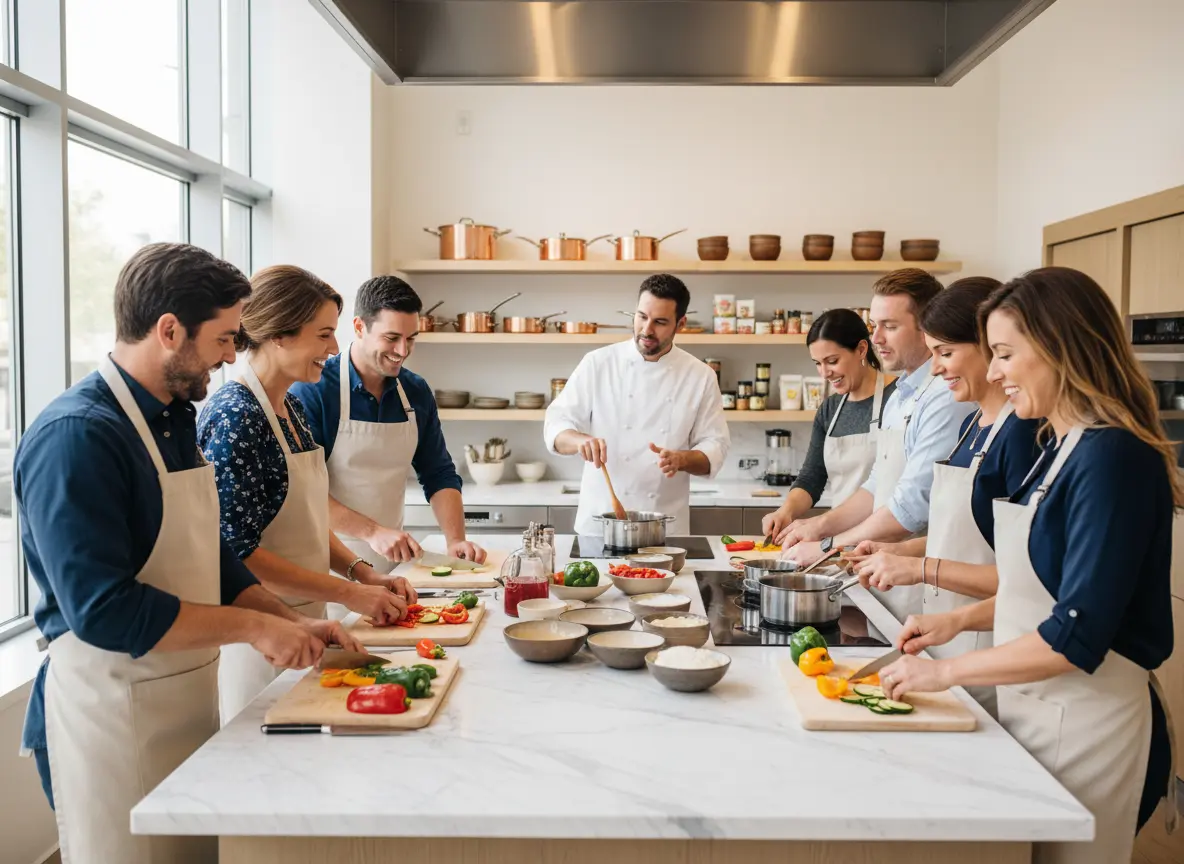
Yes, cooking classes. Groundbreaking, I know. But I’m not talking about another bland "Learn to Make Marinara" night. Your customers are more sophisticated than that (or at least they want to be). It's time to spice things up. Think outside the box of pasta:
- Skill-Based Bootcamps: Host a "Knife Skills for the Terrified" workshop where people can finally learn to dice an onion without weeping (from fear, anyway). Or a "Mastering the Mother Sauces" series for the truly ambitious.
- Trend-Forward Topics: Tap into what’s hot. A class on "Fermentation Fun: Your Intro to Kimchi & Kombucha" or a "Taco Tuesday Tirade" with a local chef who makes their own tortillas will get people talking and signing up.
- Hyper-Local Focus: Partner with a local farmer to host a "Farm to Skillet" class using only seasonal ingredients sourced from within a 20-mile radius. This connects you directly to the local food movement and gives you a story to tell.
Pro-tip: Always end your classes by offering attendees an exclusive, one-night-only 15% discount on any of the tools or ingredients they just used. Watch that expensive Dutch oven they were just drooling over fly off the shelf.
Host a "Local Flavor" Showcase
You are part of a local ecosystem. Act like it. Position your store as the champion of all things delicious and local by hosting showcase events. Dedicate a Saturday afternoon to featuring a local hot sauce maker, cheesemonger, or artisanal chocolatier. Let them set up a small table, offer samples, and tell their story.
This is a brilliant win-win-win scenario. The local artisan gets exposure to a new audience of food lovers. Your customers get to discover amazing local products and meet the people behind them. And you? You become the essential curator—the tastemaker—who connects everyone. You’re not just a retailer; you’re the glue holding the local food community together. Plus, people who come in for a cheese sample might just leave with a $150 cheese board and a set of fancy knives.
The "Utensil Petting Zoo"
Let's be real, a lot of high-end kitchen gear is intimidating. That $700 stand mixer looks amazing, but is it really that much better than one a third of the price? The best way to sell a premium product is to let people experience it for themselves. Enter the "Utensil Petting Zoo," a much friendlier name for a hands-on demo day.
Set up stations around the store. Let customers pull their own espresso shots on that fancy machine. Have a pile of carrots ready for them to test-drive different chef's knives. Let them see how quickly an immersion blender can obliterate a pot of tomatoes. When a customer can feel the difference, the price tag suddenly becomes a lot easier to justify. This isn't just selling; it's empowering them to make a confident purchase.
Your Secret Ingredient: An Unforgettable Welcome
Building a community starts the second someone walks through your door. But you’re busy. You’re in the back wrestling with a shipment of olive oil, you’re explaining the pros and cons of non-stick versus stainless steel, or you’re just trying to grab a sip of coffee. Meanwhile, a potential new regular walks in, glances around, feels utterly invisible, and walks right back out. Ouch.
Making Every Foodie Feel Seen
Consistency is key. Every single person who enters your store should be acknowledged. A warm, immediate greeting sets the stage for a positive experience. It says, "We see you, and we're happy you're here." But achieving that 100% of the time with a lean staff is nearly impossible. That’s where a little help from technology can be a game-changer. Imagine having a team member who never gets tired, never needs a lunch break, and is always ready with a perfect greeting.
Our in-store robot assistant, Stella, is designed for exactly this. Placed near your entrance, she ensures no customer goes unnoticed. She can greet everyone with a friendly "Welcome in! Did you know we have a knife sharpening demo at 2 PM today?" or "Hi there! All of our baking pans are 20% off this week." Stella acts as your store's perfect host, freeing up your human team to have those wonderful, in-depth conversations about the virtues of a particular peppercorn, which is what builds true loyalty.
Nurturing Your Foodie Flock Online and Off
The community you’re building can't be confined to your four walls. You need to create connections that extend beyond the point of sale and follow your customers into their own kitchens. This is how you stay top-of-mind and build lasting relationships.
Launch a Branded (and Actually Useful) Recipe Club
An email newsletter is fine. A community is better. Instead of just blasting sales announcements, create an exclusive club. Members could get a new, curated recipe each week—a recipe that, coincidentally, uses a unique ingredient or a specific tool you happen to sell. Make it interactive!
Start a monthly "Cook-along Challenge." Announce a signature dish, encourage members to buy the key components from your store, and have them post their results on social media with a unique hashtag (e.g., #YourStoreNameCooks). Feature the best photos on your social channels and offer the winner a small gift card. This isn't just marketing; it's building a shared experience and generating a treasure trove of user-generated content.
The Loyalty Program That Doesn't Suck
The "buy nine coffees, get the tenth free" punch card is tired. Your customers deserve better. A modern loyalty program should be about offering genuine value and making your best customers feel like true VIPs. Think beyond simple discounts and offer experiential rewards:
- Tiered Membership: Create levels (e.g., "Home Cook," "Sous Chef," "Executive Chef") with escalating perks.
- Exclusive Access: Offer top-tier members first dibs on new inventory, early registration for popular cooking classes, or invitations to members-only tasting events.
- Valuable Services: A fantastic and low-cost perk is offering a free annual knife sharpening service for any knives purchased at your store. This provides real utility and guarantees they'll come back at least once a year.
Forge Alliances with Your Culinary Comrades
You are not an island. The strongest communities are built on partnerships. Look around your neighborhood—who else is serving the same food-loving customer? Team up with them. Partner with a local butcher for a "Butchery & Braising" workshop. Collaborate with a nearby winery for a "Perfect Pairings" tasting event. Co-sponsor a pop-up dinner with an up-and-coming local chef.
By cross-promoting, you tap into each other's audiences and strengthen the entire local food scene. You’re sending a powerful message: we’re all in this together. This transforms you from a solitary shop into an indispensable part of a vibrant culinary network.
A Quick Reminder About Your Newest Team Member
As you're busy orchestrating cooking classes and building your culinary empire, remember you don't have to manage the front of the store alone. Stella is your ever-vigilant, always-on-brand assistant, ensuring every customer who walks in feels welcomed and informed from the moment they arrive. She's the perfect greeter for the community you're working so hard to build.
Conclusion: Stop Selling and Start Connecting
At the end of the day, anyone can sell a pan. But not everyone can create a place where people feel inspired, educated, and connected. Building a community isn't a fluffy marketing tactic; it's the most robust business strategy you can deploy. It’s what turns a one-time buyer into a lifelong advocate who tells all their friends about the amazing place that taught them how to perfectly sear a scallop.
So, where do you start? Don't get overwhelmed. Pick one thing from this list. Just one. Host one demo day. Launch one social media challenge. Reach out to one potential local partner. Take that first step to transform your store from a place that just sells things into the beating heart of your local food scene. Your bottom line—and your foodie soul—will thank you for it.