Your Store Smells Great. So Why Are Your Sales Just... Okay?
Let’s be honest. You got into this business because you have an exceptional nose and a passion for things that smell divine. Your shop is a fragrant wonderland, a veritable library of aromatic experiences. Customers walk in, take a deep breath, and say, “Oh, it smells so good in here!” Then they sniff three random candles, feel a bit overwhelmed, buy the one that smells vaguely like a pumpkin had a baby with a cinnamon stick, and leave. Sound familiar?
Having a store that smells nice is table stakes in the candle game. It's the bare minimum. But turning that pleasant aroma into a strategic, sales-driving machine? That’s the secret sauce. It’s the difference between selling a single candle and selling a complete home fragrance solution. This isn't about just having good scents; it's about using them to craft an experience, tell a story, and—let's be blunt—significantly increase your average transaction value. Welcome to the world of sensory merchandising and the art of the upsell, scent layering.
The Art and Science of Sensory Merchandising (Beyond Just 'Smells Nice')
Sensory merchandising is a fancy term for “making your store an irresistible place to spend money.” For you, the primary weapon is scent, but it’s a weapon that requires precision. A chaotic blast of 50 different fragrances is less "enchanting boutique" and more "headache-inducing potpourri explosion." It's time to get strategic.
Taming the Scent Overload: The "Nose Blind" Phenomenon
You know the feeling. You've been surrounded by fragrance all day, and you can't even smell the super-potent "Mahogany Teakwood" dupe anymore. That's olfactory fatigue, or "nose blindness," and it happens to your customers within minutes of entering your store. When every candle is screaming for attention, the brain just shuts down and everything starts to smell like… well, vaguely waxy air. This is the enemy of the multi-item sale.
The Fix: Create "scent zones." Don't just alphabetize your candles. Group them by fragrance family.
- The Woods: Sandalwood, Cedar, Pine, Oud
- The Florals: Rose, Lavender, Jasmine, Peony
- The Gourmands: Vanilla, Caramel, Coffee, Pumpkin Spice
- The Fresh & Clean: Citrus, Cotton, Ocean Breeze, Mint
This organizes the experience, allowing customers to explore one "mood" at a time without their senses getting scrambled. Pro tip: Place small jars of coffee beans between zones. It’s a classic for a reason—sniffing them acts as a palate cleanser for the nose, resetting their senses for the next fragrant adventure.
Creating a Mood, Not Just a Smell
Scent is a memory-making powerhouse. Research consistently shows that scent is more powerfully linked to memory and emotion than any other sense. So, are you selling a "Lemon Verbena" candle, or are you selling the feeling of a bright, clean kitchen on a sunny Saturday morning? The answer determines whether you sell one candle or an entire lifestyle.
Think about the emotional journey you want your customers to take. A calming lavender scent is perfect for a display themed around "Bedtime Rituals," while a zesty grapefruit scent should be front-and-center in a "Morning Boost" collection. Your background scent—the one diffused throughout the store—should be your brand's signature. Is your brand cozy and rustic? A subtle cedarwood might be your calling card. Modern and chic? Maybe a sophisticated white tea. This underlying scent sets the stage for everything else.
It's a Full Sensory Package
Your customer’s nose may lead the way, but their other senses are co-pilots. Sensory merchandising is a team effort. What is the customer hearing? Frantic pop music clashes with a "Relax & Unwind" display. Opt for calming instrumental or lo-fi beats that match the mood. What are they seeing? Cluttered shelves scream "discount," while well-lit, curated displays whisper "luxury." Use lighting to highlight new arrivals or specific pairings. And don't forget touch. Encourage customers to pick up the candles. The weight of a heavy glass vessel, the texture of a handcrafted ceramic pot—it all adds to the perceived value.
Guiding the Scent Journey (Without Being Overbearing)
Okay, your store is now a perfectly zoned, multi-sensory masterpiece. But a new problem arises: the "just browsing" customer. They’re intrigued but hesitant. They don't want to bother your busy staff, so they wander aimlessly, sniff a few things, and walk out. How do you guide them without hovering over their shoulder like a scented spectre?
Meet Your In-Store Scent Sommelier
Imagine having a friendly expert at the front of your store, ready to greet every single customer and offer a personalized starting point for their scent journey. That's where an in-store assistant can be a game-changer. While your human team is busy providing deep product knowledge and ringing up sales, a robotic assistant like Stella can handle the initial engagement flawlessly.
Stella can greet a shopper with, "Welcome! Are you looking for a fragrance to create a cozy, relaxing vibe or something to energize your home office?" Based on their response, she can point them in the right direction: "Wonderful! Our collection of lavender and chamomile scents is right over there in our 'Unwind' zone. They're perfect for de-stressing after a long day." She can also mention promotions without being pushy—"And just so you know, all of our 'Autumn Harvest' candles are buy-one-get-one 50% off this week." It’s a perfect, no-pressure way to ensure no customer goes unnoticed and every visit starts with helpful guidance.
Mastering the Upsell: The Magic of Scent Layering
The single-candle sale is fine. It pays the bills. But the multi-item sale? That’s what grows your business. The most effective way to achieve this is by teaching your customers the art of scent layering—a concept that sounds fancy but is wonderfully simple to execute.
What is Scent Layering? (Hint: It's Not Just a Fire Hazard)
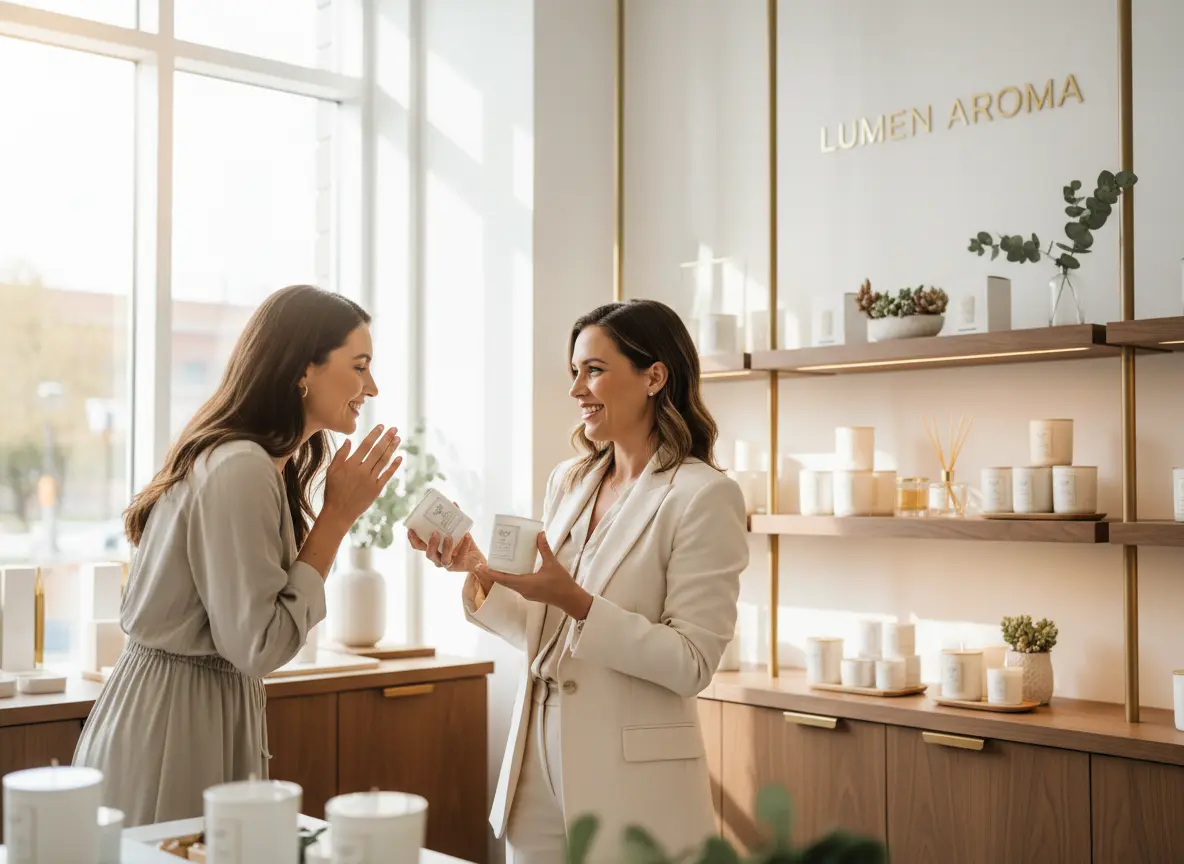
Scent layering isn't about lighting five competing candles at once and hoping for the best. It's the practice of combining complementary fragrances across different product types (candles, diffusers, room sprays, wax melts) to create a unique and complex scent profile in a home. It's about moving the customer from buying a product to building a "scent-scape."
Think of it like a fragrance recipe. You have your main "base note," which is often a larger candle or a reed diffuser providing a constant, subtle background aroma (e.g., Sandalwood, Vanilla, or Amber). Then you add "mid and top notes" with products you use intermittently, like a room spray or wax melt (e.g., a floral like Rose or a bright citrus like Bergamot). The result is a home that smells intentionally and beautifully curated, not just like a single candle.
Building the Perfect Scent "Bundle"
Your customers aren't all professional perfumers. They need your help. You have to make scent layering easy and irresistible.
- Create Themed Bundles: Package together a "Coastal Getaway" set with an Ocean Breeze reed diffuser, a Lime & Coconut candle, and a Sea Salt room spray. Give the bundle a slight discount to encourage the purchase.
- Use Shelf Talkers: Place small, elegant signs next to your best-selling candles with pairing suggestions. Next to your "Espresso" candle, a sign could read: "Pairs beautifully with our 'Vanilla Cream' wax melts for a perfect latte aroma."
- Train for the Upsell: Empower your staff (both human and robotic!) to make suggestions. When a customer brings a "Gingerbread" candle to the counter, train your team to ask, "That's one of my favorites! Have you ever tried pairing it with our 'Spiced Orange' room spray? It creates the most amazing warm and festive scent."
These tactics remove the guesswork and plant the seed that one product is good, but two (or three) are an experience.
A Quick Reminder About Stella
While you're masterfully orchestrating your store's sensory experience, an AI retail assistant can ensure your hard work gets noticed. Stella greets every customer, promotes your carefully crafted bundles, and provides the perfect starting point for their scent journey, freeing you and your team to close sales and build relationships.
Conclusion: From Smells to Sales
Transforming your candle shop from a place that simply "smells good" into a strategic retail experience is the single most powerful thing you can do for your bottom line. It's about guiding your customers, educating them, and inspiring them to see home fragrance not as a simple purchase, but as a form of self-expression and ambiance creation. By organizing your store into logical scent zones, layering in other sensory cues, and mastering the art of the scent-pairing suggestion, you’ll turn passive sniffers into loyal, high-spending customers.
Your Action Plan for This Week:
- Take a "Nose-Blind" Walk: Walk into your store as if for the first time. Is the scent profile clear and inviting, or is it a confusing mess? Identify one change you can make to create clearer "scent zones."
- Create One Simple Pairing: Pick two complementary scents and feature them together. Create a small sign, bundle a few, and make it your team's suggested pairing of the week.
- Define Your Welcome: Think of the one thing you wish every single customer knew when they walked in (e.g., your weekly special, your new collection). That’s the first thing you should be communicating, whether through a sign, a staff member, or a tirelessly cheerful robot assistant.
Now go on. Stop just selling wax and wicks. Start selling stories, moods, and experiences. Your customers—and your accountant—will thank you for it.