Let’s Be Honest: You’re Not Selling Fabric
You heard me. You’re not selling bolts of cotton, yards of silk, or stacks of fat quarters. You’re selling the idea of a quilt. You’re selling the satisfaction of a handmade dress. You’re selling the potential that sits dormant in every fiber, just waiting for a customer with a vision—or, more likely, a customer you’ve just handed a vision to on a silver platter.
If your store is a sea of bolts lined up like soldiers, you’re making your customers do all the work. And let’s face it, after a long week, the last thing anyone wants is more work. They want to be inspired. They want to walk in and have a project practically leap off the shelf and into their arms. Poor visual merchandising is why that gorgeous, high-margin linen has been sitting in the back, quietly collecting dust and contemplating its life choices. It’s time to turn your static inventory into a dynamic, project-generating machine through the magic of displays that actually sell.
Beyond the Bolt: The Art of the Narrative Display
Simply draping a few coordinating fabrics over a chair and calling it a day is, to put it mildly, an opportunity for improvement. Your customers are drowning in a sea of choice; your job is to be their lifeguard. A great display is a story, a vignette, a fully-formed idea that makes them say, "I need to make that. Right now."
From Fabric to Fantasy: Create a Scene
Stop thinking in terms of individual SKUs and start thinking in terms of finished projects. Don’t just show them blue and yellow floral cottons; build a “Lemonade on the Porch” display.
- Get a small wicker table and a couple of chairs.
- Drape the table with a simple tablecloth made from one of the fabrics.
- Sew a few throw pillows for the chairs with coordinating prints.
- Add props: a pitcher, some glasses (maybe even fake lemons!), a book, a sunhat.
Suddenly, you’re not just selling fabric. You’re selling a lazy Sunday afternoon. The display should clearly list every fabric, pattern, and notion used to create the scene. You’re not just inspiring them; you’re giving them a shopping list.
The "Unfinished Project" Ploy
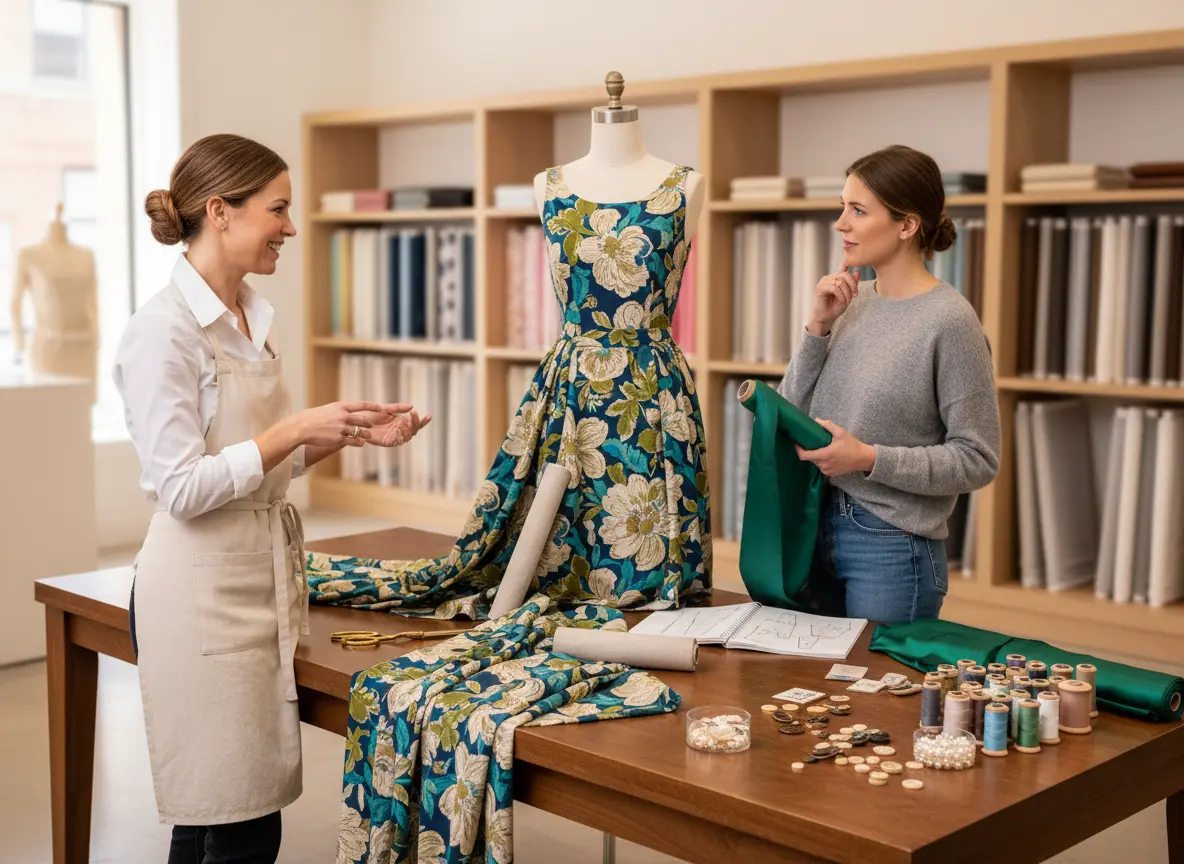
A perfectly finished, couture-level garment on a mannequin can be intimidating. For many hobby sewists, it screams, "You are not worthy!" A far more effective and relatable approach is the "in-progress" display. Pin a dress pattern to a mannequin and start draping and pinning the fabric to it, as if you were just about to start sewing. Display a quilt top that’s only half-pieced on a design wall. This does two brilliant things:
- It demystifies the process. Customers can see how it’s constructed, making it feel more achievable.
- It creates a sense of shared experience. It’s relatable. We’ve all had projects sitting in that "in-progress" phase for... a while.
This technique turns a display from a museum piece into a collaborative starting point.
Curate, Don’t Just Organize
Organizing by color is a start, but curating by project is a masterstroke. Create small, dedicated sections that are all-in-one project stations. A "Build-a-Bag" corner could feature durable canvases, fun cotton linings, interfacing, zippers, and bag patterns all in one place. A "Cozy Quilt" nook could have a curated selection of five or six fat quarter bundles that work beautifully together, displayed right next to the batting and the perfect backing fabric. This strategy respects your customer’s time and energy, making it ridiculously easy for them to say "yes."
Giving Your Displays a Voice
Your displays are your silent salespeople, but what if they weren't so silent? You’ve built this gorgeous vignette, painstakingly chosen every element, and now you’re relying on a tiny, hand-written sign to do the heavy lifting. While you’re in the back cutting three yards of slippery charmeuse for a determined customer, who’s telling the story of your brilliant display to the new browser up front?
Your 24/7 Inspiration Ambassador
This is where technology can do more than just process payments. Imagine a friendly, helpful presence right next to your "Lemonade on the Porch" display, actively engaging customers. That’s Stella. She's not just a greeter; she's an interactive part of your merchandising. While your stunning display draws them in, Stella can be programmed to be the expert on that specific project.
A shopper pauses, and Stella might say, "Isn't this a cheerful setup? The tablecloth is made from our new 'Citrus Bloom' cotton, and we have a kit with the patterns and notions for those pillows. They're a perfect weekend project!" She can answer questions about fabric care, suggest the right kind of thread, and even point out that the coordinating zippers are 15% off this week. She ensures that the inspiration you’ve created translates directly into a sale, without you having to be in two places at once.
The Practical Magic of Display Logistics
A great concept can fall flat without attention to the nitty-gritty details. Execution is everything. Let's talk about the unsung heroes of visual merchandising: lighting, texture, and timing.
Lighting: Your Secret Weapon Against "Blah"
Terrible overhead fluorescent lighting is the arch-nemesis of beautiful fabric. It can wash out vibrant colors and make luxurious textures look flat and uninviting. Good lighting is non-negotiable. Use spotlights (they don’t have to be expensive!) to highlight your main displays. Aim for warm-toned LED bulbs to create an inviting atmosphere. A well-lit display makes the colors pop and the textures beg to be touched. Remember, people are buying with their eyes first—make sure they see your fabric in its best possible light, literally.
The Psychology of Touch
This isn’t a museum. You’re in the most tactile business there is. Customers need to feel the drape of a rayon, the heft of a canvas, and the softness of a flannel. While you can't have people yanking entire bolts off the shelf, you must encourage interaction.
- Designated Swatches: Have large, generous swatches of the fabrics in your main displays available for touching. Hang them on a ring or place them in a basket.
- "Petting Stations": For fabrics like Minky, faux fur, or velvet, create a specific "Please Touch!" area. It contains the mess and makes the experience fun and explicit.
By managing how customers interact with the fabric, you protect your inventory while still giving them the essential sensory information they need to make a purchase.
The Enemy of Engagement is Stagnation
That beautiful Christmas quilt display is a lot less magical in mid-February. Displays have a shelf life. A customer who sees the same thing every time they visit will eventually stop seeing it at all. It becomes background noise. Institute a mandatory display rotation schedule. Change your main entrance display at least once a month, and smaller vignettes every two weeks. This creates a constant sense of newness and discovery, giving your regulars a reason to pop in frequently just to see what’s new. It also gives you a perfect excuse to promote seasonal fabrics and clear out old stock.
A Quick Reminder About Stella
While your brilliant displays provide the visual "wow," Stella provides the helpful voice. She’s your in-store expert who never needs a break, consistently promoting your curated projects, upselling notions, and making sure every shopper feels seen and inspired from the moment they walk in.
Conclusion: Go Sell Some Dreams
Transforming your store from a fabric warehouse into an inspiration studio is the single most powerful thing you can do to drive sales. It’s about showing, not just telling. It’s about building stories, making projects accessible, and paying attention to the details that create a delightful shopping experience. You’re selling creativity, comfort, and the pride of a finished project.
So, your next step? Walk out onto your sales floor right now and look at it through the eyes of a tired, uninspired customer. What project is screaming to be made? Pick one. Now go build a display around it. Your bolts of fabric—and your bottom line—will thank you.