Welcome to the Jungle... Now Where's the Exit?
Picture this: a wide-eyed, hopeful customer walks into your nursery. They have a vision. A Pinterest-fueled dream of a lush, green living room. They take three steps inside, stop, and their face falls. Before them lies a seemingly endless sea of green, organized by a system known only to Linnaeus himself. The ficus is fraternizing with the ferns, the succulents are scattered like a botanical afterthought, and the customer’s dream is slowly being replaced by a creeping sense of dread. They grab the first non-threatening-looking plant they see near the checkout and flee. You just made a sale, sure, but you lost a loyal, confident customer.
If this scene feels painfully familiar, you’re not alone. The "let them figure it out" approach to nursery merchandising is a silent killer of sales and customer confidence. People don't want a botany lesson; they want a solution. They want to know which plant will survive their notorious black thumb, look great on their bookshelf, and not poison their cat, Fluffy. The secret isn’t a bigger inventory; it's smarter organization. It's time to stop thinking like a botanist and start thinking like your customer. Let's dig in.
Beyond the Alphabet: Grouping by Customer Needs
Organizing your plants alphabetically by their Latin name is great if your target demographic is university horticulture students. For everyone else, it’s a recipe for confusion. Instead, let's categorize your green goods based on the actual questions your customers are asking, either out loud or in their heads.
The "Please Don't Die on Me" Corner: Grouping by Care Requirements
This is the single most effective change you can make. Grouping plants by their light and water needs is like giving your customers a cheat sheet to success. It demystifies plant care and empowers them to make a good choice. Forget overwhelming them with options; guide them to the right one.
- The Low-Light Legends: Create a sanctuary for the office workers, basement dwellers, and forgetful waterers. This is where your ZZ Plants, Snake Plants, and Pothos varieties shine. Label it something fun and relatable, like "Practically Plastic: Plants for Low-Light Lifestyles" or "Thrives on Neglect." Customers will appreciate the honesty and humor.
- The Sun Worshippers: Group your cacti, succulents, and other sun-loving specimens together. This prevents a customer from buying a beautiful Echeveria for their dimly lit bathroom, only to return a week later with a sad, etiolated pancake.
- The Drama Club (a.k.a. Humidity Lovers): Calatheas, Ferns, and Alocasias need their own special section. By placing them together, you can easily merchandise them with humidifiers, pebble trays, and misters. It’s a natural upsell that also sets the customer up for success.
The Lifestyle Aisle: Grouping by Function and Vibe
Why is the customer really buying this plant? It’s rarely just for the sake of owning another photosynthesizing organism. They're trying to solve a problem or achieve a certain aesthetic. Cater to that.
Create dedicated zones that speak directly to their goals. A well-placed sign can transform a simple plant into a solution. Consider these options:
- The Pet-Friendly Paradise: This isn't a suggestion; it's a necessity. A clearly marked, 100% pet-safe section is a godsend for animal owners. They will thank you, trust you, and buy from you exclusively. Put your Spider Plants, Prayer Plants, and Peperomias here and watch them fly off the shelves.
- The Clean Air Crew: Group together plants known for their air-purifying qualities. Yes, the science is debated on how many you’d actually need to purify a room, but the concept is a powerful selling point. A small sign referencing the famous NASA study gives customers a great, science-backed reason to buy that Peace Lily.
- The "Just Add Water" Collection: Bundle 3-5 easy-care plants of varying heights and textures into a "starter kit" for new plant parents. You're not just selling plants; you're selling an instant urban jungle and the confidence to care for it.
Guiding the Lost Gardener with Smart Signage & Tech
Excellent grouping is only half the battle. If you don't communicate your brilliant new system to your customers, they’ll still feel lost. This is where clear, concise, and personality-filled support comes in, both analog and digital.
Signage That Actually Helps (and Doesn't Read Like a Textbook)
Your plant signs are your silent salespeople. Ditch the tiny plastic stakes with unpronounceable names. Upgrade to signage that informs and delights. A good sign should answer the three key questions in under five seconds: What is it? What does it need? And why should I buy it?
Instead of: "Ficus lyrata"
Try: "The Famous Fiddle-Leaf Fig!
Likes: Bright, indirect sun & a consistent watering schedule.
Dislikes: Drafts, sudden moves, and indecisiveness.
A bit of a diva, but she's the ultimate statement piece for a reason."
Your 24/7 Greeter Who Knows Every Plant's Quirks
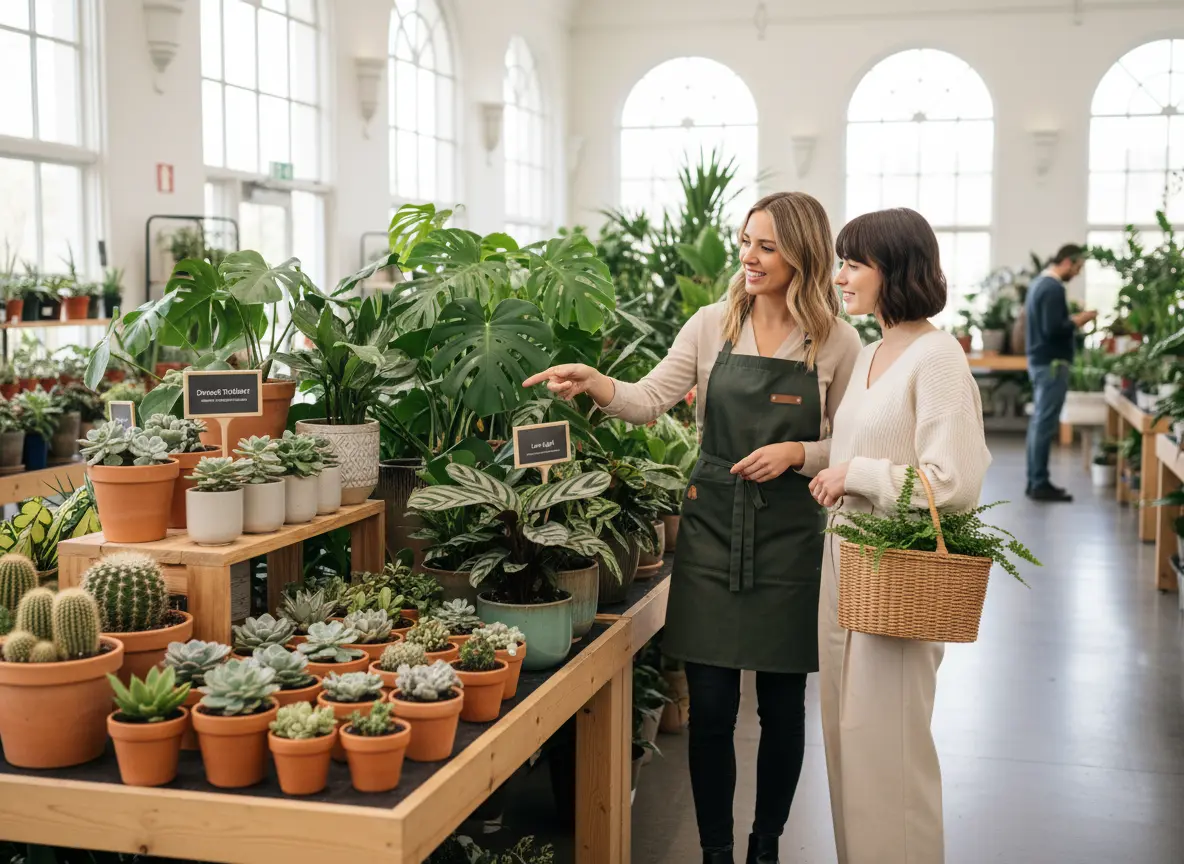
Even with stellar signage, questions are inevitable. Your staff are plant experts, but they can't be everywhere at once—they’re busy wrestling a pallet of potting soil or performing delicate surgery on a prized orchid. This is where a little robotic help goes a long way. An in-store assistant like Stella can greet every single customer, ensuring no one feels ignored. She can immediately direct them to your newly organized sections. Imagine a shopper walking in and being greeted with, "Welcome! If you're looking for plants that are safe for your furry friends, our Pet-Friendly Paradise is right this way."
Furthermore, Stella can be your ultimate cross-selling champion. When a customer is admiring your Fiddle-Leaf Figs, she can chime in, "Those are gorgeous! Just so you know, our large decorative ceramic pots are 20% off this week, and they have the excellent drainage these plants need to thrive." She handles the initial guidance and promotional heavy lifting, freeing up your human team to provide the deep, hands-on expertise they excel at.
Merchandising Magic: From Grouping to Selling
Now that your plants are thoughtfully grouped and well-signed, it's time to add the final layer of merchandising magic that turns browsers into buyers. This is about creating an experience that’s not just easy, but also inspiring.
The Art of the Cross-Sell: It’s Not Just About Plants
Your plant groupings are a roadmap for strategic cross-selling. Place relevant, high-margin products right where your customer needs them. This isn’t pushy; it's helpful. You're anticipating their needs and saving them a trip.
- Next to the "Tropical Drama Club," place your humidifiers, misters, and leaf shine products.
- In the "Sun Worshippers" section, stock terracotta pots, gritty cactus soil mix, and stylish watering cans.
- Adjacent to your "Pet-Friendly Paradise," why not feature some pet-safe fertilizers or even some branded pet accessories?
By placing the solution next to the plant, you dramatically increase the chances of an add-on sale. According to research, strategic product placement can boost sales by up to 30%.
Creating "Shop the Look" Vignettes
Help your customers overcome their "analysis paralysis" by showing them what's possible. Create small, styled scenes around the store that mimic a real home environment. Set up a chic armchair, a side table, and a floor lamp, then arrange a curated collection of 3-5 plants that complement each other.
For example, a "Boho Living Room" vignette could feature a large Bird of Paradise, a medium-sized Monstera, and a trailing String of Pearls. You can offer a small discount for buying the "full look." This tactic is incredibly powerful because it moves you from selling individual products to selling a finished, aspirational vision. It removes the guesswork and gives customers the confidence to replicate it at home.
Refresh, Rotate, and Re-evaluate
Your store layout should not be a static monument. It's a living, breathing entity that needs to evolve. Pay attention to what’s working. Use your sales data to see which groupings are most popular. Is the "Low-Light Legends" section always picked over? Great—expand it! Did that "Shop the Look" vignette sell out in a weekend? Create another one!
Don’t be afraid to move things around every few weeks. This keeps the store looking fresh for your repeat customers and gives you a chance to highlight new arrivals or slow-moving stock. A dynamic retail environment encourages discovery and makes every visit feel new.
A Quick Reminder About Stella
While perfecting your plant groupings and merchandising is a massive leap forward, engaging every single person who walks through your door is the final piece of the puzzle. That's where Stella comes in. She’s your tireless, always-friendly brand ambassador, ensuring no shopper goes unnoticed, no promotion is missed, and every customer gets a warm, helpful welcome from the moment they arrive.
Time to Grow Your Sales
Let's be honest: your customers want to succeed. They want that beautiful, thriving indoor jungle they see on Instagram. By shifting from a confusing, encyclopedic layout to a customer-centric, solution-oriented one, you become their trusted guide on that journey.
Stop forcing them to navigate a botanical labyrinth. Instead, give them a clear path. Group by care needs and lifestyle, use smart signage, create inspiring vignettes, and cross-sell with intention. Your action item for this week: pick one strategy. Just one. Create a "Hard to Kill" corner or a "Pet-Friendly" section. See how your customers respond. We have a feeling you—and your bottom line—will be pleasantly surprised. Now go on and help your customers' dreams (and your sales) grow. (You knew a plant pun was coming.)