Introduction: LinkedIn Is Not Just for Job Hunters Anymore
Let's be honest — when most catering company owners think about winning corporate contracts, LinkedIn is probably not the first thing that comes to mind. You're more likely thinking about cold calls, referrals from a friend of a friend, or simply hoping that the HR manager at a nearby tech company will somehow stumble upon your website while Googling "catering near me." Bold strategy.
Here's the reality: LinkedIn has quietly become one of the most powerful platforms for B2B sales, and corporate catering is about as B2B as it gets. With over 1 billion members worldwide and more than 65 million decision-makers actively using the platform, LinkedIn puts you in the same digital room as the very people who approve catering budgets, plan company retreats, and organize weekly team lunches. The question isn't whether LinkedIn can help you win corporate contracts — it's whether you're willing to use it correctly.
This guide walks you through how to position your catering business on LinkedIn, build relationships with the right people, and turn profile views into signed contracts. No fluff, no vague advice — just a practical playbook you can actually use.
Building a LinkedIn Presence That Actually Gets Noticed
Optimize Your Company Page Like You Mean It
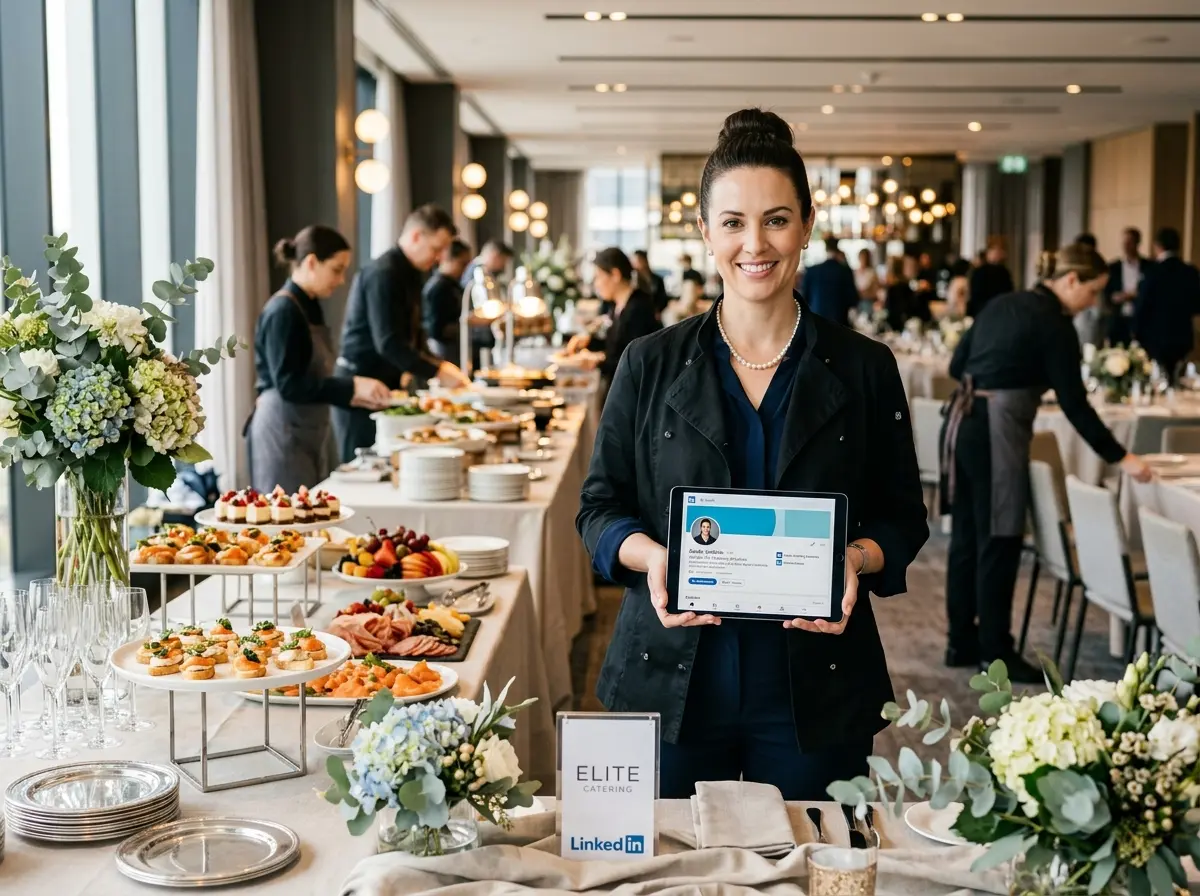
Your LinkedIn company page is your digital first impression, and just like a poorly plated entrée, a sloppy page will cost you the account before the conversation even starts. Start with the basics: a high-quality logo, a compelling banner image (think stunning food photography or a beautifully arranged corporate event setup), and a summary that speaks directly to corporate clients rather than backyard barbecue enthusiasts.
Your "About" section should answer three questions immediately: What do you do? Who do you serve? Why should a corporate client trust you? Mention your capacity, any certifications (like ServSafe or allergen management credentials), and industries you've served. If you've catered for recognizable companies, drop those names — social proof is everything in this space.
Don't forget to include a clear call-to-action. Whether it's a link to your corporate inquiry form or a direct phone number, make it effortless for a busy office manager to reach out.
Personal Profiles Matter More Than You Think
Your personal LinkedIn profile — and the profiles of any key staff members — function as extensions of your brand. Decision-makers often look at the person behind the business before they look at the business itself. Make sure your headline goes beyond "Owner at [Company Name]" and instead communicates value. Something like "Helping Corporate Teams Eat Better | Corporate Catering Specialist for 50–500+ Guests" tells the right story immediately.
Regularly share content from your personal profile: behind-the-scenes kitchen prep, event recaps, client testimonials, seasonal menu announcements. LinkedIn's algorithm rewards consistency, and showing up regularly keeps you visible to your network — which is exactly where you want to be when a contract opportunity opens up.
Use LinkedIn's Features as Sales Tools
LinkedIn isn't just a digital brochure — it has built-in tools that most catering businesses completely ignore. LinkedIn Events lets you promote open-house tastings or corporate menu previews. LinkedIn Articles allow you to write longer-form content (like "How to Choose the Right Caterer for Your Annual Conference") that positions you as an expert and improves your searchability. LinkedIn's native video feature gets significantly higher engagement than external links, so a short walkthrough of your signature corporate lunch spread could outperform a polished ad campaign.
Managing Inbound Interest Without Dropping the Ball
What Happens When LinkedIn Actually Works
Here's a scenario that happens more than you'd expect: your LinkedIn strategy starts gaining traction, inquiries come in, and suddenly your phone is ringing and your inbox is full — all while you're in the middle of executing a 200-person executive luncheon. This is a great problem to have, but only if you're set up to handle it. Missing a corporate inquiry because your team was slammed in the kitchen is the operational equivalent of serving cold soup — technically it happened, but nobody's happy about it.
This is exactly where Stella becomes a genuine asset for catering businesses. Stella is an AI robot employee and phone receptionist that answers calls 24/7, collects client information through conversational intake forms, and ensures no inquiry goes unaddressed — even when your entire staff is elbow-deep in an off-site event. Her built-in CRM automatically organizes contact details, tags leads, and generates AI-powered profiles so you can follow up with context and confidence. For a catering company trying to scale its corporate client base, that kind of infrastructure isn't a luxury — it's a lifeline.
Prospecting and Outreach That Doesn't Feel Gross
Find the Right People With LinkedIn Search
LinkedIn's search functionality is genuinely underrated for B2B prospecting. You can filter by job title, company size, industry, and location to build a highly targeted list of potential corporate clients. The people you're looking for typically carry titles like Office Manager, Executive Assistant, HR Director, Operations Manager, or Corporate Events Coordinator. These are the gatekeepers and decision-makers who plan everything from weekly catered lunches to annual company galas.
Start by identifying companies in your service area with 50 or more employees — these businesses are large enough to have recurring catering needs but often small enough that a direct relationship with the caterer actually matters. Create a simple spreadsheet to track who you've connected with, what you've sent, and where each prospect is in your pipeline.
Send Connection Requests That Start Conversations
The fastest way to get ignored on LinkedIn is to send a generic connection request followed immediately by a sales pitch. Nobody wants that. Instead, personalize your connection requests with a brief, genuine note. Reference something specific — a post they shared, a mutual connection, or the industry they're in. Keep it short, and keep the ask low-pressure.
Once connected, focus on warming up the relationship before pitching anything. Comment thoughtfully on their posts. Share something relevant to their industry. When you do eventually mention your catering services, frame it around their needs: "We work with a lot of [industry] companies in the area and help them handle everything from weekly team lunches to large client events — happy to chat if that's ever useful." That's a soft, professional opener that respects their time and intelligence.
Leverage Testimonials and Case Studies as Content
Nothing sells corporate catering quite like proof. Ask your existing corporate clients for short testimonials and post them on LinkedIn — not as a brag, but as a signal to other companies that you understand their world. Better yet, turn a successful event into a short case study: "We recently catered a 300-person product launch for a regional healthcare company. Here's how we handled dietary restrictions for 40+ guests while keeping service seamless across four stations." That kind of specific, behind-the-curtain content is enormously compelling to someone who is responsible for planning a similar event and terrified of something going wrong.
Pair this content strategy with a consistent posting schedule — even two to three posts per week can dramatically increase your visibility among the corporate contacts in your network. LinkedIn rewards engagement velocity, so the more your existing connections interact with your content, the more it spreads to their networks, many of whom are exactly the corporate clients you're trying to reach.
Quick Reminder About Stella
Stella is an AI robot employee and phone receptionist that works 24/7 — answering calls, collecting client information, managing contacts, and keeping your business running professionally even when you're off feeding 400 people at a conference center. She's available for just $99/month with no upfront hardware costs, and she's ready to work from day one. For catering companies investing in LinkedIn outreach and expecting more inbound leads, having Stella handle the front-line communication is a straightforward way to make sure that effort actually converts.
Conclusion: Your Next Corporate Contract Is a Connection Request Away
LinkedIn isn't a magic wand, and winning corporate catering contracts still requires exceptional food, reliable execution, and genuine relationship-building. But as a prospecting and visibility tool, it's one of the most cost-effective channels available to catering businesses willing to show up consistently and engage with intention.
Here's where to start this week:
- Audit your LinkedIn company page and personal profile — update photos, headlines, and your "About" section to speak directly to corporate clients.
- Identify 20 target companies in your area using LinkedIn's search tools and find the right contacts within each.
- Send five personalized connection requests this week — no pitches, just genuine introductions.
- Post one piece of content that showcases your corporate catering experience, whether it's a photo, a short video, or a client testimonial.
- Make sure your phone and intake process is ready to handle inbound interest before your outreach kicks in.
Corporate clients are on LinkedIn right now, looking for vendors they can trust. The catering companies that will win their business aren't necessarily the ones with the biggest budgets or the fanciest websites — they're the ones who show up professionally, communicate clearly, and make every touchpoint feel effortless. Go be that company.