So, Where Did All Your Customers Go?
You did great work. You delivered the service. The customer smiled, paid, and walked out the door — and then... nothing. No follow-up appointment. No return visit. No phone call. Just a faint memory of someone who used to give you money on a regular basis.
Here's the uncomfortable truth: most service businesses lose 20–40% of their active customers every year, not because of bad service, but simply because life gets busy and people forget to come back. No grudge. No dramatic breakup. Just inertia. And the good news? Inertia can be overcome with the right email.
Winback emails — also called re-engagement emails — are specifically designed to reconnect with lapsed customers and remind them why they chose you in the first place. When done right, they convert at surprisingly high rates (some campaigns see 5–15% re-engagement), and they cost a fraction of what it takes to acquire a brand-new customer. So before you go dumping more money into ads, let's talk about how to reclaim the customers you've already earned.
Anatomy of a Winback Email That Actually Gets Read
The Subject Line Is Everything (No Pressure)
You could write the most heartfelt, perfectly crafted winback email in the history of email marketing, and it will do absolutely nothing if no one opens it. The subject line is your one shot to stand out in an inbox full of newsletters, promotional codes, and that weekly sale from a mattress company the recipient doesn't remember subscribing to.
For service businesses specifically, subject lines that perform well tend to be personal, curiosity-driven, or lightly humorous. Avoid generic lines like "We miss you!" — every business uses that, and customers know exactly what's coming. Instead, try something like:
- "It's been a while — here's something just for you"
- "[First Name], your [service] is overdue (and we've got a deal)"
- "Did we do something wrong? Let's make it right."
- "Your [salon chair / massage table / appointment slot] is waiting"
Personalization tokens like first names and specific service references dramatically improve open rates. The goal is to feel like a nudge from a business that genuinely knows them — not a blast email sent to 10,000 strangers.
The Body: Be Human, Be Brief, Be Useful
Once they open it, you have about eight seconds before they decide whether to keep reading or archive it into the digital void. Lead with acknowledgment — recognize that it's been a while and keep it light. Nobody wants to feel guilty for not coming back to their dry cleaner.
A strong winback email body typically includes three elements: a warm, personalized opening, a clear and compelling reason to return (usually an offer or update), and a single, obvious call to action. That's it. Don't try to pack in your entire menu, your origin story, and a testimonial. Save the oversharing for social media.
Here's a quick example for a spa or massage business: "Hey [Name], it's been about six months since your last visit — we hope that means life has been kind to you. We've added two new services and would love to welcome you back with 20% off your next booking. One click is all it takes." Warm. Simple. Actionable. Done.
Timing and Segmentation: Send the Right Email at the Right Time
Not all lapsed customers are the same, and your winback strategy shouldn't treat them like they are. A customer who hasn't returned in 60 days is a very different conversation than someone who's been gone for 18 months. Segment your list accordingly and tailor both the messaging and the offer.
A good rule of thumb: send a soft "we noticed you haven't been in" email around the 60–90 day mark, a more incentive-driven email around 6 months, and a final "we'd love to have you back — here's our best offer" around 12 months. After that, it may be time to either archive them or send a simple re-permission email to clean your list. Sending winback emails to people who haven't engaged in years can actually hurt your email deliverability — which is a technical headache nobody wants.
How Staying Connected Year-Round Prevents the Lapse in the First Place
The Best Winback Is the One You Never Have to Send
Here's a slightly obvious but often overlooked insight: the easiest way to win back a customer is to never fully lose them. Consistent touchpoints — whether through email, SMS, or even in-person interactions — keep your business top of mind between visits. When customers feel like a business knows them and stays engaged, they're far less likely to quietly drift toward a competitor.
This is where having good systems in place really matters. Stella, the AI robot employee and phone receptionist, can help service businesses stay connected on both ends of the customer journey. In-store, she proactively greets walk-ins, promotes current deals, and can collect customer contact information through conversational intake forms — so you're actually building your list with real, engaged customers rather than hoping they hand over an email at checkout. Over the phone, she answers calls 24/7 and can handle inquiries, capture contact details, and ensure no potential customer falls through the cracks. Her built-in CRM also lets you tag, segment, and track customer interactions, so when it's time to send a winback campaign, you're working with clean, organized data rather than a chaotic spreadsheet from 2021.
Making the Offer Worth Returning For
What Kind of Incentive Should You Use?
This is where a lot of service businesses hesitate — and understandably so. Discounting your services can feel like you're cheapening your work or training customers to only return when there's a deal. That's a valid concern, and the answer is to be strategic rather than reflexively slapping a 30% off coupon on everything.
Consider tiered incentives based on how long the customer has been away. For a 60–90 day lapse, a small bonus (like a complimentary add-on or a loyalty credit) may be enough. For longer absences, a more meaningful discount or exclusive offer signals that you genuinely want them back. The key is to frame the offer as a gesture of appreciation, not a desperate plea. "We've missed you and want to celebrate your return" lands very differently than "PLEASE COME BACK HERE'S 40% OFF EVERYTHING."
What to Do After They Come Back
The worst possible outcome of a successful winback campaign is doing nothing with the momentum. When a lapsed customer returns, treat it like a first impression — because in many ways, it is. Make sure the experience exceeds their expectations, and have a clear plan to keep them engaged this time around. Schedule the next appointment before they leave. Enroll them in a loyalty program. Send a personal follow-up email 48 hours later thanking them for returning.
Re-engagement is only half the job. Retention is the other half, and it starts the moment they walk back through your door. The businesses that nail this part are the ones that turn one-time returners into long-term, loyal customers — which is ultimately a much better use of everyone's time than endlessly chasing new leads.
Measuring Whether Your Winback Campaign Is Working
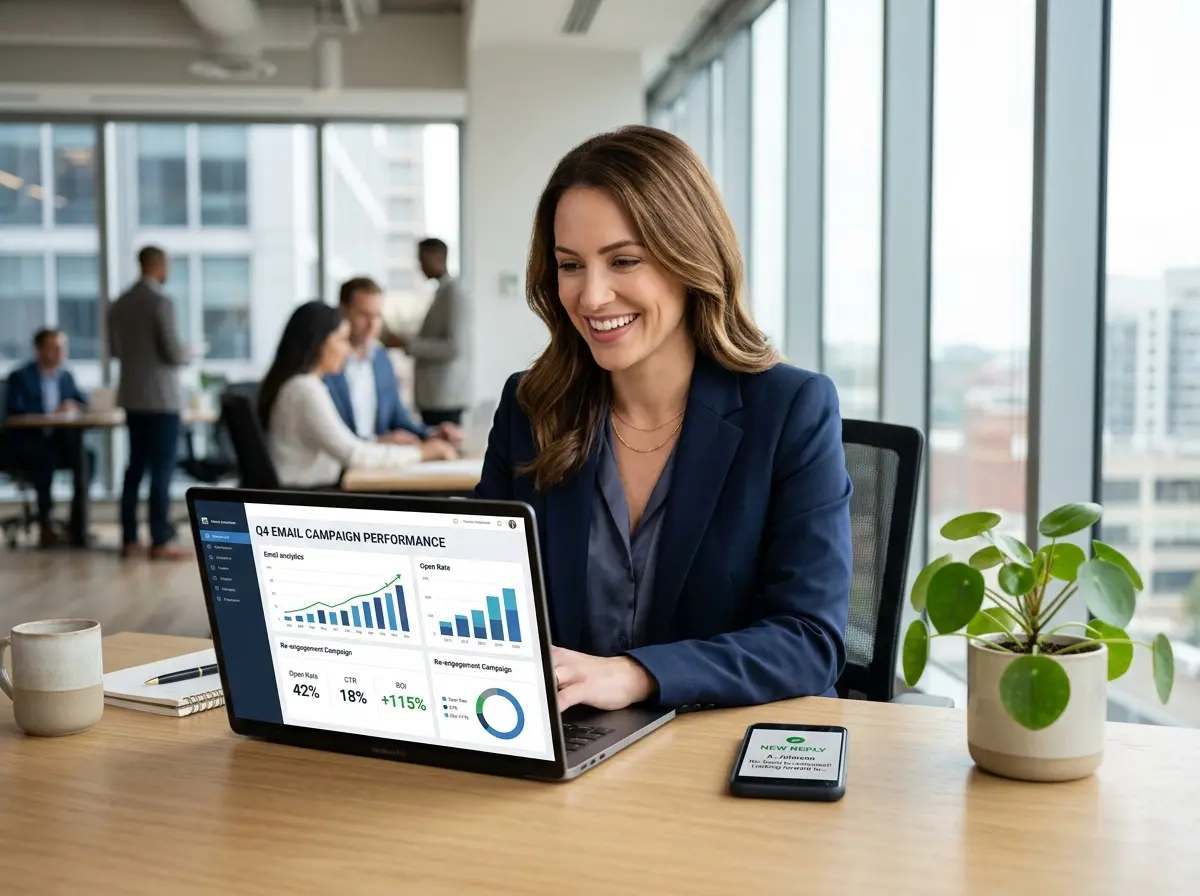
You can't improve what you don't measure. Track the following metrics for every winback campaign you run: open rate, click-through rate, conversion rate (did they actually book or buy?), and revenue generated per email sent. Compare the cost of your offer or incentive against the lifetime value of a re-engaged customer, and you'll quickly see why winback campaigns are one of the highest-ROI marketing activities available to service businesses. If something isn't performing, test a new subject line, adjust the timing, or tweak the offer — and then test again. This is marketing, not magic.
Quick Reminder About Stella
Stella is an AI robot employee and phone receptionist built for businesses of all sizes — she stands in your store greeting and engaging customers in person, and answers your phones 24/7 so no call ever goes unanswered. At just $99/month with no hardware costs, she's the kind of reliable, always-on team member that doesn't call in sick or forget to mention your current promotion. If you're thinking about ways to keep customers engaged before they become lapsed customers in the first place, she's worth a look.
Your Next Steps Start Today
Winning back lapsed customers is one of the most cost-effective growth strategies available to service businesses — and yet most owners either never attempt it or send a single half-hearted email and call it a day. The businesses that do it well treat it as a system, not an afterthought.
Here's your action plan:
- Audit your customer list today. Identify anyone who hasn't engaged or returned in the last 60, 180, and 365 days. Segment those groups separately.
- Write three emails — one for each segment — with personalized subject lines, a warm and brief body, and a single clear call to action.
- Pick an incentive appropriate to the length of absence and your business model. Keep it generous enough to matter but sustainable enough to repeat.
- Set up a trigger so future customers automatically enter a winback sequence after a defined period of inactivity. Do the work once; let automation handle the rest.
- Track everything and refine your approach after each campaign cycle.
Your lapsed customers already know who you are. They've already experienced what you offer. All they need is the right nudge at the right time — and now you know exactly how to deliver it.