When Clients Ghost You (And Your Revenue Along With Them)
You've blocked off the table. You've prepped the room. You've turned down the lights, queued up the ambient music, and maybe even lit a candle. And then — nothing. Your 2:00 PM appointment simply doesn't show up. No call, no text, no carrier pigeon. Just silence and a 60-minute hole in your schedule where money used to be.
No-shows are one of the most frustrating and costly problems facing massage studios today. Industry estimates suggest that no-show rates in service businesses hover between 10% and 30%, and for massage therapists — where each appointment slot is a finite, non-renewable resource — even a handful of missed bookings per week can quietly drain thousands of dollars from your annual revenue.
The good news? A no-show doesn't have to mean a permanent loss. With the right recovery sequence in place, you can recapture a significant portion of that revenue, re-engage clients who've gone quiet, and even turn an awkward situation into a loyalty-building opportunity. Let's walk through exactly how to do that.
Understanding Why Clients No-Show (Before You Can Fix It)
Before you build a recovery sequence, it helps to understand what's actually causing the problem. Not all no-shows are created equal, and treating them as a single monolithic issue leads to generic solutions that don't move the needle.
The Three Most Common No-Show Culprits
The first and most common culprit is simply forgetting. Life is busy. People book appointments days or weeks in advance with the best of intentions, and then reality hits — a work deadline, a sick kid, a Tuesday that felt nothing like Tuesday. These clients are not trying to disrespect your time. They just needed a better reminder.
The second culprit is friction at the moment of doubt. Something came up — a conflict, a change in plans, a mild case of "I'll just reschedule later" — and the client didn't know how easy it was to cancel or reschedule without awkwardness. If calling to cancel feels like a confrontation, some clients will simply not show up instead. Lowering that friction matters more than most studio owners realize.
The third culprit is disengagement. These are clients who booked once, had a decent experience, but never felt a strong enough connection to make it a habit. A no-show is often their quiet way of drifting out the door. For these clients, recovery isn't just about filling the slot — it's about rekindling a relationship.
What This Means for Your Recovery Strategy
A one-size-fits-all "hey, you missed your appointment" message won't cut it. Your recovery sequence needs to address each scenario differently — and it needs to start before the no-show even happens. Prevention and recovery are two sides of the same coin, and smart studios invest in both.
Automation and AI Tools That Keep Your Chair Filled
Here's the uncomfortable truth: most massage studio owners are already stretched thin. You're the therapist, the scheduler, the marketer, the bookkeeper, and sometimes the person wiping down the table between clients. Building and executing a multi-step no-show recovery sequence manually is the kind of task that gets added to the list and quietly lives there forever.
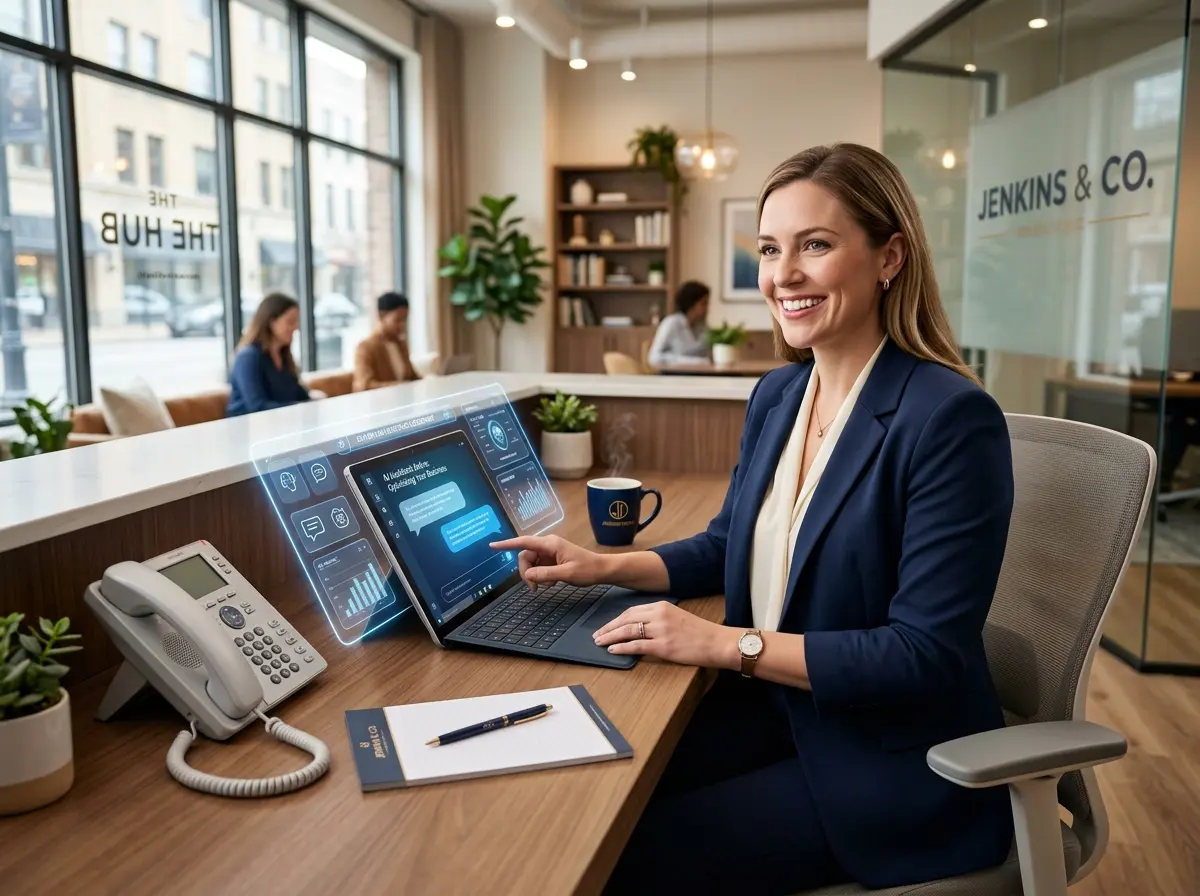
This is where AI tools — specifically ones designed for client communication and front-desk operations — can carry a lot of the weight. Stella, an AI robot employee and phone receptionist, is one option worth knowing about. For studios with a physical location, Stella operates as a friendly, human-sized kiosk that greets walk-ins, answers questions, and promotes services without needing a break. But perhaps more relevant to no-show recovery, she also handles phone calls around the clock — so when a client finally calls back three hours after they missed their appointment (you know the one), someone is always there to pick up, re-engage the conversation, and help get them rebooked.
Stella's built-in CRM and intake forms also make it easier to track no-show history, tag clients based on behavior, and personalize follow-up outreach — so your recovery sequence isn't blasting the same message to a loyal five-year client and someone who booked once six months ago and disappeared. At $99/month with no upfront hardware costs, it's a genuinely practical option for studios that want better systems without hiring more staff.
Building Your No-Show Recovery Sequence Step by Step
Now for the practical part. A strong no-show recovery sequence has three distinct phases: the immediate response, the short-term follow-up, and the long-term re-engagement. Each phase has a specific job to do.
Phase One: The Immediate Response (Within 1–2 Hours)
The moment a no-show is confirmed — meaning the appointment window has passed with no contact — send a brief, warm, non-accusatory message. The tone here is crucial. You are not scolding. You are checking in.
A simple text or email that says something like: "Hi [Name], we noticed you weren't able to make your appointment today — no worries at all! We'd love to get you rescheduled at a time that works better. Reply here or give us a call and we'll take care of it." This message accomplishes several things at once. It removes shame from the equation, it opens a door, and it signals that your studio is easy to work with. That last part matters more than most people think — clients return to businesses that made them feel comfortable, even after a stumble.
Phase Two: The 48-Hour Follow-Up
If there's been no response to your immediate message, send a second touchpoint roughly 48 hours later. This one can be slightly more value-driven. Mention something specific — a new service you're offering, a seasonal promotion, or even a simple "we saved a spot for you this week." The goal is to give them a reason to act, not just a reminder that they didn't.
This is also a good moment to make rebooking as easy as humanly possible. Include a direct link to your online booking page. Reduce every possible step between "reading this message" and "confirming an appointment." Every additional click is an opportunity for them to decide they'll do it later — and later never comes.
Phase Three: The 2-Week Re-Engagement
For clients who still haven't responded after the 48-hour follow-up, you're now in re-engagement territory. This is where you shift from "let's reschedule" to "let's remind you why you loved this in the first place." Consider a slightly longer message — or even a phone call — that acknowledges some time has passed and offers something tangible: a discounted add-on, a priority booking window, or a simple personal note from you as the studio owner.
Not every no-show client will come back, and that's okay. But data consistently shows that a well-timed, personalized re-engagement can recover 20–30% of lapsed clients who would otherwise never return. That's not a rounding error — for a studio doing 80 appointments a week, that's a meaningful number of people walking back through your door.
Quick Reminder About Stella
Stella is an AI robot employee and phone receptionist built to help businesses like yours run smoother every single day — not just during a recovery sequence. She greets clients in your studio, answers calls 24/7, manages contacts through her built-in CRM, and makes sure no opportunity to connect with a client ever slips through the cracks. She's always on, always professional, and never calls in sick on a Monday.
Turn No-Shows Into a System — Not a Source of Stress
No-shows will always be part of running a service-based business. The difference between studios that absorb the loss and studios that recover it comes down to one thing: having a system in place before the problem occurs, not scrambling to respond after it does.
Here are your actionable next steps:
- Audit your current reminder process. Are you sending reminders at all? If so, when and how many? A reminder 24 hours out is good. A reminder 48 hours out plus 2 hours out is better.
- Write your three recovery messages today. Draft the immediate response, the 48-hour follow-up, and the 2-week re-engagement. Save them as templates so the sequence can go out consistently every time.
- Make rebooking frictionless. Audit the path from "I want to rebook" to "appointment confirmed" and remove every unnecessary step.
- Tag and track no-show clients in your CRM so you can measure recovery rates over time and refine your sequence based on what actually works.
- Consider automating the sequence so it runs without relying on you or your staff to remember.
Your massage studio is built on relationships, and relationships can survive a missed appointment — as long as someone reaches back out. Build the sequence, send the messages, and watch a surprising number of those ghost stories turn into loyal regulars. They were probably just busy. And now you're ready for them when they're not.