So You Want to Stand Out as a Local Service Business?
Here's a fun little secret that most of your competitors haven't figured out yet: podcasts aren't just for true crime fanatics and self-proclaimed thought leaders. They're quietly becoming one of the most powerful — and underutilized — marketing channels for local service businesses. Yes, even yours.
Think about it. You're a plumber, a salon owner, a personal trainer, or maybe a boutique medical spa operator. Your potential customers are driving to work, folding laundry, and walking their dogs — and they're listening to something. The question is: why isn't it you?
Podcast listenership in the U.S. has grown to over 135 million people per month, and local, niche content is increasingly winning audience loyalty over generic national shows. This isn't about becoming the next Joe Rogan (thank goodness). This is about becoming the most trusted voice in your local market — and then converting that trust into booked appointments, loyal customers, and actual revenue.
This guide breaks down exactly how to use podcast marketing as a local service business owner to stand out, build authority, and grow. Let's get into it.
Why Podcasts Work Brilliantly for Local Service Businesses
You're Already an Expert — It's Time to Act Like One
One of the biggest mistakes local business owners make is assuming that marketing means shouting promotions into the void on Facebook. (We've all seen those posts. "Like and share for a chance to win a free oil change!" Riveting.) Podcasting takes a completely different approach — it positions you as the go-to expert in your field, which is infinitely more persuasive than any discount coupon could ever be.
A dentist who hosts a podcast called "The Healthy Smile Podcast" discussing oral health tips, debunking myths, and interviewing local nutrition experts isn't just a dentist anymore. They're the dentist. The one people recommend to friends. The one whose waiting room is full. Expertise, consistently demonstrated over time, builds trust at scale — and podcasts are uniquely built for that.
The Loyalty Factor: Podcasts Create Deeply Engaged Audiences
Unlike a social media post that disappears into the algorithm graveyard within 48 hours, podcast episodes live on indefinitely. People binge them. They subscribe. They tell their friends. According to Edison Research, podcast listeners are 45% more likely to have a college education and 45% more likely to have a household income over $75,000 — which, for most service businesses, is exactly the demographic you want walking through your door.
More importantly, listeners develop a genuine sense of connection with podcast hosts. When someone has spent six hours listening to your voice explain, advise, and occasionally crack a joke, they feel like they already know you. That's not a small thing — that's the warm lead pipeline most businesses spend thousands of dollars in ads trying to manufacture.
Local SEO and Discoverability Benefits
Here's the practical angle that often gets overlooked: podcasts are findable content. When you publish episodes with locally relevant keywords in your titles and descriptions — think "best HVAC tips for Atlanta homeowners" or "Chicago fitness trends with [Your Gym Name]" — you're creating additional touchpoints for local search discovery. Many podcast hosts repurpose episodes into blog posts, YouTube videos, or social clips, multiplying the SEO value of a single piece of content. That's working smarter, not harder. (And yes, you absolutely have permission to feel smug about it.)
Getting Your Business Ready Before You Hit Record
Make Sure Your Customer Experience Can Handle the Attention
Here's the unsexy truth: if your podcast starts working and driving new customers your way, you need to be ready to handle it. Nothing kills momentum faster than a potential customer calling your business, getting no answer, or being put on hold by a frazzled front desk employee who's simultaneously managing three other things. First impressions matter — even the ones that happen over the phone.
This is where Stella, the AI robot employee and phone receptionist, becomes genuinely useful. If your podcast creates inbound interest — and it will — Stella answers every call, 24/7, with the same professional knowledge she uses as an in-store kiosk. She can answer questions about your services, collect customer information through conversational intake forms, and even manage contact details through her built-in CRM. So while you're off recording your next episode, Stella's handling the front lines. The leads your podcast generates don't disappear into voicemail purgatory. They get answered, captured, and managed — automatically.
Building a Podcast Strategy That Actually Drives Local Business
Choose a Format and Topic That Serves Your Audience
The best podcast for your business isn't necessarily about your business — it's about your customer's world. A residential cleaning company might host a podcast about home organization and lifestyle. A local auto shop might run a show about car maintenance for everyday drivers who don't know a timing belt from a paper belt. The goal is to be useful and interesting to the exact people who would benefit from hiring you.
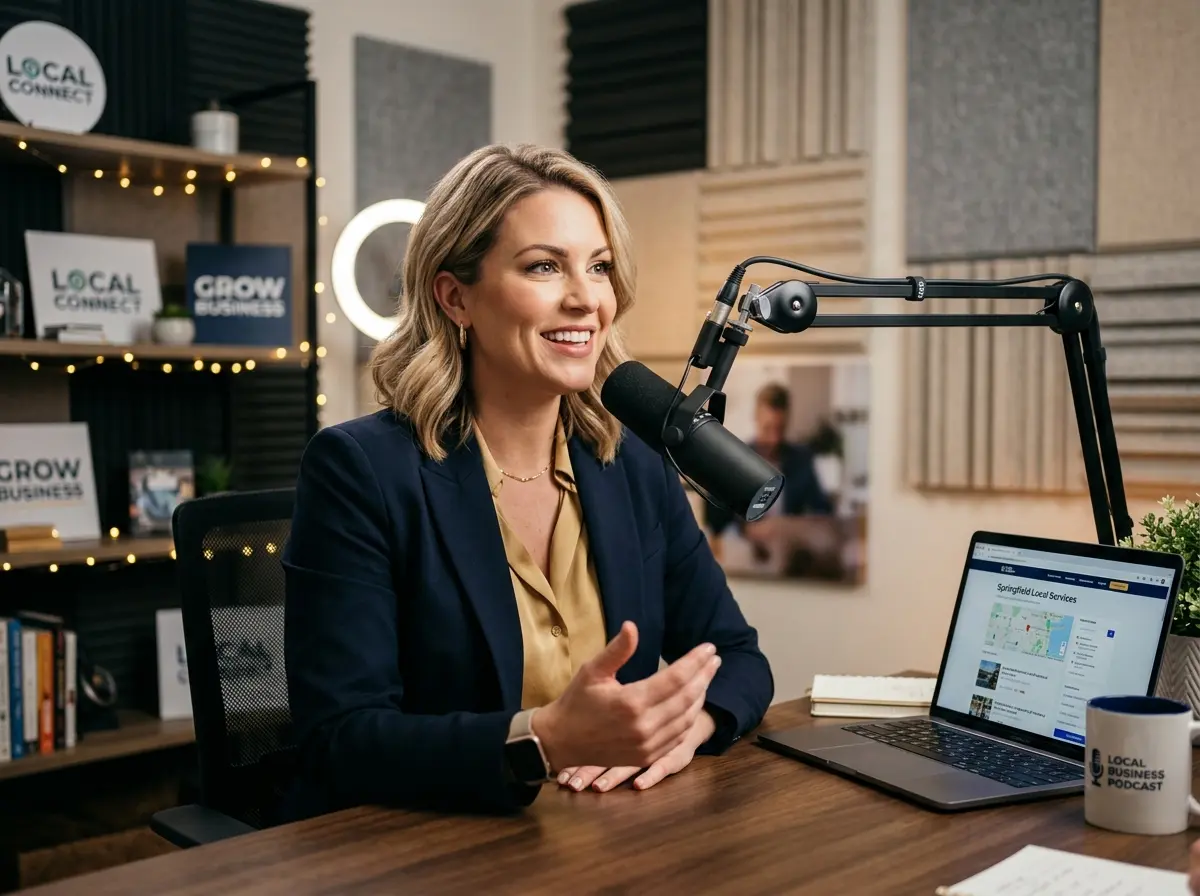
For format, keep it manageable. A 20-30 minute weekly or biweekly episode is more than enough to build an audience without burning you out. You don't need a professional studio — a decent USB microphone, a quiet room, and a free recording tool like Audacity or GarageBand will get you started. Consistency beats production value every single time.
Use Guest Interviews to Expand Your Reach Strategically
Inviting local guests — complementary business owners, community figures, or industry specialists — is one of the fastest ways to grow your audience and deepen your local network simultaneously. A wedding photographer interviewing a local florist, a caterer, and a venue coordinator isn't just producing content; they're building a referral ecosystem. Every guest brings their own audience, and those listeners now know your name.
Be strategic about who you invite. Look for guests whose audiences overlap with your ideal customer. A physical therapist hosting a sports injury prevention podcast might invite local coaches, fitness trainers, and orthopedic specialists — all of whom share an audience of active, health-conscious community members who are exactly the kind of people who need physical therapy.
Convert Listeners into Customers with Clear, Consistent Calls to Action
A podcast without a conversion strategy is a hobby, not a marketing channel. Every episode should include a clear, natural call to action — but vary it so it doesn't feel like an infomercial. Some episodes might direct listeners to book a consultation. Others might promote a seasonal special, a free download, or a local event. The key is making the next step easy and obvious.
Consider creating a dedicated landing page for your podcast listeners — something like yourbusiness.com/podcast — where they can book appointments, learn more about your services, or sign up for your email list. This also helps you measure the podcast's actual business impact, which is something your competitors definitely aren't tracking.
Quick Reminder About Stella
Stella is an AI robot employee and phone receptionist that works inside your physical location as a customer-facing kiosk and answers your business phone calls around the clock — no breaks, no bad days, no turnover. She's available for just $99/month with no upfront hardware costs, making her one of the most practical tools a growing local service business can have in their corner. While your podcast builds your reputation, Stella makes sure no opportunity slips through the cracks.
Your Next Steps: From Idea to On the Air
The barrier to starting a podcast has never been lower. The barrier to starting a good podcast that actually serves your business goals is slightly higher — but entirely manageable. Here's how to move from "this sounds interesting" to "episode one is live" without overthinking it.
First, define your audience and topic in one sentence: "My podcast is for [specific local audience] who want to [specific outcome]." If you can't answer that cleanly, keep thinking. Second, commit to a realistic publishing schedule — biweekly is plenty to start. Third, record three episodes before you launch so you have a buffer and listeners can binge right away. Fourth, submit your podcast to all major directories: Apple Podcasts, Spotify, Amazon Music, and Google Podcasts as a baseline.
From there, repurpose every episode. Turn key points into social media posts. Pull quotes for your email newsletter. Embed episodes in relevant blog posts on your website. One podcast episode can generate a week's worth of content across channels — which means your marketing gets dramatically more efficient over time.
The local service businesses that win in the next five years won't just be the ones with the best services. They'll be the ones that built real relationships with their communities, established genuine authority, and made it easy for customers to find them, trust them, and choose them. A podcast, done consistently and strategically, is one of the most powerful tools you have to make all three happen.
Now go make some noise — locally speaking, of course.