Introduction: The Return of the Returns (Pun Intended)
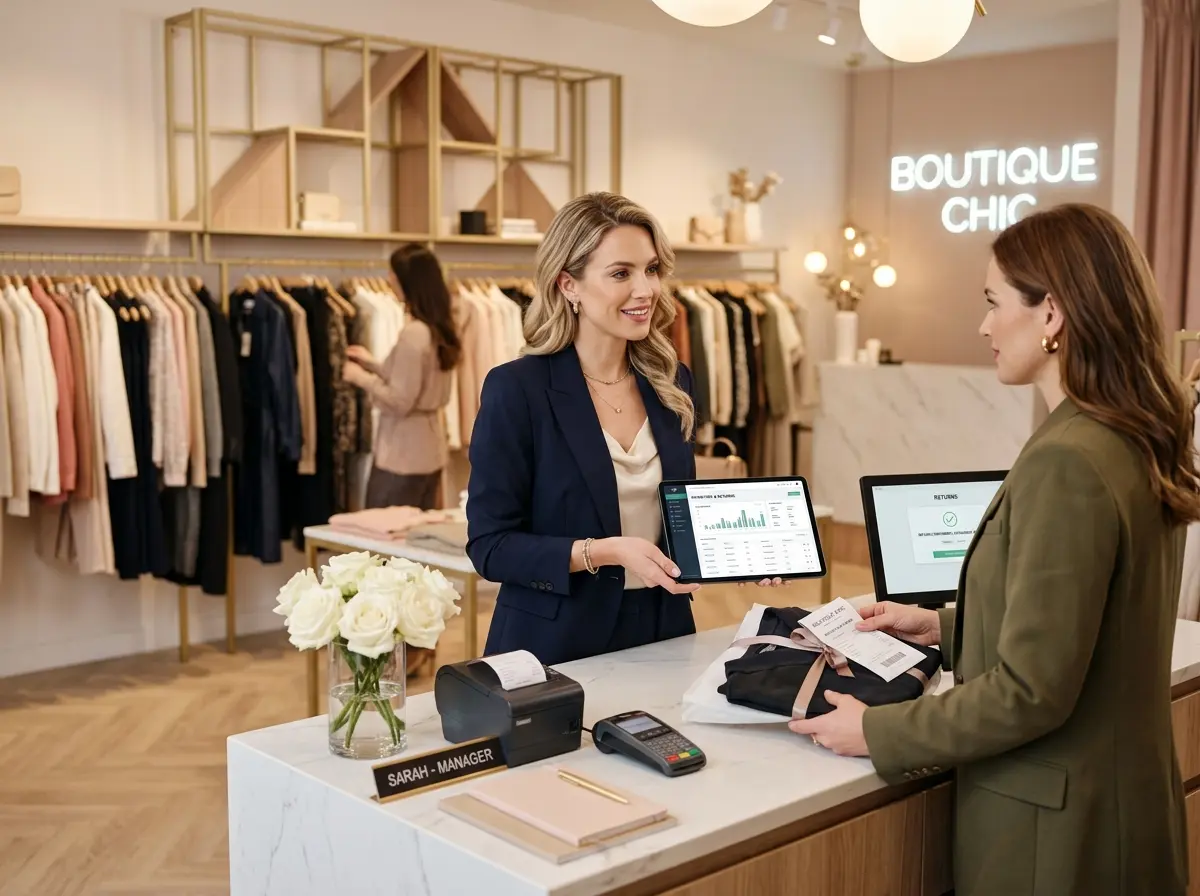
Picture this: A customer walks into your boutique, arms full of last week's impulse purchases, and announces they'd like to return everything. Meanwhile, your inventory system is doing its best impression of a confused shrug, your staff is juggling three other customers, and somewhere in the back, a spreadsheet is crying. Sound familiar? Welcome to the glamorous world of fashion retail returns management.
Returns and exchanges are the necessary evil of running a fashion boutique. According to the National Retail Federation, retail returns accounted for approximately $743 billion in merchandise in a single recent year — and fashion is one of the biggest culprits. Fit issues, color discrepancies, buyer's remorse, and the classic "I bought it but never actually planned to wear it" phenomenon make returns an unavoidable part of your business model. The question isn't whether you'll deal with them — it's whether your inventory system will handle them gracefully or spectacularly fall apart.
The good news? A well-structured returns and exchanges process, backed by a solid inventory management system, can actually turn a frustrating situation into a customer loyalty opportunity. This guide will walk you through exactly how to make that happen — without losing your mind or your margins.
Building a Returns-Ready Inventory System
Setting Up Return Status Categories That Actually Make Sense
One of the most common mistakes boutique owners make is treating all returned items as equal. They are not. A barely-worn blouse that came back because of a sizing issue is very different from a dress that came back smelling like someone's dinner party. Your inventory system needs to reflect that reality with clear, actionable return status categories.
Consider creating at minimum four distinct return conditions in your system: Resaleable (item is pristine and can go straight back to the floor), Needs Processing (requires steaming, retagging, or minor attention), Damaged/Discounted (can be sold at a markdown), and Write-Off (unsalvageable and needs to be removed from inventory entirely). When every returned item gets properly categorized at the point of return, your inventory counts stay accurate and your team knows exactly what to do next without a huddle meeting every time a customer walks out with a receipt.
Train your staff to assess and categorize returns on the spot. This takes maybe two extra minutes per transaction but saves hours of reconciliation headaches at the end of the month.
Tracking Exchanges Without Creating Inventory Chaos
Exchanges are trickier than returns from an inventory standpoint because they involve two simultaneous inventory movements — one item coming back in, another going out. If your system doesn't handle this as a single linked transaction, you end up with phantom stock, inaccurate reorder triggers, and the kind of confusion that makes your end-of-quarter reports look like modern art.
Make sure your point-of-sale or inventory platform can process exchanges as a single transaction rather than a return plus a new sale. Many boutique-friendly platforms like Shopify, Lightspeed, or Square for Retail offer this functionality, but it's often a setting or workflow that has to be deliberately enabled and consistently used. Document the process clearly for your team, post it somewhere visible, and audit it periodically. Consistency here is everything — one staff member "winging it" with a workaround can throw off your inventory data for weeks.
Integrating Online and In-Store Return Data
If you sell both online and in-store — and most boutiques do these days — your returns process just got more complicated. Customers increasingly expect to buy online and return in-store, which means your inventory system needs to communicate seamlessly between channels. A return processed in-store for an online order should update your e-commerce inventory automatically, not require a manual adjustment that someone will definitely forget to make on a busy Saturday afternoon.
Invest in a genuinely unified inventory system rather than two separate systems duct-taped together with optimism. When a returned item re-enters your sellable inventory, it should be immediately available across all your sales channels — not sitting in a limbo that only your back-office software knows about.
How Smart Tools (Like Stella) Can Support Your Boutique Operations
Letting Technology Handle the Repetitive Stuff So Your Team Doesn't Have To
Returns create a very predictable set of customer questions: What's your return window? Can I exchange for a different size? Do I need the original tags? Will I get store credit or a refund? Your staff answers these same questions dozens of times a week, which is time they could spend helping customers find outfits they'll actually keep. This is exactly the kind of repetitive, policy-based communication that Stella — the AI robot employee and phone receptionist — is built to handle.
For boutiques with a physical location, Stella stands right in your store as a friendly, human-sized AI kiosk. She can greet customers proactively, explain your return and exchange policy clearly, and free your team to focus on higher-value interactions. And because she also answers your phone calls 24/7, customers who call after hours to ask about your return policy before making a trip to the store will get an accurate, professional answer every single time — not voicemail.
Writing a Return Policy That Protects You and Delights Customers
The Elements Every Boutique Return Policy Needs
A vague return policy is an invitation for arguments. A clear one is your first line of defense. Your policy should explicitly state the return window (typically 14–30 days for boutiques), the condition requirements (tags attached, unworn, with receipt), which items are final sale (swimwear, intimates, and earrings are the usual suspects for hygiene reasons), and what the customer gets in return — full refund, store credit, or exchange only.
Post your policy everywhere: at the register, on your website, on receipts, and ideally at the fitting room. The goal is that no customer can reasonably claim they didn't know. This isn't about being adversarial — most customers are acting in good faith — but clarity protects everyone and dramatically reduces disputes. When your policy is unambiguous, your staff can enforce it confidently without awkward "let me check with my manager" moments.
Turning Returns Into Retention Opportunities
Here's the counterintuitive truth about returns: handled well, they can actually increase customer loyalty. Research from Harvard Business Review and various retail studies consistently shows that customers who have a positive return experience are more likely to make future purchases than customers who never returned anything at all. The return interaction is a trust-building moment disguised as a headache.
Train your staff to treat every return as a conversation, not a transaction. Ask what didn't work about the item — was it the fit, the color, the fabric? Use that information to suggest alternatives. Offer a styling perspective. If a customer is returning a dress because it didn't fit quite right, maybe there's another silhouette in your current collection that would work better. You're not being pushy; you're being helpful. And helpful sells. When possible, issue store credit with a small bonus amount — even an extra five dollars — to give the customer a reason to come back and spend it.
Using Return Data to Make Smarter Buying Decisions
Your return data is a goldmine of merchandising intelligence that most boutique owners completely ignore. If a particular blouse is coming back repeatedly with notes about inconsistent sizing, that's a signal about your supplier, not just an isolated bad luck streak. If a certain color of a popular style gets returned far more often than other colorways, your customers are telling you something about what they look like in the real world versus a product photo.
Build a habit of reviewing your return reasons monthly. Look for patterns by product, by vendor, by season, and by category. Over time, this data should directly inform your buying decisions — what to reorder, what to avoid, and which vendors are consistently delivering quality that matches what they showed you in the lookbook. Returns stop feeling like losses and start feeling like feedback when you actually use the information they contain.
Quick Reminder About Stella
Stella is an AI robot employee and phone receptionist designed for businesses like yours — available as an in-store kiosk presence and a 24/7 phone answering solution for just $99/month with no upfront hardware costs. She handles customer questions, promotes your offerings, collects customer information, and keeps your operation running professionally even when your team is slammed. She doesn't call in sick, doesn't forget your return policy, and never has a bad day on the floor.
Conclusion: Clean Inventory, Happy Customers, Fewer Headaches
Managing returns and exchanges in a fashion boutique will never be entirely painless — the nature of clothing retail makes that impossible. But the difference between a boutique that handles returns chaotically and one that handles them systematically is the difference between a business that constantly fights fires and one that runs with quiet confidence.
Here are your actionable next steps to get started:
- Audit your current inventory system to confirm it handles exchanges as single linked transactions and syncs across channels.
- Create or update your return status categories so every returned item gets properly triaged at the point of return.
- Review and clarify your written return policy and make sure it's visible everywhere customers interact with your brand.
- Train your team on treating returns as retention conversations, not just administrative tasks.
- Pull your return data from the last 90 days and look for patterns worth bringing to your next buying session.
Returns are never going away. But with the right systems, the right policy, and the right mindset, they become manageable — and occasionally, they even bring a customer closer to you than they were before they walked back through your door. That's not a bad outcome for something that starts with someone handing you a bag of merchandise they decided they didn't want.