So You Want to Train Clients Without Ever Leaving Your Living Room?
Good news: it's entirely possible. Better news: it doesn't require a miracle, a trust fund, or a suspiciously charismatic LinkedIn presence. What it does require is a little operational discipline and the right tools to handle the unsexy-but-critical parts of running a fitness business — like answering calls, collecting client information, and scheduling sessions without turning your phone into a full-time job.
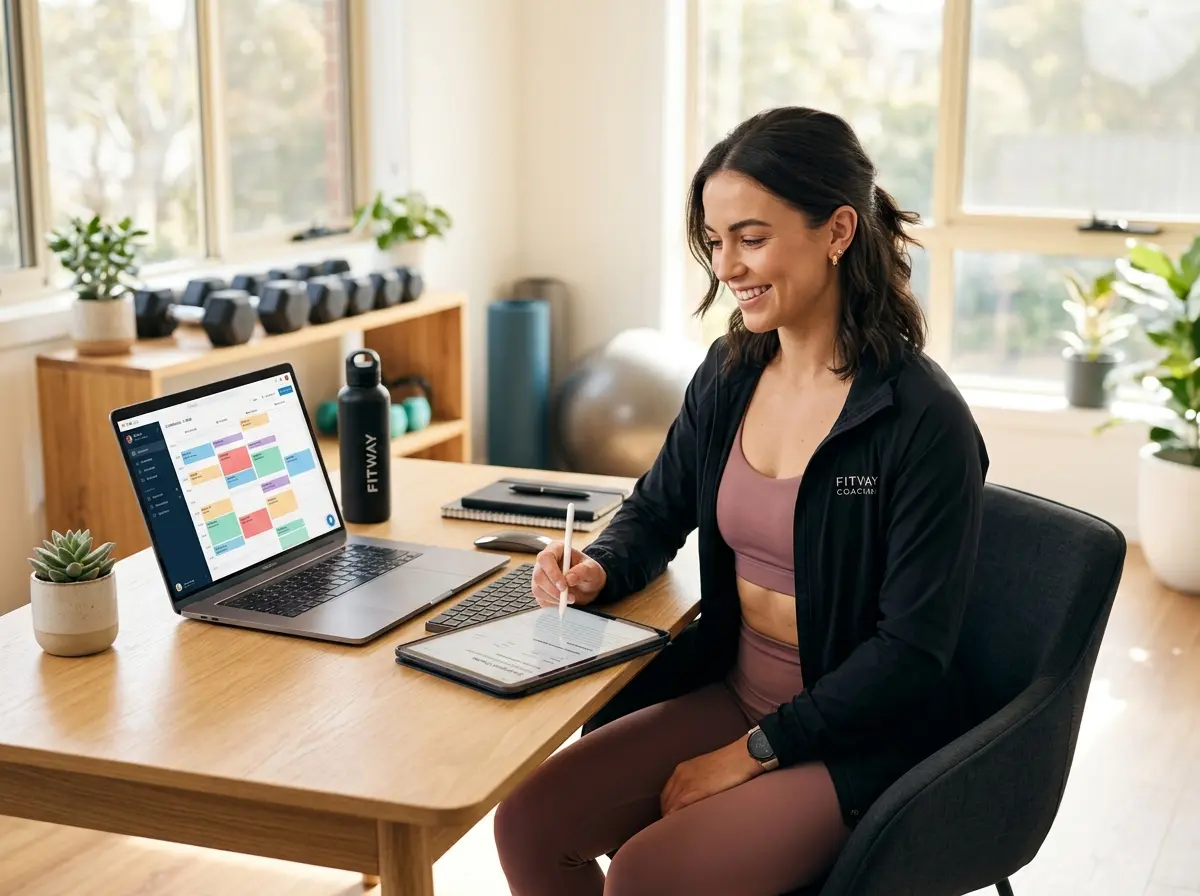
Meet Jordan. Jordan is a certified personal trainer who, two years ago, was juggling in-person clients at a local gym, missing calls during sessions, and spending evenings manually following up with leads who had long since moved on to the next shiny fitness app. Sound familiar? Today, Jordan runs a fully remote training business with clients across three time zones, a clean intake process, and — crucially — actual evenings off.
The secret wasn't hustle. It was automation. And in this post, we're going to walk through exactly how a personal trainer (or really any service-based solopreneur) can use automated scheduling and intake systems to build a remote client base that doesn't require you to be available 24 hours a day like some kind of wellness-obsessed on-call doctor.
Building the Foundation: Systems That Do the Heavy Lifting
Why Manual Processes Are Quietly Killing Your Growth
Here's a fun exercise: estimate how many hours per week you spend on administrative tasks. Scheduling calls, sending intake forms, following up on incomplete forms, rescheduling canceled sessions, answering the same five questions over and over again. If your answer is "more than I'd like," congratulations — you've identified the single biggest drag on your growth.
For Jordan, the turning point came after losing three strong leads in a single week — not because the service wasn't compelling, but because the response time was too slow. One prospect called during a session, got no answer, and signed up with a competitor by the time Jordan called back. The fitness industry is competitive and impulsive; people make decisions when motivation is high, and motivation has a notoriously short half-life.
Automated systems — scheduling software, intake forms, and AI-assisted communication — exist specifically to close that gap. They don't get tired, they don't take lunch breaks, and they certainly don't forget to follow up.
Choosing the Right Scheduling Infrastructure
For remote personal trainers, the scheduling stack doesn't need to be complicated. At minimum, you need a calendar tool that allows clients to self-book based on your real availability, sends automatic confirmations and reminders, and integrates with video conferencing. Tools like Calendly, Acuity Scheduling, or similar platforms handle this well and are relatively affordable.
The key configuration decisions that actually matter are these: First, build in buffer time between sessions — back-to-back virtual training is exhausting, and clients can tell when their trainer is already mentally in the next session. Second, set cancellation and rescheduling policies in the booking flow itself, not in a follow-up email that nobody reads. Third, require intake form completion as a prerequisite for booking confirmation. This single rule eliminates the most common scheduling bottleneck almost entirely.
Designing an Intake Process That Respects Everyone's Time
A well-designed intake form does more than collect data — it sets the tone for your professional relationship and filters out clients who aren't a great fit before either party wastes time on a discovery call. Jordan's intake form asks about training history, current goals, injury history, scheduling availability, and one deceptively useful open-ended question: "What has gotten in the way of your fitness goals in the past?" The answer to that question tells Jordan more about a prospective client's mindset than any fitness assessment ever could.
Keep intake forms conversational where possible. Long, clinical questionnaires feel like homework. Shorter, logically sequenced questions that feel like a natural conversation tend to get completed at significantly higher rates. And always — always — connect form submission to an automated follow-up sequence so that leads don't fall into a void after completing their intake.
How Tools Like Stella Can Support Your Client Pipeline
Never Miss the Call That Becomes Your Next Long-Term Client
Automated scheduling solves a lot of problems, but it doesn't solve the problem of the person who doesn't book online — the one who picks up the phone because they have questions, they're a little nervous, or they just prefer talking to someone. For a solopreneur trainer, that call often goes to voicemail during a session, and voicemail is where fitness motivation goes to die.
Stella is an AI robot employee and phone receptionist that answers calls 24/7, responds to questions about your services, pricing, and availability, and can collect client information through conversational intake forms right over the phone. For a remote personal trainer, this means a prospective client calling at 9 PM on a Tuesday — motivated, credit card metaphorically in hand — gets a real, helpful response instead of a voicemail prompt. Stella can even push AI-generated call summaries directly to you so you're fully caught up when you check in the next morning. She also comes with a built-in CRM, so client contact information and intake responses don't scatter across your inbox — they land in one organized place, tagged and ready for follow-up.
Scaling to a Remote Client Base Without Scaling Your Stress
Structuring Remote Sessions for Retention, Not Just Acquisition
Getting clients in the door — or onto the Zoom call, as it were — is only half the challenge. Remote training has a retention problem that in-person training doesn't: it's much easier to cancel a virtual session than it is to cancel on a trainer you're physically standing in front of. Successful remote trainers address this by building accountability structures directly into the client experience.
Jordan uses a combination of weekly check-in messages (automated, but personalized based on each client's goals), session recordings that clients can reference between appointments, and a shared progress tracker that both trainer and client can see in real time. The result is a relationship that feels high-touch even when it's entirely digital. Clients who feel seen and supported reschedule. Clients who feel like a line item churn.
Expanding Your Reach Through Niching and Positioning
One of the counterintuitive advantages of going remote is that geography stops being a limitation — but that advantage only materializes if you're visible to the right people beyond your local area. Jordan's growth accelerated significantly after narrowing the focus to a specific niche: strength training for women over 40 who have never worked with a trainer before. That specificity made the messaging sharper, the referrals more targeted, and the content strategy infinitely easier to execute.
Remote personal trainers who try to appeal to everyone typically appeal to no one. The trainers who build thriving remote businesses tend to be those who have made a deliberate decision about who they're for — and then built their intake process, their scheduling experience, and their entire client journey around that specific person's needs and hesitations.
Automating Follow-Up Without Sounding Like a Robot
The follow-up sequence is where most small fitness businesses leave serious money on the table. A lead completes an intake form, gets an automated confirmation, and then... silence, until someone remembers to check the inbox. Effective follow-up automation sends a personalized response within minutes of intake submission, provides a clear next step (usually a link to book a discovery call), and follows up once or twice more if no action is taken — without being aggressive or weird about it.
The tone matters enormously here. Automation that sounds like automation undermines the trust you're trying to build. Use the client's name, reference something from their intake responses, and write follow-up copy that sounds like a human who actually read what they submitted. Because your system will send it, but your voice should still be in it.
A Quick Reminder About Stella
Stella is an AI robot employee and phone receptionist built for businesses of all sizes — including solo operators like personal trainers who need a professional, always-available presence without hiring a full-time receptionist. She answers calls, handles intake, manages contacts, and keeps things running smoothly at just $99 per month with no upfront hardware costs. For any service-based business trying to grow without drowning in administrative overhead, she's worth a serious look.
Your Next Steps Start This Week, Not Someday
Jordan's remote client base didn't materialize because of luck or a viral Instagram post. It was built systematically, one operational improvement at a time, starting with the decision to stop letting manual processes limit growth. If you're a personal trainer — or any service-based business owner — looking to build or expand a remote client base, here's where to start:
- Audit your current intake process. How long does it take from first contact to booked session? Where do leads drop off? Fix the biggest leak first.
- Implement self-serve scheduling. If clients can't book without emailing you first, you are the bottleneck. Remove yourself from that step.
- Write a proper intake form — one that's conversational, appropriately thorough, and required before booking confirmation.
- Set up a follow-up sequence with at least three touchpoints after intake submission, written in your voice, not corporate robot-speak.
- Address your phone gap. Whether that's an AI receptionist or a clear voicemail-to-callback system, don't let good leads evaporate while you're in session.
The fitness industry is full of talented trainers who are too busy surviving their operations to actually grow their business. The ones who break through aren't necessarily the most credentialed or the most charismatic — they're the ones who decided to build systems that work while they sleep. Jordan did it. So can you. Preferably without the two years of trial and error, now that you have this roadmap.