January Is Either Your Best Month or Your Worst — Here's How One Gym Made It Their Best
Every January, gyms across the country experience one of two things: a glorious flood of motivated new members riding the wave of New Year's resolutions, or a quiet, awkward trickle of maybe-I'll-start-next-weeks. The difference between those two outcomes usually isn't luck — it's strategy. Specifically, it's whether or not you gave people a compelling reason to walk through your doors right now, rather than "sometime soon" (which, let's be honest, means never).
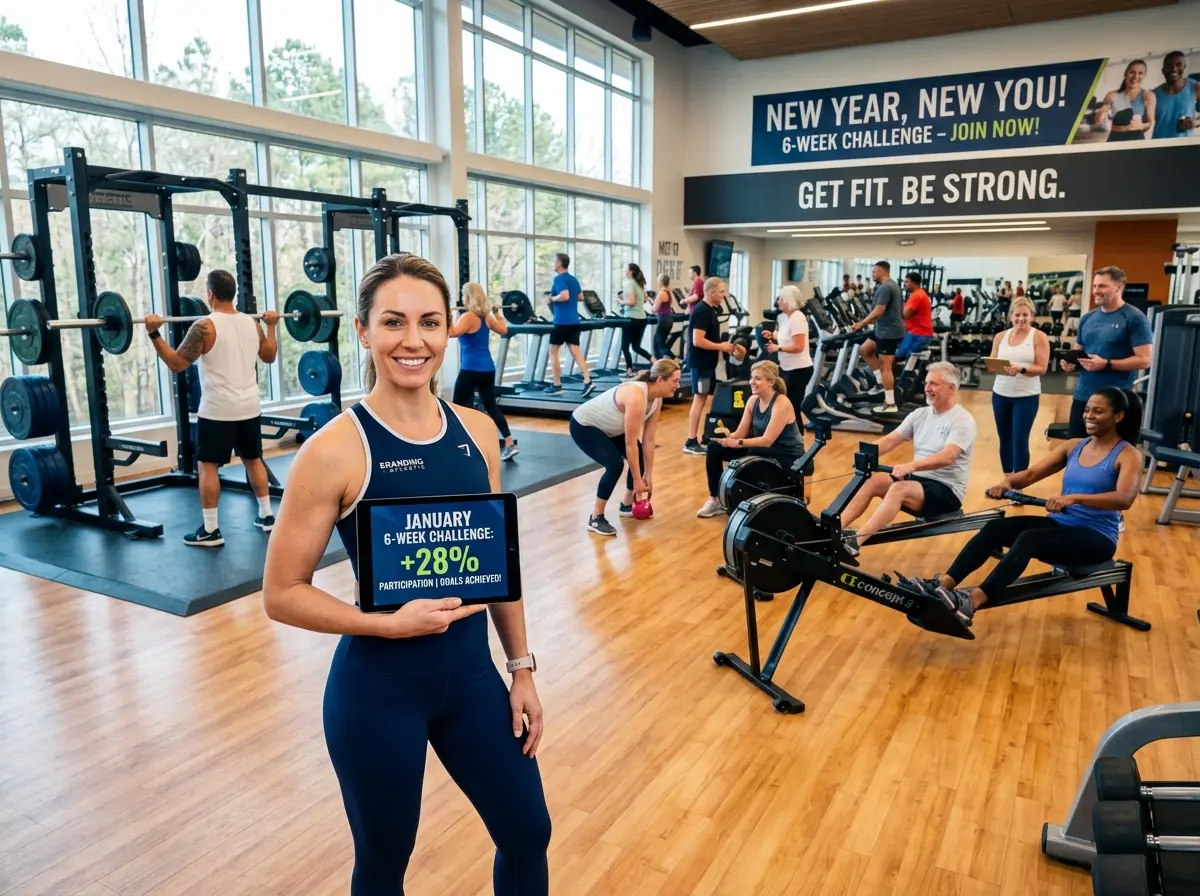
This is the story of how one local gym turned January — historically a month full of potential but plagued by poor conversion — into a record-breaking 80 new memberships in just six weeks. No magic. No massive ad budget. Just a well-executed Six-Week Challenge campaign built on urgency, community, and smart systems. If you run a gym, a fitness studio, or honestly any business where recurring memberships or repeat customers matter, keep reading. There's something here for you.
Building a Six-Week Challenge Campaign That Actually Converts
Why Six Weeks Works Better Than "Join Anytime"
The biggest mistake fitness businesses make in January is simply... being open. They unlock the doors, maybe hang a banner, and wait for the resolution crowd to show up. But "we're here if you need us" is not a marketing strategy. It's a vibe. And vibes don't pay the bills.
A Six-Week Challenge flips the script entirely. Instead of selling an open-ended membership (which feels like a big, scary, indefinite commitment to someone who failed their last three gym resolutions), you're selling a defined experience with a clear start and end date. The psychological lift here is significant. Research consistently shows that time-limited commitments lower the barrier to entry — people are far more willing to say yes to "six weeks" than to "forever." You're not asking them to change their life. You're asking them to try something for a month and a half.
The gym in our case study launched their challenge on January 6th, giving people just enough time after New Year's to recover from their holiday cheese consumption and feel genuinely ready. Registration closed January 13th, which created a real enrollment deadline — not a fake one, an actual one. That urgency drove 60% of their sign-ups in the final three days before the cutoff.
Structuring the Challenge for Maximum Stickiness
A challenge campaign lives or dies by its structure. This gym offered a tiered entry package: participants paid a one-time $49 challenge fee, which was fully credited toward a membership if they chose to continue after the six weeks. The challenge included three group classes per week, a private Facebook group for accountability, weekly check-ins with a coach, and a transformation prize for top results. The community element was deliberately engineered — because people don't quit when they feel like they belong somewhere.
By week three, retention was already looking strong. By the end of week six, 74 out of 80 participants converted to paid monthly memberships. That's a 92.5% conversion rate — the kind of number that makes even the most stoic spreadsheet smile.
Promoting the Challenge Without a Massive Marketing Budget
This gym didn't spend thousands on paid ads. Their primary channels were organic social media (especially Instagram Reels and Facebook community groups), a referral incentive for existing members who brought in a friend, and local flyer drops at complementary businesses — coffee shops, chiropractors, smoothie bars. They also ran a single email campaign to their existing inactive member list, which alone generated 11 re-activations.
The lesson? Distribution matters more than production value. A consistent, clear message across multiple channels — even scrappy, low-budget ones — will outperform a single polished ad that runs once and gets forgotten.
Streamlining Enrollment and Follow-Up With the Right Tools
How Technology Kept the Chaos Manageable
Running a Six-Week Challenge sounds fun until you're fielding 40 phone calls in one week from people asking the same five questions: What's included? When does it start? How do I sign up? Do you have parking? Can my husband join too? It's great problems to have — but without systems, great problems become exhausting problems very quickly.
This is exactly where Stella proves her worth for gym owners and fitness studios. Stella is an AI robot employee and phone receptionist that can greet walk-in prospects at your front kiosk and answer incoming phone calls around the clock — with the same accurate, friendly, promotion-aware answers every single time. During a high-volume campaign like a Six-Week Challenge, she can field questions about the program, collect prospect information through conversational intake forms, and pass qualified leads directly to your staff — all without your front desk person having a nervous breakdown by January 10th.
Stella's built-in CRM also means that every prospect who calls, walks in, or fills out a form gets logged with AI-generated contact profiles, tags, and notes — so your follow-up is organized, timely, and personal rather than a frantic scroll through sticky notes. For a campaign that depends on speed-to-contact and consistent communication, that kind of infrastructure isn't a luxury. It's leverage.
Turning Six-Week Members Into Long-Term Loyalists
The Conversion Window: What to Do in Week Five and Six
Here's where most challenge campaigns fumble at the finish line. The six weeks end, everyone claps, the winner gets their prize photo taken — and then nothing. No structured offer, no clear next step, no reason to stay. Participants drift away feeling good about what they accomplished but unanchored to anything going forward.
The gym in our case study built their conversion strategy directly into the challenge calendar. Starting in week five, coaches had individual five-minute check-ins with every participant to discuss their progress and goals for the next 90 days. These weren't sales conversations — they were genuine goal-setting discussions. But they naturally led to the question: "So what's your plan after the challenge?" That question, asked by someone you trust and have been sweating next to for five weeks, is worth more than any closing script.
In week six, participants received a personalized email with a membership offer: a discounted first-month rate, locked in only if they enrolled before the challenge end date. Again — real urgency, real deadline, real decision. No pressure, but no ambiguity either.
Building a Retention Culture Beyond the Campaign
The dirty secret of gym membership is that acquisition is the easy part. Retention is where the money actually lives. This gym followed up their challenge success by institutionalizing several of the elements that made the six weeks sticky in the first place. The private community group became a permanent members-only channel. Monthly mini-challenges were introduced to keep long-term members engaged. And the coaching check-ins that drove conversion were formalized into a quarterly goals review for all members.
The result? Twelve months after their January campaign, 61 of the original 80 challenge converts were still active members. That's a 76% annual retention rate, compared to the industry average of roughly 67%. Small structural decisions made during a six-week campaign had compounding effects that lasted all year.
Applying This Model Beyond Gyms
If you're reading this and thinking "that's great, but I don't own a gym," consider this: the Six-Week Challenge model is really just a structured trial with built-in community and a clear conversion moment. Spas can run it as a wellness series. Tutoring centers can frame it as an academic acceleration sprint. Even B2B service providers can offer a "six-week audit and optimization engagement" that transitions into a retainer. The psychological mechanics are the same. Defined commitment. Community or accountability. Urgency. Value-forward offer. Conversion moment. Repeat.
Quick Reminder About Stella
Stella is an AI robot employee and phone receptionist built for businesses like yours — whether you have a physical location where she greets customers as a friendly kiosk, or you simply need reliable 24/7 phone coverage without adding headcount. She handles inquiries, promotes your offers, collects lead information, and keeps your CRM organized, all for $99/month with no upfront hardware costs. Basically, she's the employee who's always on time, never calls in sick, and never forgets to mention the current promotion.
Ready to Run Your Own Challenge Campaign? Here's Where to Start
The Six-Week Challenge campaign that generated 80 new memberships for this gym didn't require a marketing degree or a bottomless budget. It required clarity, structure, and the discipline to actually execute. If you're a gym owner — or any business owner with a recurring revenue model — here's your actionable starting point:
- Define your challenge: What transformation or result will participants achieve? Make it specific, measurable, and genuinely exciting.
- Set real deadlines: Enrollment opens, enrollment closes, challenge ends. Put them on a calendar and stick to them.
- Price it as a trial, not a freebie: A small financial commitment improves follow-through. Credit it toward membership to remove the risk.
- Build in community: A private group, team check-ins, a leaderboard — anything that makes participants feel like they belong to something.
- Engineer your conversion moment: Don't wait until day 42 to ask about membership. Start the conversation in week five.
- Set up your intake and follow-up systems before you launch: Not after. Before. Trust us on this one.
January will come back around whether you're ready for it or not. The gyms — and the businesses — that win that month aren't the ones with the flashiest equipment or the biggest sign-up bonuses. They're the ones with a plan. Now you have one.