Your Waiting Room Is Speaking — But What Is It Saying?
Picture this: a patient walks into your physical therapy office, already nervous about their diagnosis, dreading the exercises they know are coming, and maybe a little sore just from the drive over. They sign in at the front desk, take a seat in a stiff chair under fluorescent lighting, and stare at a stack of magazines from 2019. What message does that send? "We haven't updated anything since before the pandemic, and also, please enjoy this article about Brad and Angelina."
The waiting room is the first real experience your patients have inside your practice — and in a field built around healing, comfort, and trust, first impressions matter enormously. Research consistently shows that patient anxiety spikes in clinical waiting environments, with one study published in Health Environments Research & Design Journal finding that physical design elements like lighting, seating arrangement, and noise levels directly influence patient stress levels and overall satisfaction scores. In other words, your waiting room isn't neutral. It's either helping or hurting.
The good news? A thoughtful redesign doesn't require a six-figure renovation budget. It requires intention. Let's walk through how a physical therapy office can transform its waiting area from stress-inducing to genuinely calming — and why that investment pays off in patient retention, reviews, and referrals.
Designing a Space That Calms Before the Session Even Starts
The Psychology of Color, Light, and Layout
Interior design isn't just aesthetics — it's applied psychology. In healthcare settings, the environment communicates safety or danger to the nervous system before a single word is spoken. Physical therapy offices that have leaned into evidence-based design principles report measurable improvements in patient-reported comfort and even compliance with treatment plans.
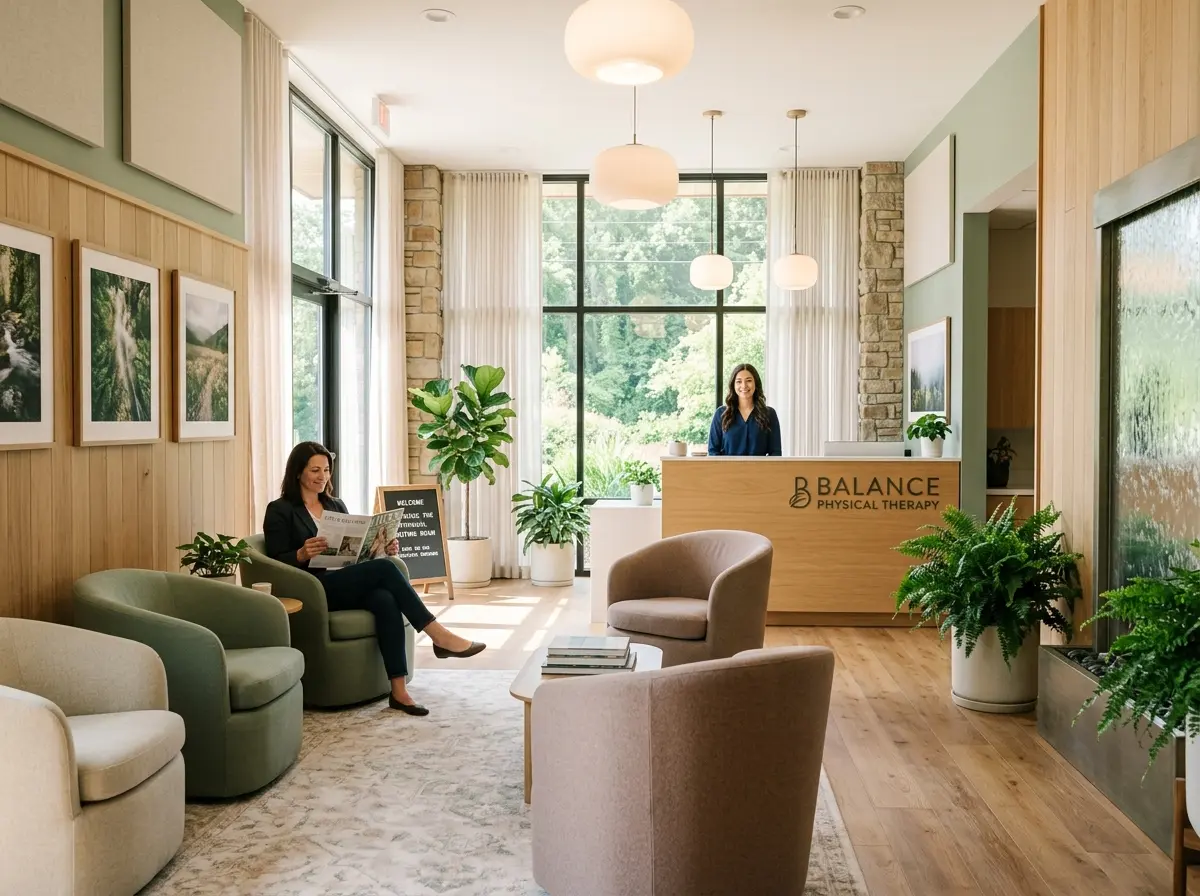
Start with color. Cool blues, soft greens, and warm neutrals are consistently linked to lower cortisol levels and reduced perceived pain. Avoid clinical white walls if you can — they read as "hospital," which for many patients carries anxiety-triggering associations. Even an accent wall in a muted sage or warm taupe can shift the emotional tone of a room dramatically.
Lighting deserves just as much attention. Harsh overhead fluorescents are the villain of many a waiting room story. Replace or supplement them with warmer-toned LED panels, floor lamps, or even well-placed windows that bring in natural light. Studies from the Lighting Research Center have shown that access to natural light improves mood and reduces anxiety in healthcare settings — and it costs you nothing if your space already has windows.
Finally, consider your layout. Rows of chairs facing each other — or worse, a wall — create social discomfort. Angled seating arrangements, small clusters of chairs, and varied seating heights give patients a sense of autonomy and personal space. Nobody wants to make awkward eye contact with a stranger for 20 minutes before learning how to do a proper hip hinge.
Sensory Details That Do the Heavy Lifting
Once you've addressed the big three — color, light, and layout — the smaller sensory details are where the magic happens. Sound is often overlooked entirely, and yet a quiet waiting room with a buzzing HVAC system and muffled treatment sounds from the back can feel unsettling. A curated soft playlist (think acoustic, ambient, or nature-inspired sounds at low volume) creates an auditory buffer that signals calm. There are paid services like Soundtrack Your Brand or even royalty-free curated playlists specifically designed for healthcare environments.
Aromatherapy is another underutilized tool. A subtle diffuser with lavender or eucalyptus — not overpowering, never plug-in synthetic — can trigger relaxation responses that even the best furniture arrangement can't. Just be mindful of patients with sensitivities or allergies, and keep it light.
Finally, consider temperature. Waiting rooms that run cold signal clinical sterility. Aim for a consistent 70–72°F with good airflow. Small touches like soft throw blankets available at a basket near seating can make patients feel genuinely cared for before they've even spoken to a therapist.
How Technology Can Support a Calmer Waiting Experience
Reducing the Front Desk Chaos That Patients Feel Too
Here's something practice owners don't always consider: patient anxiety in the waiting room isn't just about the physical environment. It's also about the energy they absorb from the front desk. When your receptionist is visibly overwhelmed — juggling phone calls, checking in new patients, answering questions, and handling insurance inquiries simultaneously — patients notice. That stress is contagious.
This is where Stella, an AI robot employee and phone receptionist, becomes genuinely relevant for practices like yours. As an in-office kiosk, Stella can greet patients as they arrive, answer common questions about services and scheduling, and handle intake information conversationally — freeing your human staff to focus on the warm, personal interactions that actually require a human touch. On the phone side, she answers calls 24/7, handles after-hours inquiries, and can collect patient information through conversational intake forms before a person ever walks through your door. Less front desk chaos means a calmer waiting room atmosphere for everyone.
The Content and Comfort Layer: What Patients Actually Experience While They Wait
Ditch the Magazine Graveyard — Create Meaningful Engagement
Let's be honest: the stack of dog-eared magazines on the waiting room table is doing no one any favors. They're a hygiene concern, an aesthetic eyesore, and approximately zero of your patients are reading them. The goal of waiting room content isn't to fill space — it's to reduce perceived wait time and keep patients feeling connected to their care.
Consider a wall-mounted screen that plays educational content relevant to physical therapy — short, visually engaging videos about common conditions, stretching techniques, or what to expect from their session. This serves double duty: it informs patients and distracts them from their anxiety. Services like Atmosphere TV or even a custom-curated YouTube playlist on a commercial screen can accomplish this at minimal cost.
For practices with longer average wait times, a digital check-in and intake process can help patients feel like they're already in motion — because they are. Completing intake forms on a tablet or kiosk gives patients a sense of control and productivity, which directly counteracts the helplessness that often underlies clinical anxiety.
Personal Touches That Cost Almost Nothing
Some of the most effective anxiety-reducing elements in a waiting room are deeply human and essentially free. A small, well-maintained plant arrangement adds life and warmth to any space — and research from the University of Exeter found that the presence of plants in indoor environments reduces stress and increases feelings of comfort. A handwritten "We're glad you're here" sign near the entrance costs nothing and communicates volumes.
Train your front desk staff — and this is critical — to acknowledge every patient within 30 seconds of arrival, even if they're busy. A simple "We see you, we'll be right with you" prevents the sinking feeling of invisibility that escalates anxiety faster than almost anything else. It's not about having a bigger waiting room. It's about patients feeling seen.
You might also consider offering a brief "what to expect today" card for new patients — a small printed or digital card that outlines the session flow. Uncertainty is a primary driver of anxiety, and removing it, even partially, has a measurable calming effect. Practices that implement patient education touchpoints in the waiting room consistently report higher satisfaction scores and lower no-show rates.
Quick Reminder About Stella
Stella is an AI robot employee and phone receptionist that works inside your practice as a friendly kiosk and answers your phones 24/7 — for just $99/month with no upfront hardware costs. She greets patients, answers questions, handles intake, and keeps things running smoothly so your human team can focus on delivering exceptional care. If your waiting room is getting a glow-up, your front desk experience should too.
Making It Happen Without Breaking the Budget
Redesigning your waiting room doesn't have to mean closing for a week and hiring an interior design firm (though, no judgment if you do). The most effective approach is a phased one — start with the high-impact, low-cost changes first, then invest in larger improvements as you see the returns in patient satisfaction and retention.
Here's a practical starting framework for physical therapy practices working with a modest budget:
- Week 1–2: Swap out harsh lighting for warmer LED alternatives, remove outdated magazines, and rearrange seating for better spacing and flow.
- Month 1: Add a curated playlist, introduce a small plant arrangement, and implement a digital or tablet-based intake process.
- Month 2–3: Install a wall-mounted screen with educational content, refresh wall colors or add an accent wall, and evaluate your front desk workflow for friction points.
- Ongoing: Gather patient feedback through post-visit surveys and adjust based on what they actually say — not just what you think looks nice.
The ROI on these investments is real. Patient experience scores are directly tied to online reviews, referral rates, and insurance reimbursement metrics in value-based care models. A waiting room that reduces anxiety isn't a luxury — it's a clinical and business asset.
So take a good, honest look at your waiting room today. Sit in one of your own chairs. Look at what your patients look at. Listen to what they hear. And then ask yourself: is this space doing everything it can to start the healing before the session even begins? If the answer is anything less than a confident yes — you know what to do.