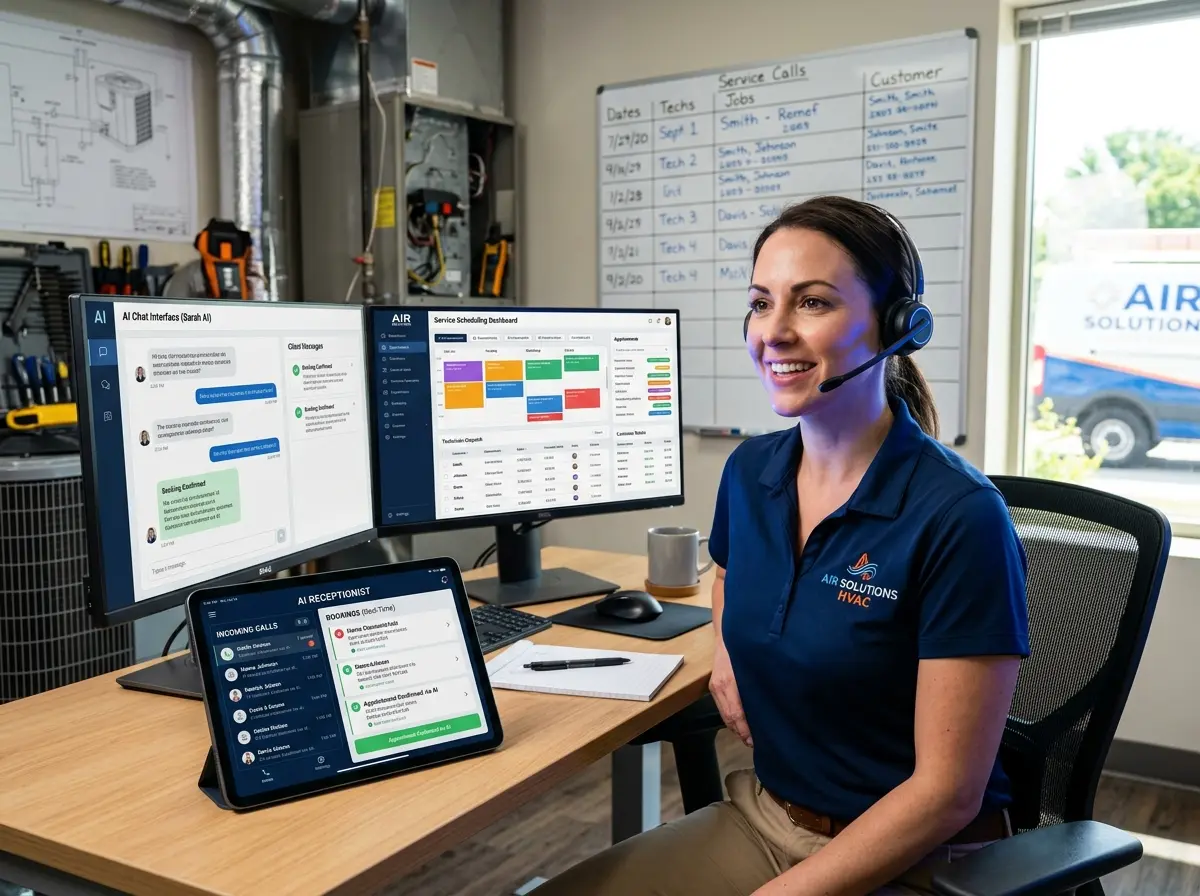
When the Heat Is On, Can Your Phones Keep Up?
Every HVAC company owner knows the feeling. The temperature outside hits 95 degrees, your phone starts ringing off the hook, your technicians are already triple-booked, and somewhere in the chaos, a brand-new customer calls, waits on hold for four minutes, and then hangs up — and calls your competitor instead. Congratulations, you just lost a $3,000 job to someone who simply picked up the phone.
Busy season in the HVAC industry is both a blessing and a curse. The demand is there. The revenue potential is enormous. But the operational pressure — especially on your front-line communication — can make or break how much of that potential you actually capture. The truth is, most HVAC companies aren't losing business because of bad technicians or poor service. They're losing it because nobody answered the phone.
The good news? AI is changing that. And the HVAC companies smart enough to embrace it early are quietly building dominant market positions while everyone else is scrambling to call customers back. Let's talk about how.
The HVAC Busy Season Communication Problem (It's Worse Than You Think)
The Missed Call Catastrophe
Here's a stat that should keep you up at night — though you're probably already up because your on-call phone is ringing: nearly 80% of callers who reach voicemail will not leave a message, and a significant portion of those will call the next company on their list within minutes. During peak cooling and heating seasons, HVAC companies can see call volume spike by 300% or more over their typical baseline. That's not a customer service challenge — that's an operational emergency.
The traditional solution has always been to hire a seasonal receptionist or use an answering service. Seasonal hires take weeks to train, cost anywhere from $15 to $22 per hour, and still clock out at 5:00 PM — right when a homeowner gets home, discovers their AC isn't working, and frantically starts Googling for help. Answering services are better, but they're expensive, impersonal, and often know nothing specific about your business, your service areas, your pricing, or your current promotions.
The After-Hours Revenue Black Hole
Let's be blunt: if your phones go unattended after business hours during July, you are leaving money on the table every single night. Emergency HVAC calls are some of the highest-margin jobs in the business. A customer with a broken AC at 9 PM on a Friday is not price-shopping — they're desperate, and they'll pay for responsiveness. But only if someone actually responds.
The HVAC companies dominating their local markets right now aren't necessarily the ones with the best technicians (though that helps). They're the ones who have solved the availability problem. They are reachable, responsive, and professional at any hour — and increasingly, they're accomplishing that with AI.
The Intake Bottleneck Nobody Talks About
Even when calls do get answered, there's a second problem lurking: collecting the right information efficiently. What type of system does the customer have? How old is the unit? What's the issue — no cooling, strange noises, water leaking? What's the service address? What's their availability for a technician visit? Getting all of this while also managing a packed schedule is exhausting for staff and often results in incomplete job tickets, callbacks, and wasted dispatch time.
A streamlined intake process isn't just good customer service — it's a direct efficiency gain for your field team. And it's one of the things AI handles exceptionally well.
How AI Receptionists Are Filling the Gap
Always On, Always Professional
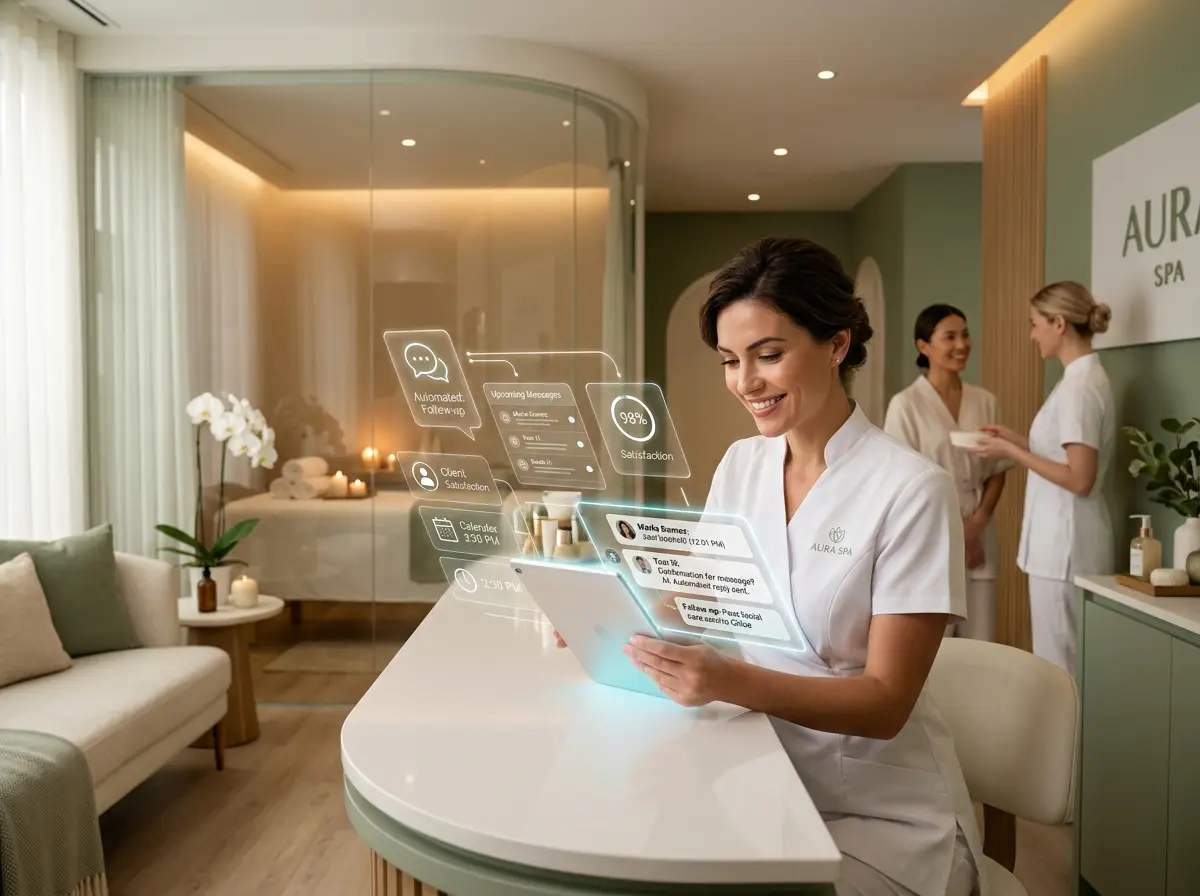
This is where tools like Stella — an AI robot employee and phone receptionist — are genuinely changing the game for HVAC operators. Stella answers calls 24/7 with the same knowledge and professionalism your best human receptionist would bring, without the overtime costs, sick days, or "I'll call them back tomorrow" habits. She knows your services, your service areas, your current promotions, and your scheduling policies — and she communicates all of it naturally, in a real conversation.
For HVAC companies that also have a physical showroom or office, Stella operates as a human-sized kiosk that proactively greets walk-in customers, answers questions about equipment, and promotes current deals — so your staff can stay focused on technical work rather than playing receptionist. Whether a customer walks in or calls in at midnight, they get a consistent, professional experience.
She can also collect customer intake information conversationally during the call — system type, issue description, address, preferred appointment windows — and store it directly in her built-in CRM with AI-generated contact profiles, custom fields, and tags. Your dispatcher gets a clean, organized lead, not a sticky note with a first name and a vague complaint about "the thing making a clicking noise."
Strategies HVAC Companies Are Using to Dominate Busy Season
Locking In Maintenance Agreements Before the Rush
The HVAC companies that truly dominate busy season don't just react to it — they prepare for it months in advance by building a base of maintenance agreement customers. These recurring service contracts generate predictable revenue, fill the slow season calendar, and give you first-call rights when those customers' systems inevitably need repair during peak season.
The key is promoting these agreements aggressively in the shoulder months — February and March for cooling season, August and September for heating season. Use every customer touchpoint — phone calls, follow-up communications, and in-person visits — to highlight the benefits. Customers who understand that a spring tune-up prevents a $4,000 emergency replacement in August are usually very receptive. Make sure your team, and your AI receptionist, can speak intelligently to the value of these agreements on every call.
Speed-to-Lead as a Competitive Weapon
In home services, the first company to respond usually gets the job. Studies in the home services industry consistently show that responding to a lead within the first five minutes makes you dramatically more likely to win the business compared to responding even an hour later. During busy season, when a homeowner submits a contact form or calls for a quote, they are often contacting two or three companies simultaneously. The race is real.
AI receptionists eliminate the response delay entirely. There is no queue, no hold music, no callback promise. A customer calls, gets a real conversation immediately, and can be walked through initial intake, scheduling options, or at minimum a professional, informative interaction that builds confidence in your company. That immediate responsiveness is increasingly the difference between winning and losing residential HVAC customers.
Upselling and Cross-Selling During High-Intent Calls
A customer calling because their AC stopped working is in a highly motivated state. They need help, they're ready to spend money, and they're on the phone with you right now. This is prime real estate for smart upselling — and most HVAC companies completely waste it because their overwhelmed receptionist is just trying to get the call logged and move on to the next one.
An AI receptionist, by contrast, can consistently and naturally mention relevant add-ons: indoor air quality products, smart thermostat upgrades, filter replacement programs, or priority service memberships. Done right, this doesn't feel pushy — it feels helpful. And because AI is consistent, every caller gets the same thoughtful experience, not just the ones who happen to call when your best receptionist is having a good day.
Quick Reminder About Stella
Stella is an AI robot employee and phone receptionist built for businesses of all sizes — including HVAC operators who need reliable, professional communication without the overhead of additional full-time staff. She answers calls around the clock, greets walk-in customers from her in-store kiosk, handles intake and CRM, and promotes your services consistently — all for $99 per month with no upfront hardware costs and no lengthy setup process. She's ready to work before your next busy season hits.
Don't Let Another Busy Season Slip Through Your Fingers
The HVAC industry is intensely local and intensely competitive. Customers in distress make fast decisions, and the companies that are available, professional, and fast will consistently outperform the ones with better trucks and fancier uniforms. Communication infrastructure is no longer a back-office concern — it's a frontline competitive advantage.
Here's what you can do right now to prepare:
- Audit your missed call rate. Pull your call logs for last busy season and count how many calls went to voicemail or went unanswered. Put a dollar figure on it. It will be uncomfortable. Good.
- Standardize your intake process. Know exactly what information you need from every new customer call, and make sure whoever — or whatever — answers your phone can collect it consistently.
- Promote maintenance agreements now. Don't wait for the rush. Build your recurring revenue base in the shoulder months so you enter peak season with a full book and loyal customers.
- Solve the after-hours problem. Whether it's an AI receptionist, a tiered answering solution, or a dedicated on-call process, stop leaving your after-hours calls to chance.
- Evaluate AI tools seriously. This isn't a novelty anymore. HVAC companies across the country are using AI receptionists to capture more leads, improve customer experience, and reduce staff burden — at a fraction of the cost of a part-time hire.
Busy season is coming. The only question is whether your phones are ready for it — or whether you're going to spend another July apologizing to customers for the callback delay while your competitor answers on the first ring.