Why Your Massage Studio Is Leaving Money on the Table (And How to Fix It)
Let's be honest: running a massage studio is deeply rewarding, physically demanding, and financially... unpredictable. One week you're fully booked, the next you're staring at an empty appointment calendar wondering if Mercury is in retrograde again. Sound familiar? The feast-or-famine cycle is one of the most frustrating realities for massage business owners — but it doesn't have to be your reality.
Enter the corporate massage program: one of the most powerful, underutilized revenue streams available to independent massage studios. While you've been relying on walk-ins and the occasional Groupon surge, companies across your city are actively looking for ways to improve employee wellness, reduce burnout, and retain top talent. They have budgets for this. They have HR departments who need to spend those budgets. And right now, they may not know your studio exists.
A well-structured corporate massage program can transform your business from a reactive, appointment-by-appointment operation into a predictable, recurring revenue machine. This guide will show you exactly how to build one — from packaging your services to closing the deal — without losing your mind in the process.
Building the Foundation of Your Corporate Massage Program
Before you start cold-calling HR managers, you need a program that's actually worth selling. Corporate clients aren't looking for a random collection of massage options — they want a clean, professional package that fits into their wellness initiatives and, crucially, their budget approval process.
Designing Packages That Businesses Actually Want to Buy
Corporate decision-makers love simplicity and predictability. The worst thing you can do is hand a potential client a full spa menu and say "pick whatever you want." Instead, create two or three clearly defined corporate packages with fixed monthly pricing.
A practical structure might look like this: a Starter Package that includes four chair massage sessions per month for up to 20 employees, a Growth Package with eight sessions and priority scheduling, and a Premium Package that adds on-site event coverage and a dedicated account manager (that's you, with a slightly fancier title). Price each tier so that committing to a monthly contract offers a meaningful discount over à la carte bookings — typically 15–20% — which gives the corporate client a win and gives you the volume you need to make it worthwhile.
Chair massage, by the way, is your best friend in this space. It requires no oils, no clothing changes, and no elaborate setup — which means you can deliver it in a conference room without anyone having an awkward conversation with HR about liability.
Setting Your Pricing for Profitability (Not Just Excitement)
Here's where many studio owners make a costly mistake: they get so excited about landing a corporate account that they underprice the entire arrangement. Don't do that. Corporate clients have bigger budgets than individual customers, and pricing yourself too low actually raises red flags in a business setting — it signals that your service might not be premium.
A reasonable starting point is $80–$120 per hour for on-site chair massage, billed at the package level. Factor in your travel time, setup, and the fact that you may need to bring in a contracted therapist to cover larger sessions. According to the American Massage Therapy Association, corporate and workplace massage is one of the fastest-growing segments of the industry — so price accordingly. This is not the moment for imposter syndrome.
Creating a Professional Proposal Document
Corporate buyers are used to receiving polished proposals. Yours should include your studio's background and credentials, a clear description of each package tier, the specific wellness benefits backed by brief data points (reduced stress, improved focus, lower absenteeism), your scheduling and cancellation policy, and a simple contract with net-30 payment terms. Keep it to two or three pages. If it reads like a doctoral thesis, it's too long. If it looks like it was made in a freebie Canva template at midnight, hire a designer for an afternoon.
Streamlining Operations and Client Management
Keeping Corporate Clients Happy Without Drowning in Admin
Landing corporate accounts is one thing. Keeping them is another — and the businesses that churn out of corporate wellness programs usually do so because of poor communication, missed scheduling coordination, or a general feeling that the vendor isn't on top of things. You need systems that make you look like a well-oiled machine, even if behind the scenes it's occasionally held together with coffee and determination.
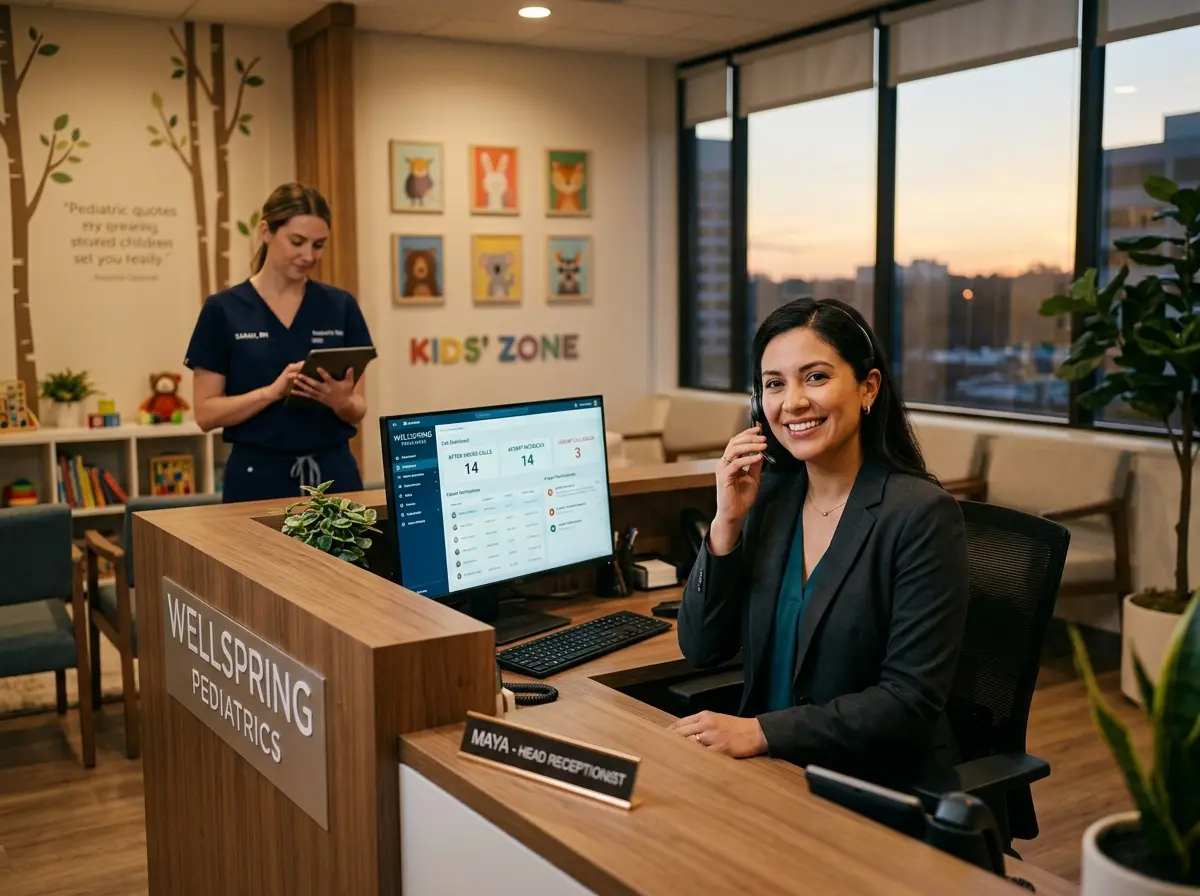
This is exactly where Stella, the AI robot employee and phone receptionist, becomes a genuinely useful part of your operation. Stella can handle incoming phone calls from corporate clients 24/7, collect intake information, and answer questions about your packages, availability, and policies — without you having to stop mid-session to grab your phone. Her built-in CRM lets you manage corporate client contacts with custom fields and tags, so you can track things like company size, contract renewal dates, and session history. If a new HR coordinator calls to ask about adding employees to an existing package, Stella can gather their information, take a detailed voicemail with an AI-generated summary, and push a notification to you — all while you're actually doing the work you love.
Marketing Your Corporate Program to the Right Businesses
You could have the most beautifully designed corporate massage package in your city, and it means absolutely nothing if the right people never hear about it. Marketing a B2B service feels intimidating if you've only ever marketed to individual consumers, but it's more straightforward than it looks once you know where to focus your energy.
Identifying and Approaching Your Ideal Corporate Clients
Not every business is a good fit. Your ideal corporate client is a company with 20–200 employees, some kind of wellness or benefits culture already in place, and a physical office location within a reasonable distance from your studio. Think tech companies, law firms, marketing agencies, financial services offices, and mid-sized healthcare organizations. These groups tend to have wellness budgets, burnt-out employees, and HR managers who are actively measured on employee satisfaction scores.
Start local. LinkedIn is your best prospecting tool here — search for HR managers, People Operations leads, and Office Managers at companies in your area. Reach out with a brief, friendly message that leads with the benefit to their team, not a pitch about your services. Something like: "Hi [Name], I work with companies in [City] to bring on-site massage directly to their offices — most clients see a noticeable improvement in team morale within the first month. Happy to share more if it's a fit for your team." That's it. Short, human, and value-forward.
Using Referrals and Partnerships to Grow Faster
Your existing individual clients are a goldmine of corporate connections that most studio owners completely ignore. That regular client who comes in every other Thursday? She might be a director at a 50-person company. That guy who always books the 90-minute deep tissue? He could be an office manager looking for his next employee perk idea. A simple, tasteful card or brief conversation at checkout — "Hey, we've actually started offering corporate on-site massage for teams. If that ever sounds interesting for your workplace, I'd love to put a package together." — is all it takes to plant the seed.
You can also partner with local business coaches, HR consultants, and employee benefits advisors who can refer your services in exchange for a referral fee. A 10% finder's fee on the first three months of a new corporate contract is a compelling incentive and costs you nothing until revenue is already coming in.
Leveraging Social Proof and Results
Once you have your first one or two corporate clients, document everything. Collect testimonials from HR contacts, track attendance rates at your sessions, and ask companies if they'd be willing to share brief feedback about the program's impact on their team. Even a single well-written testimonial on your website from a recognizable local business name can dramatically increase your conversion rate with new prospects. Businesses trust other businesses.
Quick Reminder About Stella
Stella is an AI robot employee and phone receptionist that works both as a human-sized in-store kiosk and as a 24/7 phone answering solution for businesses of all types. At just $99/month with no upfront hardware costs, she greets customers, promotes your services, manages contacts through a built-in CRM, and ensures no inquiry — corporate or otherwise — ever goes unanswered. For a massage studio building out a corporate program, that kind of consistent, professional presence can make a real difference in how potential clients perceive your business.
Your Next Steps: Turn This Into Action
Building a corporate massage program isn't a someday project — it's a this-quarter opportunity if you're willing to treat it with the same intentionality you bring to your actual craft. The recurring revenue model alone is worth the effort: instead of filling 30 individual appointment slots, you're filling three or four corporate contracts that generate the same income with significantly less scheduling chaos.
Here's a realistic action plan to get started:
- This week: Design your two or three corporate package tiers with clear pricing and create a one-page overview document.
- Next week: Identify 10–15 target companies in your area using LinkedIn and local business directories.
- Within 30 days: Send personalized outreach to HR managers and office managers at those companies, and mention the corporate program to at least five of your existing individual clients.
- Within 60 days: Aim to book at least one discovery call or on-site demo session — even a free introductory session at a promising company can convert into a long-term contract.
- Ongoing: Collect testimonials, track results, and refine your packages based on what corporate clients actually use and value.
Your massage studio has more earning potential than a fully booked Saturday suggests. Corporate clients offer stability, volume, and the kind of professional credibility that elevates your brand across every other part of your business. The companies are out there. The budgets exist. The only thing left is for you to show up and make the offer.
Now go forth, build something recurring, and please — charge what you're worth.