They Came, They Looked, They Left — Now What?
You spent real money driving traffic to your website. Maybe it was Google Ads, maybe it was a social media campaign, maybe it was the sheer force of your outstanding SEO game. People showed up, browsed your services, probably spent a solid 45 seconds on your booking page — and then vanished into the internet abyss like they were never there. No appointment. No inquiry. No nothing.
Congratulations. You've just experienced the joy of a 97% average website abandonment rate. Yes, that's a real statistic. Most industries see only 2–3% of first-time website visitors actually convert on that initial visit. The other 97% leave, get distracted by a cat video, and forget you exist.
But here's the good news: those people already know who you are. They were curious enough to show up. And with retargeting ads, you have a second (and third, and fourth) chance to bring them back and turn that curiosity into a confirmed booking. Let's talk about how to do that without wasting your budget or your sanity.
Understanding Retargeting Ads and How They Work
Before you can run effective retargeting campaigns, you need to understand the mechanics — not because you're going to code anything yourself, but because knowing what's happening under the hood helps you make smarter decisions about your ad strategy.
The Pixel: Your Silent Little Spy
Retargeting works through something called a tracking pixel — a tiny piece of code you embed on your website. When someone visits your site, the pixel drops a cookie in their browser (the digital kind, not the chocolate chip kind). That cookie allows platforms like Meta, Google, and TikTok to identify that person across the web and serve them your ads later.
This is why, after you browse a pair of sneakers, those exact sneakers follow you around Instagram for a week. That's retargeting in action. And it works just as well for service-based businesses like spas, law firms, gyms, and medical offices as it does for e-commerce brands. The only difference is that instead of showing someone the sneakers they abandoned, you're reminding them of the appointment they almost booked.
Building Your Audience Segments
Not all website visitors are created equal, and your retargeting strategy should reflect that. A person who visited your homepage and left in 10 seconds is very different from someone who spent five minutes reading your service descriptions and made it all the way to your booking confirmation page before chickening out.
Most ad platforms let you create custom audiences based on specific behaviors. Some of the most valuable segments for service businesses include:
- Booking page visitors who didn't complete a booking — your hottest leads
- Service or pricing page visitors — people who were seriously comparing options
- Blog or content readers — people in the research phase who need a little more nurturing
- Past customers — great for re-engagement and upsell campaigns
The more granular your segments, the more relevant your ads can be — and relevance is the difference between an ad that gets clicked and an ad that gets scrolled past with mild contempt.
Choosing the Right Platforms
You don't need to be everywhere. You need to be where your potential customers actually spend their time. Meta (Facebook and Instagram) remains the gold standard for local service businesses due to its demographic targeting depth. Google Display Network gives you massive reach across millions of websites. YouTube retargeting works exceptionally well if you have video content. For younger audiences, TikTok retargeting is increasingly worth exploring.
Start with one or two platforms, master them, and then expand. Spreading a modest budget too thin across five platforms is a recipe for mediocre results everywhere.
How Your Front-End Customer Experience Affects Your Retargeting Results
Here's something most retargeting guides won't tell you: your ads are only as effective as the experience waiting for people when they click back through. If someone returns because of a compelling retargeting ad and then can't get a question answered — because your phone rings out, or your staff is busy, or it's 9 PM on a Sunday — you've just paid for a click that goes nowhere. Again.
This is exactly where Stella becomes genuinely useful. Stella is an AI robot employee and phone receptionist that works 24/7 — greeting customers at your physical location and answering phone calls around the clock with full knowledge of your services, pricing, promotions, and policies. When a retargeted lead comes back and calls after hours with a question about your booking process, Stella answers, provides accurate information, and can even collect their contact details through conversational intake forms — feeding directly into her built-in CRM. No missed calls. No lost leads. No "sorry, we were closed."
Getting someone to click your retargeting ad is only half the battle. What happens in those first few moments of re-engagement determines whether they book or bounce again.
Crafting Retargeting Ads That Actually Bring People Back
Running retargeting ads without a thoughtful creative strategy is like sending a follow-up email that just says "Hey, remember us?" — technically functional, practically ineffective. The messaging, format, and offer in your retargeting ads need to be intentional.
Match Your Message to Where They Left Off
This is the most important principle in retargeting creative: speak to what they were already thinking about. If someone visited your massage therapy booking page, your retargeting ad shouldn't show them a generic brand awareness message. It should speak directly to someone who was this close to booking a massage and just needed one more nudge.
That nudge might be social proof ("Join 500+ clients who've transformed their wellness routine"), urgency ("Limited appointments available this week"), or an incentive ("First-time clients get 20% off — book before Friday"). Pair the right message to the right audience segment and your click-through rates will thank you.
Use Frequency Caps and Sequencing — Don't Be That Guy
There is a fine line between helpful reminders and digital stalking. If someone sees your ad 47 times in a week, they won't book — they'll develop a visceral aversion to your brand. Most ad platforms allow you to set frequency caps that limit how often any one person sees your ad within a given time window. Use them.
Even better, consider sequential retargeting — serving a series of different ads in a specific order. Ad one might be a gentle reminder with a testimonial. Ad two, a week later, might introduce a limited-time offer. Ad three might feature a short video from your team. This approach feels like a conversation rather than a sales ambush, and it builds familiarity over time without exhausting your audience.
Test, Measure, and Adjust Without Mercy
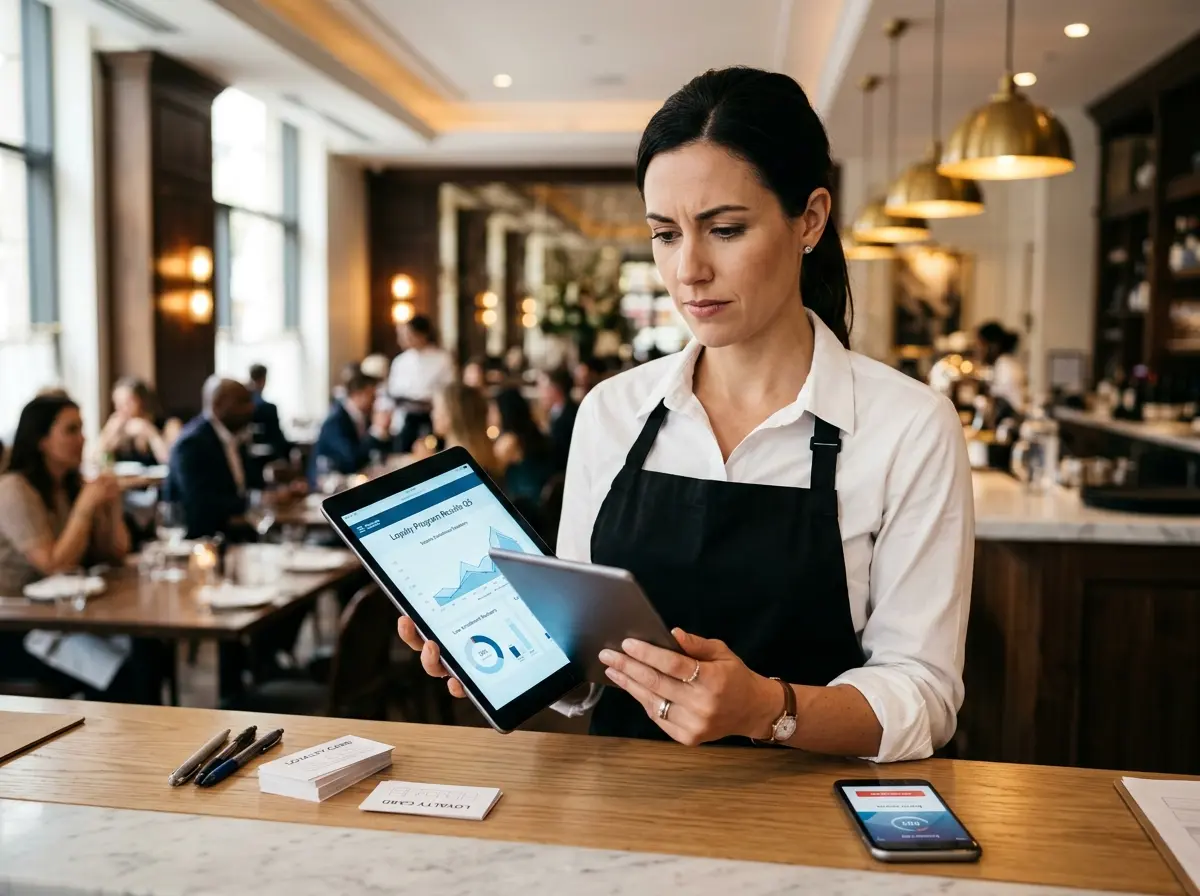
The businesses that win at retargeting are not the ones who set up a campaign and walk away. They're the ones who obsessively track performance metrics and make ongoing adjustments. Pay close attention to your click-through rate (CTR), cost per conversion, and return on ad spend (ROAS). If an ad set is burning through budget with minimal conversions after a reasonable test period, pause it, learn from it, and try a different angle.
Run A/B tests on your headlines, images, calls to action, and offers. Sometimes the difference between a 1% conversion rate and a 4% conversion rate is as simple as changing "Book Now" to "Claim Your Spot." You won't know until you test it.
Quick Reminder About Stella
Stella is an AI robot employee and phone receptionist that works inside your business location as a kiosk and answers your phone calls 24/7 — for just $99/month with no upfront hardware costs. She greets customers, promotes your services, collects lead information, manages contacts through a built-in CRM, and never calls in sick. While you're busy running retargeting campaigns to bring leads back, Stella makes sure none of them slip through the cracks when they arrive or call.
Turning Retargeting Into a Booking Machine
Retargeting is not a magic button — but it is one of the highest-ROI tools available to service-based businesses when used correctly. The foundation is solid audience segmentation, the engine is compelling and appropriately sequenced creative, and the fuel is continuous testing and optimization.
Here's your practical action plan to get started:
- Install your tracking pixels today — Meta Pixel and Google Tag are both free and take under 30 minutes to set up on most website platforms.
- Build your core audience segments — start with booking page abandoners and service page visitors as your highest priority groups.
- Create segment-specific ad creative — tailor your messaging to where each audience left off in their decision-making process.
- Set frequency caps — protect your brand from becoming an annoyance, and consider a sequential ad strategy for a more natural cadence.
- Audit your follow-through experience — make sure that when someone clicks back through your ad, they're greeted by a fast, responsive, informative experience — whether that's your website, your phone line, or your front door.
- Review performance weekly — kill what isn't working, scale what is, and keep testing.
Those 97% of visitors who left without booking aren't necessarily lost. They were interested once, and with the right retargeting strategy, you can remind them exactly why they showed up in the first place — and finally give them the nudge they need to commit. Go get your leads back.