When the Phone Rings at 11 PM, Who's Picking Up?
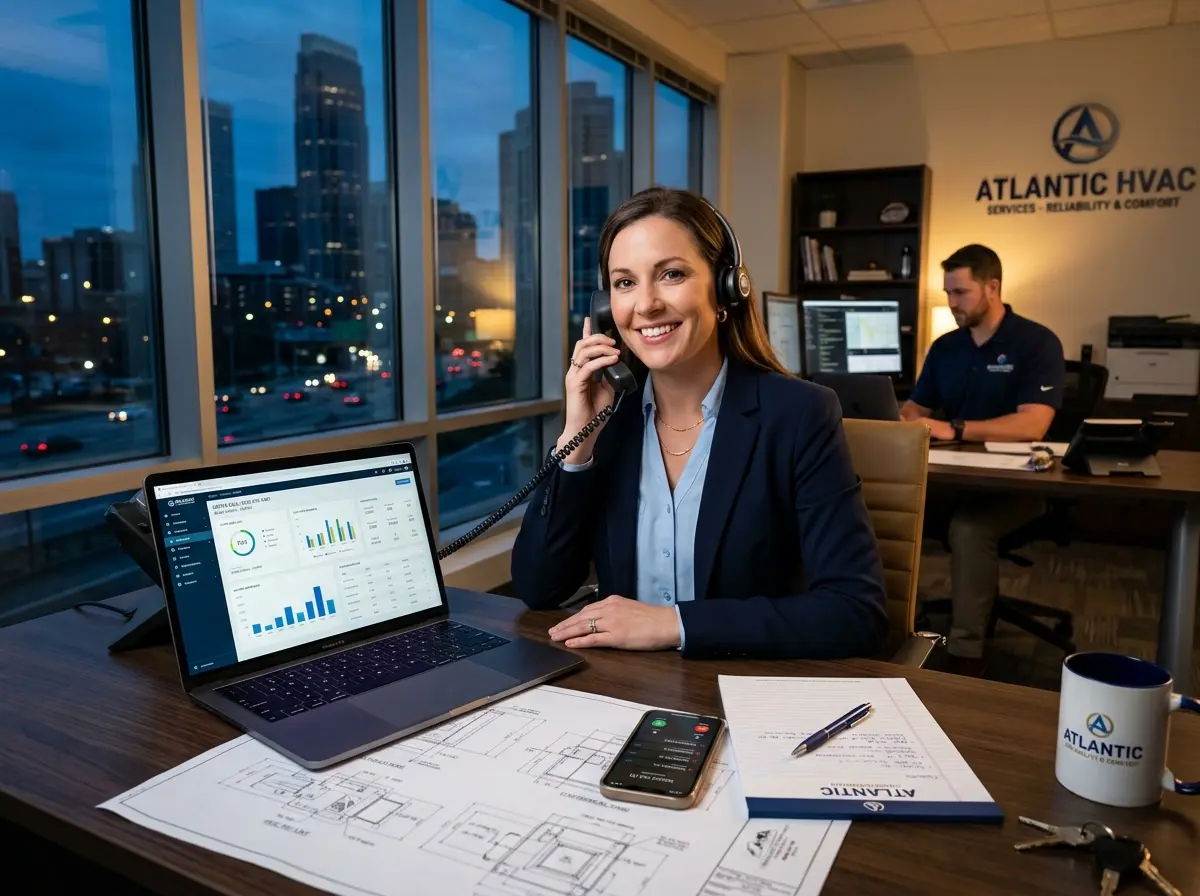
Let's paint a familiar picture: it's 11:47 PM on a Thursday in July. The heat index is somewhere around "surface of the sun," and somewhere across town, a homeowner's AC unit has just decided to call it quits. Sweat is forming. Tempers are rising. And that homeowner is frantically Googling "HVAC emergency near me" — phone already in hand, ready to call whoever picks up first.
Now here's the question that separates thriving HVAC businesses from the ones leaving money on the table: does your phone get answered?
For one HVAC company — let's call them Riverside Climate Solutions — the honest answer used to be no. Not at night. Not on weekends. Not during the lunch rush when their two office staff members were both occupied. Calls went to voicemail, customers moved on, and competitors quietly cleaned up. Sound familiar? It should, because it's one of the most common (and most expensive) problems in the service industry.
This is the story of how Riverside turned that weakness into their single biggest competitive advantage — and what any HVAC business owner can learn from their approach.
The Real Cost of a Missed Call in the HVAC Industry
It's Not Just One Lost Job — It's a Lost Relationship
There's a tempting tendency to think of a missed call as a minor inconvenience. The customer will call back, right? Maybe. But research from Lead Connect suggests that 78% of customers buy from the first business that responds to their inquiry. In a high-urgency industry like HVAC — where a broken furnace in February isn't a "I'll get around to it" situation — that number is probably even higher.
When someone calls you at midnight because their house is turning into a sauna, they aren't going to leave a voicemail and wait patiently until 9 AM. They're going to call the next number on the list. And if that company picks up, earns their trust, and does a good job? Congratulations — you didn't just miss one service call. You missed every tune-up, every filter replacement, every equipment upgrade, and every referral that customer would have generated over the next decade.
The After-Hours Gap Is Bigger Than Most Owners Realize
Riverside's owner, Marcus, decided to pull his call data after suspecting he had a problem. What he found was eye-opening: nearly 34% of all inbound calls were coming in outside of business hours — evenings, weekends, and early mornings. He had been effectively operating at 66% capacity without even realizing it. His competitors who offered 24/7 answering weren't just more convenient; they were systematically capturing a third of the available market that Marcus was voluntarily handing over.
The fix didn't require hiring a night-shift receptionist or outsourcing to an overseas call center. It required rethinking what "available" actually means for a modern service business.
The Strategy That Changed Everything for Riverside
Implementing a Smart, Always-On Phone Answering System
Marcus implemented Stella, an AI robot employee and phone receptionist, to handle inbound calls around the clock. The setup was straightforward: Stella answers every call with the same professionalism and business knowledge regardless of whether it's 2 PM on a Tuesday or 2 AM on a Sunday. She can answer questions about services, pricing structures, service areas, and current promotions — essentially everything a knowledgeable front-desk employee would know — without ever needing a coffee break or calling in sick.
For after-hours emergency calls, Stella collects the caller's name, address, the nature of the issue, and contact information through a conversational intake process that feels natural rather than robotic. That information is immediately logged in her built-in CRM and pushed to Marcus's phone as a notification with an AI-generated summary — so he wakes up to a clean, prioritized list of overnight inquiries rather than a cluttered voicemail box. For true emergencies, she can be configured to forward calls directly to on-call technicians based on conditions Marcus sets himself.
The Results After 90 Days
Within three months of going live, Riverside saw measurable changes across the board:
- After-hours call capture rate jumped from roughly 12% to over 90% — most of those calls had previously gone to voicemail and never converted.
- Booked jobs increased by 22% without any additional marketing spend.
- Customer reviews improved because callers specifically mentioned how refreshing it was to reach a "person" (or close enough) outside of business hours.
- Office staff reported fewer interruptions during peak hours because routine questions were being handled without their involvement.
The $99/month subscription cost was recovered within the first week of the first month. Marcus described the ROI as "almost embarrassingly obvious in hindsight."
Building Your Own After-Hours Answering Strategy
Define What "Available" Should Look Like for Your Business
Not every HVAC company has the same after-hours needs, and your answering strategy should reflect your specific situation. Start by pulling your own call data — most phone systems or VoIP platforms can show you when calls are coming in and which ones went unanswered. If you don't have that data, even a two-week manual log will reveal patterns. Ask yourself: are you getting emergency calls at night? Are weekend mornings busy? Is the lunch hour a dead zone for your office coverage?
Once you understand your gaps, you can configure your answering system to match. Some businesses need full 24/7 coverage. Others need help from 6 PM to 8 AM and on weekends. Some just need relief during internal busy periods when staff can't get to the phone. There's no one-size-fits-all answer — but there is a right answer for your specific operation, and it's worth taking the time to find it.
Train Your AI the Way You'd Train a Great Employee
The quality of your after-hours answering is only as good as the information your system has to work with. This is where many business owners shortchange themselves. They set up an answering solution, give it the bare minimum — hours, address, phone number — and wonder why it doesn't perform well.
Think about what your best receptionist knows. She knows that the spring tune-up special ends on May 31st. She knows that you service a 30-mile radius but will go further for commercial accounts. She knows that new system installations require a site visit before quoting. She knows to flag calls from property management companies as high priority. That institutional knowledge is what separates a helpful first impression from a frustrating one, and it's worth investing the time to document and configure it properly.
Create a Follow-Up Protocol That Matches Your Capture Rate
Answering the phone is step one. Converting those captured leads is step two — and it requires a process. If Stella or any other system is collecting overnight inquiries, someone on your team needs a clear morning routine: review the overnight log, prioritize by urgency, and make outbound contact before 9 AM whenever possible. Customers who called at midnight and get a return call at 8:15 AM are genuinely impressed. It signals responsiveness and professionalism in a way that advertising simply cannot replicate.
Build this into your team's daily workflow. Make it a non-negotiable morning task, the same way opening the office or checking supply inventory is non-negotiable. The businesses that win in competitive service markets are almost always the ones with the tightest operational rhythms, not necessarily the biggest marketing budgets.
A Quick Reminder About Stella
Stella is an AI robot employee and phone receptionist built for businesses of all sizes — she answers calls 24/7, collects customer information through conversational intake forms, and manages contacts through a built-in CRM with AI-generated profiles and push notifications. For businesses with a physical location, she also stands in-store as a friendly, human-sized kiosk that greets customers, answers questions, and promotes your current offers. At $99/month with no upfront hardware costs, she's one of the more practical investments a service business can make.
Stop Competing With One Hand Tied Behind Your Back
Riverside Climate Solutions didn't do anything revolutionary. They didn't double their ad budget, hire a sales team, or rebrand. They simply stopped letting a third of their inbound interest disappear into a voicemail black hole. That one operational fix — being genuinely available when customers needed them — was enough to meaningfully separate them from competitors who were still fighting over the same daytime calls.
If you're an HVAC business owner reading this, your action items are straightforward:
- Audit your call data. Find out exactly when calls are coming in and how many are going unanswered.
- Quantify the gap. Estimate what even a 20% improvement in after-hours capture would mean in revenue terms.
- Implement a 24/7 answering solution that can collect caller information, answer common questions, and route urgent calls appropriately.
- Build a morning follow-up routine so captured leads get fast, personal outreach from your team.
- Measure and refine. Track conversion rates from after-hours leads and adjust your configuration as you learn what works.
The HVAC market is competitive, seasonal, and brutally unforgiving of missed opportunities. The good news is that most of your competitors are probably still sending calls to voicemail at 11 PM. That means the bar for dominating your local market after hours is, for now, refreshingly low. Take advantage of it before they figure it out.