You've Got 30 Seconds — Don't Waste Them
Someone walks into your store (or stumbles onto your website, or calls your number). They're curious. Maybe they're bored. Maybe they actually need what you sell. Either way, they haven't bought anything yet — and statistically speaking, most of them won't. Research consistently shows that conversion rates for physical retail hover around 20–40%, and for many industries, that number is far lower. That means the majority of people who show genuine interest in your business walk away empty-handed.
That's not a traffic problem. That's a demo problem.
A product demo — whether it's a formal presentation, a casual in-store walkthrough, or even a well-timed phone conversation — is one of the most powerful conversion tools you have. Done well, it transforms passive curiosity into active desire. Done poorly (or skipped entirely), it lets potential customers wander off to your competitor, who probably has better signage anyway. This post is about doing it well.
The Psychology Behind Why Demos Actually Work
People Buy Feelings, Not Features
Here's a truth that every seasoned salesperson knows and every product brochure ignores: customers don't buy your product. They buy the version of themselves that owns your product. The gym membership isn't a monthly fee — it's the feeling of being the kind of person who goes to the gym. The spa treatment isn't an hour on a table — it's the relief of being taken care of for once.
A good demo bridges the gap between "this thing exists" and "I need this in my life." It's not about listing specifications or rattling off features like you're reading from a warranty card. It's about showing the customer what their life looks like on the other side of the purchase. The moment they can picture it — really picture it — you've done most of the heavy lifting.
The Endowment Effect Is Your Best Friend
Behavioral economists have a term for the phenomenon where people value something more once they've experienced it: the endowment effect. The moment a customer holds the product, tries the sample, or hears what it can do for them specifically, they begin to feel a sense of ownership — and letting go of something you already "have" feels like a loss.
This is why car dealerships let you take test drives. It's why cosmetics counters offer free samples. It's why software companies give you a 14-day free trial and then send you seven emails when it's about to expire. They're not being generous. They're being strategic. Your demo should do the same thing: give customers just enough of the experience that walking away feels like giving something up.
Confidence Is Contagious — And So Is Hesitation
The way you (or your staff) present a product sends an immediate signal. Confident, enthusiastic, and knowledgeable demos create confidence in the buyer. Uncertain, distracted, or rushed demos create doubt. Customers are remarkably good at detecting when someone doesn't believe in what they're selling — and remarkably responsive when someone clearly does.
This means your demo quality is directly tied to how well your team knows the product and how empowered they feel to have real conversations with customers. Training matters. Preparation matters. And having staff who aren't constantly pulled away to answer the same five questions repeatedly? That matters too.
How the Right Tools Set Your Team Up for Demo Success
Let Technology Handle the Interruptions
There's nothing quite like watching a promising sales interaction get derailed because an employee had to run to the phone, answer a question about parking, or explain your return policy for the fifteenth time that week. These aren't bad employees — they're just overextended ones. And every interruption chips away at the focused, engaging demo experience that actually converts customers.
This is exactly where Stella earns her keep. As an AI robot employee and phone receptionist, Stella handles the ambient noise of running a business — greeting walk-in customers proactively, answering frequently asked questions about products, hours, and policies, promoting current deals, and managing incoming phone calls 24/7. Your human staff can stay present and focused on the customer in front of them, which is exactly where they should be during a demo. Stella's in-store kiosk presence means no customer goes unacknowledged, and her phone answering capability means no call goes to voicemail during your busiest moments — or your quietest ones.
Building a Demo That Actually Converts
Start With Questions, Not Pitches
The fastest way to lose someone in a demo is to launch into a monologue. Customers tune out within seconds if they feel like they're being talked at rather than talked with. The fix is simple: ask before you tell. What brings them in today? What problem are they trying to solve? Have they used something similar before?
These aren't just pleasantries — they're intelligence gathering. The answers tell you exactly which features to highlight, which pain points to address, and which version of the "life after purchase" story will resonate most with this specific person. A demo tailored to the individual is exponentially more effective than a scripted pitch delivered to everyone.
Show, Don't Tell — Then Tell Them What They Just Saw
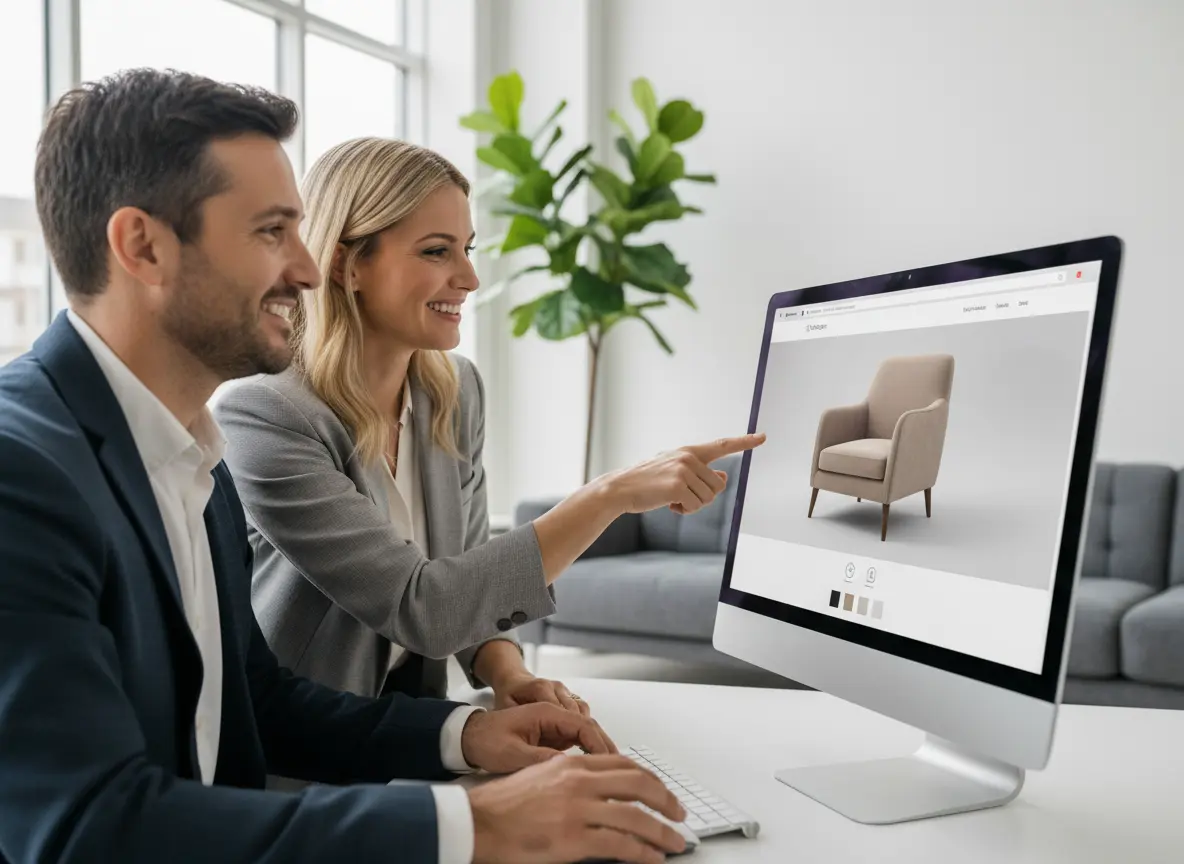
The structure of an effective demo follows a simple but powerful rhythm: demonstrate, then narrate. Show the product in action first. Let the customer see (and ideally touch, taste, or try) the thing. Then articulate what just happened and why it matters to them specifically.
For example, if you're running a kitchen store demo, you don't lead with "this knife has a full-tang construction with a bolstered heel." You pick it up, you slice something cleanly, you hand it to the customer, and then you say: "Notice how it doesn't require any extra pressure? That's the balance — your wrist won't be sore after meal prep." Now the feature means something. Now it's a benefit. And benefits are what people buy.
Handle Objections Like a Pro (Without Being Weird About It)
Objections are not rejections. They are questions wearing a skeptical hat. "That seems expensive" means "help me justify this." "I need to think about it" means "I'm not convinced yet — what am I missing?" The worst thing you can do with an objection is fold immediately or, alternatively, launch into a defensive monologue that makes the customer feel attacked for having doubts.
Instead, acknowledge the concern genuinely, then reframe it. If the price is the sticking point, walk them through the value over time — the cost-per-use, the quality differential, the headache it replaces. If they're uncertain, offer a low-risk next step: a sample, a trial, a smaller initial purchase. The goal is to move them forward, not to win an argument. Customers who feel heard and respected close far more often than customers who feel pressured.
Quick Reminder About Stella
Stella is an AI robot employee and phone receptionist built for businesses like yours — available as a friendly, human-sized in-store kiosk and as a 24/7 AI phone receptionist, starting at just $99/month with no upfront hardware costs. She greets customers, answers questions, promotes deals, and handles calls so your team can stay focused on what closes sales. Whether you run a retail shop, a restaurant, a gym, or a service business, Stella is ready to work the moment you set her up — no training required, no sick days, no small talk about the weekend.
Turn Your Next Demo Into Your Next Sale
A great product demo isn't magic — it's a repeatable skill built on a few core principles: understand your customer before you pitch, make the experience tangible and personal, narrate benefits instead of features, and handle objections with empathy rather than defensiveness. These aren't complicated concepts, but they do require intentionality. Most businesses skip the demo entirely or treat it as an afterthought, which is a remarkable waste of the interest they've already earned.
Here's what you can do starting this week:
- Audit your current demo process. Is there one? Is it consistent? Does every staff member handle it differently? Start by observing and documenting what's actually happening on the floor or in your sales calls.
- Create a demo script — then teach your team to abandon it. A script gives structure and ensures nothing important gets missed. But the best demos feel like conversations, not performances. Train the framework, then let personalities fill it in.
- Reduce the friction around demos. If your staff are too busy fielding routine questions and calls to focus on engaged customers, address that. Delegate, automate, or bring in tools that handle the repetitive stuff so your people can do what they do best.
- Follow up after the demo. For higher-ticket items or service businesses, the demo is the beginning of the conversation, not the end. A timely, personalized follow-up can close deals that didn't close in the room.
The customers are already curious. They showed up. They picked up the phone. They clicked on your link. That's the hard part — and they did it for you. Your job now is to give them a reason to say yes. With the right demo approach and the right support around your team, that "just looking" becomes a lot more interesting very quickly.