Picking Up the Phone Is the Easy Part
Any warm body can answer a ringing phone. Your cousin who shows up twenty minutes late can do it. The technician with grease on his hands and a customer waiting can do it. Heck, even a voicemail system technically "answers" the phone — and we all know how customers feel about that. But there is a massive, revenue-shaped difference between answering a call and actually handling it well. And for auto shop owners, that difference shows up directly in your appointment book, your reviews, and your bottom line.
Auto shops are loud, busy, unpredictable environments. Your team is juggling oil changes, brake jobs, diagnostic runs, and the occasional customer who is convinced their car "just needs a little something." The last thing your best technician should be doing is leaving a vehicle mid-job to explain your tire rotation pricing to someone who may or may not even book an appointment. Yet that's exactly what happens in most shops, dozens of times a week, quietly draining productivity and customer satisfaction at the same time.
This post is about closing that gap — understanding what truly professional call handling looks like, why it matters more than most shop owners realize, and how to make it happen without hiring a full-time receptionist who calls in sick every other Friday.
What "Answering the Phone" Actually Costs You
The Hidden Price of a Dropped or Mishandled Call
Let's talk numbers for a second. Studies consistently show that 85% of customers whose calls go unanswered will not call back. They move on to the next shop in their search results — and that shop doesn't even have to be better than yours. It just has to pick up. Now multiply that by how many calls your shop misses on a busy Saturday or during the lunch rush, and you start to see the problem isn't your technicians or your service quality. It's the front-of-house gap that most shops never bother to measure because the missed revenue is invisible. You never see the customer who didn't book.
And it's not just missed calls. A call that gets answered by someone distracted, rushed, or unfamiliar with current promotions is almost as costly. Customers can tell when the person on the other end of the line isn't really present. They ask about a brake special they saw on your website, and the person who answered has no idea what they're talking about. Trust erodes fast in those moments.
The Technician Tax: When Your Best People Are Doing the Wrong Jobs
There's a specific phenomenon in auto shops where the most skilled, highest-value employee in the building ends up answering phones during a rush because there's simply nobody else available. This is a completely avoidable tragedy. A master technician fielding a call about your hours of operation is the equivalent of having a surgeon check patients in at the front desk. The talent is wasted, the job isn't done well, and something else — likely something important — is being neglected in the meantime.
Proper call handling isn't just about customer experience. It's about protecting your workflow and making sure every person in your shop is doing what they're actually there to do. When calls are handled by someone — or something — specifically designed for that purpose, your technicians stay in the bay and your customers get real answers from someone who actually has the time and knowledge to give them.
What a Well-Handled Call Actually Looks Like
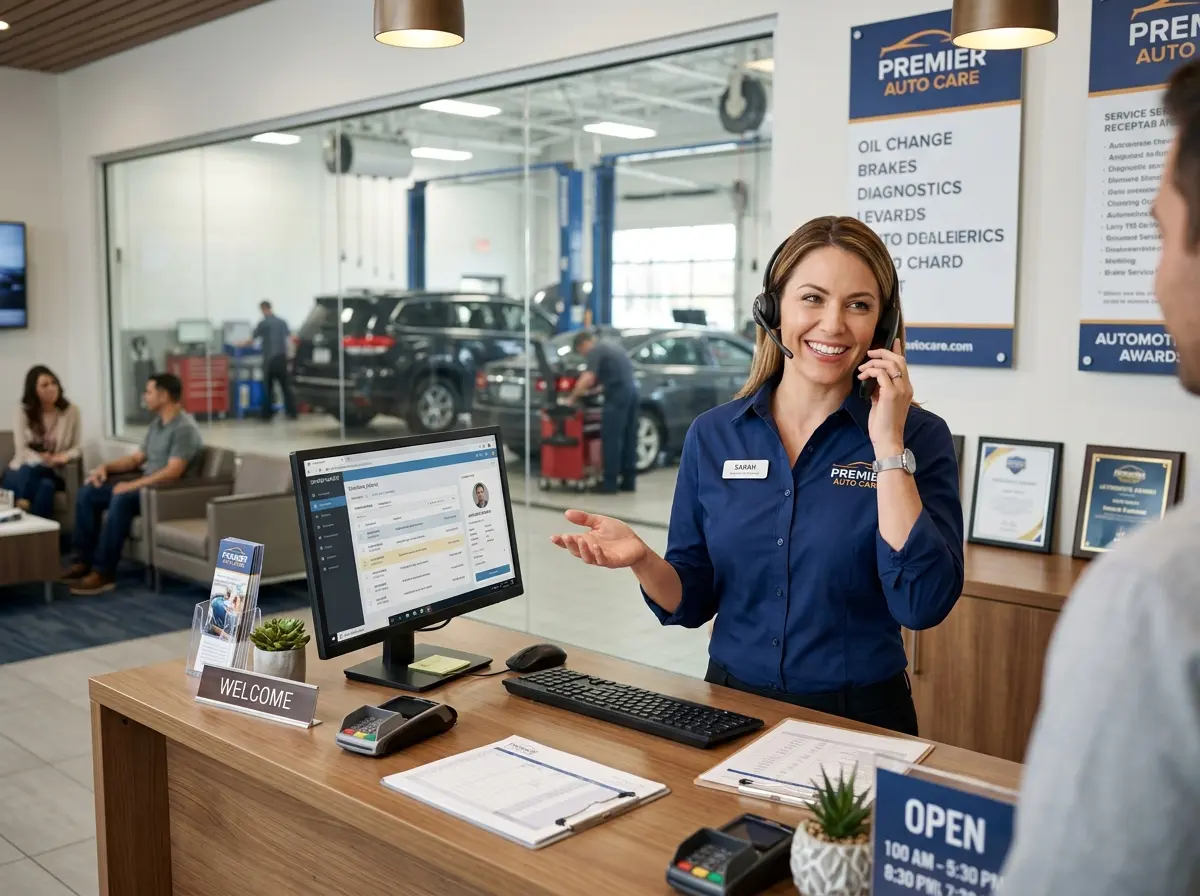
A well-handled call doesn't just answer the question that was asked. It confirms availability, offers the relevant promotion, collects the customer's name and vehicle information, sets the right expectation about timing and pricing, and books the appointment — all without the customer feeling rushed or transferred into oblivion. That's not a phone call. That's a sales conversation, and most shops are fumbling it multiple times a day without realizing it.
A Smarter Way to Manage the Phones at Your Shop
How Technology Can Fill the Front-Desk Gap
This is where it's worth getting practical about solutions. Stella is an AI robot employee and phone receptionist that handles calls for auto shops — and plenty of other businesses — around the clock. She answers with the same knowledge your best service advisor would have: your current specials, your services, your hours, your policies. She can collect customer information through natural conversation, acting as a smart intake form that actually gets completed, and she logs everything directly into a built-in CRM so nothing falls through the cracks.
For shops with a physical location, Stella also shows up in person — literally. Her in-store kiosk presence means she can greet walk-in customers, answer questions on the floor, and promote current deals while your team focuses on the actual work. And when a call genuinely needs a human — an upset customer, a complex warranty situation, a VIP client — she can forward it based on conditions you configure. She doesn't replace your people. She protects their time. At $99/month with no upfront hardware costs, she's considerably cheaper than the alternative of a missed appointment or a burned-out service advisor.
Building a Phone Experience That Actually Converts
Train for the Call, Not Just the Job
If you do have a human handling your phones — even part-time — they need specific training around automotive service calls, not just general customer service principles. There's a big difference. Automotive customers are often anxious about costs, confused about what their car actually needs, and primed to distrust. The person answering your phone needs to be confident, knowledgeable, and warm — in that order. A script helps, but it's not a substitute for actual product and service knowledge. Make sure your phone staff knows your current promotions cold, understands your most common services well enough to answer basic questions, and knows exactly when to escalate versus when to handle it themselves.
Consistency Is the Whole Game
One of the most underrated qualities in phone handling is consistency. Customers who call your shop on Tuesday morning and get a completely different experience than customers who call Friday afternoon will notice — maybe not consciously, but it shows up in reviews and in whether they come back. Consistency in tone, in information accuracy, in hold time, and in how appointments are booked creates a professional impression that compounds over time. It's what separates shops that feel like established, trustworthy businesses from shops that feel like they're held together with duct tape and good intentions.
Use Every Call as a Data Point
Most auto shops treat phone calls as individual transactions that disappear the moment they're over. Smart shop owners treat them as data. What are customers asking about most? Which promotions are generating the most calls? Are customers asking about a service you don't currently offer? The answers to those questions live inside your incoming calls, but only if you're capturing them. Whether you're using an AI solution with built-in analytics or keeping simple call logs, start treating your phone traffic as business intelligence. The patterns that emerge will tell you things about your customers and your market that no survey ever could.
Quick Reminder About Stella
Stella is an AI robot employee and phone receptionist built for businesses exactly like yours — she answers calls 24/7, greets in-store customers from her kiosk, promotes your specials, collects customer info, and keeps your team focused on what they do best. She runs on a simple $99/month subscription with no upfront hardware costs and is easy to get up and running. If phone handling is a weak point in your shop, she's worth a serious look.
Stop Letting Good Calls Go to Waste
The phone is not a nuisance. It is one of your most direct lines to new revenue, repeat customers, and the kind of word-of-mouth that no advertising budget can replicate. But only if it's handled right. Here's what you can do starting this week:
- Audit your missed calls. Check your call logs for the past 30 days and count how many calls went unanswered or to voicemail. Put a rough dollar value on those missed appointments. That number will be uncomfortable, and it should be.
- Listen to how calls are being handled. If you're not monitoring your phone interactions in some form, you're managing blind. Mystery-call your own shop during a busy period and see what experience you actually deliver.
- Separate the roles. Make a firm decision about who handles phones and when. It should not be "whoever isn't busy" — because in an auto shop, everyone is busy.
- Explore smarter solutions. Whether it's better training, a part-time receptionist, or an AI phone solution, the status quo is costing you more than the fix would.
Your shop's reputation is built one interaction at a time, and a surprising number of those interactions happen before a customer ever sets foot in your bay. Answer well. Handle it right. The bays will fill themselves.