Why Your Customers Leave and Never Come Back (And What to Do About It)
You did everything right. The product was great, the service was friendly, the experience was smooth. Your customer left happy — maybe even thrilled. And then... nothing. Crickets. They vanished into the retail wilderness, never to return. Meanwhile, you're left wondering what went wrong.
Here's the uncomfortable truth: nothing went wrong. That's the problem. In today's hypercompetitive marketplace, a good experience alone isn't enough to guarantee a return visit. Customers have options. They have short memories. And they have a dozen competitors sending them discount codes while you're busy just trying to run your business.
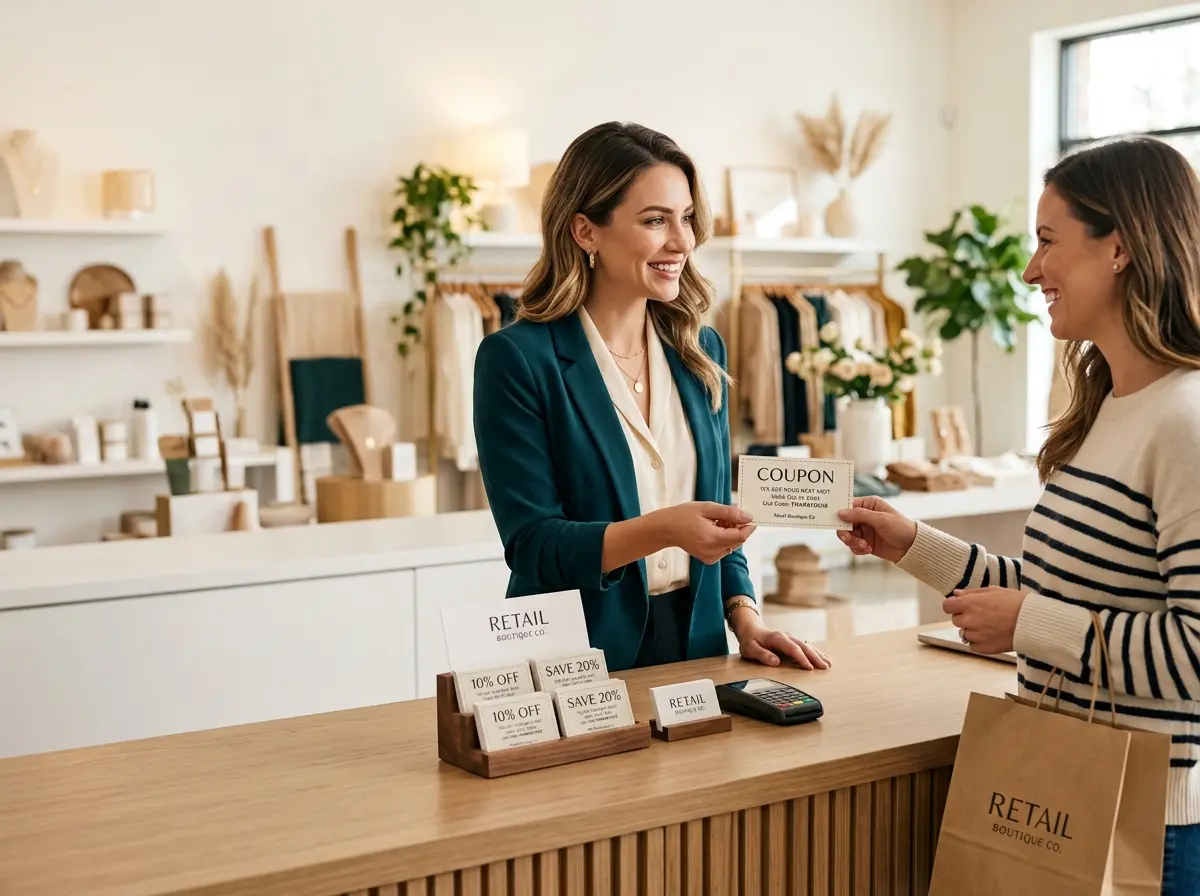
This is exactly where the bounce-back coupon earns its keep. A bounce-back coupon is a promotional incentive given to customers at the point of sale that encourages them to return for a future purchase. It's not a gimmick — it's a retention strategy. Done right, it transforms a one-time buyer into a loyal regular, and it costs you far less than acquiring a brand-new customer. Studies suggest acquiring a new customer can cost five times more than retaining an existing one. Let that sink in for a moment.
So let's talk about how to actually use bounce-back coupons effectively — not just slapping a 10% discount on a receipt and hoping for the best.
Designing a Bounce-Back Coupon That Actually Works
Most bounce-back coupons fail not because the concept is flawed, but because the execution is lazy. A coupon that sits in someone's wallet for three months before being used as a bookmark is not a successful coupon. Here's how to design one that does its job.
Make the Offer Genuinely Compelling
Let's be honest — a 5% discount is not going to get anyone excited. Customers are smarter and more deal-savvy than ever. Your offer needs to feel like a real win, not an afterthought. Consider what actually moves the needle for your specific business and customer base. A restaurant might offer a free appetizer on the next visit. A salon could offer 20% off a second service booked within 30 days. A gym might provide a free personal training session for members who bring a friend.
The key is to offer something with high perceived value, even if the actual cost to your business is manageable. A free item that costs you $3 but feels like a $12 treat to the customer? That's good math. Pair that with a product or service they haven't tried yet, and you've got a bonus upsell opportunity wrapped inside your retention strategy.
Set the Right Expiration Window
Timing is everything. Set the expiration date too far out, and customers forget about the coupon entirely. Set it too close, and they feel pressured rather than excited. The sweet spot for most businesses is two to four weeks, though this can vary significantly by industry. A coffee shop might use a 7-day window. An auto shop offering a discount on the next oil change might go out 90 days, since customers simply don't visit that often.
The goal is to create a sense of urgency without triggering anxiety. You want customers thinking, "I should use this soon" — not, "I only have 48 hours and my life is chaos." Match your expiration window to your natural purchase cycle, and you'll see much better redemption rates.
Keep the Terms Simple and Clear
Nothing kills a coupon faster than fine print that requires a law degree to interpret. If customers have to squint at exclusions, minimum purchase thresholds, and day-of-week restrictions, you've already lost them. Keep it clean: one clear offer, one clear action required, one expiration date. If you must include restrictions, limit them to one or two and state them plainly. A confused customer doesn't redeem — they toss it in the trash and go to your competitor, who made their coupon easier to understand.
Delivering Bounce-Back Coupons in the Modern Age
Digital vs. Physical: Choose Your Weapon Wisely
The classic printed receipt coupon still works — particularly for older demographics and in-store retail environments — but the modern customer increasingly expects digital options. Text message coupons boast redemption rates 8 to 10 times higher than traditional mail, and email coupons remain a reliable workhorse when they're personalized and timely. QR codes printed on receipts or packaging can bridge the physical-to-digital gap nicely, letting customers save the offer to their phone in two seconds flat.
The smartest businesses aren't choosing between physical and digital — they're offering both, meeting customers wherever they happen to be most responsive. The key is capturing customer contact information at the point of sale so you have the option to follow up digitally. Which brings us to a tool that makes this remarkably easy...
How Stella Can Help You Capture and Deliver Offers
This is where Stella, the AI robot employee and phone receptionist, becomes genuinely useful for bounce-back strategies. In physical locations, Stella greets customers proactively and can inform them of current promotions and upcoming offers — including bounce-back deals — in a natural, conversational way. She can also collect customer contact information through conversational intake forms, which means you're building your contact list without your human staff having to awkwardly ask for an email address at checkout.
On the phone side, Stella handles inbound calls 24/7 and can mention active promotions to callers, keeping your offers front and center even when your team is busy. Her built-in CRM stores customer profiles, notes, and tags — so you always know who your customers are, what they've been offered, and when they're due for a follow-up. That's the foundation of a bounce-back strategy that actually scales.
Tracking, Testing, and Improving Your Bounce-Back Program
A bounce-back coupon you never measure is just a piece of paper with a discount on it. The businesses that win with bounce-back programs are the ones that treat them like the marketing experiments they are — running tests, tracking results, and iterating over time.
Track Redemption Rates Religiously
Your redemption rate is the single most important metric for any coupon program. Industry averages for in-store bounce-back coupons typically range from 10% to 30%, depending on the offer strength, industry, and delivery method. If you're consistently below 10%, something needs to change — the offer, the timing, the delivery channel, or all three. If you're consistently above 25%, you've found something that resonates and you should be doubling down.
Use unique coupon codes for different offer types or delivery channels so you can isolate what's actually working. This doesn't have to be complicated — even a simple spreadsheet tracking offers sent versus offers redeemed will give you actionable data over time.
A/B Test Your Offers Like a Marketing Professional
Don't assume you know what your customers want — test it. Run two versions of your bounce-back offer simultaneously: maybe one offers a percentage discount while another offers a free item. See which one gets redeemed more often. Test the expiration window, the headline copy, the delivery method. Every variable is an opportunity to optimize.
Small improvements compound over time. Moving your redemption rate from 12% to 18% might not sound dramatic, but across hundreds of customers per month, that's a meaningful increase in returning visitors — and returning visitors spend more, refer more, and cost less to serve than new customers.
Use Customer Data to Personalize Future Offers
The future of bounce-back coupons isn't mass distribution — it's personalization. Customers who recently purchased a specific product should receive a coupon relevant to that product or its natural complement. First-time visitors deserve a different offer than your regulars. High-value customers might respond better to an exclusive experience rather than a discount. The more you know about your customers, the more precisely you can target your bounce-back offers — and the better your results will be.
Quick Reminder About Stella
Stella is an AI robot employee and phone receptionist that works in-store as a human-sized kiosk and answers phone calls 24/7 for businesses of all types — retail, restaurants, salons, gyms, medical offices, and more. She promotes your deals, answers customer questions, collects contact information, and manages customer profiles through a built-in CRM, all for just $99/month with no upfront hardware costs. If you're building a bounce-back strategy, she's the kind of always-on team member who never forgets to mention your latest offer.
Start Turning One-Time Buyers Into Loyal Regulars
Bounce-back coupons aren't complicated, but they do require intentionality. A compelling offer, the right timing, a frictionless delivery method, and a commitment to tracking results — that's the entire formula. Most businesses skip one or more of these steps and then conclude that coupons "don't work." They work. You just have to work them.
Here's where to start: pick one customer segment, design one clear offer with a two-to-three week expiration window, and deliver it through one channel — in-store at checkout, via text, or through email. Track how many people redeem it. Then improve. Then scale. Repeat until you've built a retention engine that runs in the background while you focus on everything else it takes to run a business.
Your best new customer is the one you already have. Go get them back.