Introduction: Namaste, First Responders — Your Community Needs This
Let's be honest: first responders don't exactly have the reputation for booking Saturday morning gentle flow classes. Between the irregular shifts, the adrenaline-fueled work culture, and the general attitude of "I'll sleep when I'm dead," yoga and mindfulness aren't always top of mind for paramedics, firefighters, and police officers. And yet — they probably need it more than anyone.
The data backs this up. First responders experience PTSD at rates two to three times higher than the general population, and burnout, substance abuse, and mental health struggles are documented crises across emergency services industries. Meanwhile, yoga studios everywhere are sitting on a powerful, evidence-based solution that's chronically undermarketed to the people who need it most.
Here's the opportunity: first-responder corporate wellness programs. Police departments, fire stations, EMS agencies, and emergency dispatch centers often have budgets for employee wellness — and they're increasingly under pressure to use them. If your studio can package a compelling, trauma-informed, schedule-flexible program, you could build a reliable B2B revenue stream while doing genuinely meaningful work in your community. Not bad for a Tuesday.
This guide will walk you through exactly how to build, pitch, and run a first-responder yoga and mindfulness corporate program — from curriculum design to client acquisition to keeping it all running smoothly without burning yourself out in the process.
Building Your First-Responder Program from the Ground Up
Understanding the Unique Needs of First Responders
Before you slap a badge emoji on your existing corporate wellness brochure and call it a day, take a moment to genuinely understand your target audience. First responders operate in high-stakes, high-stress, often traumatic environments. Many carry the physiological and psychological weight of what's called cumulative trauma — the slow accumulation of difficult calls, near-misses, and grief that builds over a career.
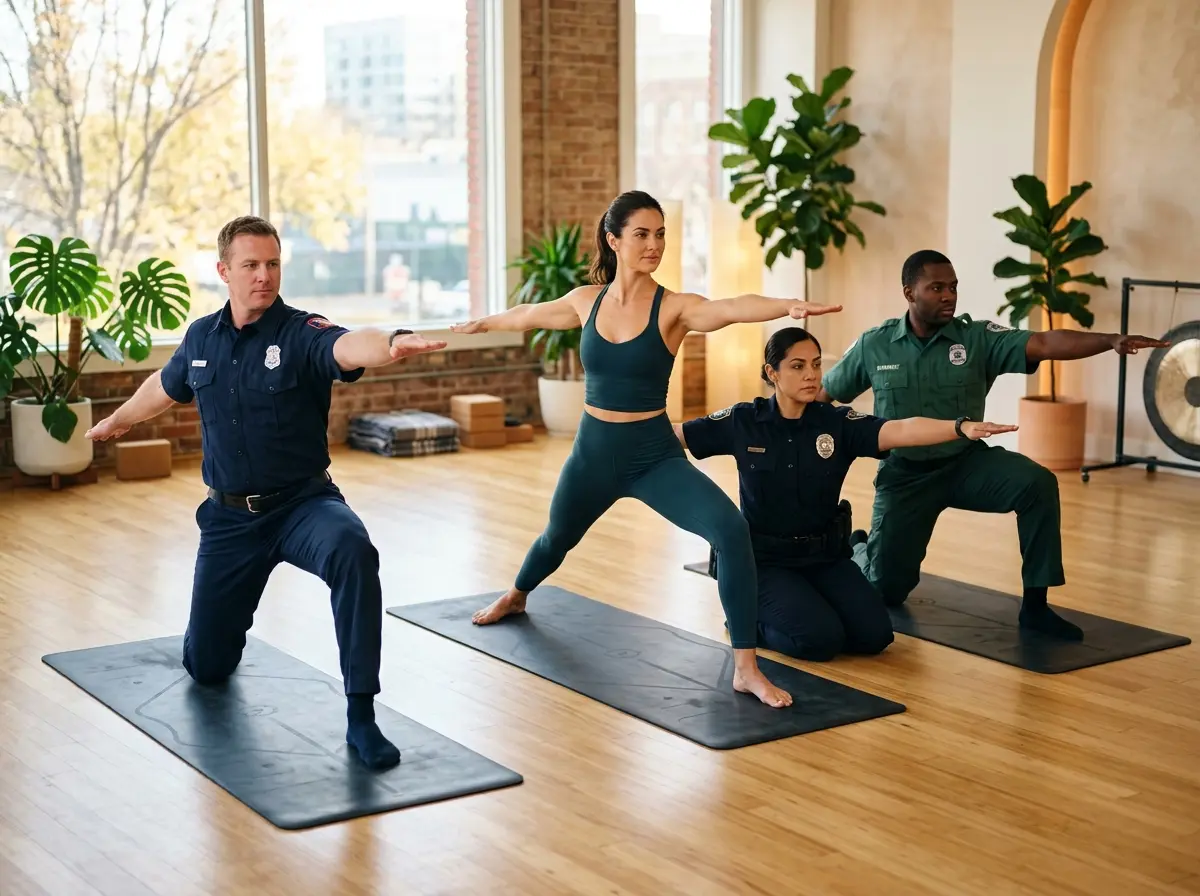
This means your program needs to be designed with trauma sensitivity at its core. Trauma-informed yoga is a recognized practice that emphasizes choice, empowerment, and safety over performance or flexibility milestones. Instructors should be trained — or willing to get trained — in trauma-sensitive facilitation. Organizations like the Trauma Center Trauma-Sensitive Yoga (TCTSY) program offer certifications worth pursuing.
You also need to respect the culture. First responders tend to be pragmatic, results-oriented people. Frame the benefits in practical terms: better sleep, faster recovery from physical demands, improved focus under pressure, and reduced anxiety. Leave the "connect with your inner light" language at the door — at least for the first session.
Designing a Curriculum That Actually Works for Shift Workers
Shift work is the sworn enemy of consistent scheduling, and most first responders rotate through 24-hour, 48-hour, or rotating day/night cycles. Your program has to flex accordingly. Consider offering classes in multiple formats:
- On-site sessions at fire stations or precincts during shift downtime
- Early morning or late-night studio classes specifically timed for shift transitions
- On-demand video content that participants can access anytime
- Short-form mindfulness sessions (15–20 minutes) designed for high-stress environments
A well-rounded curriculum might include restorative yoga for physical recovery, breathwork and box breathing techniques (already familiar to many first responders through tactical training), body scan meditations for nervous system regulation, and yoga nidra for sleep improvement. Keep sessions accessible — no prior yoga experience required, no judgment, no pressure to perform.
Pricing and Packaging Your Corporate Offering
Corporate wellness programs are priced differently than drop-in classes, and for good reason — you're selling a packaged service to an organization, not an individual. Common structures include a monthly retainer model (e.g., $800–$2,500/month for a set number of weekly sessions), a per-employee licensing fee for digital content access, or a custom contract based on department size and service scope.
Research local fire department and police department wellness budgets in your area — many are publicly available. Some municipalities also have grants or union-negotiated wellness funds specifically allocated for mental health and physical recovery programming. Grant funding through organizations like the Assistance to Firefighters Grant (AFG) program or FEMA's SAFER grants can sometimes cover wellness initiatives, making your pitch even easier to land.
Streamlining Operations So You Can Focus on Teaching
Managing Inquiries, Intake, and Scheduling Without Losing Your Mind
Here's a scenario: your first-responder program pitch lands. A fire station captain is interested. He calls your studio at 11:47 PM — because, naturally, that's when his shift wraps up and he finally has a moment to think. If no one answers, that warm lead cools fast.
This is exactly the kind of operational gap where Stella, the AI robot employee and phone receptionist, quietly becomes your secret weapon. Stella answers calls 24/7 with the same knowledgeable, professional presence you'd want from your best front-desk staffer — without the overtime pay. She can answer questions about your corporate programs, collect contact information through conversational intake forms, and ensure no inquiry falls through the cracks, whether it comes in at noon or midnight.
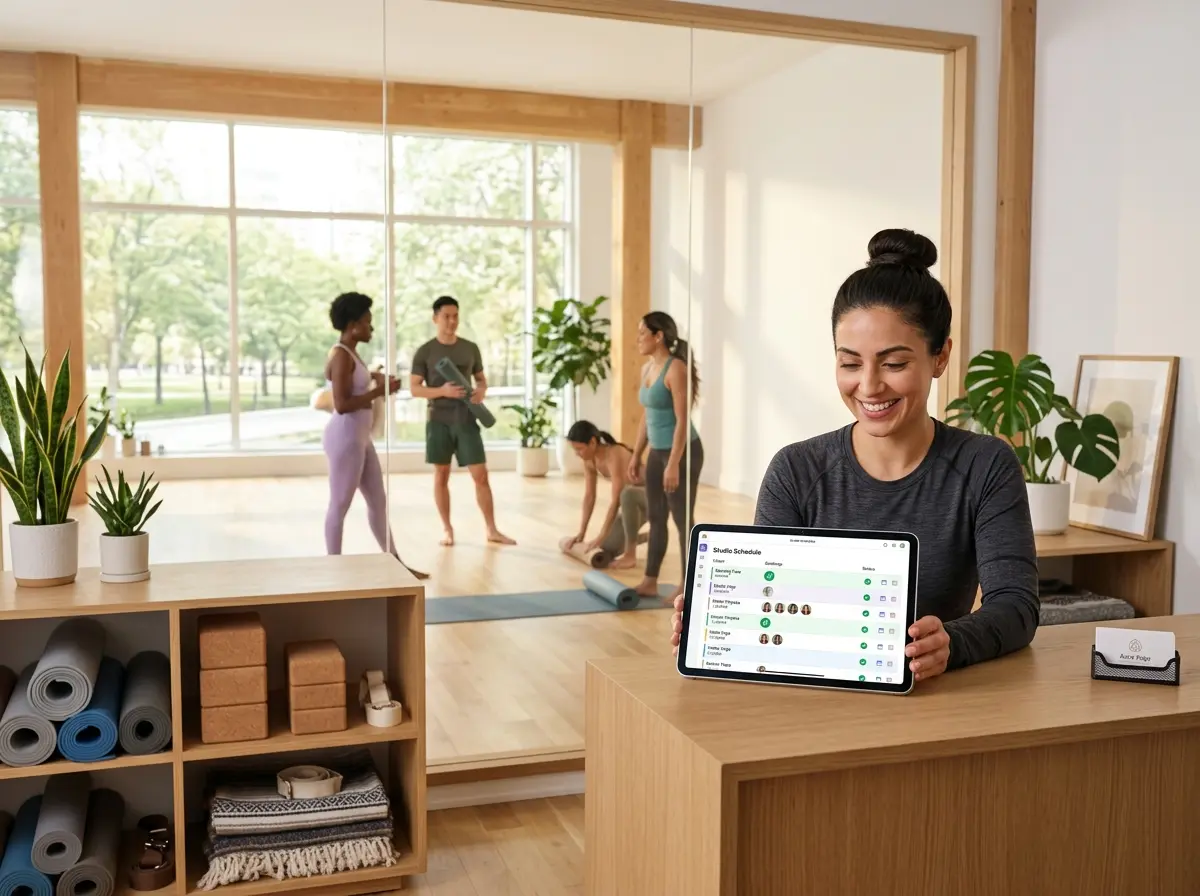
For studios with a physical location, Stella also operates as a human-sized in-store kiosk, greeting walk-ins and proactively engaging potential clients about your corporate offerings and current promotions. Her built-in CRM lets you tag and track corporate leads separately from individual members — handy when you're juggling a growing B2B pipeline alongside your regular class schedule.
Pitching to Departments and Building Lasting Partnerships
How to Approach Fire Stations, Police Departments, and EMS Agencies
Cold outreach works — but warm introductions work better. Start by identifying whether your studio already serves any first responders as individual members. A firefighter who swears by your Thursday evening restorative class is your best brand ambassador into their department. Ask them if they'd be willing to facilitate an introduction to their wellness coordinator or union representative.
When you do pitch, lead with outcomes, not philosophy. Prepare a one-page proposal that includes the program overview, pricing, scheduling flexibility, instructor credentials (especially any trauma-informed training), and ideally a brief summary of relevant research on yoga and PTSD recovery. Studies published in journals like the Journal of Traumatic Stress and Military Medicine have documented measurable improvements in PTSD symptoms, sleep quality, and emotional regulation among first responders who participated in yoga-based interventions. That kind of evidence goes a long way with department administrators.
Offer a free pilot session — one class, no strings attached, open to whoever wants to show up. It lowers the barrier to a yes, and a room full of skeptical firefighters who actually enjoyed a 45-minute yoga session is about the most powerful testimonial you can collect.
Retaining Corporate Clients and Expanding the Relationship
Landing the contract is only step one. Retention in corporate wellness depends on two things: measurable results and consistent communication. Set up a simple way to track participation rates and collect periodic feedback — even a short post-session survey sent via text can surface valuable insights.
Check in with the wellness coordinator or department liaison monthly. Share highlights, attendance numbers, and any qualitative feedback you've gathered. If a particular breathing technique resonated strongly during a session, note it and build on it. Over time, you become not just a vendor but a trusted partner in their wellness strategy — which makes you very difficult to replace come contract renewal time.
Consider creating tiered program levels: a foundational tier for departments new to wellness programming, an intermediate tier with more frequent sessions and added mindfulness content, and a premium tier that includes on-demand digital access for officers to use at home. As departments grow comfortable with the program, upselling to a higher tier becomes a natural conversation, not a sales pitch.
Quick Reminder About Stella
Stella is an AI robot employee and phone receptionist designed to help businesses like yours stay responsive and professional around the clock. She greets customers in-store, answers calls 24/7, collects intake information, manages your CRM, and promotes your services — all for just $99/month with no upfront hardware costs. When you're busy teaching a trauma-informed class to a fire crew at 6 AM, Stella is back at the studio handling everything else.
Conclusion: Your Studio Can Be a Lifeline — Start Building That Bridge
First-responder wellness programs represent one of the most meaningful and financially sustainable corporate niches a yoga studio can pursue. The need is real, the budgets exist, and the community impact is profound. You already have the tools — the space, the instructors, the practice — to make a genuine difference in the lives of people who spend their careers making a difference in everyone else's.
Here's what to do next:
- Audit your current instructor team for trauma-informed training or identify candidates for certification.
- Design a pilot program — three to four sessions, accessible format, flexible timing.
- Identify two or three local departments to approach, and look for warm introductions through existing members.
- Build a one-page proposal with pricing, credentials, scheduling options, and supporting research.
- Shore up your operations so that when the inquiries start coming in — at all hours — you're ready to respond professionally and promptly.
The first responders in your community have spent years running toward emergencies so the rest of us don't have to. The least we can do is offer them a place to breathe.