Why Your Pricing Strategy Might Be Leaving Money on the Table
Let's talk about something every business owner thinks they understand but few truly master: pricing. You've got a great product, a solid location (or a killer website), and customers who seem genuinely interested — and yet, somehow, your margins aren't where they should be. Sound familiar? You're not alone, and the culprit probably isn't your product quality or your marketing. It's your pricing psychology.
Here's the uncomfortable truth: customers don't actually know what your products are "worth." They're making educated guesses based on visual cues, comparisons, context, and a whole lot of cognitive shortcuts their brains run in the background. The good news? Once you understand how those mental shortcuts work, you can design your pricing strategy to work with human psychology rather than against it — and watch your revenue climb without changing a single thing about your actual product.
This isn't about trickery. It's about presenting your value in a way that resonates with how people actually make decisions. So let's dig in.
The Core Principles of Pricing Psychology
Charm Pricing and the Power of the Number 9
You've seen it a thousand times: $19.99 instead of $20.00. It feels almost cliché at this point — and yet, it keeps working. Research published in the Journal of Consumer Research found that prices ending in 9 consistently outperform rounded prices, even when the rounded price is technically lower. Yes, you read that correctly. In one study, a dress priced at $39 outsold the same dress priced at $34. The brain reads left to right, anchors on the first digit, and moves on before fully processing the rest. $19.99 feels like "the $19 range," not "basically $20."
That said, charm pricing isn't universally appropriate. Luxury goods and premium services often benefit from round numbers because they signal confidence and quality. A $200 facial at a day spa feels intentional and premium. A $197.99 facial feels like it's trying too hard. Know your brand positioning before you commit to a pricing format.
Anchoring: The First Number Wins
Anchoring is one of the most powerful (and underused) tools in retail pricing. The concept is simple: the first price a customer sees sets a mental reference point — an "anchor" — against which all subsequent prices are judged. This is why showing a higher "original" price next to a sale price is so effective. It's not manipulation; it's context. Customers need a benchmark to evaluate whether a deal is good, and if you don't provide one, they'll invent their own (often inaccurate) benchmark.
Practical application: if you sell three tiers of a product or service, lead with the premium option. When customers see your mid-tier option next, it suddenly looks like a bargain by comparison — even if that mid-tier option is exactly what you intended to sell all along. Restaurants have mastered this with menus, placing an expensive entrée at the top so everything below it feels reasonably priced. You can do the same in your store, on your website, or in any sales conversation.
The Decoy Effect: Making Your Best Option Obvious
Here's a fun one. The decoy effect occurs when a third, strategically inferior option makes one of the other two options look significantly more attractive. The classic example: a small popcorn for $3, a large for $7, and a medium for $6.50. Suddenly, the large looks like an obvious steal — you're only paying $0.50 more for a dramatically bigger size. The medium exists primarily to make the large look reasonable. It's a decoy, and it works beautifully.
Consider building a "decoy" pricing tier into your product or service offerings. It doesn't need to be a bad product — it just needs to be positioned in a way that makes your preferred option feel like the smartest choice in the room.
How Your In-Store and Phone Experience Affects Perceived Value
Pricing Doesn't Exist in a Vacuum
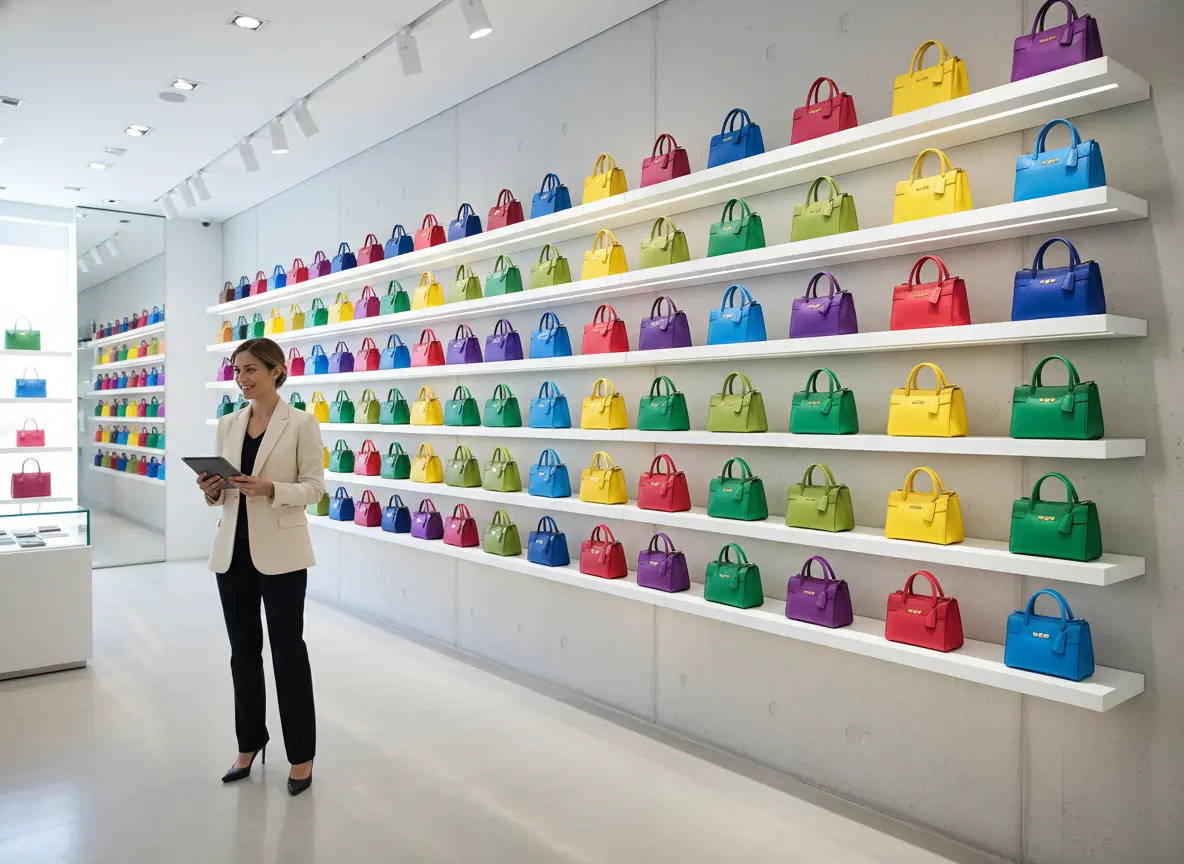
Here's something pricing guides rarely mention: the experience surrounding a purchase dramatically affects how customers perceive its value. A $45 candle feels different in a beautifully curated boutique with soft lighting and a knowledgeable staff member than it does sitting on a cluttered shelf next to a "3 for $10" bin. Pricing psychology isn't just about the numbers — it's about the entire environment in which those numbers are encountered.
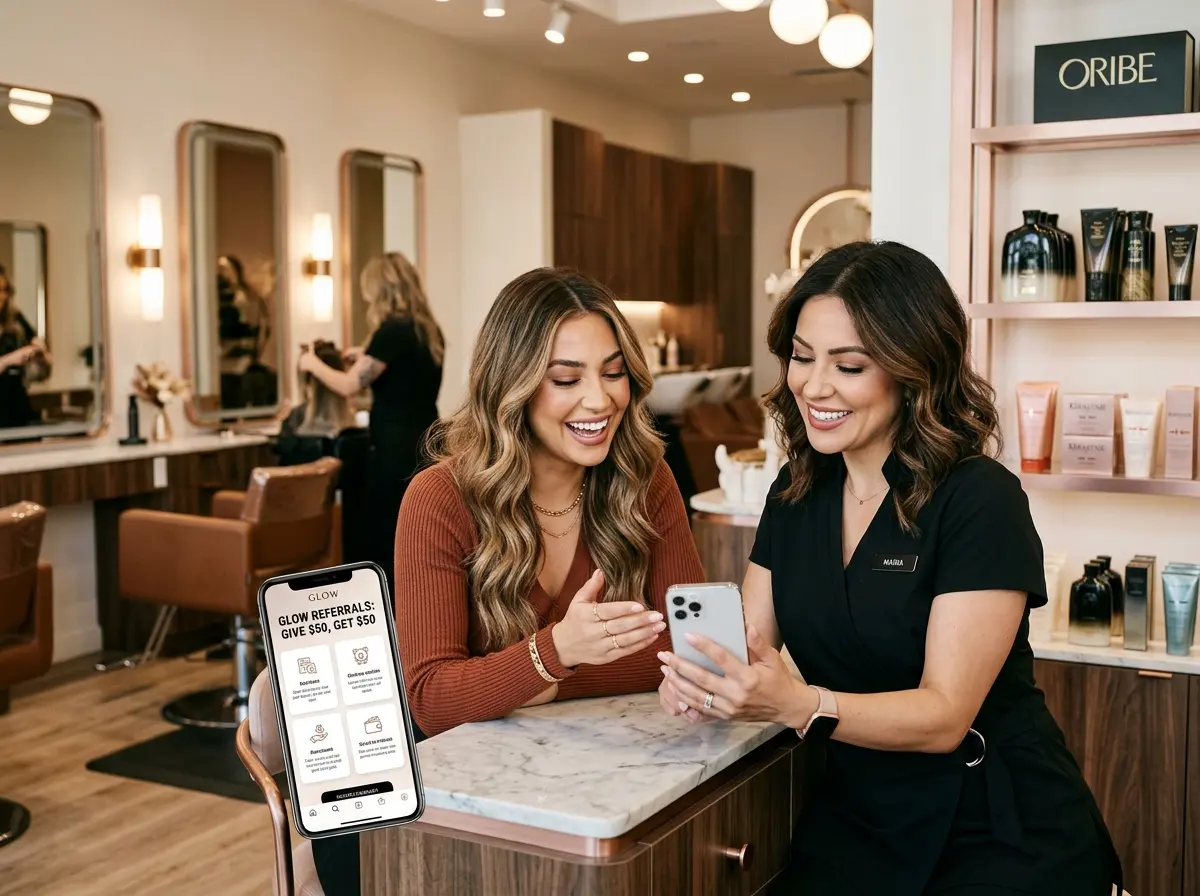
This is where your customer touchpoints matter enormously. Every interaction a customer has with your business — walking through the door, browsing your website, calling your phone number — shapes their perception of your brand's value. A warm, professional greeting communicates that you take your business seriously. A missed call or a confused-sounding staff member communicates the opposite, and it can undercut even a perfectly constructed pricing strategy.
Stella, the AI robot employee and phone receptionist, helps retail businesses and service providers maintain a polished, consistent customer experience at every touchpoint. In-store, she greets customers proactively, answers product questions, and highlights current promotions — reinforcing the perceived value of what you're selling. On the phone, she answers calls 24/7 with the same confidence and business knowledge, so a potential customer calling after hours gets a professional experience instead of voicemail. When customers feel like they're dealing with a well-run operation, they're far more willing to pay your asking price without negotiating.
Advanced Pricing Strategies Worth Stealing
Bundle Pricing: Make the Math Confusing (in a Good Way)
Bundling is one of the most effective ways to increase average order value while making customers feel like they're getting a deal. When you bundle products or services together, customers shift from evaluating individual prices to evaluating the bundle's overall value — and that's a much easier mental calculation to win. A skincare brand selling a cleanser for $28, a toner for $22, and a moisturizer for $35 individually might bundle all three for $74. The customer saves $11, feels smart, and spends $74 instead of whatever single item they originally came in for.
The key is to bundle items that genuinely complement each other so the package feels thoughtful, not like you're just trying to clear inventory. Pair your bestseller with a slower-moving product that legitimately enhances it. Name the bundle something appealing. Present it prominently. You'll be surprised how many customers choose the bundle over an individual item simply because the decision feels easier.
Price Framing: How You Say It Matters as Much as What You Say
Two statements can describe the exact same price and land completely differently. "Only $1.50 per day" hits differently than "$550 per year," even though they're mathematically identical. This is price framing — presenting your price in the context most favorable to purchase. Daily or weekly breakdowns work particularly well for subscription services, memberships, and higher-ticket items where the total price might cause sticker shock.
Similarly, framing a price in terms of what it replaces can be powerful. A $99/month service that "replaces a part-time employee" or "saves you 10 hours a week" shifts the mental math entirely. Now you're not spending money — you're making an investment with a clear return. Audit your pricing language on your website, in your pitch, and on your signage. Small wording changes can have a measurable impact on conversion rates.
Scarcity and Urgency: The Classics That Still Convert
Scarcity and urgency are psychological pricing allies, not pricing strategies themselves — but they work hand-in-hand with your price points to drive action. Limited-time pricing, low-stock alerts, and exclusive member pricing all tap into loss aversion, the well-documented human tendency to work harder to avoid losing something than to gain something of equal value. A 20% discount feels more compelling when it expires Sunday than when it's available indefinitely. "Only 3 left at this price" creates a sense of competition even when the customer is browsing alone.
Use these tactics genuinely and sparingly. Customers who feel manipulated by artificial scarcity lose trust quickly, and lost trust is far more expensive than a missed sale. But authentic scarcity — a seasonal item, a limited run, a genuine promotional window — is a legitimate and effective pricing tool that every retailer should be using intentionally.
Quick Reminder About Stella
Stella is an AI robot employee and phone receptionist built for businesses like yours. She greets customers in-store, answers calls around the clock, promotes your current deals, and ensures no opportunity slips through the cracks — all for $99/month with no upfront hardware costs. If your pricing strategy is working hard to attract customers, Stella makes sure the experience they walk into (or call into) lives up to the promise.
Put Your Pricing Psychology to Work
Great pricing strategy isn't about charging as much as the market will bear and hoping for the best. It's about understanding how your customers' brains process value and designing your pricing, presentation, and environment to communicate that value clearly and compellingly. The psychology is real, the research is solid, and the tactics are entirely within your reach regardless of your industry or budget.
Here's where to start:
- Audit your current prices. Are you using charm pricing where appropriate? Are your premium options anchoring the rest of your lineup effectively?
- Build or refine a tiered pricing structure. Introduce a decoy tier if you don't have one. Make your preferred option the obvious middle-ground winner.
- Review your pricing language. Reframe annual or high-ticket prices as daily or weekly equivalents where it makes sense. Replace "cost" with "investment" where appropriate.
- Create at least one compelling bundle. Pair a bestseller with a complementary product and promote it prominently in-store and online.
- Evaluate your customer experience holistically. Your pricing strategy is only as strong as the environment around it. Make sure every touchpoint — in person, online, and on the phone — reinforces the value you're selling.
Pricing is part science, part art, and a healthy dash of knowing your customer. Start with one or two of these strategies, measure the impact, and iterate from there. Your margins will thank you — and so will your customers, who will walk away feeling like they got exactly what they were looking for.