Introduction: Straight Talk About Crooked Spines
Here's a sobering statistic: scoliosis affects approximately 2–3% of the population, with adolescents between the ages of 10 and 18 representing the highest-risk group. That translates to roughly 6 to 9 million people in the United States alone walking around with spines that have decided to take a scenic detour. And yet, most of them will never be identified early enough to benefit from conservative chiropractic care — not because the tools don't exist, but because organized screening and treatment programs in chiropractic offices remain surprisingly rare.
If you're a chiropractor who has watched patients arrive with advanced scoliotic curves that could have been caught years earlier, you already feel the weight of that missed opportunity. The good news is that building a structured adolescent scoliosis screening and treatment program isn't just clinically valuable — it's also a smart business move that deepens community relationships, generates consistent case flow, and positions your practice as a specialized resource that families actively seek out. This guide will walk you through exactly how to build one, step by step, without turning your practice upside down in the process.
Building the Clinical Foundation of Your Program
Before you start hanging banners and booking school assemblies, the infrastructure of your program needs to be solid. A scoliosis screening initiative that isn't backed by clear clinical protocols, proper equipment, and a defined treatment philosophy will fall apart quickly — and worse, it may do patients a disservice. Let's build it right.
Establishing Your Screening Protocol
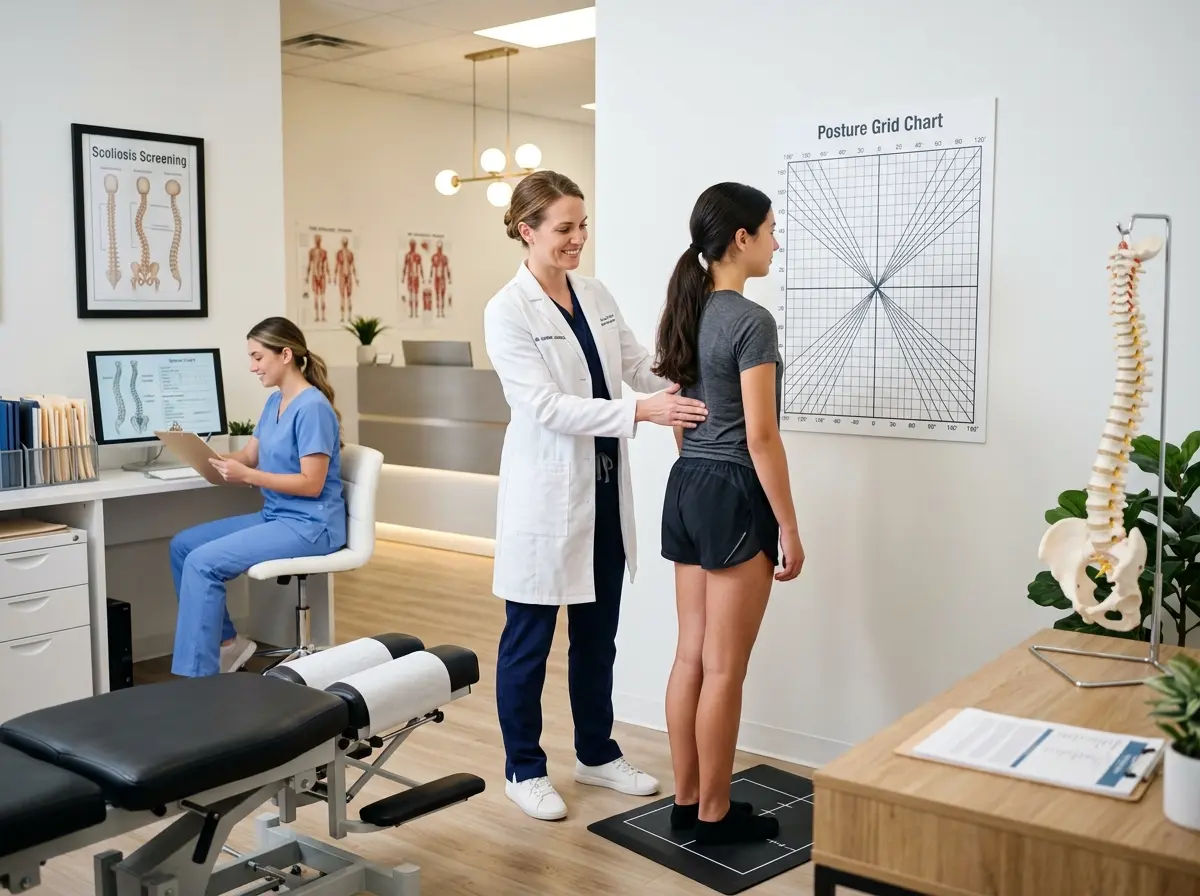
The cornerstone of any adolescent scoliosis program is a reproducible, evidence-informed screening process. The Adam's Forward Bend Test remains a widely used clinical tool and should be part of every screening event. Pair this with a scoliometer reading to quantify trunk rotation — a reading of 7 degrees or more is generally accepted as a threshold warranting radiographic evaluation. If your practice has the capacity for digital postural analysis software or surface topography scanning, these tools can add objectivity and provide compelling visual documentation for parents, who respond very well to seeing — not just hearing — what's happening with their child's spine.
Define your referral thresholds clearly before you begin. Know when you'll recommend in-office chiropractic management, when you'll co-manage with a pediatric orthopedic specialist, and when bracing conversations need to happen. Having these decision trees mapped out in advance means you're not improvising in front of anxious parents, which is good for everyone involved.
Defining Your Treatment Approach
Chiropractic care for adolescent idiopathic scoliosis (AIS) increasingly includes methods like Chiropractic BioPhysics (CBP), the CLEAR Institute protocol, and Schroth Method-influenced rehabilitation. Decide which methodology aligns with your training and philosophy, and invest in the continuing education needed to implement it competently. Patients and parents are doing their research — they will ask pointed questions, and vague answers about "adjustments and exercises" won't inspire confidence or retain cases.
Consider building a treatment pathway that spans 12 to 24 months of active care for moderate curves, with clearly defined reassessment milestones. Document outcomes religiously. Over time, your own case data becomes one of your most powerful marketing assets and clinical tools.
Staffing, Training, and Patient Communication
Your front desk and clinical support team need to understand the program inside and out. When a parent calls to ask what the screening involves, or whether their insurance covers scoliosis care, or what happens after their child is flagged — the answer cannot be "let me find out and call you back." Train your team on the program's structure, the common questions, and the emotional sensitivity required when communicating with parents of newly diagnosed adolescents. This isn't just a spine issue; for many families, it's a stressful and emotional revelation.
Streamlining Patient Intake and Communication With Smart Tools
Running a structured screening program means handling a higher volume of inquiries, scheduling requests, and follow-up conversations than your average chiropractic day. That operational load needs to go somewhere — and ideally, it shouldn't land entirely on your already-busy front desk staff.
How Stella Can Help Your Chiropractic Practice
This is where Stella, the AI robot employee and phone receptionist, can genuinely earn her keep. For practices with a physical location, Stella stands in your office and proactively engages patients and parents who walk in — answering questions about your scoliosis program, explaining the screening process, and collecting intake information without pulling a staff member away from clinical duties. On the phone side, she handles calls 24/7, meaning a parent who finally has time to call at 9 PM on a Tuesday gets a knowledgeable, friendly response instead of voicemail. Stella's built-in CRM and conversational intake forms mean you can collect patient history, contact details, and screening interest data automatically — organized, tagged, and ready for your team to act on in the morning. For a scoliosis program that depends on timely follow-up and consistent communication, that kind of reliability matters.
Growing Your Program Through Community Outreach
The most clinically excellent scoliosis program in your city won't help anyone if families don't know it exists. Community outreach is the engine that drives case flow — and fortunately, chiropractors are uniquely positioned to build authentic relationships with schools, athletic organizations, and pediatric health networks.
Partnering With Schools and Youth Organizations
Many states eliminated mandatory school scoliosis screening programs years ago due to budget cuts, which means there's a genuine gap your practice can fill. Reach out to local middle schools and high schools and offer free or low-cost on-site screening events. Bring your scoliometer, a printed handout explaining what scoliosis is and what parents should do if their child screens positive, and a clear, no-pressure referral pathway back to your office. Frame the conversation around community health, not marketing — because it genuinely is community health, and school administrators can tell the difference.
Youth sports organizations — gymnastics clubs, dance studios, swim teams, and competitive cheer programs — are particularly high-value partners, as these activities are associated with elevated prevalence and delayed diagnosis. A relationship with a local gymnastics coach can generate consistent referrals for years.
Building Referral Relationships With Pediatricians and Orthopedic Specialists
Your program will be significantly more credible — and more useful to patients — if you have established co-management relationships with pediatricians and pediatric orthopedic surgeons in your area. This requires some humility and a lot of professionalism. Introduce yourself with a brief, well-designed one-page overview of your program, your screening criteria, your referral thresholds, and your treatment philosophy. Make it clear you're not trying to manage surgical cases conservatively — you're trying to identify and treat curves early, and you will refer when appropriate.
Pediatricians, in particular, often see patients at the ages when scoliosis first appears. A trusted referral relationship means that when a parent asks their child's doctor whether chiropractic care is worth exploring, your name comes up first. That's not an accident — it's a relationship you have to build intentionally and maintain consistently.
Marketing That Educates and Builds Trust
Parents of adolescents are sophisticated consumers of health information — and appropriately skeptical. Your marketing for this program should lean heavily on education rather than promotion. Blog posts explaining the difference between structural and functional scoliosis, videos showing what a screening event looks like, patient testimonials that describe the experience of being caught early versus late — these are the assets that build the trust required for a parent to bring their child in. Social media content aimed at parents in your community, combined with Google search visibility for terms like "scoliosis screening [your city]," creates a consistent inbound pipeline that compounds over time.
Quick Reminder About Stella
Stella is an AI robot employee and phone receptionist designed to help businesses like chiropractic practices handle customer engagement, answer questions, collect intake information, and manage communication — all for just $99 per month with no upfront hardware costs. She works in-person at your office kiosk and answers phone calls around the clock, so your scoliosis program inquiries never go unanswered. If you're building a program that depends on timely, professional first impressions, she's worth a look.
Conclusion: The Spine of Your Practice
Building an adolescent scoliosis screening and treatment program is one of the more meaningful things a chiropractor can do — clinically, professionally, and for the community. Early identification genuinely changes outcomes. Families who receive clear information, compassionate guidance, and competent care during a stressful time become some of the most loyal and vocal advocates a practice can have. That's not nothing.
Here's where to start: spend the next two weeks defining your screening protocol and treatment pathway on paper. Then identify three schools or youth organizations in your area and send a brief introductory email. Schedule a coffee meeting with one pediatrician you already have a relationship with. Set up your intake forms and patient tracking so that when cases start coming in, nothing falls through the cracks.
The program won't build itself overnight, but it also doesn't require a massive investment to get started — it requires clarity, consistency, and the willingness to show up for your community before the community shows up for you. The spines of the next generation will thank you. Probably not literally, because teenagers, but still.