From Private Kitchens to Weekly Deliveries: Why Meal Prep Subscriptions Are the Future for Personal Chefs
Let's be honest — you didn't spend years perfecting your knife skills and memorizing macro ratios just to cook one dinner party at a time. The personal chef model is wonderful, but it has a ceiling. There are only so many hours in a week, and there are only so many high-end cutting boards you can haul across town before you start questioning your life choices.
Enter the meal prep subscription service — a business model that lets you do what you love at scale, create predictable recurring revenue, and actually take a Saturday off once in a while. Busy families are desperately looking for someone to solve their weeknight dinner problem, and you, with your culinary expertise and professional kitchen instincts, are perfectly positioned to be that person.
This guide walks you through building a meal prep subscription service from the ground up — pricing, packaging, client acquisition, operations, and the tools that keep everything running smoothly when you're elbow-deep in a batch of roasted vegetables.
Building Your Subscription Model the Right Way
The most common mistake new meal prep services make is treating subscriptions like a fancy version of one-off orders. A true subscription service requires deliberate structure — in your offerings, your pricing, and your client relationships. Get this foundation right, and everything else becomes dramatically easier.
Designing Tiers That Sell Themselves
Families have wildly different needs, schedules, and budgets, which means a one-size-fits-all menu is a fast track to a lot of cancellations. The most successful personal chef meal prep services offer two to three clearly defined tiers that cover the spectrum without overwhelming potential clients.
Consider a structure like this: a Starter tier offering five to seven pre-portioned meals per week for a family of two to four, a Family Full-Service tier that includes ten to fourteen meals plus two grab-and-go breakfast options, and a Premium tier with fully customized weekly menus, dietary accommodations, and a brief weekly check-in call. Each tier should feel complete and valuable on its own — not like you're holding features hostage to upsell people.
Price your tiers based on ingredient cost, prep time, delivery logistics, and a healthy margin that actually respects your expertise. A common benchmark is targeting a 60–65% gross margin after food and packaging costs. If your numbers don't hit that range, something in the model needs adjusting before you scale.
Locking In Retention with Smart Subscription Terms
Recurring revenue is only valuable if clients actually recur. Many meal prep services offer week-to-week flexibility in the beginning to reduce signup friction, which is smart — but you also need built-in incentives that reward commitment. Consider offering a small discount for quarterly prepayment, a free meal upgrade at the three-month mark, or a referral bonus that turns your best clients into your best salespeople.
Pause options are also non-negotiable. Families go on vacation. Grandma comes to visit for two weeks. Life happens. If pausing is difficult or punitive, clients will cancel instead — and getting a cancellation reversed is far harder than simply accommodating a two-week break. Build flexibility into the system, and clients will stay loyal for years.
Streamlining Client Communication and Intake
Here's where a lot of solo personal chefs quietly lose their minds. The cooking? You've got that. The part that eats your time alive is the back-and-forth: answering the same questions about allergens, fielding calls during prep hours, following up on onboarding forms that clients forgot to fill out, and trying to remember which family is dairy-free versus which one just doesn't like mushrooms.
How Stella Can Take This Off Your Plate
This is exactly the kind of operational chaos that Stella — an AI robot employee and phone receptionist — was built for. As a personal chef running a subscription service, you're essentially running a customer-facing business with real intake requirements, and every minute you spend answering a phone call is a minute you're not prepping food or growing your client base.
Stella answers your business calls 24/7, handles common questions about your menu tiers, dietary accommodations, delivery windows, and pricing — and can collect new client information through conversational intake forms right over the phone. Her built-in CRM lets you store custom fields like household size, dietary restrictions, allergies, and delivery preferences, so nothing falls through the cracks. At just $99/month with no hardware costs, she's the team member you've been needing without the overhead you've been dreading.
Operations, Logistics, and Keeping Your Sanity
A meal prep subscription service lives or dies by its operational efficiency. The culinary creativity is what gets clients in the door — but reliable, consistent execution is what keeps them. This section is about building systems that scale without requiring you to clone yourself.
Creating a Repeatable Weekly Production System
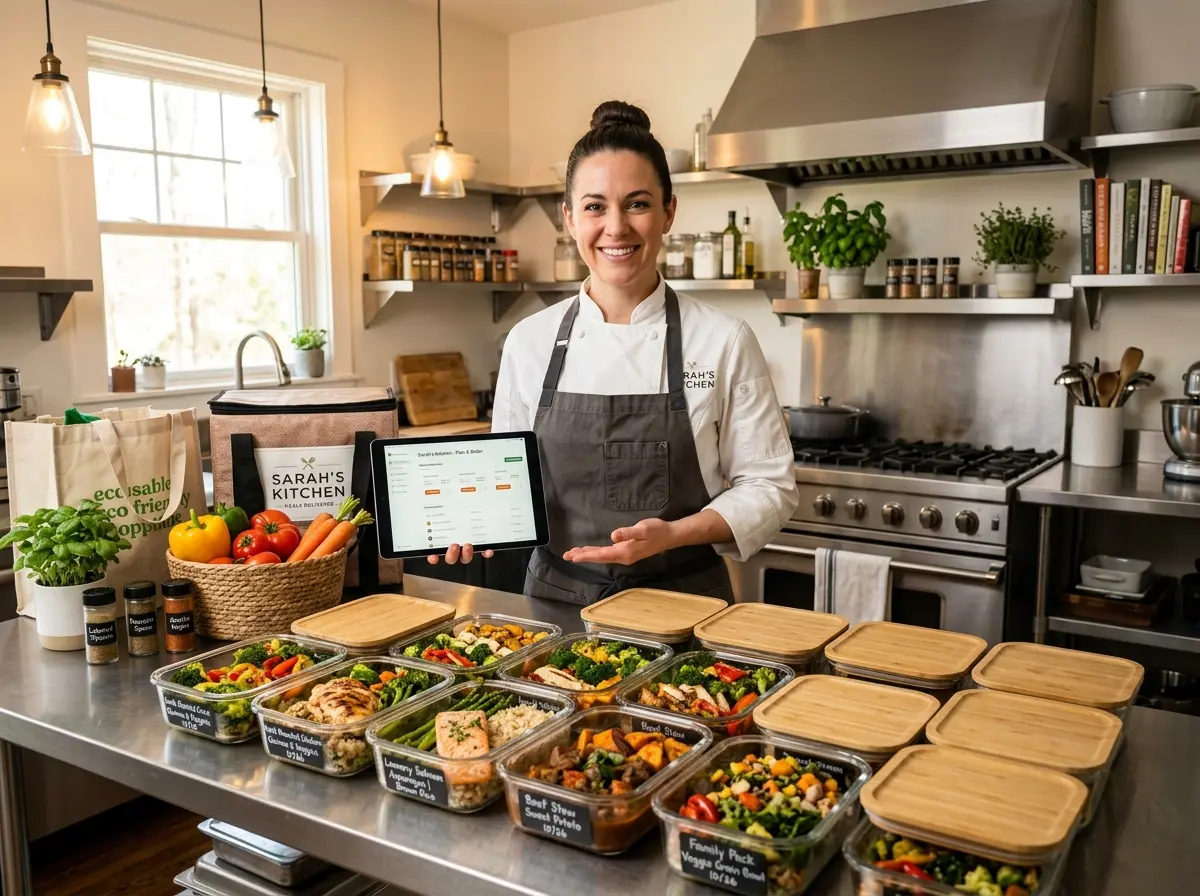
Your weekly workflow should follow a tight rhythm: menu planning on Monday, ingredient ordering by Tuesday afternoon, bulk prep on Thursday, and delivery or pickup on Saturday or Sunday. This isn't the only way to structure it, but the principle matters — batch everything that can be batched. Roast your vegetables in large sheet pan runs. Prep proteins in bulk and portion after. Label everything with client names and dietary notes before a single container leaves your kitchen.
Invest early in a commercial-grade vacuum sealer and a reliable labeling system. These aren't luxuries — they're the difference between a professional product and something that looks like it came from a home cook. Clients are paying a premium, and the packaging and presentation need to match the price point.
Managing Dietary Restrictions Without Losing Your Mind
As your client base grows, the matrix of dietary needs can get complicated fast. One family is gluten-free, another is doing Whole30, a third has a severe tree nut allergy, and someone's teenager just decided to go vegan last Tuesday. The answer here is standardization wherever possible. Design your base recipes to be modular — proteins, grains, and sauces separated, with easy swap-ins for common restrictions.
Build a clear policy around what you accommodate and what falls outside your scope. Not every restriction needs to be your problem to solve. Setting expectations upfront — in your onboarding materials, on your intake forms, and in your welcome communications — protects both you and the client from misunderstandings down the road.
Growing Through Referrals and Community Visibility
The best marketing for a personal chef meal prep service is a happy client talking to another exhausted parent in the school pickup line. Word-of-mouth is powerful in this space because the problem you're solving is deeply personal and highly relatable. Make it easy for satisfied clients to refer friends by creating a simple referral program with a tangible incentive — a free meal, a discount on next month's tier, or even a small branded kitchen item.
Beyond referrals, consider local visibility tactics: partnerships with pediatric dietitians, sponsorships of community events, or a presence in neighborhood Facebook groups and Nextdoor. You're not selling a product people have to be convinced they want — you're selling relief to people who already know they need it. Your marketing job is simply to show up where they're already looking.
Quick Reminder About Stella
Stella is an AI robot employee and phone receptionist that answers calls, handles client questions, collects intake information, and manages contacts through a built-in CRM — all for $99/month with no setup headaches. For a personal chef building a subscription service, she's the operational backbone that keeps things running while you focus on the food. She doesn't take breaks, doesn't forget to follow up, and never puts a prospective client on hold while you're mid-sauté.
Your Next Steps Toward a Thriving Meal Prep Business
Building a meal prep subscription service isn't a weekend project — but it's also not as complicated as it can feel when you're staring at a blank spreadsheet at midnight. The path forward is sequential: nail your tier structure and pricing first, then build your operational systems, then invest in the tools and support that let you scale without burning out.
Here's a simple action plan to get started:
- This week: Define your two or three subscription tiers with clear deliverables and pricing based on honest cost analysis.
- Next two weeks: Build your onboarding intake process — what information do you need from every client before their first delivery?
- This month: Launch with three to five pilot clients, gather feedback obsessively, and refine before you open wider.
- Ongoing: Set up your client management system, automate what can be automated, and protect your prep time like it's a sacred ritual — because it is.
The busy families in your community are out there right now, staring into a refrigerator full of nothing, wondering how they're going to feed everyone a nutritious dinner by 6:30 PM. You have the skills, the passion, and now the roadmap. The only thing left to do is build the thing — and let the right tools handle everything that isn't cooking.