Who Doesn't Love Free Stuff?
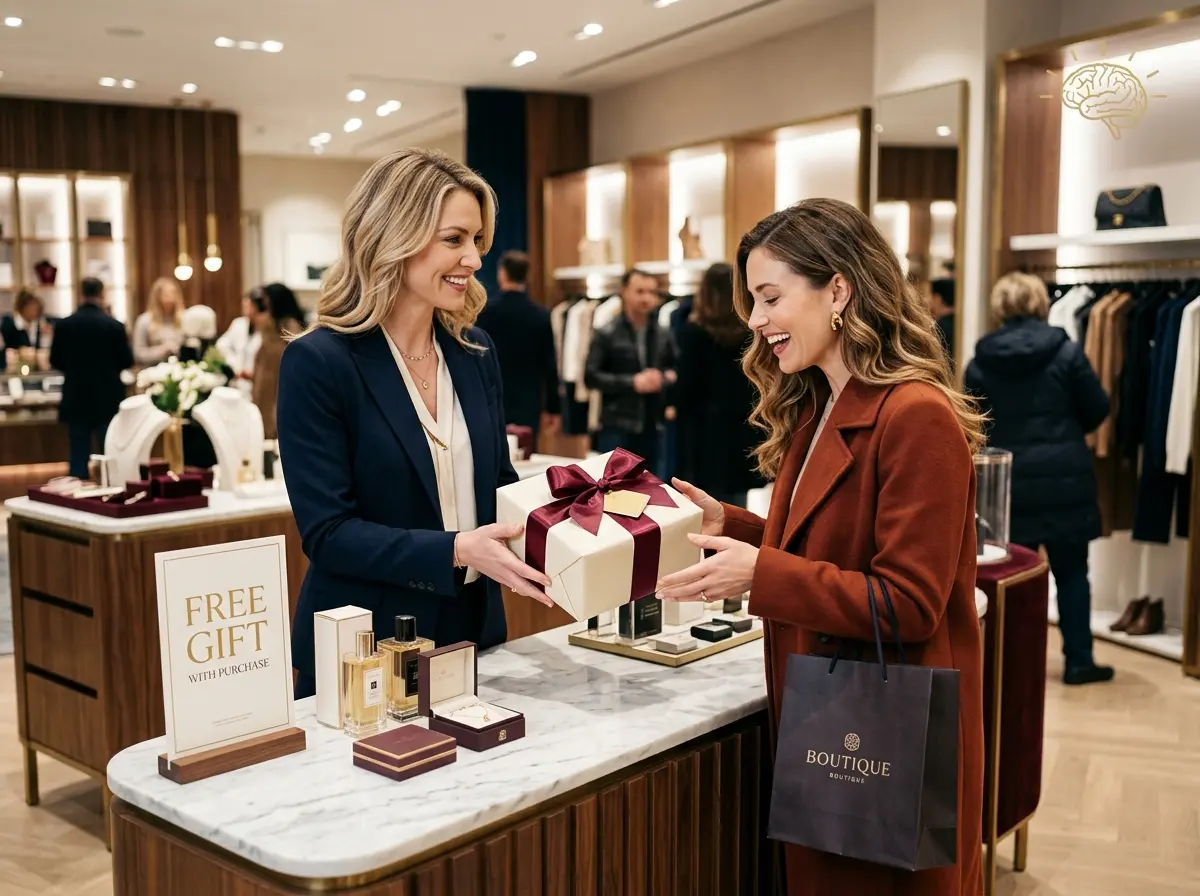
Let's be honest — the words "free gift with purchase" have an almost supernatural ability to make people open their wallets wider than they ever planned to. You've seen it happen. A customer comes in for a $20 product, notices they're only $15 away from a free tote bag, and suddenly they're spending $80. Magic? No. Psychology. And understanding the difference between the two is what separates businesses that run profitable gift-with-purchase promotions from those that just... give away a lot of free stuff and wonder where their margin went.
The free gift with purchase strategy is one of the oldest tricks in the retail playbook, but it's surprisingly easy to get wrong. Done well, it increases average order value, moves slow inventory, builds brand loyalty, and creates genuine excitement. Done poorly, it trains your customers to wait for deals, devalues your core offerings, and eats into your profitability faster than a free sample station at Costco. So let's talk about how to do it right.
The Psychology Behind the Power of "Free"
Why "Free" Hijacks the Brain
There's actual science behind why the word "free" is so irresistible, and it goes beyond simple bargain-hunting. In his book Predictably Irrational, behavioral economist Dan Ariely demonstrated that people respond to "free" offers in ways that completely defy rational decision-making. When something is free, the perceived value skyrockets and the perceived risk drops to zero. There's no fear of making a bad purchase if you're not technically purchasing anything — even if you spent $100 to "unlock" it.
This cognitive shortcut is called zero-price effect, and it means your customers aren't just thinking "I'm getting a good deal." They're thinking "I'm winning." That emotional response — the tiny dopamine hit of getting something for nothing — is exactly what you want to engineer. The key is that the free item must feel genuinely valuable, not like the box of broken pens you found in the back of the supply closet.
The Reciprocity Principle: They Feel Like They Owe You
There's a second psychological mechanism at work here: reciprocity. Humans are hardwired to feel obligated to return a favor. When you give a customer something — even something they technically "earned" by hitting a spending threshold — they feel a subconscious sense of goodwill toward your brand. Studies in consumer psychology consistently show that customers who receive unexpected extras are more likely to return, more likely to leave positive reviews, and more likely to refer friends.
This is why the gift-with-purchase strategy works even better when the gift feels slightly unexpected or generous — when customers feel like they got more than they bargained for. The bar receipt that comes with a little mint? That's not an accident. That's psychology.
Anchoring and Perceived Value
The third piece of the psychological puzzle is anchoring. When you advertise a "free gift valued at $30 with any purchase over $75," you're doing two things simultaneously: you're making the $75 threshold feel more attainable (because the customer perceives they're really spending only $45 net), and you're anchoring your gift's value in the customer's mind at $30 — whether or not they would have ever paid $30 for it otherwise. The key word here is perceived. Your gift doesn't have to cost you $30. It just needs to be something customers genuinely believe is worth $30.
Promoting Your Gift-With-Purchase the Smart Way
Let Technology Do the Talking
A promotion is only as effective as its visibility, and here's where a lot of small business owners drop the ball. They set up a great gift-with-purchase offer, slap a sign on the counter, and hope customers figure it out. Spoiler: they won't always figure it out. Proactive promotion — telling customers about the deal before they've already decided how much to spend — is what drives behavior change.
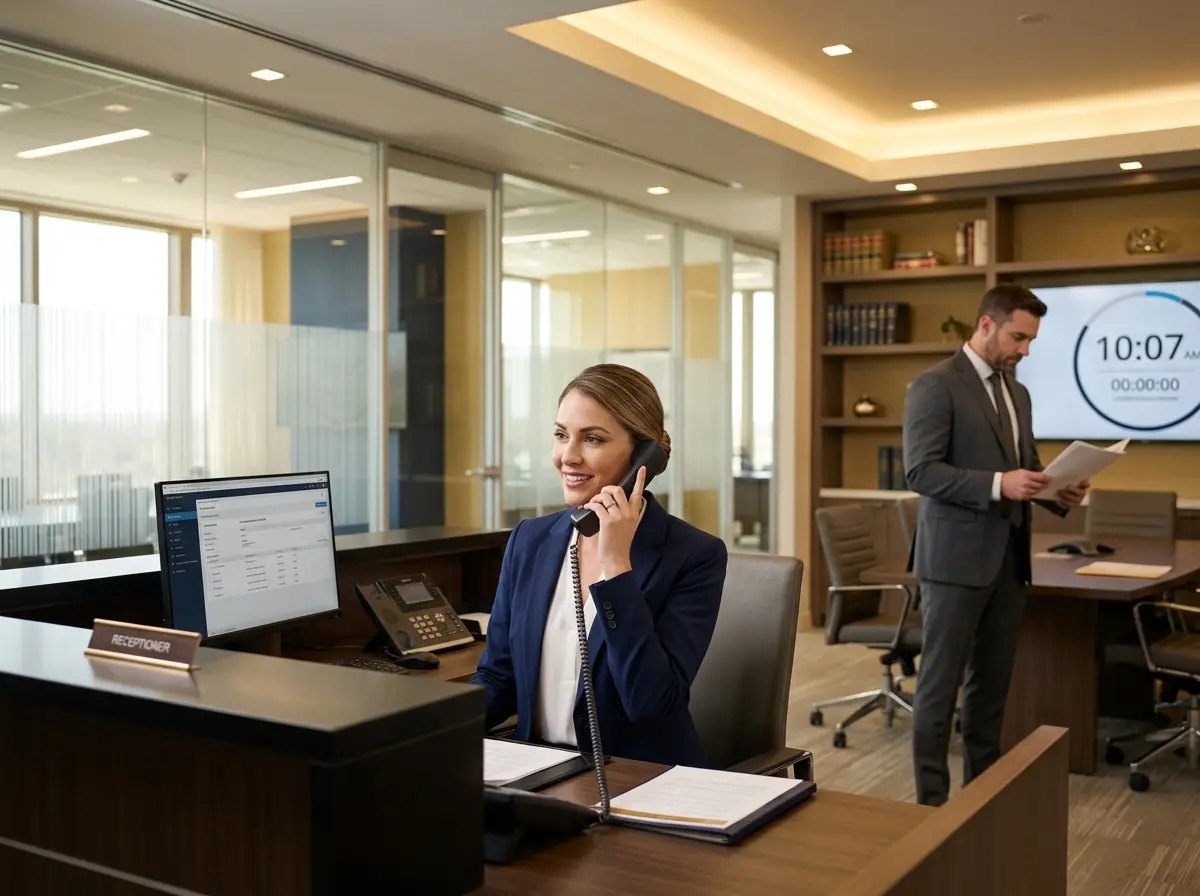
This is exactly where Stella, the AI robot employee and phone receptionist, becomes genuinely useful. For businesses with a physical location, Stella stands inside the store and proactively greets customers, naturally working your current promotions — including gift-with-purchase deals — into the conversation before customers have finished browsing. On the phone side, she answers calls 24/7 and can inform callers about active deals, so your promotion gets airtime even when your human staff are busy or off the clock. That's consistent, enthusiastic promotion without having to remind your team for the fifteenth time to mention the deal.
Designing a Gift-With-Purchase Offer That Actually Makes Money
Choose the Right Gift
The cardinal rule of gift-with-purchase profitability is this: the gift should have high perceived value and low actual cost to you. This is not as contradictory as it sounds. Consider gifting items that you produce or source cheaply, products that have a strong brand association (so the gift reinforces your identity), or slow-moving inventory that you need to shift anyway. A spa offering a free travel-sized product with any facial booking isn't just being generous — they're introducing clients to a retail line they might purchase full-size next time. A restaurant offering a free dessert with a two-entree purchase is filling a table slot that would have gone partially unused. Every "free" gift should have a strategic reason to exist.
Avoid gifting items that are completely unrelated to your business — a hardware store giving away scented candles is confusing, not charming. The gift should reinforce what you do and who you are, and ideally create a bridge to a future purchase.
Set the Right Spending Threshold
The spending threshold is where most businesses either leave money on the table or scare customers away entirely. The golden rule: set your threshold just above your current average order value. If your customers typically spend $45, set your threshold at $60. This creates just enough of a stretch to increase revenue without asking customers to make a leap they're unwilling to make.
According to a study by the Journal of Marketing Research, customers are significantly more likely to "round up" their spending to hit a threshold when the gap feels bridgeable. If the gap feels too large, they mentally opt out and the promotion has no effect. Know your numbers, and set your threshold accordingly.
Measure What Actually Matters
This sounds obvious, but you'd be surprised how many business owners run a gift-with-purchase campaign and evaluate its success by gut feeling alone. Track your average transaction value before, during, and after the promotion. Monitor how many customers actually hit the threshold versus how many came close and didn't quite make it (those are your optimization opportunities). Look at repeat visit rates in the weeks following the campaign — if your gift created genuine delight, you should see a measurable uptick.
If you're running the promotion in-store, also pay attention to which products are being purchased alongside the gift and which combinations are most popular. That kind of insight helps you refine your next offer and, eventually, build promotions that are almost embarrassingly effective.
Quick Reminder About Stella
Stella is an AI robot employee and phone receptionist designed for businesses of all sizes — whether you have a storefront, a service business, or operate entirely online. She greets customers in person, answers phone calls around the clock, promotes your current deals, and keeps your operation running professionally without the sick days or turnover. At $99/month with no upfront hardware costs, she's one of the more surprisingly affordable decisions you can make for your business.
Start Small, Measure Everything, and Scale What Works
The businesses that get the most mileage out of gift-with-purchase promotions aren't necessarily the ones with the biggest budgets or the flashiest gifts. They're the ones who treat each campaign as an experiment, gather real data, and iterate deliberately. Here's a practical starting framework to get you moving:
- Audit your current average order value and set your threshold 25–35% above it.
- Choose a gift with a high perceived value that reinforces your brand and costs you as little as possible — ideally something you already carry or produce.
- Promote it actively — in-store signage, your website, social media, phone greetings, and through any customer-facing technology you use.
- Run the promotion for a defined period (two to four weeks is a solid test window) and track your metrics throughout.
- Debrief honestly. Did average order value increase? Did customers redeem the offer? Did you see any uptick in return visits? Use those answers to design your next promotion smarter.
The psychology of free isn't going anywhere. Customers will always respond to the feeling of winning, of reciprocity, of getting more than they paid for. Your job as a business owner is to harness that response in a way that's genuinely profitable — not just generous. Because generosity without strategy isn't marketing. It's just... expensive.
Now go find out what's sitting in your back room that customers would actually love to receive for free, and build something around it. You've got all the tools you need.