Why Your Customers Leave Without Buying (And What to Do About It)
Picture this: A customer walks into your gift shop, picks up three items, says "oh, how cute!" no fewer than seven times, and then... walks out empty-handed. You smile politely while internally questioning every life decision that led you to retail. Sound familiar?
The truth is, impulse purchases account for up to 40% of all retail spending — meaning nearly half your potential revenue is sitting right there, waiting to be claimed, if you know how to nudge customers in the right direction. The science of impulse buying is well-documented, surprisingly actionable, and honestly a little fascinating once you start seeing it everywhere. Customers aren't randomly grabbing things off shelves; they're responding to carefully crafted psychological triggers — whether they know it or not.
This guide breaks down the core principles of impulse purchase psychology and gives you practical, implementable strategies to turn your gift shop into a place where "I'm just looking" becomes "I'll take two, actually."
The Psychology Behind the Unplanned Purchase
Before we start rearranging your checkout counter, it helps to understand why people buy things they didn't plan to. Impulse purchasing isn't irrational — it's emotional. Customers make split-second decisions based on how a product makes them feel, how it's presented, and whether the environment gives them permission to indulge. Your job is to create all three conditions simultaneously.
The Role of Emotion and Identity
People don't buy products — they buy feelings and self-expressions. That quirky enamel pin isn't just a pin; it's a personality statement. That locally made candle isn't just wax; it's the feeling of supporting something meaningful. When your merchandise and your store environment speak to a customer's identity — their values, humor, aesthetic, or aspirations — they want to buy. They feel understood.
This is why curation matters so much in gift retail. A thoughtfully themed display that tells a cohesive story ("Gifts for the Outdoor Enthusiast" or "Self-Care Starter Pack") emotionally qualifies the customer before they even reach for their wallet. It says: this was made for someone like you. That's an incredibly powerful thing to communicate without saying a word.
Scarcity, Urgency, and the Fear of Missing Out
Limited quantities and time-sensitive offers are among the oldest tricks in the retail playbook — and they work because human brains are wired to avoid loss more strongly than they're motivated by gain. Behavioral economist Daniel Kahneman's research on loss aversion shows that the pain of losing something is roughly twice as powerful as the pleasure of gaining it.
In practical terms: "Only 3 left!" signs, seasonal exclusives, and weekend-only bundles all create a subtle urgency that tips the scales from "maybe later" to "better grab it now." Just make sure your scarcity is genuine — savvy customers see through manufactured urgency fast, and nothing kills trust like a "limited time" offer that's been running since 2019.
The Power of the Price Anchor
Strategic pricing isn't just about margins — it's about perception. When customers see a $45 item next to a $12 item, the $12 item suddenly feels like a steal, even if they had no intention of spending $12 on anything. This is called price anchoring, and it's a subtle but effective way to make lower-priced impulse items feel like sensible, even responsible choices.
Placement matters here too. Positioning moderately priced impulse items — think $8–$20 — near premium products or at eye level near the register can meaningfully increase attachment rates. It's not manipulation; it's retail choreography.
How Your In-Store Experience Drives (or Kills) Impulse Buys
Layout, ambiance, and customer engagement are the unsung heroes of gift shop revenue. You can have the best products in town, but if your store feels cluttered, your staff is overwhelmed, or customers can't find what they're looking for, those impulse purchases evaporate.
Let Technology Handle the Greeting So Your Team Can Handle the Selling
One underappreciated impulse-killer is the awkward moment when a customer walks in and nobody acknowledges them — or worse, gets immediately pounced on by a stressed employee juggling three other tasks. Stella, an AI robot employee and in-store kiosk, solves this elegantly. She stands inside your shop, greets every customer who walks by, and proactively engages them about products, current promotions, and specials — so your human staff can focus on building relationships and closing sales rather than fielding "do you have this in blue?" for the fifteenth time.
Stella also answers your phones 24/7 with the same product knowledge she uses in person, so you're never losing a potential sale because nobody picked up. For a gift shop running lean on staff, that kind of consistent, professional presence is genuinely game-changing — and at $99/month with no upfront hardware costs, it's not exactly a tough ROI calculation.
Strategic Store Layout and Merchandising Techniques
Now let's get physical — because how you arrange your space has a direct, measurable impact on what customers buy. Retail design is a discipline unto itself, but a few foundational principles go a long way for independent gift shops.
The Decompression Zone and the Power Wall
Customers need a moment to mentally "arrive" when they enter your store. The first few feet inside the entrance — called the decompression zone — are largely wasted for selling purposes. Shoppers are still transitioning from the outside world and tend to overlook whatever's placed there. Instead, save your prime real estate for what comes just after: the power wall, the area customers naturally look toward as they enter and start to engage.
This is where your most visually striking, seasonally relevant, or emotionally compelling displays should live. Think bold colors, a clear theme, and a mix of price points. This is your store's first real "hello," and it sets the emotional tone for everything that follows. If your power wall is a pegboard of miscellaneous keychains, it might be time for a refresh.
The Checkout Counter: Your Final Impulse Opportunity
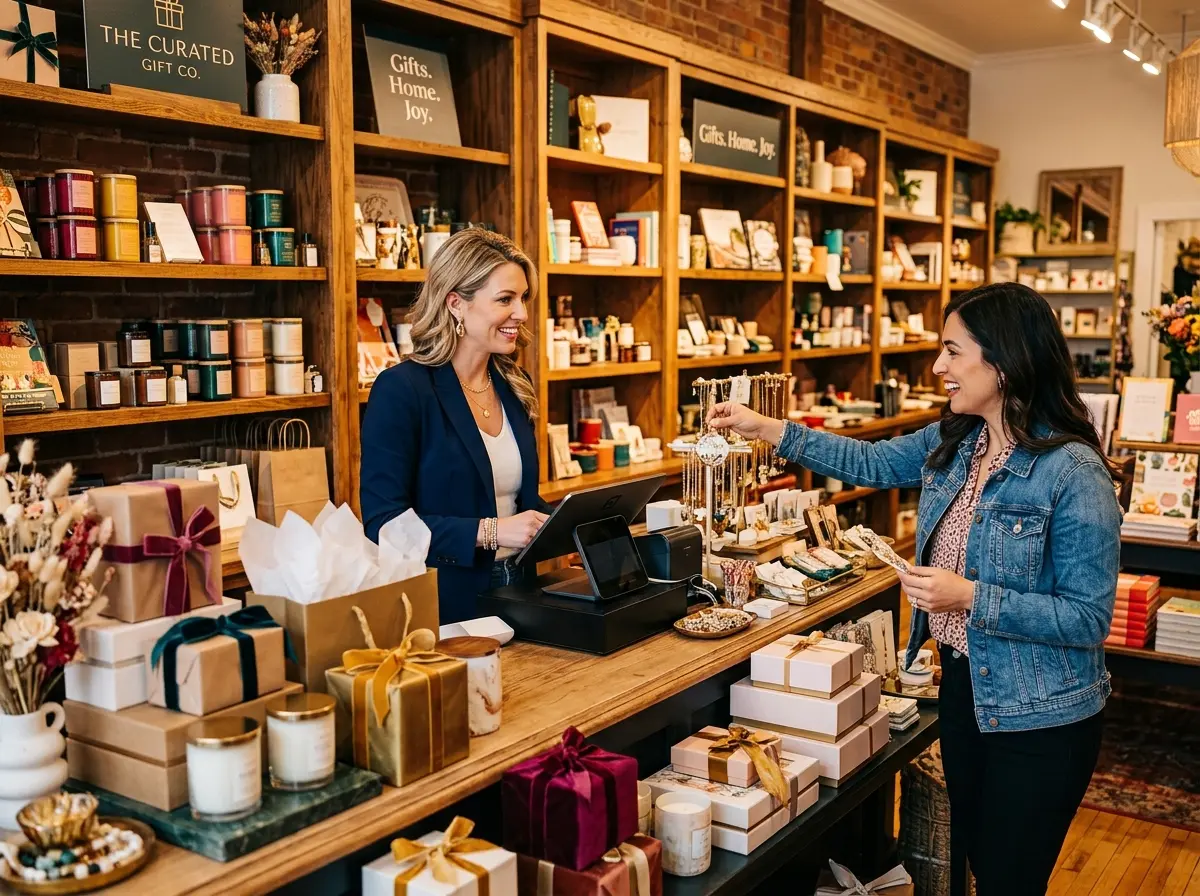
The checkout counter is sacred impulse-purchase territory. By the time a customer reaches it, they've already made the mental shift into "buying mode" — their psychological resistance is at its lowest. This is where small, affordable, delightful items thrive: sticker packs, mini candles, novelty magnets, chocolates, bookmarks, locally made items with a good story.
Keep your checkout display tidy, intentional, and regularly refreshed. Rotate items seasonally and introduce new additions frequently — regular customers should always have something new to discover. A good rule of thumb: if your checkout items are priced under $15 and take less than three seconds to understand, they belong near the register.
Cross-Merchandising: The Art of the Helpful Suggestion
Cross-merchandising — displaying complementary products together — is one of the most effective and underused impulse-purchase strategies in gift retail. A beautiful journal displayed alongside quality pens and a small desk plant isn't just aesthetically pleasing; it tells a complete story and makes the buying decision easy. Customers don't have to imagine how things go together — you've already done it for them.
Consider which products in your inventory naturally belong together and build small "lifestyle vignettes" throughout your store. A spa-themed corner with bath salts, a loofah, a scented candle, and a funny "treat yourself" card. A pet-lover section with toys, treats, and illustrated pet portrait prints. These curated moments increase average transaction value because customers aren't just buying one item — they're buying a complete idea.
Quick Reminder About Stella
Stella is an AI robot employee and phone receptionist designed to help businesses like yours stay engaged with every customer — whether they're walking through your door or calling from across town. She greets shoppers in-store, promotes your current deals, answers questions about products and hours, and handles phone calls around the clock so nothing slips through the cracks. At $99/month with no hardware costs and easy setup, she's one of the most cost-effective team members you'll ever hire.
Start Turning Browsers into Buyers Today
Impulse purchasing psychology isn't about tricking your customers — it's about removing the friction between "I love this" and "I'll take it." When your store environment feels intentional, your displays tell compelling stories, your pricing anchors are smart, and your team (human and AI alike) is focused on engagement rather than logistics, the results show up in your daily sales totals.
Here's where to start this week:
- Walk your store like a customer. Enter through the front door and notice what you see first, what draws your eye, and where you feel confused or overwhelmed. Fix those things first.
- Audit your checkout counter. Remove anything that's been there for more than 60 days without selling. Replace it with something fresh, seasonal, and under $15.
- Build one cross-merchandised vignette. Pick three to five complementary products and display them together as a lifestyle story. Track whether those items sell better together than they did separately.
- Add urgency where it's genuine. If you have limited stock of something popular, say so. If you're running a weekend promotion, make it visible.
- Make sure every customer gets a greeting. Whether that's a well-trained staff member or an AI kiosk like Stella, nobody should walk into your store and feel invisible.
The customers who walk out empty-handed aren't lost causes — they're opportunities waiting for a better experience. Give them one, and watch those "just browsing" visits start ending at the register.