You're Leaving Money on the Table — And Blaming the Members
Here's a scenario that plays out in gyms everywhere: A member has been showing up three times a week for four months. They're consistent, motivated, and clearly serious about their results. Your gym offers nutrition coaching — a genuinely valuable service that would absolutely help them hit their goals faster. They leave without ever signing up for it. Why? Because nobody told them about it at the right moment, in the right way, or with the right framing.
If your nutrition coaching upsell is underperforming, the instinct is to blame member disinterest. "People just don't want to pay for it." But that's rarely the real problem. The real problem is positioning — when you're offering it, how you're framing it, and who is doing the asking. Get those three things right, and nutrition coaching goes from an awkward add-on that staff hate pitching to a natural part of the membership conversation that practically sells itself.
Let's break down why your current approach probably isn't working, and what to do about it.
The Positioning Problems You Might Not See
You're Pitching It Too Early (or Way Too Late)
Timing is everything in sales, and nutrition coaching is no exception. Many gyms make one of two classic mistakes: they either pitch the upsell on day one during signup — when the new member is already overwhelmed with forms, payment details, and locker combinations — or they wait until a member is already disengaged and hoping a nutrition add-on will save the relationship. Neither works particularly well.
The sweet spot is somewhere around weeks three to six of membership. By this point, the member has established a routine, experienced some early wins, and — crucially — started bumping up against their first plateau or lingering questions about food. That's when the door is open. Offering nutrition coaching during this window feels less like an upsell and more like exactly what they were about to Google anyway. You're solving a problem they're currently having, not one they haven't thought about yet.
You're Framing It as a Product Instead of a Solution
There's a big difference between saying "We offer nutrition coaching for $79/month" and saying "Most members hit their first plateau around this point — our nutrition coaching has helped a lot of people break through it pretty quickly." The first is a price tag. The second is a conversation.
Nutrition coaching sells best when it's positioned as the missing puzzle piece to the work a member is already doing — not as a standalone product competing for their monthly budget. Tie it directly to goals they've already expressed. If someone signed up to lose weight, connect the coaching to that specific outcome. If they're training for a race, frame it around performance fuel. Generic pitches get generic results. Personalized framing gets credit cards out.
Your Staff Is Uncomfortable Asking — And Members Can Tell
This one stings a little, but it's worth saying: if your front desk team or trainers feel awkward about upselling, that discomfort radiates. Members pick up on it immediately, and an uncertain pitch almost always leads to a polite "I'll think about it" that never materializes into anything.
The fix isn't to train your team harder on sales tactics. It's to make the recommendation feel genuinely natural — part of a normal check-in conversation rather than a scripted close. Role-play the conversations. Give staff talking points that start with curiosity, not a pitch. Ask members how their nutrition has been going. Let the conversation lead somewhere organic. When the offer follows genuine interest, it lands completely differently.
How Consistent Touchpoints Can Transform Your Conversion Rate
Let Technology Handle the Warm-Up
One reason nutrition coaching upsells fall flat is simple inconsistency. The right staff member has the conversation on a good day, the wrong one forgets entirely on a busy day, and your conversion rate reflects that chaos. A more reliable approach involves building touchpoints that happen automatically — and that's exactly where Stella, the AI robot employee and phone receptionist, fits in naturally for gyms with a physical location.
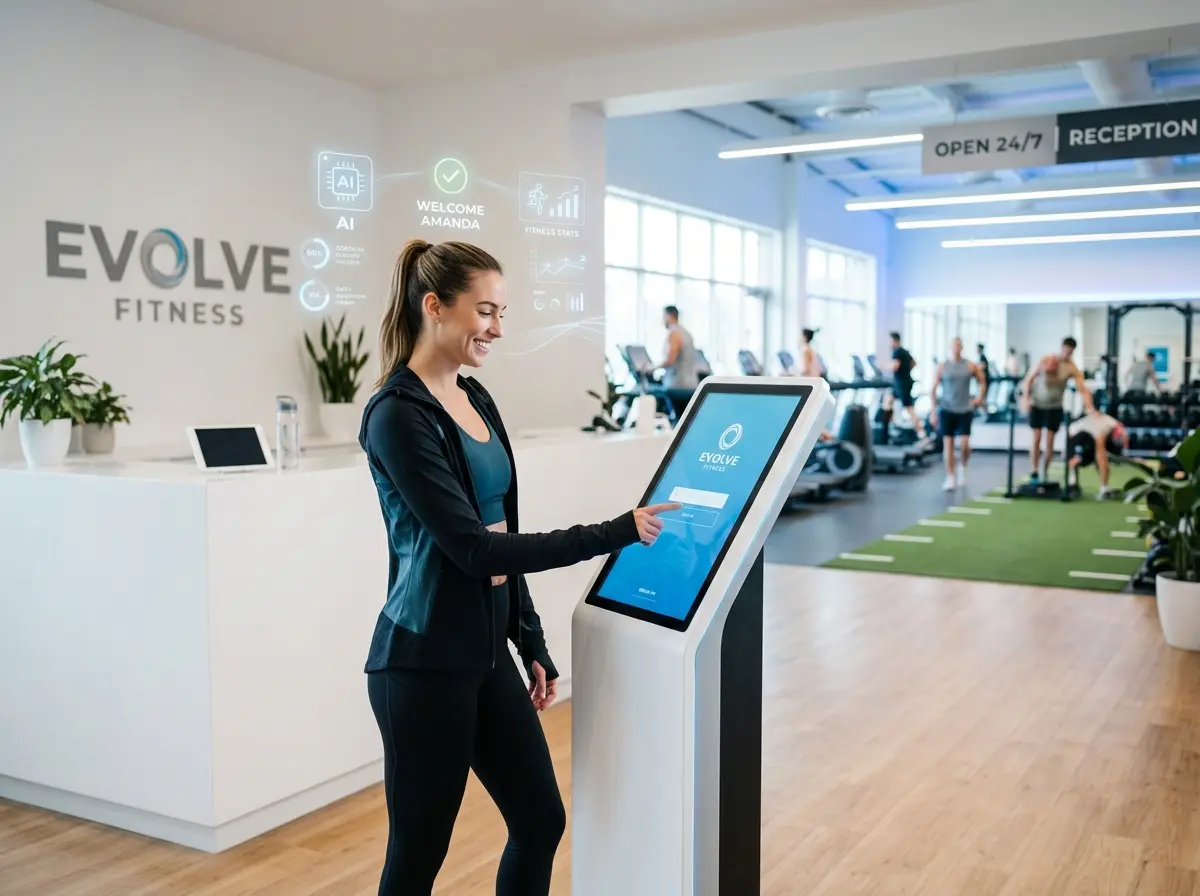
Stella stands in your gym as a friendly, human-sized kiosk that proactively engages members as they come and go. She can highlight your nutrition coaching program, answer questions about what's included, explain the pricing, and even spark the initial interest that your staff then follows up on. She's consistent — she doesn't have off days, she doesn't forget to mention the promo, and she doesn't feel awkward about bringing it up. On the phone side, she handles incoming calls 24/7, which means a member calling after hours to ask about add-on services actually gets a real, helpful answer instead of a voicemail. For a $99/month subscription with no upfront hardware costs, that's a reliable upsell touchpoint working around the clock.
Restructuring the Upsell So It Actually Converts
Create a Natural Milestone Moment
Instead of leaving upsell conversations to chance, build them into your member experience as a formal touchpoint. Consider a "30-Day Check-In" — a brief, friendly conversation (in person or by phone) where a staff member asks how the first month went, what the member is working toward next, and whether they've been thinking about their nutrition at all. This check-in isn't framed as a sales call. It's framed as a service. But it creates a reliable moment to make the nutrition coaching offer in context.
The key is making this check-in feel like something members receive, not something that happens to them. Send a quick text or email letting them know it's coming. Keep it short. Make it personal. Members who feel genuinely cared for are significantly more likely to trust your recommendations — and significantly more likely to buy them.
Use Social Proof Early and Often
Nutrition coaching is an intangible service, which means members often struggle to visualize the value before they've experienced it. Social proof bridges that gap faster than almost anything else. Post short testimonials at your front desk, on your website, and in your gym's app or email communications. Share real member stories — with permission — that tie specific outcomes to the coaching program. Even a simple framed quote near the check-in desk from a member who hit their goal can do more quiet selling than three months of staff pitches.
If you have data, use it. "Members who add nutrition coaching to their membership report hitting their first major goal 40% faster" is a much more compelling statement than "nutrition is really important." Specificity builds credibility. Credibility builds trust. Trust closes upsells.
Offer a Low-Risk Entry Point
Full nutrition coaching programs can feel like a big commitment, especially for members who aren't sure yet whether they'll stick with the gym long-term. Consider offering a single-session nutrition consultation at a low price point — or even complimentary for members who've been with you for 60 days. This removes the commitment barrier entirely and lets the service sell itself. Once a member sits down with a coach and walks away with a personalized plan, the conversion to a recurring package becomes much, much easier. You're not asking them to believe in something abstract anymore. You're asking them to keep doing something that already helped them.
Quick Reminder About Stella
Stella is an AI robot employee and phone receptionist built for businesses like yours. She greets customers in person at your location, promotes your services and specials, answers questions, and handles phone calls 24/7 — all for $99/month with no upfront hardware costs. Whether you need consistent upsell touchpoints on the gym floor or a reliable voice answering calls after hours, she's always on, always professional, and never needs a break.
Stop Blaming the Offer — Fix the Approach
Nutrition coaching is not a hard sell if it's positioned well. The members who would genuinely benefit from it are already in your gym. They're already spending money with you. They already trust you enough to show up. All you need to do is meet them at the right moment, with the right framing, and with enough consistency that the opportunity doesn't keep slipping through the cracks.
Here's where to start:
- Audit your current approach. When is nutrition coaching being offered? By whom? How is it framed? Identify the gaps honestly.
- Build a 30-day check-in into your member journey. Make it a standard touchpoint, not an afterthought.
- Retrain your pitch. Lead with curiosity and outcomes, not price and features.
- Introduce a low-barrier entry point — a free consultation or single session — to let the service prove itself.
- Add consistent touchpoints so the offer is made reliably, not just when a staff member remembers to mention it.
The nutrition coaching revenue you're leaving on the table isn't gone — it's just waiting for a better conversation. Go have it.