Introduction: The Technician Who Can Fix Your HVAC but Can't Sell You a Filter
Picture this: your technician just finished a routine maintenance call. The homeowner's system is 14 years old, the filter looks like it survived a dust storm, and the indoor air quality equipment is nowhere to be found. Your tech wraps up, hands over the invoice, and heads to the next job — leaving behind a golden sales opportunity that just quietly walked out the door with him.
Here's the uncomfortable truth: technical excellence alone doesn't grow your HVAC business. Your technicians are in customers' homes and businesses every single day, which makes them your most powerful — and most underutilized — sales force. Yet most HVAC companies invest thousands in technical certifications and exactly zero in teaching their team how to have a simple revenue-generating conversation.
According to the Air Conditioning Contractors of America (ACCA), the average HVAC service ticket can increase by 20–40% when technicians are trained to present additional services, maintenance agreements, and equipment upgrades. That's not aggressive sales tactics — that's just talking to the customer about what they actually need.
This post is for HVAC business owners who are tired of leaving money on the table and ready to turn their technicians into trusted advisors who just happen to close deals.
Why Technicians Are Your Best (Untrained) Salespeople
They Already Have the Trust You Can't Buy
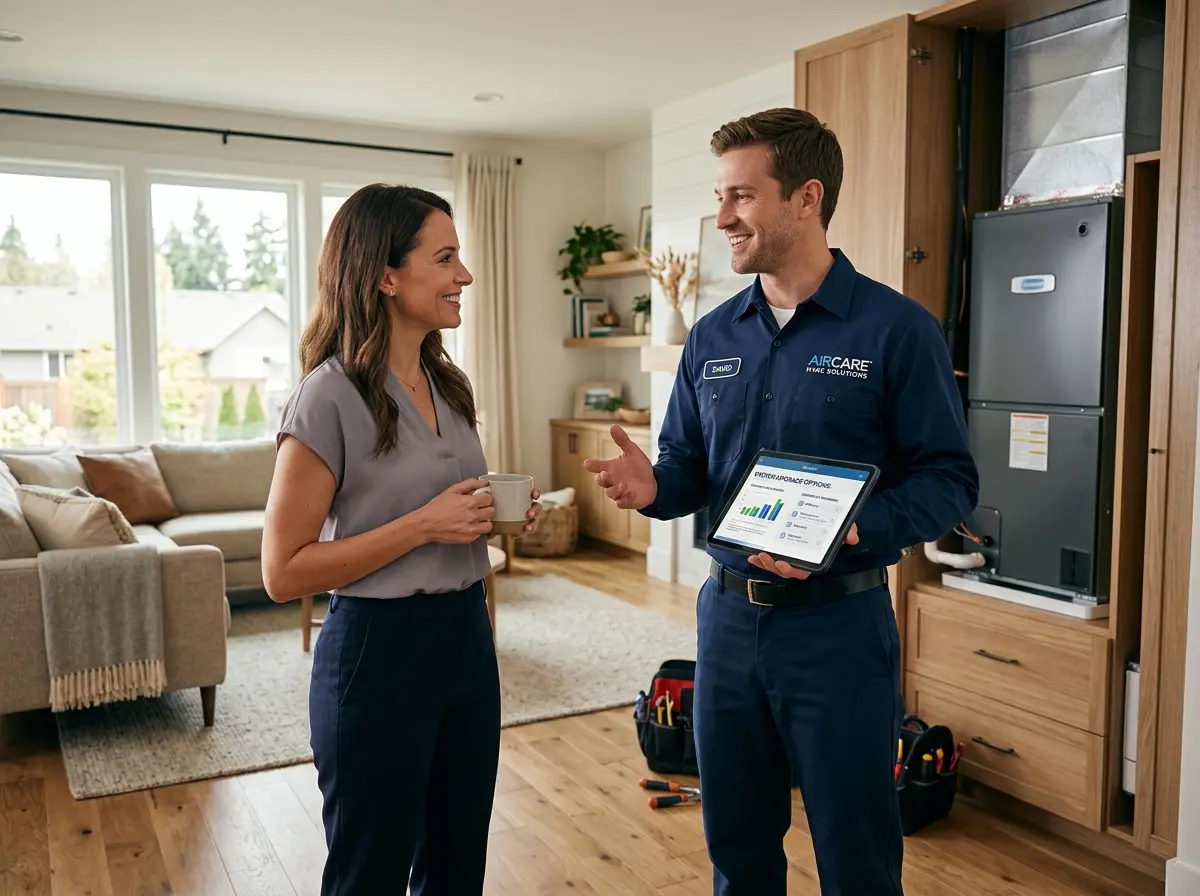
Think about what it takes for a salesperson to earn a customer's trust. Months of relationship-building, follow-up calls, carefully worded emails — it's a whole thing. Your technician earns that same trust in about 20 minutes by showing up on time, being professional, and not breaking anything. Customers who let someone into their home to work on a critical piece of infrastructure are already in a high-trust mindset. That's an extraordinary sales environment, and most technicians have no idea what to do with it.
The key is teaching them to use that trust responsibly — not to push products, but to genuinely educate homeowners about what they're seeing. Customers don't feel sold to when a technician explains that their evaporator coil is aging and what that means for efficiency. They feel informed. And informed customers buy things.
The Language Problem: Speaking "Tech" vs. Speaking "Homeowner"
Here's where things get genuinely painful. A technician tells a homeowner: "Your TXV is showing signs of thermal degradation and your refrigerant charge is about 15% low." The homeowner smiles politely and says, "So… is that bad?"
Sales training for technicians isn't about turning them into slick pitchmen. It's about helping them translate what they know into language that means something to the customer. "Your system is working about 15% harder than it should, which is showing up on your energy bill every month" is the same diagnosis — it just actually lands. Training programs that focus on customer-facing communication, benefit-based language, and active listening can transform how technicians present findings and recommendations without making anyone feel like they're being upsold.
Service Agreements: The Missed Opportunity in Every Driveway
Maintenance agreements are the holy grail of HVAC recurring revenue, and yet most techs finish a call without ever mentioning them. Why? Because nobody taught them how. A well-structured sales training program gives technicians a simple, repeatable framework for presenting maintenance plans — not as a sales pitch, but as a natural extension of the service conversation. Something like: "Everything looks good today. A lot of our customers find it easier to just get on a plan so we catch these things before they become expensive surprises — want me to go over what that looks like?" That's not pushy. That's helpful. And it converts.
Tools That Support Your Team (Including a Robot, Apparently)
How Technology Can Reinforce a Sales-Oriented Culture
Sales training doesn't happen once in a conference room and then magically stick. It needs to be reinforced through your systems, your check-in processes, and yes — even the way your phones are answered and leads are handled. Every touchpoint a customer has with your business either supports or undermines the professional, consultative image you're trying to build.
That's where Stella comes in. Stella is an AI robot employee and phone receptionist that answers calls 24/7, promotes your current services and specials, and collects customer information through conversational intake forms — all while your team is out in the field actually doing the work. When a homeowner calls after hours to ask about a maintenance plan they just heard about from your tech, Stella picks up, answers their questions, and captures their contact information for follow-up. No missed leads, no voicemails that sit until Tuesday. She also maintains a built-in CRM so that every customer interaction is logged, tagged, and ready for your team to act on. Think of her as the front-office support system your sales-trained technicians actually deserve.
Building a Sales Training Program That Technicians Won't Hate
Keep It Real, Keep It Practical
The fastest way to lose your technicians' buy-in is to bring in a generic sales trainer who's never touched a condenser unit and starts talking about "closing techniques." Technicians are practical people. They respect competence, and they can smell inauthenticity from across a crawl space. Your training program needs to be grounded in real HVAC scenarios, real customer objections, and real language that feels natural coming from someone in a work shirt and steel-toed boots.
Role-playing exercises — as uncomfortable as they sound — are genuinely effective when framed around common field situations. Practice the filter upsell. Practice the maintenance agreement conversation. Practice what to say when a customer asks if the repair is "really necessary." The goal is to make these conversations feel automatic, not scripted.
Incentivize the Right Behaviors
You can train all you want, but if your compensation structure only rewards completed service tickets, don't be surprised when that's all your technicians focus on. A well-designed incentive program ties bonuses or commissions to service agreement sign-ups, accessory sales, and equipment upgrade referrals. Even modest incentives — a $25 bonus per maintenance plan sold — can dramatically shift behavior. Make sure the incentive structure is simple enough that technicians can mentally calculate what they're earning in real time. Complexity kills motivation.
Track It, Measure It, Improve It
Like any part of your business, your technician sales program should be measured. Track conversion rates on maintenance agreements per technician, accessory attachment rates, and average ticket values by tech. This data tells you who's thriving with the training, who needs more coaching, and which talking points are actually working. Share the results openly with your team — healthy, transparent competition among technicians can be a powerful motivator, and recognizing top performers publicly reinforces the culture you're building.
Quick Reminder About Stella
Stella is an AI robot employee and phone receptionist that helps HVAC businesses (and businesses across dozens of industries) never miss a call, capture leads around the clock, and present a polished, professional image to every customer. At just $99/month with no upfront hardware costs, she's the kind of front-office upgrade that pays for itself remarkably fast — especially once your newly sales-trained technicians start sending warm leads her way after every service call.
Conclusion: The Business You Could Be Running
Your HVAC company's growth isn't hiding in a new piece of equipment or a bigger advertising budget. A significant portion of it is already riding around in your service vans every single day, going into customers' homes, and coming back without having the conversations that could change your revenue trajectory.
Here's what you can do this week to get started:
- Audit your current technician conversations. Ride along with two or three techs and observe what happens at the end of a call. Are maintenance agreements being mentioned? Are accessories being offered? If not, now you know your baseline.
- Design a simple training framework around three or four core scenarios: the maintenance plan pitch, the filter/accessory upsell, the equipment aging conversation, and handling price objections.
- Build an incentive structure that rewards the sales behaviors you want to see, and communicate it clearly so every technician understands what's in it for them.
- Support the process with the right tools — including a phone and front-office system that captures leads and customer data so that every conversation your tech starts has a place to land.
Technical skills got your business to where it is today. Sales skills — paired with the right training, incentives, and support systems — are what will take it to where you want it to be. Your technicians are already in the room. It's time to give them something useful to say.