Pour Decisions: Why Your Glass Menu Is Leaving Money on the Table
Let's be honest — your by-the-glass menu is doing a lot of heavy lifting. It lowers the barrier to entry, keeps hesitant guests comfortable, and makes your wine program feel approachable. But here's the thing: it's also quietly costing you revenue every single night. When a guest orders four glasses of the same wine over the course of an evening, they've essentially bought a bottle — at a significant markup — and walked out without realizing it. That's great for your margins on that one transaction, but it's a missed opportunity to create a more memorable experience, build loyalty, and move that beautiful bottle inventory gathering dust on your shelves.
Upselling a bottle isn't about being pushy. It's about being helpful. When done well, it feels like a sommelier leaning in with a knowing smile, not a used car salesman in a bow tie. The difference between the two is knowledge, timing, and a staff that's confident enough to have the conversation. This guide breaks down exactly how to do it — without making your guests feel like a sales target and without overwhelming your team.
Building the Foundation: Menu Design and Staff Training
Engineer Your Menu to Do the Selling for You
Your glass menu should be more than a list of wines and prices — it should be a strategic document. Start by auditing which bottles you want to sell more of. Maybe it's a mid-tier Barolo that's been sitting too long, or a case of Côtes du Rhône you got at a great price. Whatever it is, make sure those wines are represented on your glass menu so guests can discover them before you even say a word.
Once they're on the list, pricing psychology becomes your friend. The classic rule: always include a bottle price directly next to or below the glass price. Something as simple as "$14/glass | $48/bottle" does the math for the guest and plants the seed. If a table is eyeing two glasses each, they can see for themselves that a bottle makes more sense financially. You're not upselling — the menu is doing it for you.
Also consider tiering your glass offerings intentionally. A good-better-best structure (three price points per category) gives guests a natural upgrade path. When someone orders the mid-tier Chardonnay by the glass, your staff has a clear, easy conversation starter: "Would you like to try the reserve pour? It's only a few dollars more per glass, or we can open the bottle for the table."
Train Your Staff to Speak Wine Without Sounding Like a Wikipedia Article
Here's a hard truth: your servers are your biggest upsell asset, and most of them are undertrained for wine conversations. That's not a criticism — it's an opportunity. You don't need everyone to be a sommelier. You need them to know three things about each wine on your list: where it's from, what it tastes like, and what food it loves. That's it. Build short, memorable tasting notes into your weekly pre-shift meetings and rotate through your bottle inventory regularly.
Role-play the upsell conversation. It sounds corny, but it works. Have your team practice saying: "You two have each had two glasses — want me to just open a bottle? It works out to about the same and you'll have plenty for the table." That sentence is casual, math-forward, and genuinely helpful. It doesn't feel like an upsell because it isn't — it's a service suggestion. The more naturally your staff can deliver that line, the more often it will land.
Letting Technology Handle the Groundwork
A Smarter Front-of-House Starts Before the First Pour
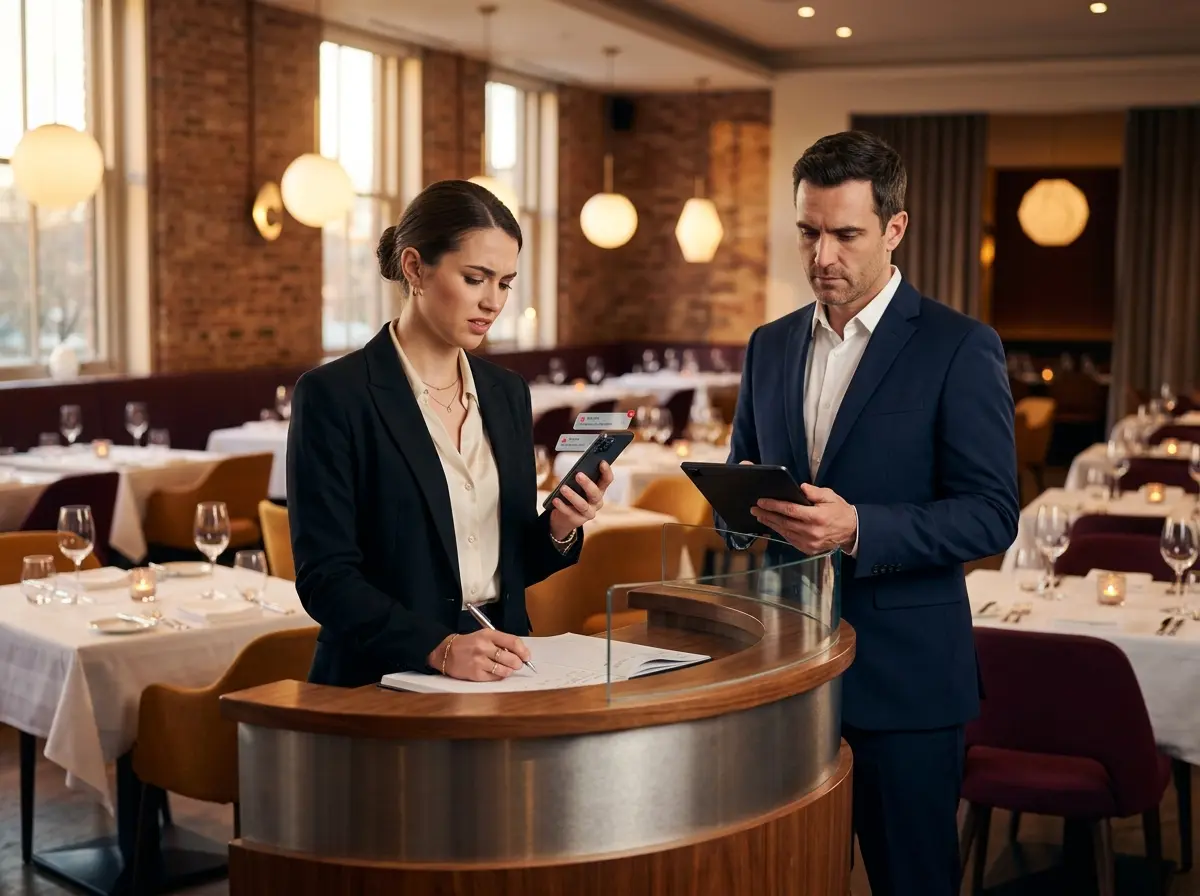
One of the underrated challenges in wine bar upselling isn't the conversation itself — it's the context. Your staff is busy. Tables turn. A guest who walked in curious about natural wines gets seated, glances at the menu for ninety seconds, and then orders whatever sounds familiar. The opportunity to guide that decision often happens before your server ever arrives.
That's where Stella comes in. Stella is an AI robot employee and phone receptionist that can be stationed right inside your wine bar to greet guests as they arrive, highlight current bottle specials, and answer questions about your wine list — all before a human staff member has a chance to get there. She can mention that tonight's featured bottle is the Grenache from the Priorat region, available by the glass or as a bottle with a special pairing offer. That kind of proactive, consistent promotion is the difference between a guest who orders with intention and one who just defaults to whatever's cheapest.
Stella also answers your phone calls 24/7, which matters more than you might think. Guests often call ahead to ask about your wine selection, private events, or bottle pricing. A knowledgeable, always-available AI voice on the other end of that call — one that can actually recommend bottles and promote your current features — sets the upsell in motion before they ever walk through the door.
The Art of the Bottle Conversation: Timing, Framing, and Follow-Through
Timing Is Everything (Seriously, Don't Wait Too Long)
The best moment to suggest a bottle is earlier than most servers think. By the time a guest has had two glasses, they're relaxed and enjoying themselves — which is exactly when the suggestion lands naturally. Waiting until they've finished their third glass means you've already missed the window. The math no longer works in the guest's favor, and the conversation feels transactional rather than helpful.
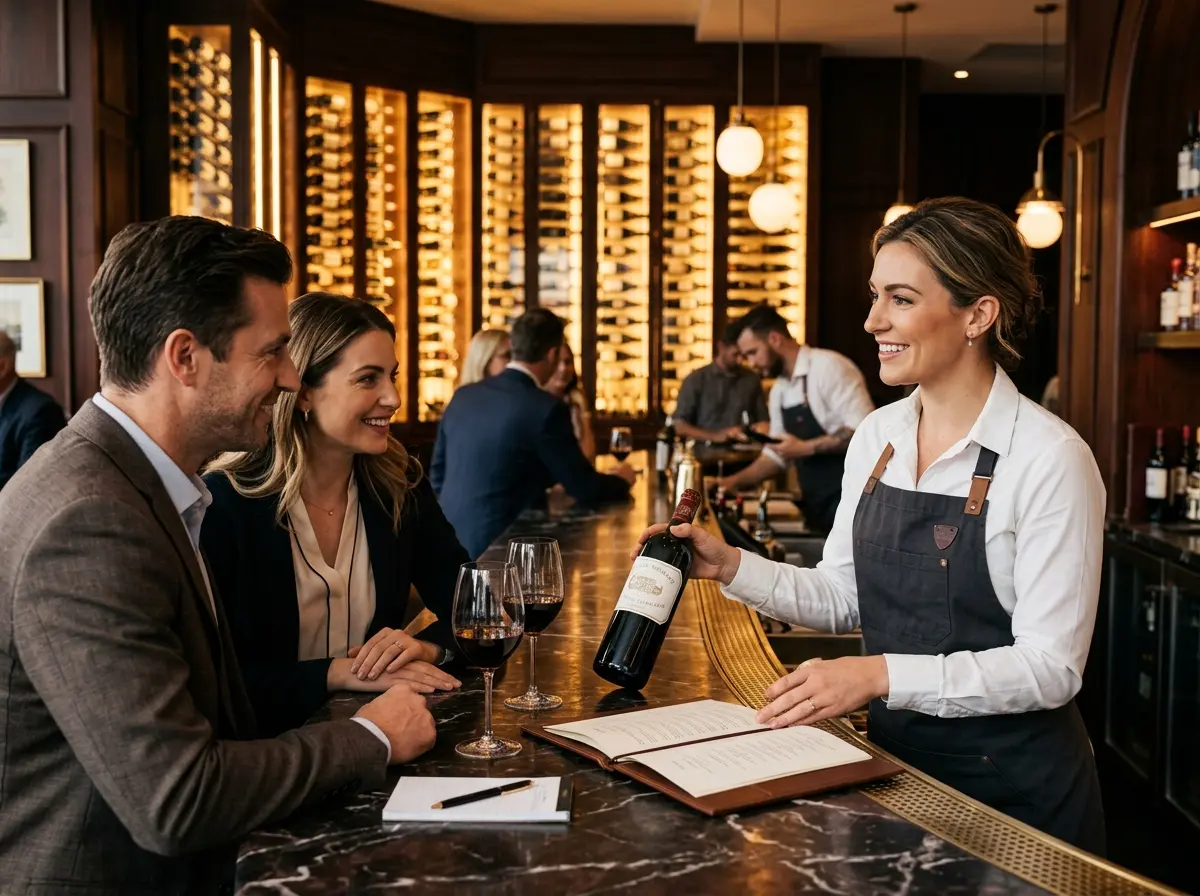
Train your team to flag two-glass moments. As soon as a table has ordered a second round of the same wine, that's the cue: "You're both clearly enjoying this one — can I go ahead and open a bottle for the table? It's a better deal and you won't have to flag me down for refills." The last part — the convenience angle — is often more persuasive than the price argument. People love not having to wave someone down.
Framing the Upsell as an Experience, Not a Transaction
Wine drinkers, more than almost any other category of guest, respond to story and experience. A bottle is not just a bigger volume of liquid — it's an event. It has a label worth looking at, a provenance worth mentioning, and a ritual (the opening, the pour, the breathing) that adds theater to the table. Lean into that.
Your staff should be able to say something like: "This is a small-production Tempranillo from a family-owned estate in Ribera del Duero — they only make about 2,000 cases a year. It opens up beautifully over the course of an evening. Want me to open a bottle?" That's not an upsell. That's a story with an invitation. The guest isn't spending more money — they're gaining an experience. Frame it that way consistently, and your bottle sales will follow.
Create Bottle-Specific Incentives That Actually Work
If you want to move specific bottles more aggressively, incentive structures help — both for guests and for staff. On the guest side, consider offering a small benefit for bottle purchases: a complimentary charcuterie add-on, a take-home wine tag or card with tasting notes, or a loyalty point bonus if you run a program. These don't need to be expensive. They just need to signal that ordering a bottle is the smarter, more rewarding choice.
On the staff side, consider a simple bottle-of-the-week contest. Track who sells the most bottles of a featured wine over the course of a week and offer a small reward — a gift card, a shift meal, a cash bonus. Friendly competition sharpens attention. When your team is actively thinking about bottle sales, they find the opportunities that would otherwise slip by. Pair that with a short training on the featured wine, and you've created both the motivation and the knowledge to make it happen.
Quick Reminder About Stella
Stella is an AI robot employee and phone receptionist built for businesses like yours — available as a physical kiosk inside your wine bar and as a 24/7 AI voice on your phone line. She's always on, always informed, and always ready to promote your current specials, answer questions, and start the upsell conversation before your human staff even steps in. At $99/month with no upfront hardware costs, she's one of the lowest-effort, highest-consistency additions you can make to your front-of-house operation.
Start Pouring More Bottles Tonight
The path from a glass sale to a bottle sale is shorter than most wine bar owners realize. It doesn't require a dramatic overhaul of your operations or a staff full of certified sommeliers. It requires a menu designed with intention, a team trained with specific language and timing cues, a willingness to use technology to fill the gaps, and a culture that treats the bottle recommendation as a genuine act of hospitality rather than a sales tactic.
Here's where to start this week: pick three bottles you want to move. Make sure they're on your glass menu. Brief your team on a two-sentence description of each. Set a soft goal for bottle sales this weekend. Debrief on Monday. That cycle — identify, brief, promote, review — is the engine behind every wine program that actually converts its glass traffic into bottle revenue.
Your guests came in for a great experience. A bottle on the table is almost always a better version of that experience than four separate glasses ordered one at a time. Help them get there, and everyone wins — including your inventory.