The One-Time Oil Change Problem (And How to Fix It)
Here's a scenario that plays out in auto shops across the country every single day: A customer pulls in, gets an oil change, pays the bill, says "see ya," and then... vanishes. Maybe they come back in six months. Maybe they find another shop. Maybe they move to a deserted island. You genuinely have no idea, because once they drove off the lot, they took their contact information, their vehicle history, and their future revenue with them.
The average American spends over $1,200 per year on vehicle maintenance and repairs. That's a significant chunk of money — money that's either coming to your shop or going to your competitor down the street. The difference between capturing that revenue and watching it drive away often comes down to one thing: how well you manage your customer relationships.
That's where Customer Relationship Management — better known as CRM — comes in. CRM isn't just corporate buzzword soup. For auto shops, it's the difference between running a business that constantly scrambles for new customers and running one with a loyal base that keeps coming back, refers their friends, and doesn't even bother Googling competitors. Let's talk about how to build that.
The Foundation: What CRM Actually Means for Auto Shops
It's Not Just a Spreadsheet (Please Tell Us It's Not a Spreadsheet)
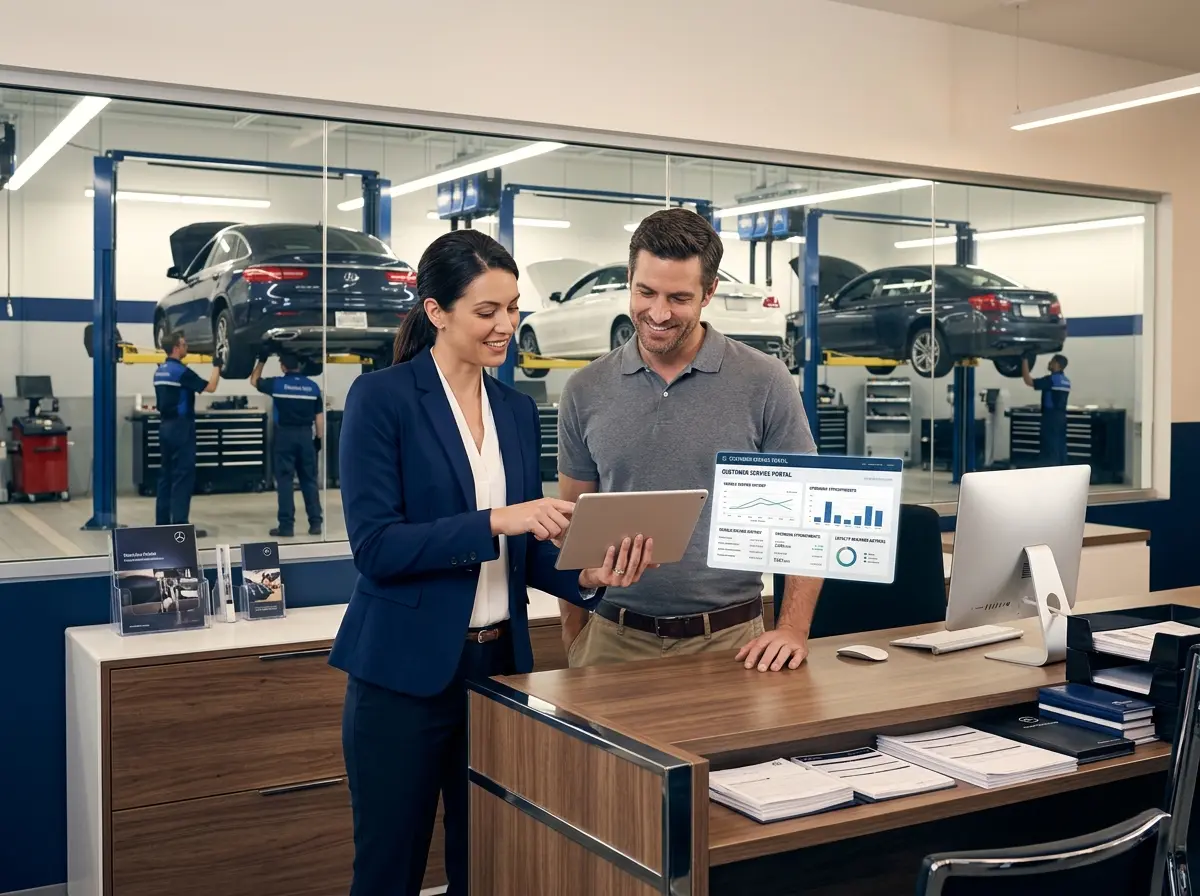
CRM, at its core, is a system for tracking and managing your relationships with current and potential customers. For an auto shop, this means knowing who your customers are, what vehicles they drive, what services they've had done, when they're due for their next visit, and how they prefer to be contacted. A proper CRM centralizes all of this so that any member of your team can pull up a customer's history in seconds — without rifling through a filing cabinet or, heaven forbid, a color-coded spreadsheet held together by hope and conditional formatting.
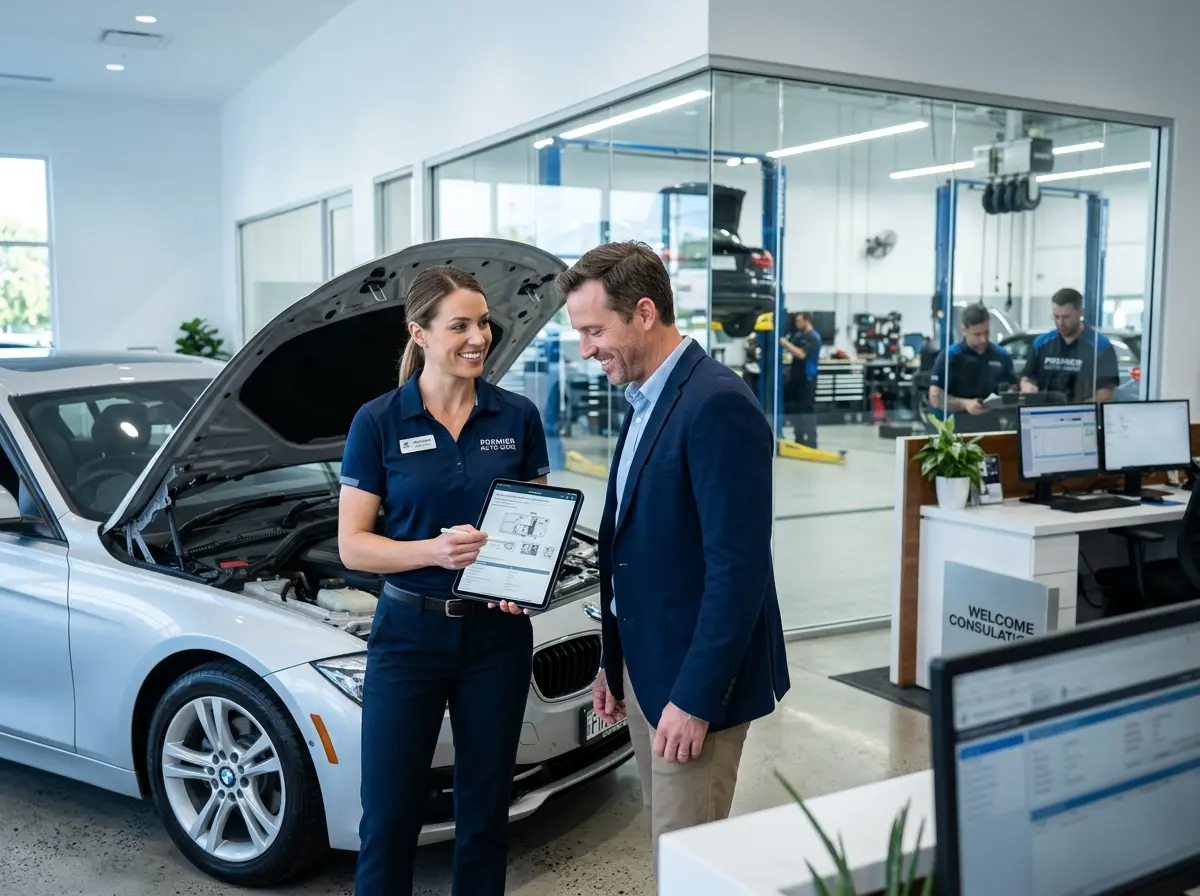
Good auto shop CRM data includes customer contact information, vehicle make, model, year, and VIN, full service history, mileage at each visit, upcoming maintenance milestones, and any notes about preferences or past conversations. The goal is that when Mrs. Henderson pulls in for her third visit, your team greets her by name, already knows she drives a 2019 Honda CR-V, and can mention that her brake pads are probably due for an inspection. That's not magic — that's CRM.
Why First-Time Customers Are Your Biggest Opportunity (and Risk)
Research consistently shows that acquiring a new customer costs five times more than retaining an existing one. First-time visitors to your shop represent a fork in the road: either you do something to make them feel remembered and valued, or they become just another one-time transaction. The businesses that win long-term are the ones that treat the first visit as the beginning of a relationship, not the end of a sale.
The key is capturing their information during that first visit and then actually doing something useful with it. This means collecting at minimum their name, phone number, email, and vehicle information. With that data in hand, you can send a follow-up thank you, remind them when they're due for service, alert them to seasonal promotions, and build a communication rhythm that keeps your shop top of mind without being annoying about it.
Tools That Do the Heavy Lifting So You Don't Have To
Automating the Follow-Up (Because You Have Enough on Your Plate)
Here's where technology becomes your best friend. A good CRM system doesn't just store information — it acts on it. Automated reminders sent via text or email when a customer is approaching their next oil change interval, seasonal campaign emails about tire rotations before winter hits, and birthday or vehicle anniversary messages are all examples of touchpoints that feel personal but require zero manual effort once set up. Customers feel remembered. You didn't have to remember anything. Everybody wins.
The shops that excel at this treat their CRM like a silent sales associate that works 24/7, quietly nudging customers back through the door at exactly the right moment. Set it up once, refine it occasionally, and let it run.
Where Stella Fits Into Your Customer Capture Strategy
One of the biggest gaps in most auto shops' CRM strategy isn't the software — it's the data collection. Customers call to ask about pricing, pull in for a quick service, and leave without ever being properly entered into the system. That's where Stella, the AI robot employee and phone receptionist, becomes genuinely useful. Stella can answer incoming calls 24/7 — including the ones that come in after hours when your team has gone home — and collect customer information through conversational intake forms right during the call. That data flows directly into a built-in CRM complete with custom fields, tags, notes, and AI-generated customer profiles.
Beyond phone calls, Stella operates as an in-shop kiosk that greets walk-in customers, answers their questions about services and pricing, and can capture their information during natural conversation — no clipboard, no awkward "can I get your email?" moment at the register. For an auto shop trying to systematically convert first-time visitors into long-term customers, having both the in-person and phone touchpoints covered by one consistent system is a meaningful advantage.
Turning Data into Loyalty: Practical CRM Strategies for Auto Shops
Segment Your Customers and Communicate Smarter
Not every customer is the same, and a one-size-fits-all communication approach treats them like they are. A CRM allows you to segment your customer base into meaningful groups — oil change regulars, customers who haven't visited in over a year, high-value customers who spend above a certain threshold, owners of older vehicles likely needing more frequent maintenance, and so on. Once segmented, you can tailor your outreach accordingly.
The customer who hasn't been in for 14 months needs a different message than the one who was in three weeks ago. The owner of a 2009 pickup with 180,000 miles on it needs different service recommendations than the person driving a lease vehicle under warranty. Personalization at this level is what separates shops that feel like they know their customers from shops that feel like anonymous service stations. Tags and custom fields in your CRM make this kind of targeted communication genuinely easy to execute.
Build a Loyalty and Referral Loop
CRM data gives you the intelligence to build loyalty programs that actually make sense. You can identify your top customers by visit frequency or spend, reward them with exclusive offers, and create referral incentives that encourage them to bring in friends and family. The referral piece is particularly powerful — referred customers have a 37% higher retention rate than customers acquired through other channels, and they tend to spend more too.
A simple referral program tracked through your CRM might look like this: existing customers get a discount on their next service for every new customer they refer, and the referred customer gets a first-visit discount as well. Your CRM tracks who referred whom, makes sure the rewards are applied correctly, and gives you visibility into which customers are your best ambassadors. That's a flywheel worth building.
Use Service History to Drive Upsells That Don't Feel Pushy
There's a meaningful difference between pushy upselling and genuinely helpful recommendations. When a customer brings in their car for an oil change and your technician notices — based on their CRM record — that their last tire rotation was 12,000 miles ago, mentioning it isn't pushy. It's helpful. Customers appreciate being informed about things their vehicle actually needs, especially when the recommendation is grounded in their own service history rather than a generic sales script.
CRM-powered upselling works because it's contextual and credible. It shows customers that you're paying attention to their vehicle specifically, which builds trust. And trust, in the auto repair industry where skepticism runs high, is the most valuable currency you have.
Quick Reminder About Stella
Stella is an AI robot employee and phone receptionist that greets customers in your shop, answers calls 24/7, collects customer information through conversational intake forms, and manages contacts through a built-in CRM — all for $99/month with no hardware costs. She handles the repetitive front-desk work so your team can focus on the work that actually requires a wrench. For auto shops trying to capture and retain more customers, she covers the touchpoints where most shops are losing data and dropping the ball.
Conclusion: Stop Letting Customers Slip Through the Cracks
Building a loyal customer base for your auto shop isn't about gimmicks or flashy promotions. It's about consistently making customers feel known, valued, and well-served — and then using smart systems to make that consistency scalable. CRM is the infrastructure that makes all of it possible.
Here's what to do next. Start by auditing what customer data you're currently collecting and where the gaps are. If you're not capturing contact information and vehicle details for every single visit, fix that first — everything else depends on it. Then look at how you're following up with customers after their visit, and whether your outreach is personalized or generic. Finally, evaluate whether your current tools are doing enough of the heavy lifting, or whether you're relying on manual effort that inevitably falls through the cracks.
The shops that build lasting businesses aren't necessarily the ones with the best technicians or the lowest prices. They're the ones that make customers feel like more than a transaction — and then have the systems in place to keep proving it, visit after visit.