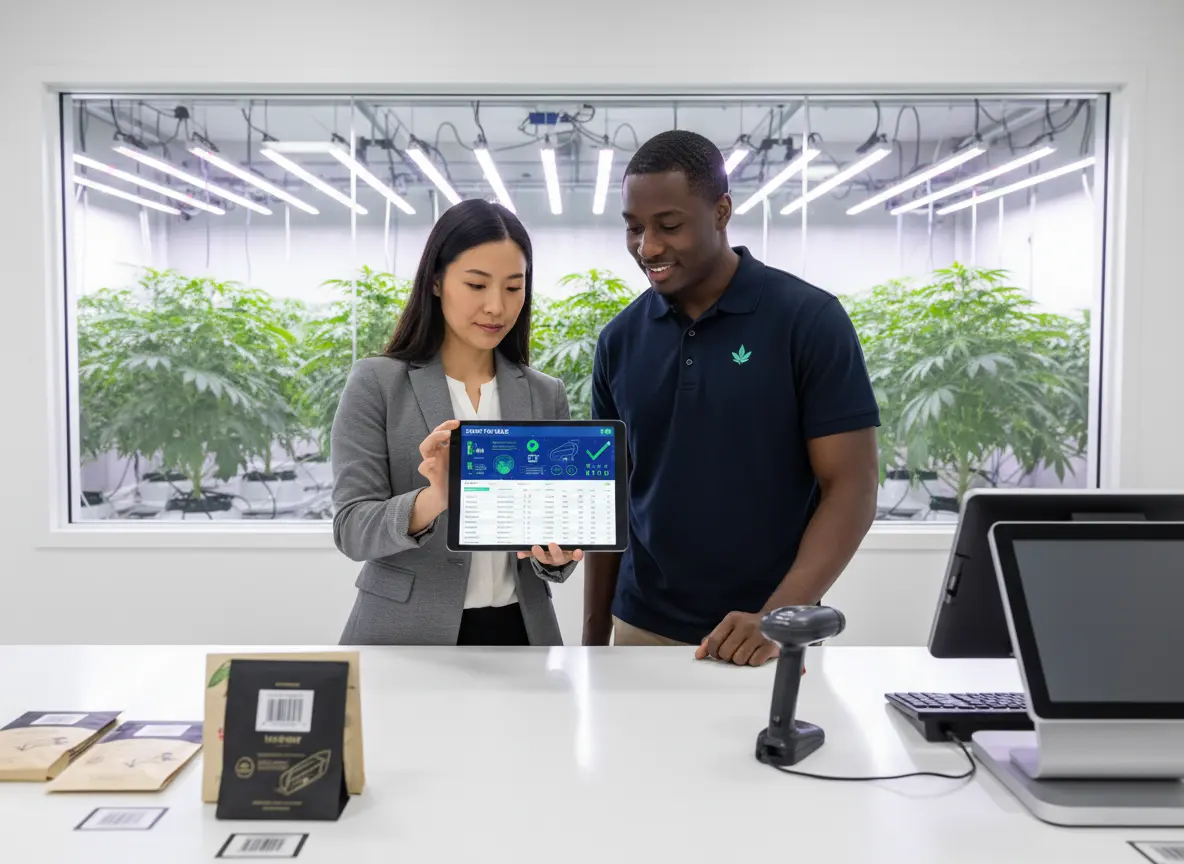
Welcome to the Jungle: Navigating Seed-to-Sale Without Losing Your Mind
Let's be honest. You didn't get into the cannabis business because you have a deep, burning passion for data entry and regulatory paperwork. You got into it for the culture, the community, the product, and maybe—just maybe—the dream of building a thriving business in a groundbreaking industry. And then, reality hit. It came in the form of a million tiny plant tags, a state-mandated software system that looks like it was designed in 1998, and the ever-present, low-grade fear of a surprise audit.
Ah, yes. We're talking about seed-to-sale tracking. It’s the regulatory backbone of the legal cannabis industry, designed to ensure every single gram of product is accounted for from the moment it sprouts to the moment a happy customer walks out your door. It’s also a notorious source of headaches, sleepless nights, and the kind of existential dread usually reserved for filing taxes. But fear not, intrepid dispensary owner. Mastering this beast isn't just possible; it's essential for your survival. So grab your strongest sativa, and let's dive into the thrilling world of compliance.
The ABCs of Seed-to-Sale (and Why It’s Not as Fun as it Sounds)
Seed-to-sale is exactly what it sounds like: a meticulous, legally mandated tracking system that follows the entire life cycle of a cannabis plant. Think of it as a government-issued babysitter for every single one of your products. It’s not here to be your friend; it's here to make sure you follow the rules. Ignoring it is, to put it mildly, a very bad idea.
What Exactly Is Seed-to-Sale Tracking?
At its core, seed-to-sale is a chain of custody. Every action involving a cannabis product must be logged into a state-approved tracking system. This includes:
- Cultivation: Every seed or clone gets a unique identifier (UID). As it grows, its progress, any pesticides used, and its eventual harvest weight are all recorded.
- Processing: When that plant is processed into flower, edibles, or concentrates, the system tracks the transfer of weight from the raw plant to the finished goods, accounting for every last gram.
- Testing: Products are sent to a lab, and the results (potency, purity, etc.) are logged against their UIDs.
- Distribution & Retail: When you receive a shipment, you log it into the system. Every time you sell a product, the transaction is recorded, linking that specific UID to a sale and removing it from your inventory.
In essence, you’re creating a digital paper trail so comprehensive that a regulator could, in theory, trace the gummy in a customer’s bag all the way back to the specific plant it came from. It’s Big Brother, but for bud.
The High Stakes of Non-Compliance
So what happens if you get a little sloppy? If a few grams go "missing" or a manifest isn't logged correctly? Well, the consequences range from "painful" to "catastrophic." We’re not talking about a slap on the wrist. State cannabis agencies have been known to levy fines that can easily run into the tens or even hundreds of thousands of dollars for record-keeping violations. In some states, a single major compliance failure can cost you your license—the one you spent a small fortune and countless hours to obtain.
According to one industry report, compliance costs for cannabis businesses can account for over 10% of their operating budget. But the cost of non-compliance is infinitely higher. This isn't just about avoiding fines; it's about protecting the very existence of your business.
Choosing Your Weapon: The Right Tracking Software
Most states mandate the use of a specific tracking system, like Metrc, BioTrack, or Leaf Data Systems. You don’t get a choice in that. However, you do get to choose your Point of Sale (POS) and inventory management software that integrates with the state system. This is one of the most important decisions you’ll make.
Look for a system that offers a seamless, two-way integration. You want a POS that makes compliance easy, not harder. It should automatically report sales, adjust inventory levels in real-time, and flag potential discrepancies before they become five-alarm fires. A clunky system that requires constant manual data entry is a recipe for human error, which is a regulator’s favorite dish. Do your homework, ask for demos, and talk to other dispensary owners. Your sanity depends on it.
Juggling Compliance and Customer Experience
All this talk of tracking, logging, and auditing can make it easy to forget the most important part of your business: your customers. While your manager is in the back office triple-checking a manifest and your best budtender is stuck doing a cycle count, who’s on the floor creating a welcoming atmosphere and making sales?
Keeping Customers Happy While You're Counting Trichomes
This is the classic dispensary dilemma. Compliance tasks are non-negotiable and incredibly time-consuming. They pull your most experienced staff away from the sales floor, leaving new hires or fewer employees to handle the customer rush. This can lead to missed greetings, long wait times, and a less-than-stellar customer experience. Patrons who feel ignored are patrons who go to the dispensary down the street.
This is where automation can be your secret weapon. Imagine having a team member who never needs to be pulled away for compliance tasks. An assistant like Stella, our in-store robot, can be that reliable presence. While your human team focuses on detailed compliance work and high-value customer consultations, Stella greets every single person who walks in, promotes your daily specials, and answers common questions about store hours or loyalty programs. She ensures no customer feels overlooked, keeping the floor engaged while your team handles the crucial (and frankly, tedious) back-end work that keeps the lights on and the regulators happy.
Mastering the Compliance Maze: Practical Tips
Knowing what seed-to-sale is and having the right software is just the beginning. True mastery comes from building a culture of compliance within your dispensary. It’s about processes, training, and a healthy dose of paranoia.
Training Your Team to be Compliance Ninjas
Your budtenders are your first line of defense against compliance errors. Don't just throw them onto the floor with a login and a prayer. Comprehensive training is a must. Every employee, from the general manager to the part-time budtender, needs to understand not just how to perform a task but why it's so important.
Create Standard Operating Procedures (SOPs) for every compliance-related task: receiving inventory, processing sales, handling returns, and performing daily audits. Make these documents your store's bible. Regular training sessions and pop quizzes can keep the information fresh and reinforce the message that compliance is everyone's job. When your team understands the stakes, they become partners in protecting the business.
The Art of the Impeccable Audit
Don't wait for the state to audit you. Audit yourself. Regularly. Conduct your own mock audits to find and fix discrepancies before they become official problems. A good practice is to perform daily reconciliations of your physical inventory against what’s recorded in your POS and the state tracking system. It might feel like overkill, but finding a one-gram discrepancy today is infinitely better than having a regulator find a 100-gram discrepancy three months from now.
Keep your records pristine and easily accessible. When an auditor does arrive (and they will), being able to produce any requested document quickly and confidently makes a huge difference. It shows them you’re organized, professional, and have nothing to hide—even if your heart is pounding out of your chest.
Staying Ahead of Ever-Changing Regulations
The only thing constant in the cannabis industry is change. Regulations are constantly being updated, tweaked, or completely overhauled. What was compliant yesterday might be a violation tomorrow. It's your responsibility to stay on top of it. This means:
- Subscribing to updates from your state's cannabis control board.
- Joining industry associations like the National Cannabis Industry Association (NCIA) or local state groups.
- Networking with other dispensary owners to share information and best practices.
- Consulting with a compliance expert or lawyer when you’re unsure. The legal fees are a lot cheaper than the fines.
Staying informed is not a passive activity. You have to actively seek out the information to protect your business.
A Quick Reminder About Stella
While you’re busy becoming a compliance black belt, don’t let your customer service slip. Our AI retail assistant, Stella, ensures every shopper is greeted and engaged, freeing up your human staff for the complex compliance and sales tasks that only they can handle. She's the perfect teammate in the daily juggle of retail and regulation.
Conclusion: Conquer the Compliance Mountain
Seed-to-sale tracking is, without a doubt, one of the most challenging aspects of running a cannabis dispensary. It’s complex, unforgiving, and requires constant vigilance. But it is not an insurmountable obstacle. By embracing the right technology, investing in rigorous team training, and building airtight internal processes, you can transform compliance from a source of dread into a competitive advantage.
A well-run, compliant dispensary is a sustainable dispensary. It’s a business that can weather audits, adapt to regulatory changes, and build a foundation for long-term success. So take a deep breath, double-check your inventory, and go forth and conquer that compliance mountain—one plant tag at a time.