From "Just One Rose" to a Full Bouquet Sale: The Art of the Floral Upsell
Someone walks into your flower shop. They want one stem. One. A single, solitary flower that they'll probably stick in a water glass and call it a day. Meanwhile, you're standing there surrounded by gorgeous arrangements, specialty vases, artisan ribbon, and the most fragrant eucalyptus this side of the country — and they want one stem.
Sound familiar? If you're a florist, this scenario probably plays out multiple times a day. The good news is that the gap between "just browsing" and "I'll take the deluxe arrangement with the add-on greenery package" isn't as wide as you think. It just takes the right approach to upselling — one that feels natural, helpful, and not remotely pushy. Because nobody wants to feel like they're being sold a timeshare when they came in for a carnation.
This guide breaks down practical upselling strategies for florists — from how you frame your offerings to how you handle the moments when nobody's staffed at the counter. Spoiler: there's a lot of revenue sitting quietly on the table, and it's time to pick it up.
The Psychology and Strategy Behind Floral Upselling
Upselling gets a bad reputation because people confuse it with pressure tactics. But done correctly, upselling is simply helping customers discover what they actually want — they just didn't know the options existed. In a flower shop, this is especially true. Most customers aren't floral designers. They don't know that baby's breath can transform a simple bouquet or that a kraft paper wrap makes even a casual gift look intentional. Your job is to guide them, not corner them.
Start with the Occasion, Not the Price Tag
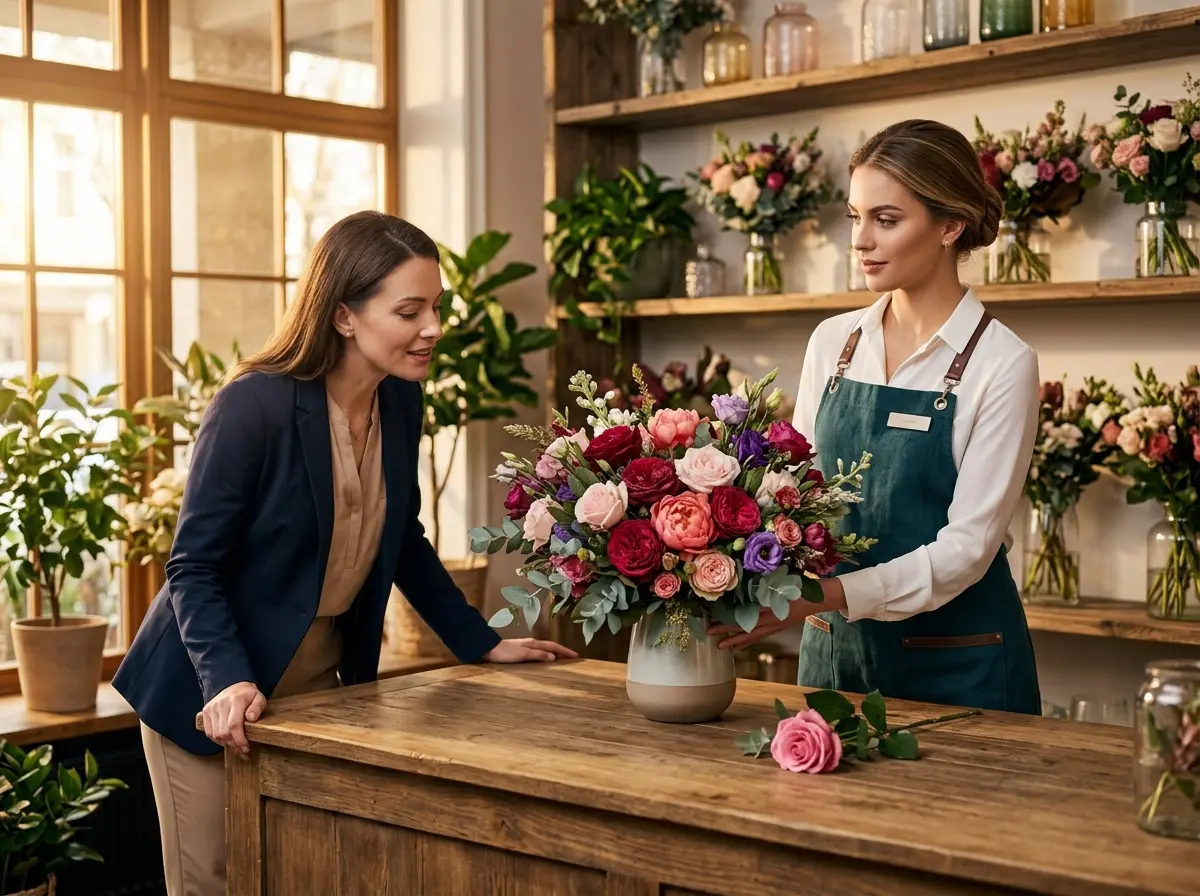
The single most effective upselling technique for florists is occasion-based selling. Instead of asking "how much were you looking to spend?" — which immediately triggers budget defensiveness — ask "what's the occasion?" A customer buying flowers for a work anniversary has a completely different emotional context than someone grabbing a hostess gift. When you understand the occasion, you can suggest items that genuinely enhance the experience.
For example, a customer who mentions their mother's birthday is a natural candidate for an add-on candle, a vase upgrade, or even a subscription arrangement if their mom lives locally. A customer picking up sympathy flowers might appreciate knowing you offer same-day delivery for future arrangements. The occasion opens the door; your product knowledge closes the sale.
Build Tiered Options Into Your Menu
If customers only see one option, they can only say yes or no. But if they see three options — a classic arrangement, a premium arrangement, and a curated designer arrangement — suddenly the conversation shifts from "do I want this?" to "which one do I want?" This is the classic Good-Better-Best model, and it works extraordinarily well in retail floristry.
Studies in consumer psychology consistently show that when given three options, the majority of buyers gravitate toward the middle tier. So if you're not already presenting tiered arrangements on your menu board, in your shop displays, and on your website, you're leaving money — and satisfied customers — on the table. Label them clearly, price them visibly, and let the presentation do half the selling for you.
Train Your Team to Suggest, Not Sell
There's a significant difference in tone between "Would you like to add a vase for $12?" and "Most people grab one of our bud vases with this — it really ties the whole thing together." The first sounds like a checkout prompt. The second sounds like advice from someone who knows their product. Train your staff to lead with context and enthusiasm, not just price. When team members genuinely love what they're selling, customers feel it — and they buy more because of it.
Using Technology to Upsell When You Can't Be Everywhere
Here's the uncomfortable truth: your best upselling often doesn't happen because no one is available to do it. A staff member is in the back wrapping an order. The phone is ringing while you're helping someone at the counter. A customer walks in, glances around, and leaves because nobody greeted them in those crucial first 30 seconds. These aren't failures of strategy — they're failures of capacity.
Let an AI Receptionist Handle the Gaps
This is exactly where Stella, an AI robot employee and phone receptionist, becomes genuinely useful for florists. Inside your shop, Stella stands as a friendly, human-sized kiosk that greets every customer who walks by — proactively, every time, without exception. She can talk naturally about your current arrangements, seasonal specials, add-on products, and promotions, which means the upsell conversation starts even when your hands are full of peonies.
On the phone side, Stella answers calls 24/7 with the same product knowledge she uses in person. A customer calling at 9 PM to ask about Valentine's Day pre-orders doesn't get voicemail — they get a knowledgeable, friendly interaction that can capture their information, explain your offerings, and set them up for a follow-up. That's a lead you would have otherwise lost entirely. At $99/month with no upfront hardware costs, it's a remarkably low bar for what amounts to a tireless, always-on team member.
Building Long-Term Revenue Through Add-Ons and Loyalty
One-time upsells are great. But the real compounding value comes from turning occasional buyers into repeat customers who trust your recommendations and return for every occasion on the calendar. A florist who masters this transforms their revenue model from transactional to relational — and relational businesses are dramatically more resilient.
Create Add-On Bundles That Feel Like Value, Not Extras
Nobody likes feeling nickel-and-dimed. So instead of listing every add-on individually, consider pre-bundling them into named packages. A "Garden Party Bundle" might include a mid-size arrangement, a complementary candle, and a reusable ribbon for a flat rate that represents a small savings over buying each item separately. Customers perceive bundles as thoughtful curation rather than upselling — even though the net result is the same. You sell more; they feel great about it. That's the dream.
Seasonal bundles are particularly powerful. A "Holiday Host Bundle" or a "Sympathy Package" positions your shop as a one-stop solution rather than just a place to buy flowers. The more problems you solve in a single transaction, the more indispensable you become to that customer.
Introduce Subscription and Pre-Order Programs
Flower subscriptions are one of the most underutilized revenue streams in independent floristry. A weekly or bi-weekly arrangement subscription locks in predictable revenue, reduces your ordering guesswork, and creates a habit loop with your customers. The key is making it easy to sign up and flexible enough to feel low-commitment. Offer a one-month trial, allow pause options, and give subscribers first access to seasonal specials. Once someone has had fresh flowers delivered to their home or office consistently, they rarely want to stop.
Pre-order programs for major holidays — Valentine's Day, Mother's Day, and the winter holidays — solve the inventory problem on your end while giving customers peace of mind on theirs. Promote them early, offer a small discount for early commitment, and watch your holiday chaos become manageable.
Follow Up and Stay Top of Mind
The best florists don't wait for customers to remember them — they show up first. A simple post-purchase follow-up message, a reminder before recurring anniversaries, or a heads-up that your spring inventory just arrived are all low-effort, high-return touches. Even something as basic as collecting a customer's email at checkout and sending a monthly "what's blooming" update keeps your shop present in their mind when the next occasion arises. Consistency and warmth are your competitive advantages over the grocery store floral section down the street.
Quick Reminder About Stella
Stella is an AI robot employee and phone receptionist built for businesses like yours — she greets customers in-store, answers calls around the clock, promotes your specials, and handles intake so your human team can focus on what they do best. She runs on a simple $99/month subscription, requires no upfront hardware investment, and is ready to work the moment she's set up. If upselling requires consistent, timely engagement with every customer, Stella makes that scalable without adding headcount.
Turning Petals Into Profit: Your Next Steps
The path from a single-stem sale to a curated arrangement isn't paved with aggressive sales tactics — it's built on genuine conversation, smart presentation, and showing up consistently for your customers. Start by implementing tiered pricing in your displays this week. Train your team to ask about occasions before budgets. Build out two or three add-on bundles that make gifting easier for your customers. And if your capacity to engage every customer — in-store and on the phone — is limited by your team's bandwidth, explore tools that can close those gaps reliably.
Your customers want to spend more when it feels right. The flowers are already beautiful. The occasion is already meaningful. All you have to do is make it easy for them to say yes to the full experience — and then show up ready to deliver it, every single time.