Introduction: Stop Racing to the Bottom
Ah, the discount spiral. It starts innocently enough — a modest 10% off coupon here, a "buy one get one" there — and before you know it, your customers won't walk through the door unless there's a blinking sale sign in the window. Congratulations, you've trained them beautifully. Unfortunately, you've also trained your profit margin to disappear.
Here's the uncomfortable truth: discounting is the lazy marketer's reflex. It works in the short term, sure. But chronic discounting erodes your brand's perceived value, attracts deal-chasers who vanish the moment a competitor offers 5% more off, and quietly chips away at the financial foundation of your business. According to research from McKinsey, a 1% improvement in price realization generates an average 8.7% improvement in operating profits. Discounting in the wrong direction? Do the math yourself — it's not pretty.
The good news is that driving foot traffic and customer engagement doesn't require you to sacrifice your margins on the altar of "more butts in seats." There's a whole universe of creative, cost-effective promotional strategies that make customers genuinely excited to visit your business, spend real money, and actually come back. Let's explore them.
Promotions That Create Experiences, Not Just Transactions
The most magnetic businesses aren't necessarily the cheapest — they're the most interesting. When you shift your promotional thinking from "how much can I take off?" to "what can I give that money can't easily replicate?", you stop competing on price and start competing on experience. That's a game far fewer businesses are playing, which means you have more room to win.
Host Events That Turn Your Business Into a Destination
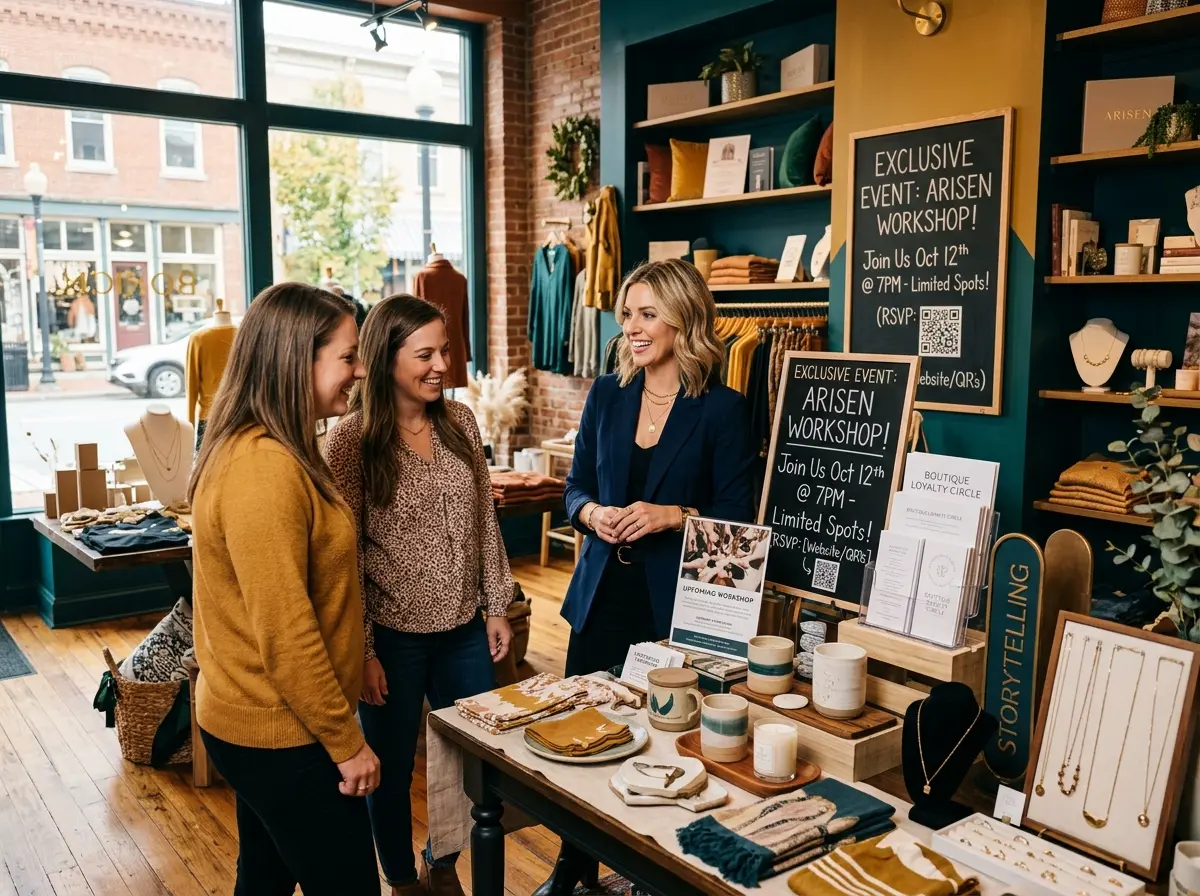
A boutique clothing shop that hosts a styling workshop on a slow Tuesday evening isn't just filling a time slot — it's creating a memory, building community, and positioning itself as an authority. A gym that holds a free Saturday morning outdoor bootcamp isn't giving away its product; it's giving prospective members a reason to show up and feel something. Events create urgency (they happen once), shareability (people post about experiences), and loyalty (people return to places where they've had a good time).
The key is aligning the event with your brand identity and your customer's lifestyle. A spa might host a "stress-less" evening with mini-treatments, aromatherapy demos, and a glass of wine. A hardware store — yes, really — could run a DIY tiling workshop. The event draws traffic; your expertise and products close the sale. No coupon required.
Loyalty Programs That Actually Feel Rewarding
Not all loyalty programs are created equal. A punch card that requires 47 purchases to earn a free coffee is not a loyalty program — it's a joke on cardstock. Effective loyalty programs reward customers early and often enough that they feel the benefit before they've forgotten they enrolled. Consider tiered structures where customers unlock perks at meaningful milestones, or "surprise and delight" moments where a loyal customer randomly receives a complimentary add-on. These gestures cost relatively little but generate disproportionate goodwill and word-of-mouth. A 5% increase in customer retention can increase profits by 25–95%, according to Bain & Company. Loyalty programs done right are one of the most powerful levers you have.
Collaborations and Cross-Promotions With Complementary Businesses
Your neighboring businesses are not your enemies — they're your untapped marketing partners. A florist and a wine bar. A yoga studio and a healthy café. A children's clothing boutique and a pediatric dental office. These pairings are natural, and a joint promotion — "Show your receipt from either business this weekend for a complimentary add-on" — exposes each business to the other's loyal customer base at virtually zero cost. You're not discounting; you're bundling value and widening your reach.
Let Technology Do the Heavy Lifting on Promotions
Here's where a lot of business owners leave serious money on the table: even a brilliant promotion dies a quiet death if nobody hears about it consistently. Your staff is busy, distracted, and — let's be honest — not always enthusiastic about pitching that week's special to every single customer who walks through the door.
How Stella Keeps Your Promotions Front and Center
This is exactly the kind of problem that Stella, the AI robot employee and phone receptionist, was built to solve. Standing inside your physical location, Stella proactively greets every customer who walks by and naturally works your current promotions and specials into the conversation — every time, without fail, and without needing a pep talk from management. She doesn't forget, doesn't get distracted, and doesn't have a bad day where she just doesn't feel like upselling.
Beyond the floor, Stella answers your phones 24/7 with the same promotional knowledge she uses in-store. A customer calls at 9pm to ask about your weekend event or your current loyalty offer? Stella has it handled, professionally and accurately. For business owners running promotions that generate inbound inquiries — which good promotions always do — having a consistent, always-on voice on the other end of the phone is less of a luxury and more of a necessity. At $99/month with no upfront hardware costs, it's also a remarkably affordable one.
Scarcity, Exclusivity, and the Psychology of "I Don't Want to Miss Out"
Discounts tell customers your product is worth less. Scarcity and exclusivity tell them it's worth more. That's the psychological flip you want to make. When something is limited — in time, quantity, or access — human brains instinctively assign it higher value. You don't need a Ph.D. in behavioral economics to use this to your advantage; you just need a little creativity.
Limited-Time Offerings That Create Genuine Urgency
Seasonal menu items, limited-edition products, and time-boxed services create urgency without devaluing your core offering. A barbershop that offers a "winter grooming package" available only through December isn't discounting — it's bundling and adding perceived value. A restaurant that features a chef's special available only on weekday evenings drives traffic during slow periods without touching weekend pricing. The limited nature of these offers is itself the marketing hook. When customers know something won't be there forever, they stop procrastinating.
VIP and Member-Only Perks
Exclusivity is a surprisingly democratic tool — you can offer it to anyone willing to opt in. Early access to new products, members-only shopping hours, first dibs on appointment slots, or exclusive content all create a sense of insider status that customers will pay for or at minimum visit more often to maintain. A salon offering "VIP members get priority booking and a complimentary deep conditioning treatment quarterly" isn't giving away revenue — it's creating a stickier, higher-value customer relationship. The perceived value of access often far exceeds its actual cost to you.
Gamification and Challenges
People love a challenge almost as much as they love winning. A gym running a "30-day check-in challenge" with a meaningful prize for participants creates engagement, habit formation, and social sharing — all free marketing. A coffee shop doing a "passport" promotion where customers try five different drinks to earn a reward drives trial of higher-margin items. Gamification works because it transforms ordinary transactions into a narrative. Customers aren't just buying — they're progressing toward something. That's a fundamentally more engaging experience than "10% off Tuesdays."
Quick Reminder About Stella
Stella is an AI robot employee and phone receptionist that greets customers in-store, promotes your deals and specials, and answers calls 24/7 — all for $99/month with no hardware costs. She's easy to set up, never calls in sick, and brings the same professional energy to every single customer interaction. For businesses that want their promotions to actually land consistently, she's worth a serious look.
Conclusion: Build Promotions Worth Talking About
The businesses that win long-term aren't the ones with the deepest discounts — they're the ones with the most compelling reasons to visit, stay, and return. That means rethinking what a "promotion" actually is. It's not just a price reduction; it's any deliberate strategy to make your business more attractive, more memorable, and more worthy of a customer's time and money.
Here's your actionable game plan to start shifting away from the discount dependency:
- Audit your current promotions. Which ones actually attract your ideal customers, and which ones just attract people hunting for the lowest price?
- Plan one experience-based event in the next 60 days that aligns with your brand and gives your community a genuine reason to show up.
- Identify one complementary local business for a cross-promotional partnership — and reach out this week.
- Build or improve your loyalty program so customers feel rewarded before they've forgotten they joined.
- Introduce one limited-time or exclusive offer that creates urgency without touching your standard pricing.
- Make sure your promotions are actually communicated — to every customer, consistently, whether they walk in or call in.
Your margins are worth protecting. Your brand's perceived value is worth building. And honestly? Your customers deserve a more interesting reason to visit than a mediocre percentage-off sticker. Give them something to talk about — and then make sure you have the systems in place to tell every single one of them about it.