Introduction: When "Call Us During Business Hours" Just Doesn't Cut It Anymore
Picture this: It's 9:47 PM on a Tuesday. A frantic parent is sitting in their living room, finally getting a moment to breathe after dinner, homework, and the nightly battle to get the kids into bed. Their seven-year-old has been complaining about a toothache for three days, and this parent has been meaning to schedule a dentist appointment. They pick up their phone, find your dental office online, and then — nothing. No way to book. Just a phone number and the soul-crushing words: "Office hours: Monday–Friday, 8AM–5PM."
So they close the tab and move on to a competitor who lets them book right then and there. You just lost a new patient, and you were never even awake to know it happened.
Online scheduling isn't a luxury anymore — it's table stakes. And for pediatric dental offices specifically, where parents are already juggling approximately seventeen thousand responsibilities at once, removing friction from the appointment process can be the difference between a thriving patient roster and a waiting room that echoes. One pediatric dental practice implemented online scheduling and a smarter patient intake process, and the results were hard to argue with: a 25% increase in new patient appointments. Here's how they did it — and how you can too.
The Problem: Why Pediatric Dental Offices Lose New Patients Before They Ever Walk In
The Scheduling Black Hole
For many dental offices, the new patient journey looks something like this: A parent finds the practice online, gets excited about your sparkling reviews and reassuring photos of murals on the walls, and then hits a wall when they realize they have to call during office hours to schedule. If they do call, they're often placed on hold. If they leave a voicemail, they're hoping someone calls back before they've already booked with someone else. It's a funnel with more holes than a slice of Swiss cheese.
According to research from Accenture, 77% of patients say the ability to book, change, or cancel appointments online is important to their choice of provider. For pediatric practices, that number is almost certainly higher, given that the decision-makers are busy parents who do most of their planning outside of traditional business hours.
The First-Impression Problem
Your front desk staff is wonderful — but they're also answering phones, checking in existing patients, handling insurance questions, managing emergencies, and trying to eat lunch. When a new patient inquiry comes in at a busy moment, it doesn't always get the white-glove treatment it deserves. That first interaction sets the tone for the entire patient relationship, and if it starts with being rushed, forgotten, or placed on a callback list, you're already behind.
The pediatric dental practice in our case study recognized this problem early. They weren't losing patients because of bad care — their clinical team was exceptional. They were losing patients at the very first touchpoint, before a single tooth was ever examined.
The Intake Bottleneck
Even when a new patient successfully scheduled an appointment, the intake process created another layer of friction. Paper forms. Phone calls to collect insurance information. Reminders that went out late or not at all. The administrative burden was heavy on staff and annoying for parents — not exactly the first impression a cheerful, child-friendly practice wants to make.
How Technology (Including a Little AI Magic) Can Help
Streamlining Intake and Availability Around the Clock
Part of what made the 25% increase possible was combining online scheduling with smarter patient communication tools. When parents could not only book at midnight but also complete intake forms digitally before the appointment, the entire new patient experience felt seamless. Staff arrived to work with pre-filled patient information instead of a stack of clipboards — and parents arrived actually on time because automated reminders did the nudging.
This is where tools like Stella — the AI robot employee and phone receptionist — enter the picture. Stella can handle phone inquiries 24/7, collect new patient information through conversational intake forms during calls or on the web, and keep everything organized in a built-in CRM complete with custom fields, tags, and AI-generated contact profiles. For a pediatric dental office, that means a parent calling at 10 PM to ask about new patient availability doesn't get a voicemail — they get an actual conversation, with their information captured and waiting for the front desk team in the morning. Stella also greets patients from her in-office kiosk, answers questions about services and policies, and reduces the constant stream of interruptions that make front desk life so hectic.
What the Pediatric Dental Practice Actually Did
Step 1: Implementing 24/7 Online Scheduling
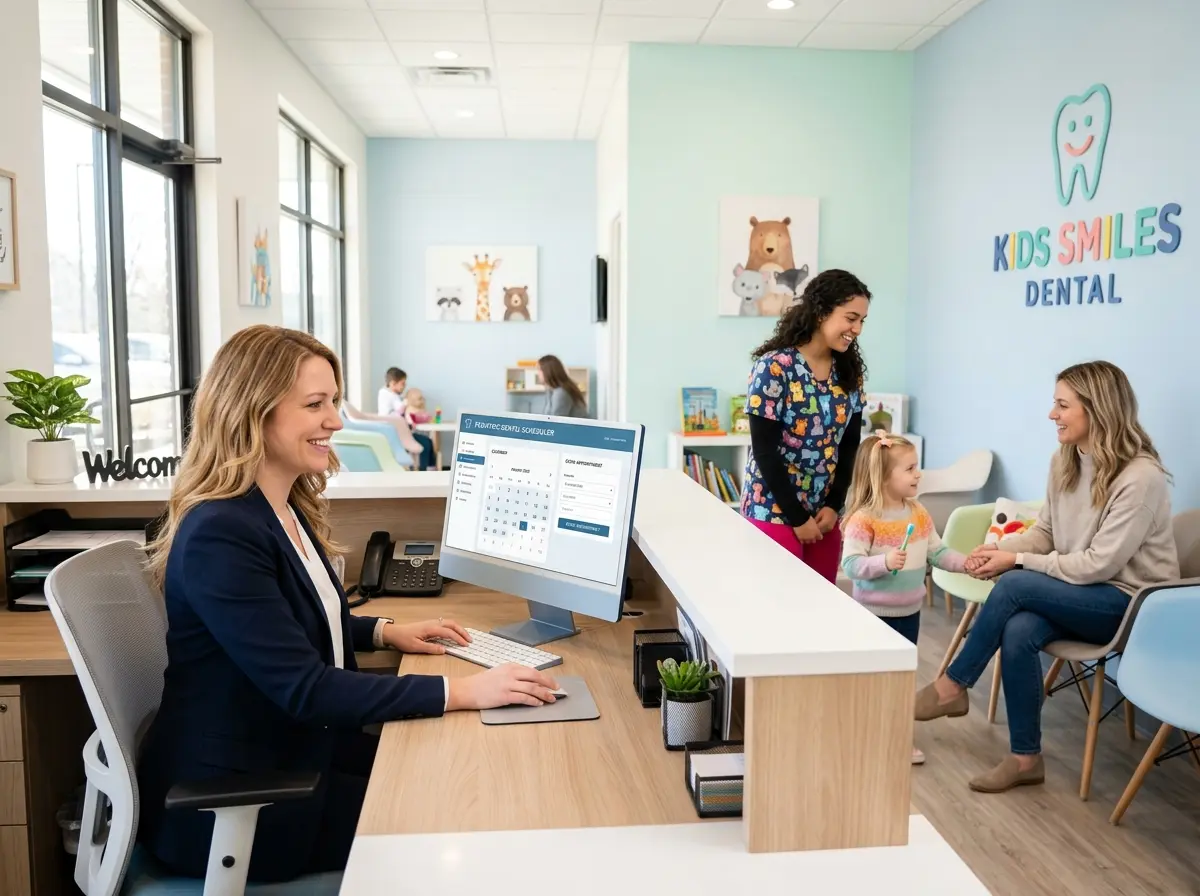
The practice started by integrating an online scheduling tool directly into their website and Google Business Profile. No more hunting for a phone number — a prominent "Book Now" button appeared on every page. They configured it to show real-time availability, allow parents to select the type of appointment (new patient exam, cleaning, emergency visit), and provide immediate booking confirmation via email and text.
Within the first month, they noticed that over 40% of new appointment bookings were happening outside of office hours — evenings and weekends primarily. These were patients the practice would have simply missed before. The scheduling tool paid for itself almost immediately.
Step 2: Digitizing the New Patient Intake Process
Next, they tackled intake. New patients received an automated email after booking that included a link to complete their forms digitally — insurance information, medical history, the works. Completion rates were high because the forms were mobile-friendly and took less than five minutes. Staff no longer spent the first ten minutes of every new patient appointment chasing down paperwork, and parents appreciated not having to show up fifteen minutes early to fill out a clipboard novel.
Step 3: Automating Reminders and Follow-Ups
The practice also implemented automated appointment reminders via text and email at the 48-hour and 24-hour marks. No-show rates dropped. For patients who didn't confirm, a staff member reached out personally — but the automation handled the bulk of the communication, freeing up real human attention for the cases that actually needed it.
They also added a post-appointment follow-up sequence. A simple text message after each visit asking how the appointment went, with a gentle nudge to leave a review if they were happy. New online reviews increased by 60% over three months. Happy parents talk — both online and at school pickup.
Quick Reminder About Stella
Stella is an AI robot employee and phone receptionist that works around the clock — answering calls, greeting walk-ins from her in-office kiosk, collecting patient information, and keeping your CRM up to date, all for just $99 a month with no upfront hardware costs. She's essentially the world's most punctual, never-sick front desk team member who also never asks for a parking validation. If you're looking for a way to modernize your patient communication without overhauling your entire operation, she's worth a conversation.
Conclusion: Your Next 25% Is Waiting
The pediatric dental practice in this story didn't reinvent dentistry. They didn't rebrand, remodel, or hire a marketing agency with suspiciously vague deliverables. They simply removed the friction that was standing between interested parents and booked appointments — and the results spoke for themselves.
If you're running a pediatric dental office (or any practice where the decision-maker is a busy adult doing research after bedtime), here are your actionable next steps:
- Audit your current scheduling process. How many steps does a new patient have to take before their appointment is confirmed? Every unnecessary step is a drop-off point.
- Add online booking to your website and Google Business Profile with real-time availability. Make the "Book Now" button impossible to miss.
- Digitize your intake forms and send them automatically after booking. Your front desk staff will send you a thank-you card.
- Set up automated appointment reminders via text and email. Two touchpoints before the appointment is a sweet spot for most practices.
- Capture after-hours inquiries with an AI receptionist or online contact form so no lead goes cold overnight.
- Build a post-appointment review strategy. Happy patients rarely volunteer reviews. A well-timed nudge makes all the difference.
The technology to do all of this exists, it's affordable, and your competitors are either already using it or about to be. The only question is whether you want to be the practice parents find at 10 PM — or the one they never think about again.
Start with one change. Then another. Your waiting room will thank you.