The Secret Weapon That Most Jewelry Stores Are Completely Ignoring
Let's be honest — if your jewelry store's growth strategy is "hope people walk in and buy something," you might be leaving a staggering amount of money on the table. The average jewelry store conversion rate hovers around 10–15%, which sounds reasonable until you realize that 85–90% of the people who showed genuine interest in your pieces walked out the door and never came back. Ouch.
Here's the good news: private clienteling — the art of building deeply personal, ongoing relationships with your best customers — is the single most powerful tool available to jewelry retailers today. It's not a new concept. Tiffany & Co. and Cartier have been doing it for decades. But thanks to modern tools and a little strategic thinking, even a small independent jeweler can implement a world-class clienteling program without hiring a full team of personal shoppers or spending a fortune. What you do need is a system, a strategy, and the willingness to treat your best customers like the VIPs they actually are.
This guide will walk you through exactly how to double your sales by building a private clienteling program that keeps your customers coming back — and spending more every single time they do.
Understanding Private Clienteling and Why It Works So Well for Jewelry
What Private Clienteling Actually Means
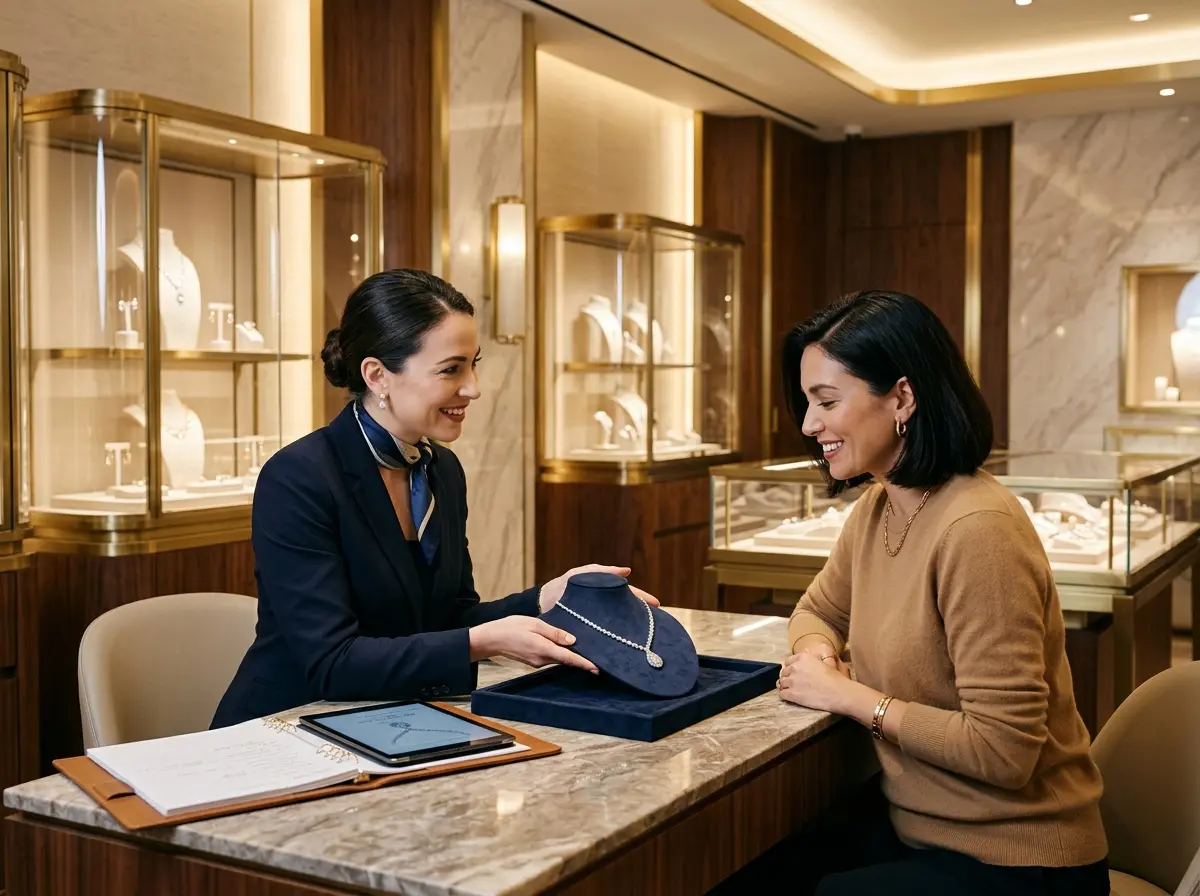
Private clienteling is the practice of proactively nurturing individual customer relationships through personalized outreach, tailored recommendations, and exclusive experiences. It goes far beyond loyalty punch cards and generic email blasts. Think of it as the difference between a store that remembers your name and a store that remembers your wife's ring size, your anniversary date, your preference for rose gold over yellow gold, and the fact that you almost pulled the trigger on that sapphire pendant last October.
When done right, clienteling transforms one-time buyers into lifelong advocates. It creates customers who don't just return — they refer. They celebrate milestones with you. They call you before they even think about browsing elsewhere. And in the jewelry industry, where purchases are often tied to deeply emotional moments like engagements, anniversaries, and milestones, this kind of relationship is worth its weight in, well, gold.
The Numbers Behind the Strategy
Still not convinced? Consider this: research from Bain & Company found that increasing customer retention by just 5% can increase profits by 25–95%. In jewelry specifically, repeat customers spend an average of 67% more than new customers. And the cost of acquiring a new customer is anywhere from 5 to 25 times more expensive than retaining an existing one.
Private clienteling is essentially a high-ROI investment in the customers you've already won. It's not glamorous math, but it's very good math. The stores that understand this are quietly doubling their revenue while their competitors keep throwing money at foot traffic that doesn't convert.
Building Your Clienteling System from the Ground Up
Start by Capturing the Right Customer Data
You cannot personalize what you don't know. The foundation of any successful clienteling program is a robust customer profile — and building one starts the moment a customer first interacts with your store. Every conversation, every purchase, and every inquiry is an opportunity to learn something valuable.
At minimum, your customer profiles should include contact information, purchase history, budget ranges, style preferences, upcoming occasions like anniversaries or birthdays, and the names and preferences of the people they typically shop for. This might sound like a lot, but most of it comes out naturally in a good sales conversation. The key is making sure that information actually gets recorded somewhere useful rather than living exclusively in your head or on a Post-it note that will inevitably be lost.
A dedicated CRM (customer relationship management system) is non-negotiable here. It doesn't need to be overly complex, but it needs to be consistently used. Tag customers by preference, tier them by spending level, and set reminders for key dates. When a customer's anniversary is two weeks away and you send them a handwritten note (or even a personalized text) mentioning that gorgeous bracelet they admired last spring, the effect is genuinely magical — and very profitable.
Leverage Technology to Make It Scalable
The biggest reason most jewelry stores never implement clienteling properly is that it sounds labor-intensive. And manually tracking every customer preference across hundreds or thousands of contacts is labor-intensive — if you're doing it with a spreadsheet and good intentions. That's where Stella, the AI robot employee and phone receptionist, becomes genuinely useful for jewelry store owners.
Stella stands inside your store as a friendly, human-sized kiosk and engages customers proactively — greeting them, answering questions about your pieces and policies, and collecting information through conversational intake forms. She also answers your phones 24/7 with the same knowledge she uses on the floor, so no inquiry falls through the cracks even after hours. All of that customer information flows into her built-in CRM with custom fields, tags, notes, and AI-generated customer profiles — giving you exactly the kind of rich data your clienteling program needs without requiring your staff to manually log every single interaction. At just $99/month, it's the kind of technology that used to be reserved for flagship luxury retailers.
Proactive Outreach: The Art of the Personal Touch
Timing Your Outreach for Maximum Impact
Great clienteling isn't about bombarding customers with promotions. It's about showing up at exactly the right moment with something genuinely relevant. The jewelry industry has a remarkable built-in advantage here: human beings celebrate predictable milestones on a fairly reliable schedule. Anniversaries, birthdays, Valentine's Day, Mother's Day, graduations, and holidays are all coming whether your customers are ready or not — and your job is to be the first person they think of when those moments arrive.
Set calendar-based reminders in your CRM for every key date associated with each customer. A well-timed personal text or call two to three weeks before a major occasion — with a specific recommendation based on their history — will convert at a dramatically higher rate than any generic marketing campaign. The message doesn't need to be long. Something as simple as "Hi Sarah, I know your anniversary is coming up next month, and I just received a stunning new piece I immediately thought of when it came in — would you like me to hold it for you to take a look?" is worth more than a thousand generic promotional emails.
Creating Exclusive Experiences That Money Can't Buy Elsewhere
High-value customers don't just want jewelry — they want to feel special. Private shopping events, after-hours previews of new collections, invitations to trunk shows, and personalized "first look" access to limited pieces are all experiences that reinforce your relationship and make your store genuinely irreplaceable. These don't have to be elaborate or expensive to produce. A private champagne preview for your top 20 clients twice a year can generate extraordinary goodwill — and extraordinary sales — with relatively modest effort.
Consider creating explicit tiers for your clienteling program. Your top-tier clients might receive personal calls from you or your senior staff, handwritten notes, and first access to new inventory. Mid-tier clients might receive personalized text messages and invitations to exclusive events. Even light-touch clienteling — a birthday greeting with a small exclusive offer — dramatically outperforms doing nothing at all. The goal is to make every customer feel like they have a personal jeweler, not just a store they've shopped at once or twice.
Training Your Staff to Think Like Personal Stylists
Technology and systems are only as good as the people using them. Your sales staff need to understand that their job isn't just to close today's sale — it's to open tomorrow's relationship. This is a meaningful cultural shift for some teams, and it's worth investing in proper training to make it stick.
Teach your team to ask great questions and actually listen. Encourage them to take brief notes after meaningful customer interactions. Recognize and reward staff members who generate strong repeat business, not just high single-transaction totals. When your entire team is invested in the clienteling mindset, the data in your CRM gets richer, the outreach gets more personalized, and the results compound over time in ways that will make your quarterly numbers very, very happy.
Quick Reminder About Stella
Stella is an AI robot employee and phone receptionist that greets customers in your store, answers calls around the clock, and manages customer data through a built-in CRM — all for just $99/month with no upfront hardware costs. She's always on, always professional, and never calls in sick the day before Valentine's Day. For jewelry store owners building a clienteling program, she's the kind of always-available, detail-capturing team member that makes the whole system work without burning out your human staff.
Your Next Steps Toward a Clienteling-Driven Business
Doubling your jewelry store's sales through private clienteling is not a fantasy — it's a proven strategy used by the most successful jewelers at every level of the market. But it requires commitment to a system, consistency in execution, and genuine care for your customers as individuals rather than transactions.
Here's where to start:
- Audit your current customer data. What do you actually know about your repeat buyers? Identify the gaps and start filling them in immediately.
- Set up or optimize your CRM. Every customer interaction should generate a record. Every key date should trigger a reminder.
- Identify your top 20% of customers and design a white-glove outreach plan specifically for them. These are the people who will respond most enthusiastically and generate the fastest ROI.
- Train your team on clienteling principles and make relationship-building a measurable part of their performance.
- Plan your first exclusive event. Even a small, intimate preview evening can transform customer loyalty overnight.
The jewelry stores that will thrive over the next decade won't necessarily be the ones with the most foot traffic or the flashiest window displays. They'll be the ones that made their customers feel genuinely known, genuinely valued, and genuinely irreplaceable to them in return. That's the real secret to doubling your sales — and now you have everything you need to start.