Introduction: Your Leads Are Leaking (And You Probably Don't Even Know It)
Here's a scenario that might feel uncomfortably familiar: Someone calls your landscaping business on a Tuesday afternoon, asks about lawn care packages, and says they'll "think about it." You mentally file that away, get swamped with three other jobs, and by Friday — poof. That lead is gone. No follow-up, no name, no number, no record it ever happened. That potential customer is now paying your competitor to mow their lawn.
You're not alone. According to research by Salesforce, 79% of leads never convert into sales — and a huge chunk of that is simply due to poor follow-up and zero lead tracking. For landscaping businesses especially, where the sales cycle involves estimates, seasonal timing, and ongoing service agreements, letting leads slip through the cracks isn't just frustrating — it's genuinely expensive.
The good news? You don't need a full-time sales team or a Fortune 500 software budget to fix this. What you need is a CRM pipeline — and more importantly, you need to actually use it. This guide will walk you through building a practical, no-nonsense pipeline that works for the realities of running a landscaping business.
Understanding the CRM Pipeline (And Why Landscapers Actually Need One)
What Is a CRM Pipeline, Exactly?
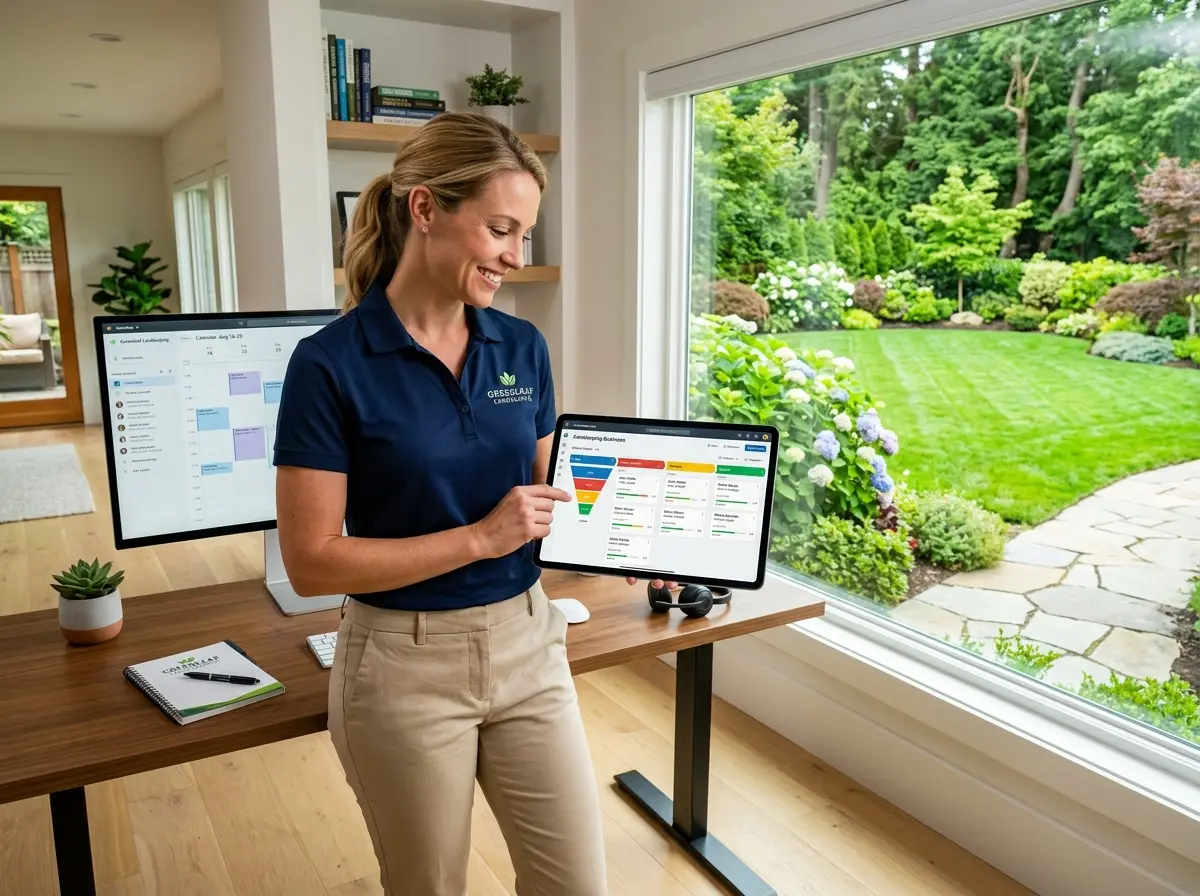
A CRM — Customer Relationship Management — pipeline is essentially a visual map of where every potential customer stands in your sales process, from "just heard of you" to "signed contract and booked for spring cleanup." Think of it as a whiteboard on your wall, except it doesn't get accidentally erased and it actually reminds you to follow up with people.
For a landscaping business, your pipeline typically moves through several stages: initial inquiry, estimate sent, follow-up, proposal accepted, job scheduled, and finally, ongoing customer. Each stage represents a different level of commitment from the customer — and a different action required from you. Without a pipeline, all those leads just pile up in your head, your texts, your voicemails, and that napkin you definitely saved but can't find anymore.
Why Landscaping Businesses Are Especially Vulnerable to Lead Loss
Landscaping is a high-volume, seasonally intense business. In spring, your phone might ring off the hook with people suddenly panicking about their overgrown yards. That's great — until you realize you have no organized system to handle the influx. Leads come in from phone calls, web forms, walk-ins, referrals, and social media messages, all at once, often while you're literally in a ditch installing an irrigation system.
The timing sensitivity makes follow-up critical. A homeowner who calls in March about spring cleanup isn't going to wait two weeks for a callback. They'll move on. A solid CRM pipeline ensures that no matter how hectic the season gets, every lead is captured, categorized, and assigned a next action. That structure is what separates landscaping businesses that grow consistently from the ones that have a great April and a chaotic everything-else.
Choosing the Right CRM Tool for Your Business Size
You don't need to go overboard here. If you're a solo operator or small crew, something like HubSpot's free tier, Jobber, or even a well-organized spreadsheet can get the job done. Mid-sized operations might benefit from purpose-built field service CRMs like Jobber or ServiceTitan, which integrate scheduling, invoicing, and customer history all in one place.
Whatever you choose, look for these basics: the ability to add custom fields (like "property size" or "preferred service type"), a clear pipeline view, automated follow-up reminders, and easy contact tagging. Bonus points if it integrates with your phone system or intake forms so leads land in your CRM automatically — without you manually typing anything at 9pm after a long day of work.
Capturing Leads Before They Disappear: Where Stella Comes In
The Problem with Manual Lead Capture
Let's be honest — manual lead capture is where most landscaping businesses fall apart. Someone calls, you answer if you're not busy, you maybe jot down their name, and then the call ends and you forget to log it. Or worse, the call goes to voicemail, nobody checks it until Thursday, and by then the customer has hired someone else. This isn't laziness; it's just the reality of running a field-heavy business where you're not always near a desk.
The fix is automating lead capture so that information flows directly into your CRM without depending on anyone remembering to do it manually. That means using intake forms, AI-powered phone receptionists, and smart contact management — ideally working together.
How Stella Handles Intake and CRM Automatically
This is exactly the kind of problem that Stella was built to solve. Stella is an AI receptionist and robot employee that answers your phone calls 24/7 — including during those peak spring weeks when you physically cannot pick up every call. When a potential customer calls about lawn care, Stella engages them in a natural conversation, collects their contact details, service interests, and any other relevant information through conversational intake forms, and logs everything directly into her built-in CRM.
That CRM supports custom fields, tags, notes, and AI-generated contact profiles — meaning every lead that comes in through Stella is already organized and ready for follow-up without you lifting a finger. She can also forward calls to your staff when needed or take detailed voicemails with AI-generated summaries sent directly to your phone. For landscaping businesses that live and die by their response time, this kind of automated first contact can be the difference between landing a new customer and losing them to the guy with the truck two streets over.
Building Your Landscaping CRM Pipeline Stage by Stage
Stage 1 – Inquiry and Lead Capture
This is the top of your funnel. Every potential customer starts here, regardless of how they found you. Your goal at this stage is simple: capture the contact information and document the inquiry. Name, phone number, email, what they're interested in, and how they heard about you. That's it.
Set up your CRM so that new leads — whether they come from your website contact form, a phone call, or a referral — automatically populate a "New Inquiry" stage. Tag them with relevant labels like residential, commercial, one-time, or recurring so you can segment later. The faster a lead gets into your system, the less likely it is to evaporate into the void. Aim for every lead to be logged within the same day it comes in — ideally within the same hour.
Stage 2 – Estimate Sent and Follow-Up
Once you've made contact and sent an estimate, move the lead to an "Estimate Sent" stage and immediately set a follow-up reminder for 48 to 72 hours out. This is where most landscaping businesses drop the ball — they send the estimate and wait passively for the customer to respond. Don't do that. People are busy. A quick, friendly follow-up message often makes the difference between a signed job and a ghosted proposal.
Your CRM should make this automatic. Most tools let you set task reminders or even trigger automated emails when a lead sits in a stage too long without activity. Use that feature. A message as simple as "Hey, just checking in on the estimate I sent over — happy to answer any questions!" is often all it takes to close a job that seemed like it was going cold.
Stage 3 – Booked, Ongoing, and Upsell Opportunities
When a customer says yes, they don't disappear from your CRM — they evolve. Move them to a "Booked" stage, then to "Active Customer" once work begins. The real long-term value here is in recognizing upsell and cross-sell opportunities. A customer who hired you for lawn mowing might be a perfect candidate for fall aeration, mulching, or a spring flower bed installation. Tag customers based on what services they've received, and set seasonal reminders to reach back out with relevant offers.
Research consistently shows that selling to an existing customer is five to seven times cheaper than acquiring a new one. Your CRM is the tool that makes those repeat and upsell conversations happen systematically rather than accidentally. Over time, this stage becomes your most valuable — a library of warm relationships that generate revenue year after year with relatively little effort.
Quick Reminder About Stella
Stella is an AI robot employee and phone receptionist that answers calls, greets customers, collects lead information through intake forms, and manages contacts through a built-in CRM — all for just $99 a month with no upfront hardware costs. For landscaping businesses drowning in seasonal call volume, she's the front-line team member who never misses a call, never forgets to log a lead, and never takes a day off. She's easy to set up and ready to start working immediately.
Conclusion: Stop Winging It and Start Converting
Building a CRM pipeline for your landscaping business isn't about becoming a tech company or spending your weekends learning software. It's about putting a simple, consistent system in place so that the leads you work hard to generate actually turn into paying customers — not missed calls and forgotten names.
Here's what to do this week:
- Pick a CRM tool that fits your business size and budget. Start free if you need to — just start.
- Define your pipeline stages based on your actual sales process: Inquiry, Estimate Sent, Follow-Up, Booked, Active, and Past Customer at minimum.
- Set up automatic lead capture so that phone inquiries, web form submissions, and walk-in contacts go directly into your CRM without manual entry.
- Add follow-up reminders at every stage so leads don't sit untouched for days at a time.
- Revisit your active customer records seasonally to identify upsell and re-engagement opportunities.
Your competitors are out there hustling for the same customers you are. The ones that grow aren't necessarily the best landscapers — they're the ones with the best systems. A solid CRM pipeline is one of the highest-return investments you can make in your business, and it costs far less than the leads you're currently losing. Time to stop letting revenue walk out the door and start capturing every opportunity that comes your way.