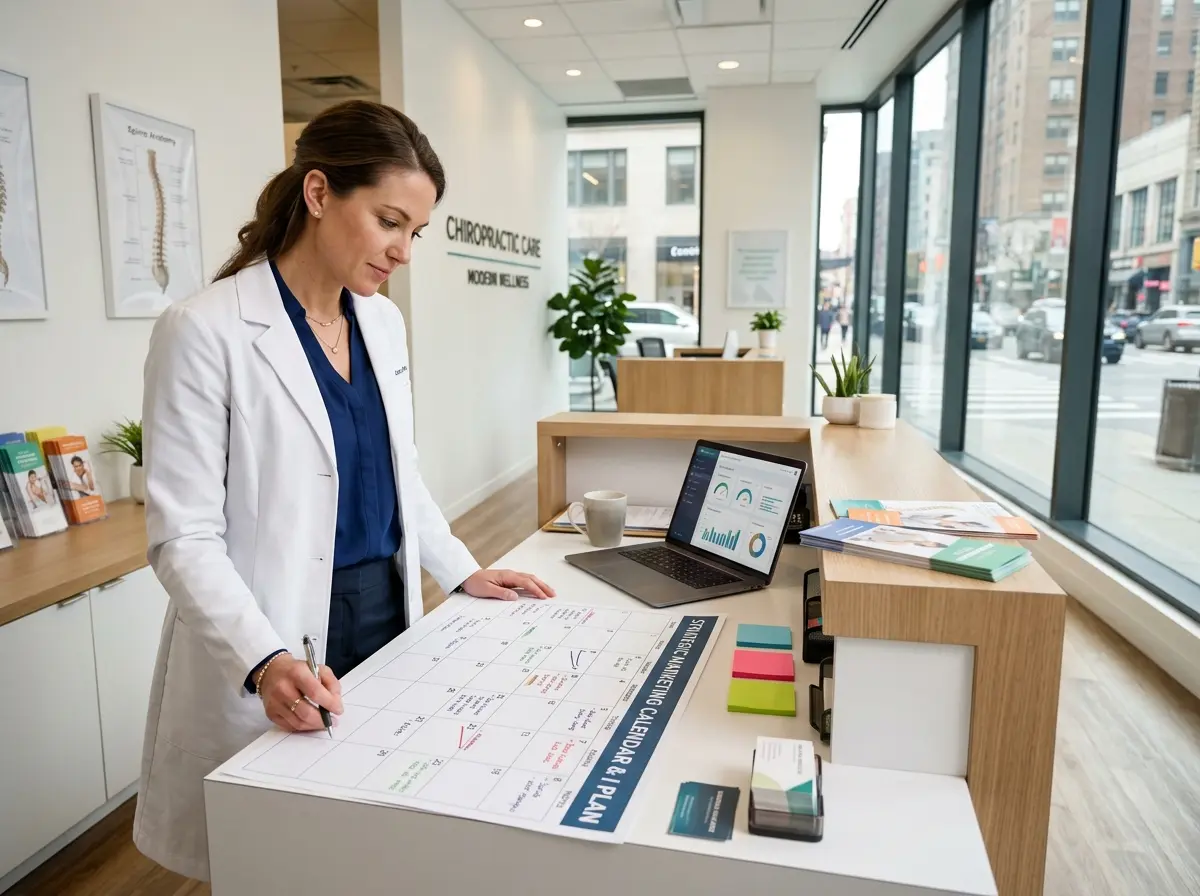
So You've Decided to Open a Chiropractic Office in a Market That Already Has Twelve of Them
Congratulations! You've spent years in school, invested in your equipment, signed a lease, and now you're staring down a competitive local market wondering why you didn't open a hot dog cart instead. The good news is that opening a chiropractic office in a competitive market is absolutely winnable — it just requires a smart, disciplined marketing approach for the first 90 days, because those first three months will largely determine whether you become the go-to spine whisperer in your area or the place people drive past on the way to your competitor.
The average new chiropractic office takes 6–12 months to reach sustainable profitability, but practices that launch with a structured marketing plan see new patient acquisition rates up to 40% higher in the first quarter compared to those who rely on a sign and a prayer. This guide breaks your first 90 days into three clear phases, gives you practical action steps, and — because we live in the future — introduces you to some technology that can actually help you execute without hiring a small army.
Days 1–30: Build the Foundation Before You Build the Hype
Before you spend a single dollar on advertising, you need to have your house in order. A marketing campaign that drives traffic to a half-finished Google Business Profile or a phone that rings into a voicemail abyss is just an expensive way to lose potential patients permanently. Month one is about building a foundation that converts curiosity into appointments.
Claim and Optimize Every Digital Touchpoint
Start with your Google Business Profile — this is non-negotiable. Fill out every single field, upload high-quality photos of your office, list your services with detailed descriptions, and set your hours accurately. Studies show that businesses with complete Google profiles receive 7x more clicks than those with incomplete listings. Next, claim your Yelp profile, Healthgrades, Zocdoc, and any local business directory you can find. Consistency in your name, address, and phone number (NAP) across all platforms isn't just tidy — it directly impacts your local SEO rankings.
Your website should be live, fast, and mobile-friendly before day one. At minimum, it needs a clear homepage with your value proposition, a services page, an about page that humanizes you, and a frictionless online booking option. If a prospective patient lands on your site at 9pm and can't book an appointment in under three clicks, they're gone — and they're booking with Dr. Someone Else down the street.
Establish Your Referral Network Immediately
One of the most underutilized strategies for new chiropractic offices is professional referral networking, and it costs almost nothing. Introduce yourself to primary care physicians, physical therapists, personal trainers, massage therapists, and sports coaches in your area. Bring them a thoughtful introduction kit — your bio, your specializations, and a clear explanation of the conditions you treat best. You are not competing with most of these people. You are completing their care ecosystem.
Even landing two or three active referral relationships in your first month can generate a meaningful, steady stream of new patients that compounds over time. Be the chiropractor who shows up, communicates well, and sends detailed progress notes back to referring providers. Professionalism travels fast in local healthcare circles — in both directions.
How Technology Can Do the Heavy Lifting on Patient Communication
Here's an uncomfortable truth: one of the biggest reasons new chiropractic offices lose patients they've already attracted is poor communication. A potential patient calls after hours, nobody answers, they hang up, and they never call back. You spent money getting them to pick up the phone, and then you dropped the ball at the one-yard line. This is where smart front-office technology earns its keep.
Never Miss a New Patient Inquiry Again
Stella is an AI robot employee and phone receptionist that answers calls 24/7 with real business knowledge — your services, your hours, your specialties, your new patient intake process. For a new chiropractic office, she can handle the after-hours rush (because people Google chiropractors at 10pm when their back finally gives out), answer common questions, and even collect new patient information through conversational intake forms right on the call. If a situation requires a human touch, she can forward the call or take a detailed, AI-summarized voicemail with an instant push notification to you or your front desk staff. Stella also includes a built-in CRM with custom fields, tags, and AI-generated patient profiles, so every inquiry is captured, organized, and ready for follow-up — not lost in a voicemail nobody checked. For a new office trying to make every lead count, that kind of reliability is hard to overstate.
Days 31–60: Generate Visibility and Community Presence
With your foundation locked in, month two is about getting your name in front of as many relevant eyeballs as possible. This means a combination of paid local advertising, community engagement, and content that positions you as the authority in your area.
Run a Targeted Local Launch Campaign
Allocate a modest but intentional budget — even $500–$1,000/month — to Google Local Services Ads and Facebook/Instagram geo-targeted campaigns. Google Local Services Ads are particularly valuable for chiropractors because they appear above organic results, include a "Google Screened" badge, and you only pay per lead, not per click. Target a 5–10 mile radius around your office and use ad copy that speaks directly to specific pain points: back pain, sciatica, sports injuries, car accident recovery, and headaches. Specificity wins.
Simultaneously, consider a Grand Opening offer — not a gimmick, but a genuine value-add like a complimentary consultation and posture assessment for new patients. Promote it through your social channels, local Facebook community groups, and Nextdoor, where neighbors actively seek local business recommendations. The goal in month two isn't profit — it's volume. Get people in the door, deliver an exceptional experience, and let the results speak for themselves.
Content Marketing and Social Proof
Start publishing short-form educational content consistently. A 60-second video explaining the difference between an adjustment and manipulation, a post about ergonomic desk setups, a reel demonstrating a simple hip flexor stretch — this content builds trust before someone ever meets you. Post three to four times per week across Instagram and Facebook at minimum. You don't need a production crew; you need a phone, decent lighting, and the willingness to show up on camera like you actually know things. (You do. You went to school for this.)
As patients start coming in, gently and systematically request Google reviews from satisfied patients. A single week of five-star reviews from real patients can meaningfully shift your local search ranking and your perceived credibility versus competitors who have been coasting on a 3.8-star average for years.
Host a Community Event
Partner with a local gym, yoga studio, or workplace to offer a free "Back Health and Posture Workshop" — either on-site or at your office. Events like this serve multiple purposes simultaneously: they generate local visibility, establish your authority, create shareable content, and often result in immediate appointment bookings from attendees who realize, mid-presentation, that yes, their posture is actually that bad. Events also give you genuine, personal connections in your community that no ad campaign can replicate.
Days 61–90: Double Down on What's Working and Lock In Retention
By month three, you should have real data. You know which ads are converting, which referral sources are active, and which patient segments are walking through your door most frequently. Month three is about optimizing your spend, formalizing your retention strategy, and building systems that will carry you past the 90-day mark without losing momentum.
Build a Patient Retention and Reactivation System
Acquiring a new patient costs five to seven times more than retaining an existing one — a fact that chiropractors, like most small business owners, are prone to forgetting when the adrenaline of a busy launch month wears off. By day 60, implement a formal follow-up system: automated appointment reminders, post-visit check-in messages, and a reactivation sequence for patients who haven't returned in 30 or 60 days. Even a simple "How are you feeling? We'd love to see you for a follow-up" message, sent at the right time, reactivates a meaningful percentage of lapsed patients.
Consider introducing a wellness care plan or membership model. Patients on recurring plans visit more consistently, generate predictable monthly revenue, and are more likely to refer friends and family. Structure two or three tiers that give patients flexibility while incentivizing commitment.
Review, Reallocate, and Plan for Month Four
Pull your data. Which Google Ads keywords drove actual appointments? Which social content got the most engagement? Which referral sources sent you real patients? Cut what isn't working, double what is, and set measurable goals for months four through six. At this stage, you should also begin building out email marketing — a monthly newsletter with health tips, office updates, and promotions keeps your name in front of past and potential patients at almost zero cost.
If you haven't already asked your happiest early patients for testimonials — video if possible — now is the time. Video testimonials on your website and social channels are among the highest-converting pieces of content a healthcare practice can produce, because nothing reassures a skeptical new patient like a real person saying "I couldn't sit at my desk for more than 20 minutes, and now I run 5Ks."
A Quick Word About Stella
Stella is an AI robot employee and phone receptionist built for businesses exactly like yours — professional, patient-facing, and perpetually slammed with questions that don't need a licensed chiropractor to answer. She runs on a simple $99/month subscription, requires no upfront hardware costs, and is ready to work the moment you are. Whether she's answering calls at 2am from someone whose back just gave out or greeting patients as they walk into your waiting room, she handles the communication load so your staff can focus on delivering care.
Your First 90 Days Are a Head Start, Not a Finish Line
Opening a chiropractic office in a competitive market isn't a sprint — it's a relay race where the first leg really, really matters. The actions you take in days one through ninety establish your reputation, your referral network, your digital authority, and your patient base. Cut corners here and you're playing catch-up for the next year. Execute well and you're building momentum that compounds well beyond month three.
Here's your action summary to take away:
- Month 1: Complete all digital profiles, launch your website with online booking, and begin building professional referral relationships.
- Month 2: Run targeted local ads, host a community event, publish consistent social content, and actively collect patient reviews.
- Month 3: Analyze your data, optimize your marketing spend, implement a retention and reactivation system, and plan your next quarter.
And throughout all three months: answer your phone, follow up promptly, and deliver an experience worth talking about. The market may be competitive, but it's rarely saturated with practices that actually do all of the above consistently. Be that practice.