Why Most Restaurants Are Leaving Money on the Table (Hint: It's Not the Menu)
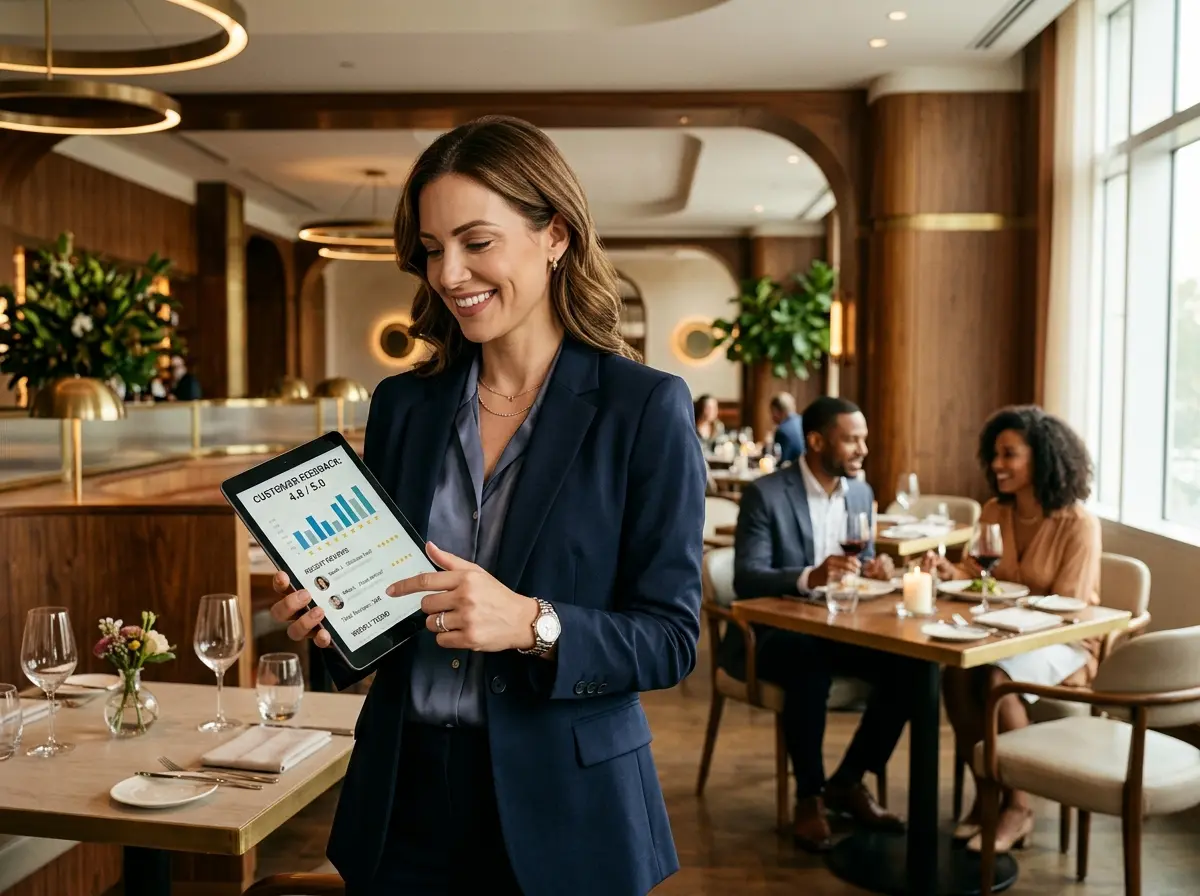
Here's a fun game: ask a restaurant owner how they know their customers are happy. Nine times out of ten, you'll get some version of "well, no one's complained lately." Congratulations — you've just described the bare minimum. The restaurants that actually grow week over week aren't the ones waiting for Yelp reviews to trickle in like a slow drip from a broken faucet. They're the ones who have built intentional feedback loops that turn everyday customer interactions into a constant stream of actionable intelligence.
The truth is, most restaurants collect feedback the same way they collect spare change — passively, occasionally, and without any real system. A comment card here, a Google review there, maybe a frustrated DM on Instagram when someone got the wrong order. That's not a feedback loop. That's chaos with a side of ranch dressing.
A real customer feedback loop is a deliberate cycle: you gather input, you analyze it, you act on it, and then you let customers know you listened. Done consistently, it transforms your restaurant from a place people visit into a place people champion. Let's break down exactly how to build one that actually works — every single week.
Building the Foundation of Your Feedback System
Choosing the Right Feedback Channels
Not all feedback channels are created equal, and the mistake most restaurant owners make is treating them as interchangeable. A Google review and a mid-meal check-in from a server are fundamentally different animals. One is reactive and public; the other is proactive and private. You need both — and a few things in between.
Start by mapping out the customer journey in your restaurant. There's the arrival experience, the ordering process, the wait time, the food itself, the ambiance, and the checkout. Each touchpoint is a potential feedback moment. Consider deploying short SMS surveys sent within an hour of a visit (when the experience is still fresh), QR codes on receipts that link to a 3-question form, and trained staff who ask specific, open-ended questions rather than the classic "Was everything okay?" — which, let's be honest, no one ever answers honestly while their mouth is full.
Timing Is Everything
According to a study by Harvard Business Review, customers are significantly more likely to provide useful feedback when contacted within 24 hours of an experience. Wait a week and you're getting vague recollections. Wait a month and you're getting fiction. The sweet spot is shortly after the visit — close enough that emotions are still tied to specifics, but far enough that the customer has had a moment to reflect.
For in-restaurant feedback, train your team to check in at the right moment: after the food has been on the table for about two minutes, not immediately after it's set down (they haven't tasted it yet!) and not when the table is clearly mid-conversation. It sounds small, but the timing of a genuine "How's everything tasting?" can be the difference between catching a problem and getting a bad review 48 hours later.
Making Feedback Effortless for Customers
Nobody is filling out a 12-question survey after a Tuesday night dinner. Keep it short, keep it specific, and remove every possible point of friction. The best feedback forms ask no more than three focused questions, take under 90 seconds to complete, and end with an optional open-text field for customers who actually have something to say. Incentivizing participation — a small discount on their next visit, entry into a monthly giveaway — can boost response rates without feeling transactional. Make it feel like you genuinely care about what they think, because if you're doing this right, you actually do.
How Technology Can Streamline Your Feedback Collection
Let Your Tools Do the Heavy Lifting
Here's where smart restaurant owners pull ahead of the pack. Manually tracking feedback across multiple channels — texts, emails, comment cards, review platforms — is a full-time job that you definitely do not have time for. That's where tools like Stella, the AI robot employee and phone receptionist, come in. Stella can engage customers directly — both at her in-store kiosk and over the phone — collecting information through natural conversational intake forms that don't feel like a corporate survey. When a customer calls to make a reservation or ask about a special, Stella can gather key details and preferences that feed directly into a built-in CRM, complete with AI-generated customer profiles, custom tags, and notes. Over time, that data becomes a goldmine for spotting trends, identifying your most loyal guests, and personalizing outreach in ways that actually resonate. It's like having a host, a data analyst, and a receptionist rolled into one — who never takes a smoke break.
Turning Feedback into Weekly Action
The Weekly Feedback Review Meeting
This is the step that separates restaurants that collect feedback from restaurants that use it. Set a recurring 20-minute meeting — Friday morning works well for most operators — where you or your manager reviews the week's feedback in aggregate. You're not reading every comment individually (though flagged outliers deserve attention). You're looking for patterns. Did multiple customers mention slow service between 7 and 8 PM on Thursday? Did three separate reviews mention the salmon being underseasoned this week? These patterns are your operating instructions for the week ahead.
Keep a simple running document — a shared Google Sheet works fine — that tracks recurring themes by week. After a month, you'll have a remarkably clear picture of what's consistent and what's a one-off. Consistent issues become training opportunities or menu decisions. One-off complaints get a follow-up and a generous response, then filed under "noted and moving on."
Closing the Loop With Customers
Here's the part most restaurants skip entirely, and it's arguably the most powerful step: tell customers you listened. When a repeat guest mentions that the outdoor seating was too loud, and two weeks later you've added some acoustic elements, send them a message. "Hey, we heard your feedback about the patio — we've made some changes and would love to have you back." That's not just good service. That's the kind of thing people tell their friends about.
For negative online reviews, respond publicly and specifically. Don't copy-paste a generic apology. Address the actual issue, explain what changed (or what you're working on), and invite them back. According to BrightLocal, 89% of consumers read businesses' responses to reviews, and a thoughtful, specific reply can actually increase trust among potential new customers who see it. Your review response is marketing. Treat it that way.
Using Feedback to Drive Menu and Operations Decisions
After 4–6 weeks of consistent feedback collection, you'll have enough data to make genuinely informed decisions rather than gut-feel guesses. Maybe your signature burger is universally loved but the fries always come up lukewarm in delivery orders — that's a packaging problem, not a recipe problem. Maybe your lunch crowd is happy but dinner guests consistently mention feeling rushed — that's a staffing or floor management issue hiding in plain sight.
Run a simple monthly audit: what are the top three recurring positives (protect and promote these), and what are the top three recurring negatives (address these systematically)? Apply changes, then watch whether the feedback shifts in the following weeks. This is the loop in action — and when it's working, you'll feel it in your covers, your repeat visit rate, and eventually, your bottom line.
Quick Reminder About Stella
Stella is an AI robot employee and phone receptionist designed for businesses like yours. She greets customers at her in-store kiosk, answers phone calls 24/7, promotes your specials, and collects customer information — all for $99/month with no upfront hardware costs. If you're building a feedback system and want smarter data collection baked right in, she's worth a serious look.
Start the Loop This Week — Not Next Quarter
Building a customer feedback loop is not a project for someday. It's a system you can start this week with the tools you already have. Here's your action plan:
- Pick two feedback channels to start: A post-visit SMS survey and a QR code on your receipt are a solid, low-friction beginning.
- Set your weekly review meeting: Block 20 minutes on the calendar. Make it recurring. Treat it like a P&L review — because it basically is.
- Respond to every review this week: Public and private, positive and negative. Get into the habit now.
- Close the loop with one customer: Find someone who gave you feedback in the last month and personally follow up. It will take five minutes and make a lasting impression.
- Track your themes: Start a simple log. After four weeks, patterns will emerge that would have stayed invisible otherwise.
The restaurants that thrive long-term aren't necessarily the ones with the most Instagram-worthy plating or the trendiest concept. They're the ones that listen better than everyone else — and then actually do something about it. Your customers are talking. The only question is whether you've built a system worthy of what they have to say.
Build the loop. Run it every week. Watch your restaurant get better — not by accident, but by design.