You're Losing Leads and You Don't Even Know It
Let's paint a picture. A homebuyer is sitting at their kitchen table at 9:47 PM, contract in hand, slightly panicked, and desperately searching for a home inspector. They find your website, they're impressed, and they want to book. But your contact form is buried three clicks deep, your phone goes to voicemail, and your only lead capture method is a sticky note reminder you wrote to yourself six months ago that says "fix website."
Congratulations — you just lost a customer to the inspector down the street who had a simple, functional intake form and an actual system for following up.
Home inspection is a referral-heavy, time-sensitive business. Buyers are often operating under tight contract deadlines, which means they're not going to wait around for you to call them back when you're done crawling through someone's attic. If you don't have a structured lead capture system — a real one, not just a phone number on a business card — you're leaving money on the table every single day. The good news? Fixing this is entirely within your control, and it doesn't require a marketing degree or a full-time receptionist.
Understanding Why Lead Capture Matters for Home Inspectors
The Time-Sensitive Nature of the Inspection Business
Unlike many service businesses, home inspectors operate within windows. Real estate contracts typically include inspection contingencies with deadlines of 7–10 days, sometimes less in competitive markets. That means when a potential client reaches out, they need a response fast — not tomorrow, not after lunch, but now. Studies show that responding to a lead within the first five minutes makes you up to 100 times more likely to convert that lead than if you respond an hour later. An hour. Not a day — an hour.
If your lead capture system consists of "call me and hope I pick up," you're not just being optimistic — you're being optimistic in an industry that doesn't reward optimism, it rewards responsiveness.
Most Inspectors Are One-Person Operations (And That's the Problem)
The majority of home inspection businesses are solo operators or small teams. You're doing the inspections, writing the reports, managing scheduling, handling billing, and somehow also supposed to be answering phones and capturing leads simultaneously. It's a lot. And the natural result is that things fall through the cracks — usually the phone calls that come in while you're under a crawl space with no cell signal.
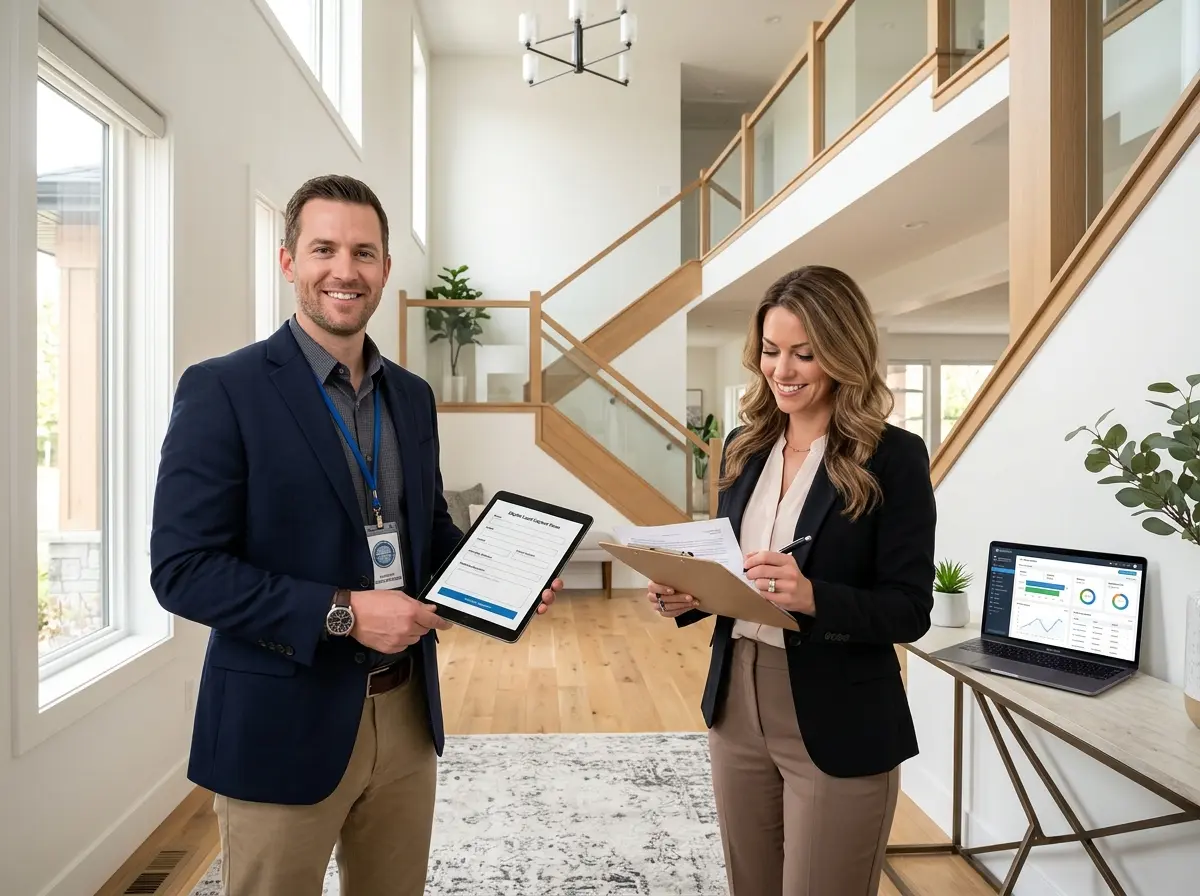
A structured lead capture system solves this by removing you from the equation for the initial touchpoint. When someone reaches out, your system collects their name, contact info, property address, preferred inspection date, and any special notes — all without you lifting a finger. That information waits for you, organized and actionable, when you come up for air.
What "Structured" Actually Means
Structured doesn't mean complicated. It means intentional. A structured lead capture system has defined entry points — your website, your phone line, maybe a QR code on your business card — and each one funnels information into the same place. There's no mystery about who called, what they needed, or when they reached out. You have a contact record, a follow-up task, and enough context to have an intelligent conversation when you call them back. That's it. That's the whole game.
Tools and Technology That Do the Heavy Lifting
How AI Receptionists and Smart Intake Forms Change Everything
This is where modern technology stops being a luxury and starts being a necessity. Stella, an AI robot employee and phone receptionist, is built exactly for this kind of problem. When a potential client calls your inspection business after hours — or during hours when you're literally on a roof — Stella answers. She's knowledgeable, friendly, and professional, and she collects the client's information through a natural, conversational intake process. No awkward forms, no missed calls going to a generic voicemail, and no leads disappearing into the void.
Stella also manages captured contacts through a built-in CRM with custom fields, tags, notes, and AI-generated profiles — so every lead is organized and accessible the moment you're ready to follow up. At just $99/month with no upfront hardware costs, it's genuinely one of the most cost-effective front-office upgrades an inspection business can make.
Building Your Lead Capture System Step by Step
Step 1 — Audit Your Current Entry Points
Before you build anything new, figure out where leads are currently trying to reach you. Is it primarily phone calls? Your website contact form? Google Business Profile? Referrals from real estate agents? Most inspectors find that phone calls dominate, followed by web forms. Once you know where leads are coming from, you can prioritize which entry points need the most attention and make sure none of them are leaking.
Common leak points include: a contact form that doesn't send notifications, a phone number that goes directly to voicemail with no callback expectation set, and a website that doesn't collect enough information to qualify the lead before your first conversation. Each of these is fixable in a day.
Step 2 — Standardize the Information You Collect
Every lead that enters your system should include the same core data: full name, phone number, email address, property address, desired inspection date or timeframe, and how they heard about you. That last one is underrated — knowing whether your leads come from Zillow, agent referrals, or Google ads tells you exactly where to focus your marketing energy.
Build this into every intake touchpoint. Whether someone fills out a form on your website or speaks to your AI receptionist on the phone, the output should look the same in your CRM. Consistency is what makes a system actually useful instead of just a collection of half-filled sticky notes and email threads.
Step 3 — Build a Follow-Up Workflow That Actually Runs
Capturing a lead is only half the job. The other half is following up — and doing it fast. Your workflow doesn't need to be elaborate. A simple process looks like this: lead comes in, you receive a notification, you call back within 30–60 minutes, you send a confirmation email with next steps. That's a complete workflow. The key is that it happens every time, not just when you remember.
For home inspectors specifically, it's worth segmenting your follow-up by urgency. A buyer with a 7-day inspection contingency is a hot lead that needs same-day contact. A homeowner thinking about a pre-listing inspection next month can wait a day or two. Tag your leads accordingly so you're spending your energy in the right places.
Quick Reminder About Stella
Stella is an AI robot employee and phone receptionist that answers calls 24/7, collects lead information through conversational intake forms, and organizes everything in a built-in CRM — all for $99/month with no setup headaches. For home inspectors who are constantly in the field and can't afford to miss a call, she's the kind of front-office upgrade that pays for itself the first time she captures a lead you would have otherwise missed.
Start Building Your System This Week
Here's the honest truth: you don't need to overhaul your entire business to fix your lead capture problem. You need to pick the two or three highest-priority changes and implement them this week. Not next quarter. This week.
Start by auditing your phone and web entry points — are they collecting information, or are they just hoping someone leaves a voicemail? Then standardize what you collect at every touchpoint so your follow-up process has something to work with. Finally, make sure your follow-up actually happens on a schedule, not on a whim.
If you're ready to remove yourself from the initial response loop entirely — which, if you're spending your days on job sites, you absolutely should — look into an AI receptionist that can handle incoming calls intelligently and feed clean lead data directly into a CRM. The inspectors who grow consistently aren't the ones who do the most inspections. They're the ones who never let a qualified lead slip through the cracks.
Your next client is probably calling right now. The question is: who's answering?