When the Phone Won't Stop Ringing and the Fryer Is on Fire
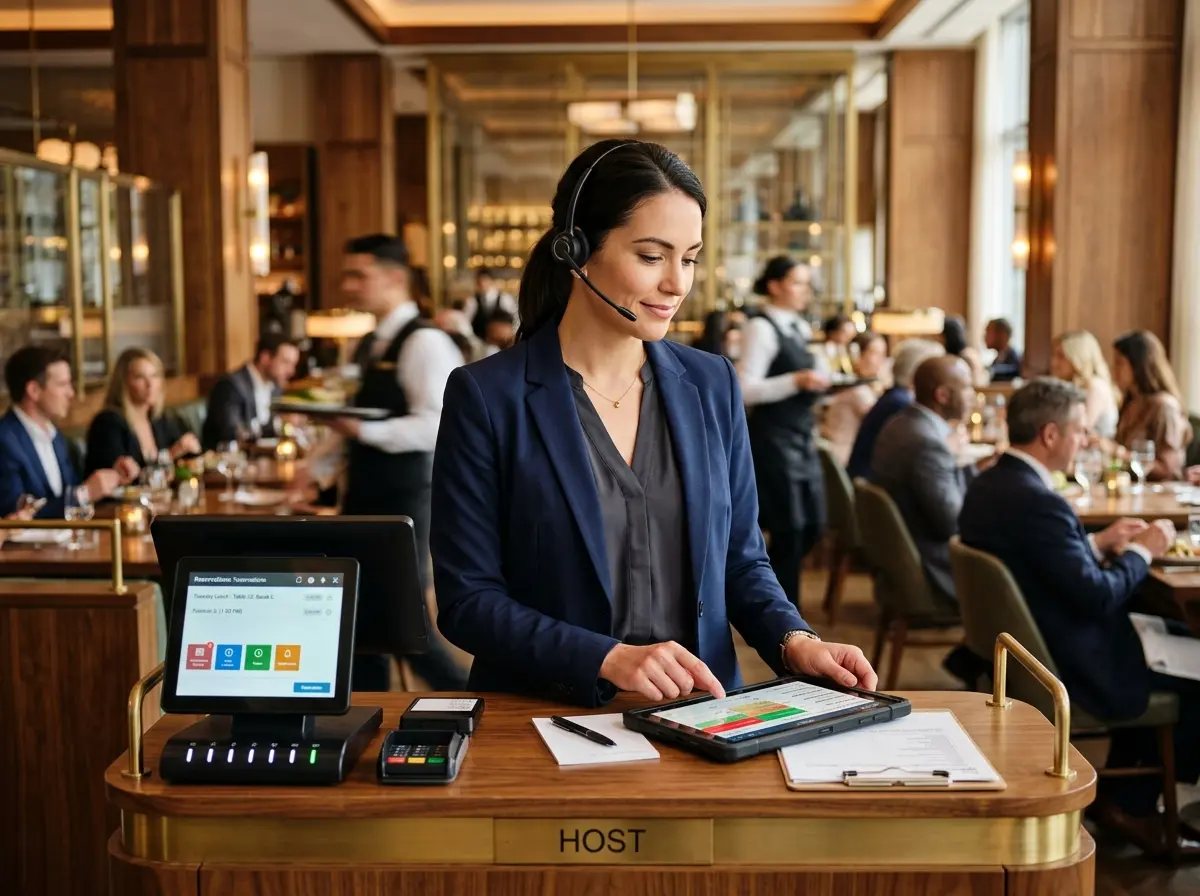
If you've ever watched a Friday night dinner rush unfold from behind the host stand, you already know the scene: the dining room is packed, the kitchen is in controlled chaos, your best server is triple-sat, and the phone — that relentless, beautiful, customer-generating phone — will not stop ringing. Someone has to answer it. But everyone is already doing three jobs at once.
Here's the uncomfortable truth: missed calls are missed revenue. Studies show that 85% of callers who can't reach a business won't call back. In the restaurant industry, where a single reservation or catering inquiry can mean hundreds of dollars, letting calls go to voicemail isn't just inconvenient — it's expensive. And yet, asking your already-stretched staff to pivot from table service to phone duty mid-rush is its own kind of operational nightmare.
High call volume isn't a sign that something is wrong with your restaurant. It's a sign that people want what you're offering. The challenge isn't the demand — it's how you handle it. This post breaks down why high-volume calls are such a pain point for restaurants, how smart operators are solving it, and what your options actually look like in the real world.
Why Restaurants Struggle With Call Volume More Than Other Businesses
The Nature of the Beast
Restaurants are uniquely exposed to call volume spikes in a way that most other businesses simply aren't. A boutique clothing shop might get a handful of calls per day. A busy restaurant on a Saturday? Try fielding calls for reservations, takeout orders, catering quotes, allergy questions, hours of operation, and "do you have parking?" — all before 6:00 PM. The volume isn't just high; it's unpredictable. It clusters around meal times, which are precisely the moments when your staff has zero bandwidth to spare.
Unlike a retail environment where a call can wait a few extra rings, restaurant customers are often calling in real time — they're hungry, they're planning tonight's dinner, or they're trying to book a table for an anniversary that's happening this weekend. Delay or a missed connection and they've already opened a competitor's menu on their phone.
The Hidden Cost of Interruption
Beyond missed calls, there's a subtler problem: the cost of interruption. When a staff member stops what they're doing to answer the phone, the impact ripples outward. A host who steps away from the door to handle a reservation call leaves incoming guests ungreeted. A server who grabs the phone at the bar creates a service gap that tables notice. These micro-interruptions add up — in service quality, in team morale, and ultimately in tips and reviews.
Research from the University of California, Irvine found that it takes an average of 23 minutes to fully regain focus after an interruption. Now multiply that by a dozen phone calls during a dinner service. The math isn't pretty, but it is clarifying.
What Callers Actually Want (And How Quickly They Want It)
Most restaurant calls fall into a surprisingly predictable set of categories: hours and location, reservation requests, menu or allergy questions, takeout and delivery inquiries, and event or catering quotes. Very few of these require a human with deep institutional knowledge to answer. They require someone — or something — that is available, accurate, and friendly. Which opens the door to a solution that more restaurant owners are starting to take seriously.
Smarter Tools for a Smarter Front-of-House
Let Technology Handle the Predictable Stuff
This is where AI-powered phone solutions are genuinely changing the game for busy restaurants. Stella is an AI robot employee and phone receptionist that answers calls 24/7, handles the kinds of questions your staff field a hundred times a week, and never puts a customer on hold because it's triple-sat. She knows your hours, your menu, your current specials, and your policies — and she can communicate all of it conversationally, without a script that sounds like it was written in 1997.
For restaurants with a physical location, Stella also operates as a friendly in-store kiosk, greeting walk-in guests and engaging them proactively about deals, offerings, and promotions. Her built-in CRM and conversational intake forms mean she can also collect customer information — useful for reservations, loyalty programs, or catering leads — without a staff member having to stop and manually log anything. She forwards calls to human staff when the situation genuinely calls for it, and takes AI-summarized voicemails with push notifications when it doesn't. At $99/month with no upfront hardware costs, she's also significantly less expensive than a part-time host whose sole job is answering phones.
Practical Strategies for Managing High Call Volume Right Now
Audit Where Your Calls Are Actually Coming From
Before you can fix a call volume problem, you need to understand it. Spend one week tracking every incoming call by category: What did they want? What time did they call? Was it answered? How long did it take? This doesn't need to be a sophisticated system — even a simple tally sheet at the host stand works. What you'll likely discover is that a significant majority of your calls are asking the same five or six questions, and those calls are clustering in the same two or three time windows. That pattern is your roadmap.
Once you know what people are calling about, you can start making proactive decisions: updating your Google Business Profile with comprehensive hours and FAQ information, improving your website's menu and contact page, and identifying which types of calls truly need a human versus which ones just need a fast, accurate answer.
Build a Phone Protocol Your Team Can Actually Follow
If human staff are answering phones — and in many restaurants, they will still handle some portion of calls — they need a clear, simple protocol that doesn't require memorizing a manual. This means designating a specific person (or rotation) for phone duty during peak hours, establishing a firm maximum number of rings before a call goes to voicemail or an automated system, and creating a quick-reference card near the phone with answers to the top ten most common questions. The goal is to reduce the cognitive load on staff so that answering a call is a five-second pivot, not a five-minute derailment.
Use Voicemail — But Use It Strategically
Voicemail has a bad reputation, mostly because it's been implemented lazily. A generic "we're busy, leave a message" greeting doesn't serve your customer and doesn't serve your business. But a well-crafted voicemail message that acknowledges the caller warmly, tells them exactly when they can expect a callback, and points them toward your website or online ordering platform? That actually works. Even better if your system generates an AI summary of the message and sends a push notification to a manager, so no lead gets buried in an inbox and forgotten.
Quick Reminder About Stella
Stella is an AI robot employee and phone receptionist designed to help busy businesses — including restaurants — manage customer interactions without burning out their human staff. She answers calls around the clock, greets in-store guests, promotes current deals, and handles the kinds of questions that eat up your team's time during a rush. At $99/month with no upfront hardware costs and a straightforward setup, she's built for real-world restaurant operations, not just enterprise budgets.
Stop Letting the Phone Cost You Customers
High call volume is a good problem — it means people want to reach you. But good problems still need solutions, and the solution isn't to hire a dedicated phone person for every shift or to just hope your staff figures it out under pressure. The operators winning right now are the ones treating their phone line with the same intentionality they bring to their menu design and their dining room layout.
Here's what you can do this week to start making a real dent in the problem:
- Audit your incoming calls for one week to identify patterns in timing, volume, and call type.
- Update your online presence — Google profile, website, and social media — with thorough answers to your most frequently asked questions.
- Create a phone protocol for your team that's simple, specific, and posted where they can reference it during service.
- Evaluate an AI receptionist solution to handle predictable call types 24/7, so your human staff can stay focused on the guests in front of them.
- Treat your voicemail like a first impression — because for many callers, it is one.
The restaurants that consistently outperform their competition aren't just better at cooking food. They're better at the unglamorous operational stuff that most owners never want to think about — including how the phone gets answered. Get that right, and you've quietly solved a problem that's costing your competitors customers every single day.