Your Store Called — It Wants to Be Smarter
Running a retail operation in 2024 means juggling approximately 47 things at once — inventory, staffing, customer experience, promotions, shrinkage, vendor relationships — all while someone asks you where the bathrooms are. It's a lot. And while you've been busy keeping the lights on, a quiet revolution has been happening on the shelves, stockrooms, and sales floors of forward-thinking retailers everywhere: the Internet of Things, or IoT, has entered the building.
IoT devices are physical tools embedded with sensors, software, and connectivity that collect and exchange data in real time. In retail, that translates to smarter inventory management, better customer experiences, reduced waste, and — most importantly — fewer fires for you to put out manually. According to a report by Grand View Research, the global IoT in retail market is expected to reach over $94 billion by 2025. So no, this isn't just a tech buzzword. It's a genuine operational shift, and it's happening with or without you.
This post breaks down the most impactful IoT technologies transforming retail right now — and how you can start putting them to work in your store.
The IoT Devices Making the Biggest Impact on the Sales Floor
Smart Shelves and Automated Inventory Tracking
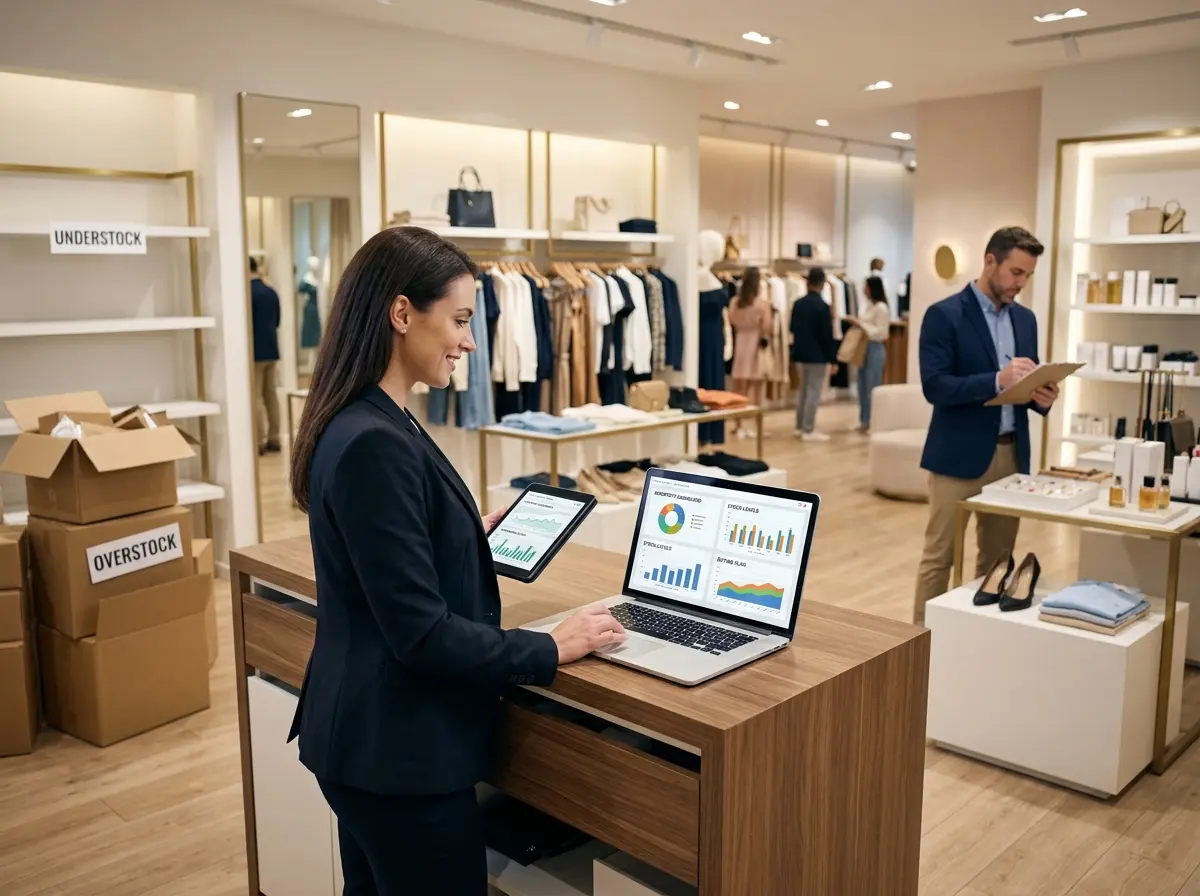
If you've ever had a customer ask for a product that your system says you have but physically does not exist anywhere in your store, congratulations — you've experienced inventory discrepancy, the retail industry's very own ghost problem. Smart shelving systems use weight sensors, RFID tags, and computer vision to monitor stock levels in real time, automatically flagging low-stock items and reducing the need for manual counts.
Retailers like Walmart and Amazon Go have been using these systems for years, but the technology is becoming increasingly accessible for small and mid-sized businesses. RFID-enabled inventory systems, for example, can improve inventory accuracy to over 95% compared to roughly 65% with manual tracking. That's not just a nice stat — it means fewer lost sales, fewer over-orders, and a whole lot less time spent in the stockroom counting things by hand.
Actionable tip: Start with RFID tagging for your highest-turnover or highest-value product categories. You don't need to overhaul the entire store overnight. Pick a section, implement, measure, and expand from there.
Digital Price Tags and Dynamic Signage
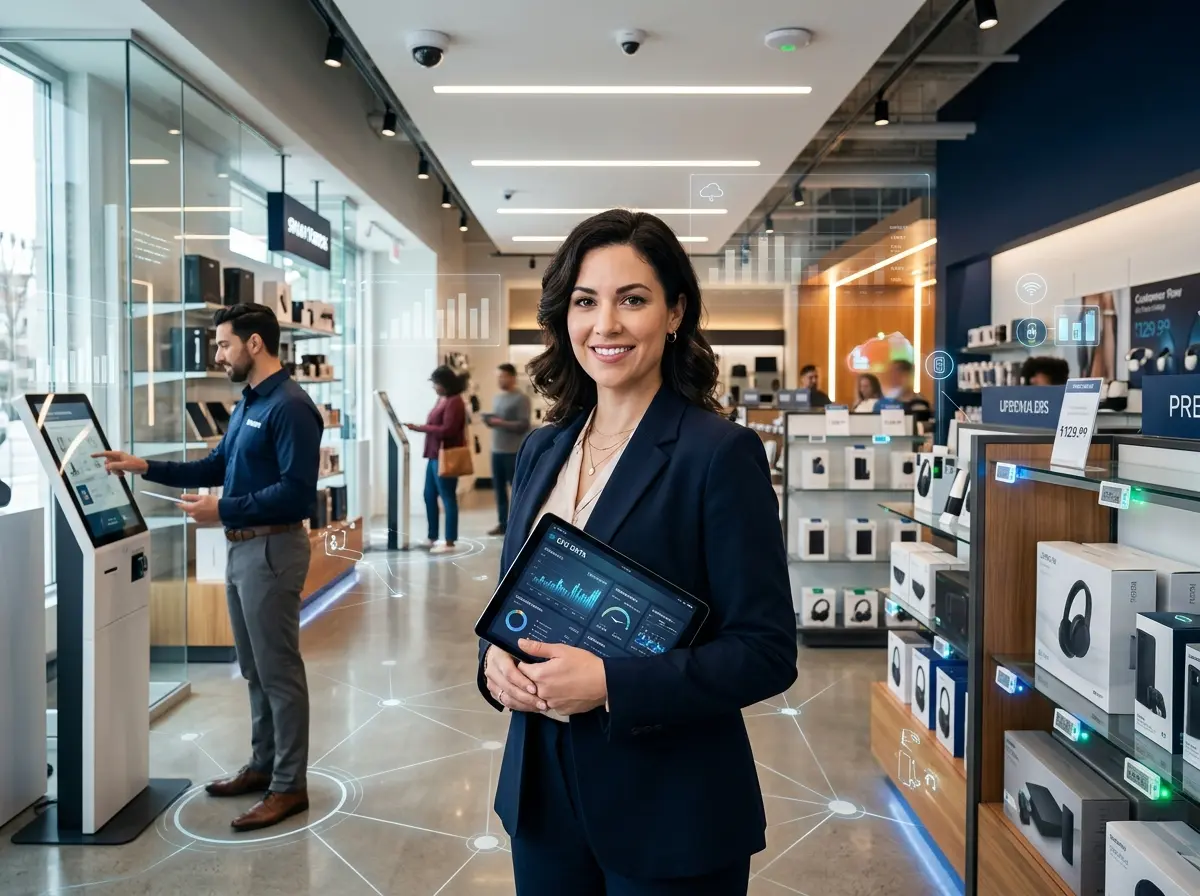
Electronic shelf labels (ESLs) allow you to update pricing and product information across your entire store from a central dashboard — instantly. No more printing paper tags at 7 AM because corporate pushed a price change. No more mismatched prices causing confusion (and headaches) at checkout. ESLs sync directly with your POS system and can even display QR codes, promotional badges, or stock indicators.
Pair ESLs with dynamic digital signage — screens that pull live data to display current promotions, trending products, or time-sensitive deals — and you've built a sales floor that essentially markets itself. That's the dream, isn't it?
People Counters and Traffic Analytics
Understanding how customers move through your store is one of the most underutilized advantages a physical retailer has over their e-commerce counterparts. People counters use infrared sensors, thermal imaging, or camera-based AI to track foot traffic patterns: how many people enter, where they linger, what they walk right past, and when your busiest hours actually are.
This data helps you make smarter decisions about product placement, staffing schedules, and promotional positioning. If 80% of your customers turn left when they walk in but your featured promotion is on the right — that's a fixable problem, and traffic analytics will tell you about it.
A Smarter Front-of-Store Experience Starts at the Door
How Stella Fits Into Your IoT Strategy
While sensors and smart shelves are busy optimizing the back end of your operations, your front end — the part where actual humans walk in expecting to feel welcomed — deserves just as much attention. That's where Stella comes in. Stella is an AI robot employee and phone receptionist designed to greet every customer who walks into your store, proactively engage them about products and promotions, and answer their questions without pulling your staff away from other tasks. She also answers your phone calls 24/7, handles intake, takes AI-summarized voicemails, and can forward calls to your team when needed.
Think of Stella as the IoT upgrade for your customer-facing layer. She collects interaction insights, promotes current deals, upsells and cross-sells, and maintains a consistent, professional presence — without breaks, bad days, or turnover. At $99/month with no upfront hardware costs, she fits neatly into a modern, tech-forward retail operation without requiring a serious capital investment.
IoT in the Backroom: Where the Real Efficiency Gains Live
Smart Environmental Monitoring
This one sounds boring until you realize what it can prevent. IoT-enabled environmental sensors monitor temperature, humidity, and air quality in real time — critical for retailers who stock perishables, pharmaceuticals, cosmetics, wine, or any product sensitive to environmental conditions. A temperature spike in your storage area at 2 AM used to mean discovering spoiled inventory the next morning. With smart sensors, you get an alert the moment something goes wrong, giving you time to actually do something about it.
Beyond product preservation, environmental monitoring contributes to energy efficiency. Smart thermostats and lighting systems that respond to occupancy and time-of-day data can meaningfully reduce your utility bills. The U.S. Department of Energy estimates that smart building controls can reduce energy consumption by 10–30% in commercial settings. That's real money staying in your pocket every month.
Loss Prevention and Smart Security Systems
Traditional security cameras record. Smart security systems analyze. Modern IoT-powered loss prevention tools use AI-driven video analytics to detect suspicious behavior patterns, monitor high-risk zones, and generate alerts in real time. Some systems integrate directly with your POS to flag unusual transaction patterns that might indicate internal theft.
RFID-based anti-theft tags have also become far more sophisticated — modern systems can distinguish between an item moving toward the exit versus being relocated within the store, dramatically reducing false alarms while improving detection rates. For a small retail operation, even a modest reduction in shrinkage can have an outsized impact on your bottom line. The National Retail Federation reports that retail shrink costs the industry nearly $100 billion annually — a number that should get anyone's attention.
Connected POS and Supply Chain Integration
A modern IoT-connected point-of-sale system does far more than process transactions. When integrated with your inventory management, supplier portals, and analytics dashboards, your POS becomes the nervous center of your entire operation. It can automatically trigger purchase orders when stock hits a defined threshold, identify which products are your highest-margin performers, and sync sales data with your accounting software in real time.
The goal here isn't more data for data's sake — it's making sure the right information reaches the right people (or systems) at the right moment, so decisions are made faster and smarter. Cloud-connected POS systems with IoT integration are available at a wide range of price points today, and most modern retail platforms — Square, Shopify, Lightspeed, and others — offer meaningful IoT connectivity out of the box or through integrations.
Quick Reminder About Stella
Stella is an AI robot employee and phone receptionist built for businesses exactly like yours. She greets customers in person at your store, answers your phones around the clock, promotes your deals, and keeps things running smoothly — all for $99/month with no hardware costs upfront. If you're investing in a smarter store, she's a natural part of that picture.
Building Your Smart Retail Strategy: Where to Start
IoT adoption doesn't require ripping out everything you have and starting from scratch. The most successful retail operators approach it incrementally — identifying their most painful operational problems first, then selecting the technology that addresses those problems directly. Here's how to approach it:
- Audit your biggest friction points. Is it inventory accuracy? Staffing inefficiencies? Shrinkage? Customer engagement? Start where the pain is greatest, not where the technology is flashiest.
- Choose interoperable systems. The real power of IoT is in integration. Before purchasing any device or platform, ask how it connects to the systems you already use — your POS, your CRM, your e-commerce store.
- Set measurable goals before you deploy. Decide what success looks like upfront. A 15% reduction in stockouts? A 20% drop in manual inventory time? Having a target makes it much easier to evaluate whether your investment is paying off.
- Train your team. Technology only works if your people know how to use it and trust it. Budget time for onboarding, not just installation.
- Iterate. Start with one or two solutions, measure results, learn, and expand. The retailers winning with IoT didn't do it all at once.
The smart store isn't a distant future concept. It's a present-tense competitive advantage — and the gap between retailers who are leveraging these tools and those who aren't is widening every year. The good news is that the entry point has never been lower, the technology has never been more reliable, and the ROI has never been easier to demonstrate. Your store is ready to get smarter. The only question is whether you're ready to let it.