Why Your Tires Are Rolling Out the Door — But the Revenue Isn't
Let's paint a picture. A customer pulls up, drops off four winter tires, you store them somewhere in the back, and they pick them up in the spring. You charged them nothing for this. You remembered which tires belonged to which car purely by psychic intuition (or a sticky note that may or may not have survived the winter). And when they came back to pick them up, nobody mentioned that those tires were looking a little worn — so they drove off on bald rubber and bought their next set from the guy down the street.
Sound familiar? You're not alone. Tire storage is one of the most consistently undermonetized services in the auto industry, and yet it's one of the easiest to systematize into a reliable, recurring revenue stream. Done right, a tire storage and management program doesn't just add income — it builds loyalty, creates repeat visits, and gives your shop a professional edge that customers actually notice and appreciate.
So let's talk about how to build a tire storage program that actually makes money, keeps customers coming back, and doesn't turn your back room into a tire-themed obstacle course.
Building the Foundation of Your Tire Storage Program
Setting Up Your Pricing Structure
The first thing most shop owners get wrong is pricing. Many either charge too little (or nothing at all) out of habit, or they set arbitrary numbers without considering their actual costs. A solid starting point for tire storage pricing in most markets is $25–$60 per set per season, though urban shops or premium service centers can charge significantly more. According to industry surveys, shops that formalize their tire storage programs see an average revenue increase of 15–25% per stored vehicle when you factor in the upsell opportunities that come with seasonal changeovers.
When building your pricing model, consider offering tiered options: a basic storage-only package, a mid-tier that includes seasonal mounting and balancing, and a premium tier that includes inspection, a detailed condition report, and priority scheduling. Customers love choices, and tiered pricing almost always nudges people toward the middle option — which you've conveniently priced to be your best margin.
Organizing Your Physical Storage Space
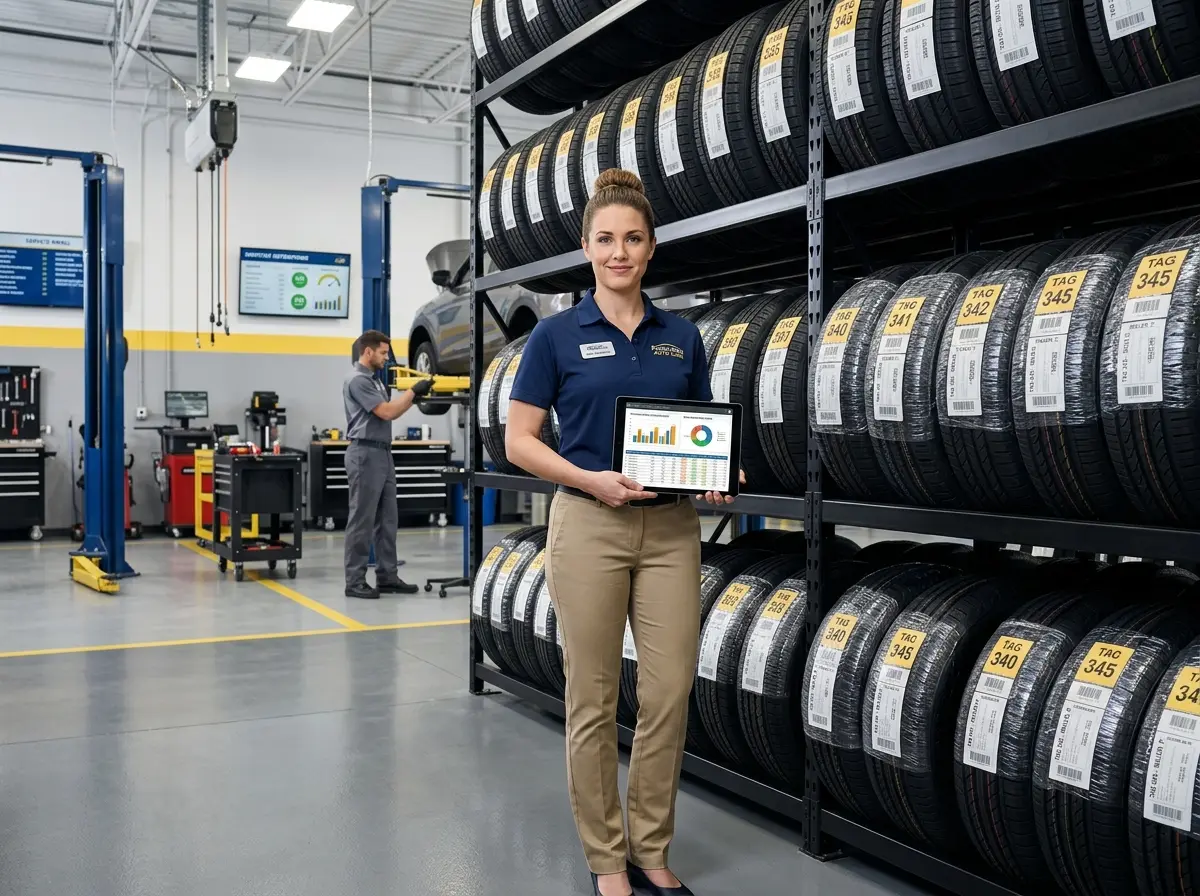
If your current tire storage system involves hoping for the best, it's time to invest in a proper racking solution. Numbered or labeled tire racks — whether wall-mounted, freestanding, or stackable — are a relatively modest investment that pays for itself quickly. Each set should be tagged with a barcode, QR code, or numbered tag that ties directly to a customer record. This eliminates the "which tires are these again?" chaos and makes your operation look professional rather than improvised.
Label each set with the customer name, vehicle year/make/model, tire size, and storage date. Keep a physical log and a digital record. Yes, both. Paper is the backup nobody wants to need but everyone eventually does.
Creating a Customer Agreement and Intake Process
Every stored tire set should be accompanied by a signed customer agreement. This isn't just good legal practice — it also sets professional expectations. The agreement should outline your storage fees, pickup deadlines (what happens if a customer abandons their tires?), liability limitations for pre-existing damage, and your inspection policy. Sending customers a digital copy of this agreement, ideally at the time of booking, dramatically reduces confusion and disputes down the road — pun intended.
Automating the Customer Experience With the Right Tools
How Stella Can Help Your Auto Shop Stay Ahead
Here's where things get interesting. Managing a tire storage program means managing a lot of customer touchpoints — intake calls, appointment scheduling, storage reminders, seasonal changeover bookings, and upsell conversations. That's a lot of work for your front desk staff, especially during your busiest seasonal rushes. Stella, the AI robot employee and phone receptionist, is built for exactly this kind of high-volume customer interaction.
At your front counter, Stella can greet walk-in customers, explain your tire storage packages, answer questions about pricing and availability, and even collect intake information through conversational forms — right at the kiosk. On the phone side, she answers calls 24/7, so when a customer calls at 7pm to ask whether their tires are ready for pickup, someone actually picks up. She can also handle appointment booking inquiries, promote your seasonal changeover specials, and forward calls to staff when human judgment is needed. Her built-in CRM means every customer interaction is logged, tagged, and summarized — so your team always knows exactly where a customer stands in the storage cycle without digging through sticky notes or spreadsheets.
Turning Tire Storage Into a Revenue Engine
The Seasonal Changeover Upsell Opportunity
The single greatest revenue opportunity in tire storage isn't the storage fee itself — it's the guaranteed twice-a-year appointment. When a customer comes in to swap from winter to all-season tires, they're already in your shop, their car is already on the lift, and your technician is already handling their vehicle. This is the perfect moment for a multi-point inspection, an oil change, a brake check, or a wheel alignment recommendation. Shops that actively build these upsell touchpoints into their seasonal changeover workflow routinely increase per-visit revenue by 30–40% compared to a basic swap appointment.
The key is systematizing the conversation rather than leaving it to chance. Create a short inspection checklist that every technician completes during each changeover, with clear prompts to note any concerns. Then have a staff member — or Stella at the front kiosk — walk the customer through the findings before they leave. A calm, informative recommendation is far more effective than a rushed upsell pitch.
Using Reminders and Communication to Reduce No-Shows and Abandoned Tires
One of the quiet profit killers in tire storage programs is customer inaction. Customers forget to book their changeover appointment, tires sit in your rack past the season, and suddenly you've got 40 sets of rubber taking up space with no revenue attached to them. A proactive communication strategy solves this elegantly.
Build a reminder sequence into your process: send a reminder email or text 4–6 weeks before typical changeover season, a follow-up 2 weeks out, and a final nudge the week of. Make it easy to book — a direct link, a phone number, or even a QR code on the reminder card you hand out at drop-off. Shops that implement structured reminder programs see changeover appointment compliance rates above 85%, compared to roughly 60% for shops with no formal outreach.
Loyalty Perks and Program Packaging
Customers who store tires with you are, by definition, repeat customers. Reward that behavior intentionally. Consider offering a discount on year two of storage for customers who book their changeover appointment in advance, a loyalty punch card for every five oil changes that includes a free tire rotation, or a bundled annual tire care package that combines storage, two changeovers, and two rotations for a flat fee. Bundled pricing encourages customers to pre-commit their spend, which means more predictable revenue for you and more perceived value for them. Everyone wins — except maybe your competitor down the street.
Quick Reminder About Stella
Stella is an AI robot employee and phone receptionist that works in your shop and answers your phones — 24/7, no breaks, no bad days. For just $99/month with no upfront hardware costs, she greets customers, promotes your services, handles intake, and keeps your team focused on the work that actually requires a human. She's the front desk employee who never calls in sick during your busiest week of the season.
Your Next Steps to Launch a Profitable Tire Storage Program
If you've made it this far, you're already ahead of the majority of shop owners who keep meaning to formalize their tire storage program and never quite get around to it. Here's what a practical launch looks like.
Start by auditing your current situation. How many sets are you storing right now, and what are you charging? If the answer is "some" and "nothing," you have immediate, low-effort revenue sitting in your back room. Next, set up your physical storage infrastructure — racks, labels, and a digital tracking system. Then build your pricing tiers and create a simple customer agreement. Finally, establish your communication cadence: intake confirmation, seasonal reminders, and a post-appointment follow-up that reinforces loyalty.
A well-run tire storage program doesn't require a complete overhaul of your operation. It requires intention, a little organization, and the willingness to charge appropriately for a service your customers genuinely value. The shops that thrive on recurring revenue aren't doing anything magical — they've just stopped leaving money on the table and started treating every stored set of tires as the beginning of a long-term customer relationship.
Now go check on whatever is currently stacked in the corner of your back room. There's a good chance it's worth more than you think.