So You Want to Run a Flash Sale at Your Tattoo Studio
Congratulations — you've decided to run a flash sale event. Maybe you want to fill up a slow Tuesday. Maybe you've got a new artist who needs to build their portfolio. Maybe you just really love controlled chaos. Whatever the reason, a well-executed flash sale can bring in serious revenue, introduce new clients to your studio, and generate the kind of buzz that money normally can't buy. A poorly executed one, however, can leave you with a line out the door, confused walk-ins, overwhelmed artists, and a front desk person who's quietly updating their resume.
The difference between the two? Planning, promotion, and the systems you have in place before the first needle hits skin. This guide breaks down exactly how to run a flash sale event that fills your books, keeps your artists happy, and maybe — just maybe — doesn't drive you completely insane in the process.
Building the Foundation: What to Offer and How to Price It
Choosing Your Flash Designs Wisely
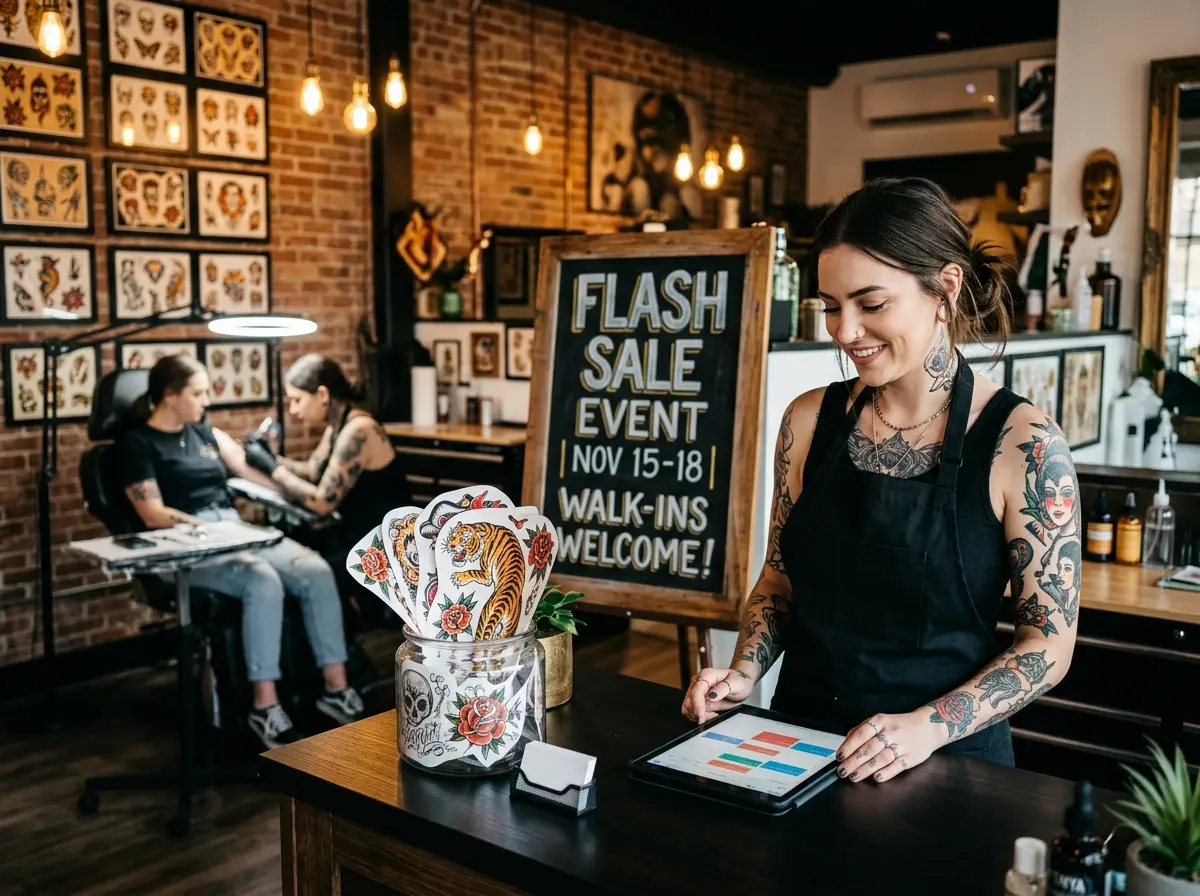
The backbone of any great flash sale is the design sheet itself. Your flash designs should be quick to execute, visually appealing, and priced to feel like a genuine deal without undercutting your artists' value. Think bold linework, simple fills, and designs that can be completed in 30–60 minutes. This isn't the time for a full sleeve consultation — it's the time for that perfect little mushroom or a classic dagger that your artist can knock out beautifully in under an hour.
Involve your whole team in the design selection process. Each artist should contribute designs that reflect their style, which keeps them engaged and ensures quality stays high throughout the event. A sheet of 20–30 designs across multiple artists gives clients variety without turning your shop into a full-blown design buffet with no clear direction.
Pricing for Profit (Not Just Hype)
Flash sale doesn't mean free sale. A common mistake studio owners make is pricing so aggressively that the event generates foot traffic but not actual profit. A good benchmark is to offer a 15–30% discount off your standard minimum or small-piece pricing — enough to feel exciting, not so much that you're working for exposure. Some studios price flash designs at a flat rate (e.g., $80–$150 depending on size and placement), which simplifies decision-making for clients and keeps your booking process moving quickly.
Don't forget to factor in supply costs, artist commission or hourly rates, and the time spent on setup and cleanup. If the numbers don't work on paper, they won't work on the day either.
Setting Clear Event Parameters
Decide upfront: Is this a walk-in-only event, or will you pre-book slots? Both models work, but they require different systems. Walk-in events create energy and urgency — they reward early birds and create a sense of exclusivity. Pre-booked events are easier to manage and reduce the risk of no-shows killing your momentum mid-day. Many successful studios use a hybrid approach: pre-book 60–70% of slots and leave the rest for walk-ins to keep that live-event atmosphere buzzing.
Promoting Your Flash Sale So People Actually Show Up
Start Earlier Than You Think You Need To
If you're announcing your flash sale the day before, you've already lost. Ideally, you want two to four weeks of lead time, especially if you're relying on social media organic reach. Post teaser content — partial previews of flash sheets, behind-the-scenes clips of artists drawing designs, countdown posts. Build anticipation like you're dropping a limited-edition product, because you are. Instagram and TikTok are your best friends here; short video content showing the actual designs being drawn consistently outperforms static posts in the tattoo space.
Email your existing client list directly. These are warm leads who already trust your studio — they're significantly more likely to book than a cold follower who just stumbled onto your page. If you have a loyalty program or VIP list, give them early access to pre-booking slots as a reward for their loyalty. That kind of gesture builds long-term client relationships and fills your books before you've even gone public.
Leveraging Local Channels
Don't sleep on local promotion. Community Facebook groups, neighborhood apps like Nextdoor, local event calendars, and even partnerships with nearby businesses (coffee shops, clothing boutiques, barber shops) can extend your reach well beyond your existing audience. Consider offering a small referral incentive — "bring a friend who books and get 10% off your next appointment" — to turn your current clients into your promotional team.
Keeping Things Running Smoothly on the Day
How Stella Can Support Your Studio During High-Traffic Events
Here's where things can go sideways fast: the phone starts ringing off the hook, walk-ins are stacking up at the front desk, and your receptionist is simultaneously trying to check people in, answer questions about pricing, and explain for the fourteenth time that no, you cannot request a custom design during the flash event. This is exactly the kind of scenario where Stella, the AI robot employee and phone receptionist, earns her keep.
Stella can handle incoming phone calls 24/7, answering questions about your event — designs available, pricing, walk-in hours, deposit requirements — without pulling your human staff away from the clients standing right in front of them. Her in-store kiosk presence means she can also greet walk-ins, share event details, and collect intake information conversationally, so by the time a client reaches your actual front desk, the basics are already handled. During a high-volume flash event, that kind of operational support isn't a luxury — it's the difference between a smooth day and a stressful one.
After the Event: Turning Flash Clients Into Regulars
Capturing Client Information the Right Way
A flash sale is only as valuable as the relationships it creates. Every person who walks through your door during a flash event is a potential long-term client — but only if you capture their information and follow up intentionally. Make sure you're collecting names, email addresses, and phone numbers for every client, not just those who book appointments. Even walk-ins who didn't get tattooed that day are warm leads worth nurturing.
Use a simple intake process — digital forms work great — and make sure the data lands somewhere useful, not just in a spreadsheet that nobody looks at. Tag flash event clients specifically in your CRM so you can target them with follow-up campaigns, anniversary reminders, or early access to your next event.
Following Up With Purpose
Send a thank-you message within 48 hours of the event. It sounds basic, but most studios don't do it, and it makes a real impression. Include a soft call to action — something like "ready to book your next piece?" with a link to your booking page. For clients who didn't end up getting tattooed during the event, a follow-up message acknowledging that spots ran out and offering them early access to the next event keeps the relationship warm without being pushy.
Track which clients from the event return within 90 days. That retention rate tells you a lot about whether your flash sale attracted your people — clients who align with your studio's style and values — or just deal-seekers who won't be back until the next discount. Adjust your future promotions accordingly.
Reviewing What Actually Worked
After the dust settles and your artists have recovered with a well-deserved rest day, do a proper debrief. Which designs sold out first? Which artists were booked solid versus underbooked? What did clients ask about most that your promotional materials didn't answer clearly? How many calls came in, and how many were handled without interrupting your staff? These insights are gold for planning your next event and for refining how you communicate about your studio in general. Flash sales are one of the best real-world tests of your studio's systems — treat the data accordingly.
A Quick Word About Stella
Stella is an AI robot employee and phone receptionist built for businesses like yours — she handles walk-in greetings, answers calls around the clock, promotes your current deals, and keeps operations moving without breaks or burnout. At $99/month with no upfront hardware costs, she's the kind of team member who's always ready, always on-brand, and never calls in sick the day of your biggest event.
Go Fill Those Books
Running a successful flash sale isn't magic — it's the result of smart design curation, honest pricing, early promotion, and systems that can handle the volume you're generating. Start with a clear concept, involve your artists, give your audience enough runway to get excited, and make sure your front-of-house experience matches the quality of the work happening in your chairs.
Your actionable next steps are simple: set your date, brief your team, build your flash sheet, and start teasing it on social at least three weeks out. Audit your front desk process now — before the event — so you're not scrambling on the day. And if your phone situation is currently "whoever can pick it up," consider whether that's actually serving your clients or just surviving them.
A great flash sale doesn't just fill your books for one day. Done right, it fills them for the months that follow.