When "We'll Call You Back" Becomes a Patient Safety Issue
Let's be honest — oral surgery scheduling is not exactly a casual affair. You're not booking a haircut. You're coordinating pre-operative instructions, medical clearances, anesthesia consent forms, post-op care arrangements, and insurance authorizations — all while trying to make sure Mrs. Henderson doesn't accidentally show up having eaten a full breakfast before her IV sedation appointment. The stakes are real, and administrative errors in surgical scheduling don't just cause headaches. They cause rescheduling, revenue loss, compliance risks, and occasionally a very unhappy patient sitting in your waiting room wondering why nobody told them what to bring.
One oral surgery practice — let's call them exactly what they were: overwhelmed and understaffed — decided enough was enough. Their front desk team was talented, dedicated, and completely buried. Phone calls were being missed. Intake information was inconsistent. Pre-op instructions were sometimes communicated, sometimes not, and the paper trail was more of a paper suggestion. After restructuring their scheduling workflow from the ground up, administrative errors dropped significantly and their team finally had room to breathe. Here's what they did.
The Root Causes of Scheduling Chaos in Oral Surgery Practices
The Information Handoff Problem
Most scheduling errors don't happen because your staff is careless. They happen because information passes through too many hands, too many formats, and too many interruptions. A patient calls, gives their insurance information to one person, their medical history to another during a callback, and then shows up and gives it all again in person — except now there are three slightly different versions of the same data floating around your system. Which one is correct? Nobody knows. Everyone assumes someone else verified it.
The oral surgery practice in our case study identified that the majority of their documentation errors originated at the first point of contact — the initial phone call. Callers were asked different questions depending on who answered, notes were entered inconsistently into their practice management software, and there was no standardized script for capturing the information that actually mattered before a surgical consultation could be scheduled.
Verbal Instructions Without Verification
Pre-operative instructions for oral surgery procedures — particularly those involving sedation — are non-negotiable. NPO status (nothing by mouth), medication holds, transportation arrangements, and procedural consent all need to be communicated clearly and confirmed. The problem is that "we told them on the phone" is not a documentation strategy. When a patient arrives having ignored instructions they claim they never received, it's very difficult to prove otherwise when your only record is a handwritten note that says "called pt, reminded about appt."
The practice found that inconsistent instruction delivery was one of their top three causes of day-of cancellations and procedure delays. Without a standardized confirmation and instruction workflow, critical information was falling through the cracks on a regular basis.
The Overbooking and Overlap Trap
Oral surgery practices often run multiple operatories, manage different procedure types with wildly different time requirements, and coordinate with anesthesia providers who may not be in-house every day. When scheduling is handled reactively — filling slots as calls come in without cross-referencing anesthesia availability, room setup requirements, or equipment needs — double-bookings and timeline miscalculations become a recurring problem. The practice was experiencing an average of three to five scheduling conflicts per week that required staff intervention, patient callbacks, and rescheduling. Multiply that by 52 weeks and you have a significant operational drag.
How Technology and AI Assistants Are Helping Surgical Practices Get It Right
Standardized Intake at the First Point of Contact
One of the most impactful changes a surgical practice can make is ensuring that every patient interaction — whether by phone, web, or in person — captures the same standardized set of information, every single time. This is where AI-assisted intake tools have become genuinely useful. Stella, the AI robot receptionist and kiosk platform, handles exactly this kind of structured intake during phone calls, on the web, and at a physical kiosk in your practice's waiting area. Instead of relying on whichever staff member happens to answer the phone, every new patient inquiry is guided through a consistent conversational intake process that captures the right information and stores it directly in a built-in CRM — complete with custom fields, tags, notes, and AI-generated contact profiles.
For oral surgery practices specifically, this means that by the time a consultation is confirmed, you already have insurance information, the referring provider's details, the patient's medical history flags, and their preferred callback number — all organized and ready to review before anyone picks up the chart. Stella also answers incoming calls around the clock, so patients calling after hours to ask pre-op questions or confirm appointment details aren't left to wonder until Monday morning.
The Workflow Restructuring That Actually Worked
Building a Surgical Scheduling Checklist With Hard Stops
The practice implemented a tiered scheduling checklist that treated each stage of the scheduling process as a gate — a step that had to be completed before the next one could begin. This sounds simple, but it represented a significant cultural shift. Previously, appointments could be placed on the calendar with incomplete intake information, with the assumption that "we'll get the rest later." Later never came, or came at 7:45 AM on the day of the procedure.
Their new checklist required that before any surgical appointment was confirmed, the following were documented: verified insurance eligibility, completed medical history form, confirmed anesthesia type and provider availability, transportation arrangement acknowledgment for sedation cases, and signed or e-signed informed consent. If any of these were missing, the appointment moved to a "pending" status and triggered an automatic follow-up task assigned to a specific staff member with a deadline. The result was a 40% reduction in incomplete patient files at the time of procedure.
Templated Procedure Blocks With Buffer Time Built In
The practice also overhauled their scheduling templates. Rather than using generic appointment slots, they created procedure-specific templates in their practice management software that accounted for setup time, procedure duration, recovery time, and room turnover. A simple extraction and a full-arch implant consultation were no longer competing for the same 45-minute block. Each procedure type had its own template, and schedulers were required to use them — no manual overrides without a supervisor's authorization.
This change alone reduced same-day timeline overruns by a reported 60% in the first quarter after implementation. It also made anesthesia coordination dramatically easier, since providers could see predictable, realistic block schedules instead of an optimistic fantasy of back-to-back procedures with no breathing room.
Automated Confirmation and Instruction Delivery
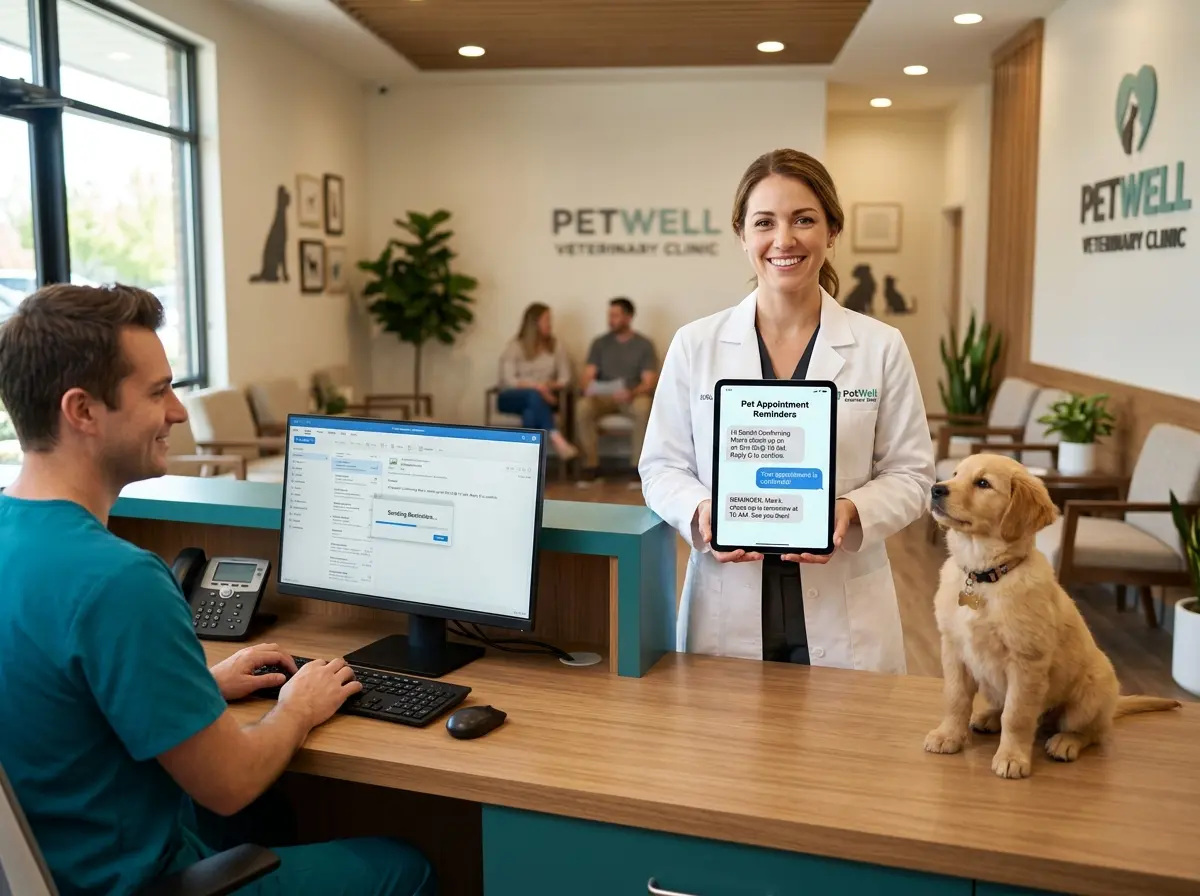
The third pillar of their workflow restructuring was a systematic approach to pre-operative communication. Every patient scheduled for a procedure involving sedation received an automated confirmation sequence: an initial confirmation with appointment details, a 72-hour reminder that included written pre-op instructions, a 24-hour reminder that required a response confirmation, and a same-day check-in message. Each of these touchpoints was logged in the patient's record, giving the practice a clear, timestamped documentation trail that answered the "nobody told me" problem once and for all.
For patients who didn't respond to automated messages, the system flagged their charts for a personal callback — ensuring that human follow-up was targeted rather than generalized. The team's time was spent on the patients who actually needed a phone call, not on routine confirmations that an automated system could handle perfectly well.
A Quick Reminder About Stella
Stella is an AI robot employee and phone receptionist that works in your practice 24/7 — greeting patients at her in-office kiosk, answering calls around the clock, collecting intake information through conversational forms, and keeping your CRM organized without adding a single task to your front desk team's plate. At $99/month with no upfront hardware costs, she's one of the most cost-effective front-of-office upgrades a practice can make.
Your Next Steps Toward a Cleaner Scheduling Workflow
The oral surgery practice described here didn't overhaul their operation overnight, and they didn't buy an expensive enterprise platform to do it. They audited where errors were actually coming from, standardized their processes at the points of highest variability, and used available technology to remove human inconsistency from tasks that didn't require human judgment. The results spoke for themselves.
If you're ready to tighten up your own scheduling workflow, here's where to start:
- Audit your current error sources. Track where scheduling problems originate for 30 days. You'll likely find the same two or three breakpoints causing the majority of your issues.
- Standardize your intake process. Every patient, every call, every channel should capture the same core information using the same process — no exceptions.
- Build procedure-specific scheduling templates. Realistic time blocks prevent cascade failures throughout your day.
- Automate confirmations and pre-op instruction delivery. Documented, timestamped communication protects your practice and your patients.
- Use AI tools to handle first-contact and after-hours communication. Your front desk team is a clinical support resource — not an answering service.
Administrative errors in surgical scheduling are not inevitable. They're the predictable output of inconsistent processes, and they respond very well to structured, systematic fixes. The practices that take this seriously don't just reduce errors — they build the kind of operational reputation that keeps referring providers sending patients their way for years to come.