When "Just a Bath" Leaves Money on the Table
Let's be honest: most pet grooming customers walk in thinking they only need one thing, and walk out having received exactly that — while you quietly wonder why your revenue per visit hasn't moved in three years. Sound familiar? You're not alone. The average grooming shop focuses heavily on getting customers in the door and almost entirely forgets about what happens once they're actually standing there, wallet metaphorically in hand, waiting for their freshly blow-dried golden retriever.
The good news? One small grooming shop figured out a smarter approach — a simple, non-pushy upsell sequence that felt natural to customers and added a meaningful 20% bump in average revenue per visit. No aggressive sales tactics. No awkward "would you like fries with that?" energy. Just a thoughtful system that made it easy for customers to say yes to things they actually wanted. Here's how they did it — and how you can apply the same logic to your shop.
The Upsell Sequence: Breaking It Down
Step 1 — The Welcome Moment (Before the Appointment Even Starts)
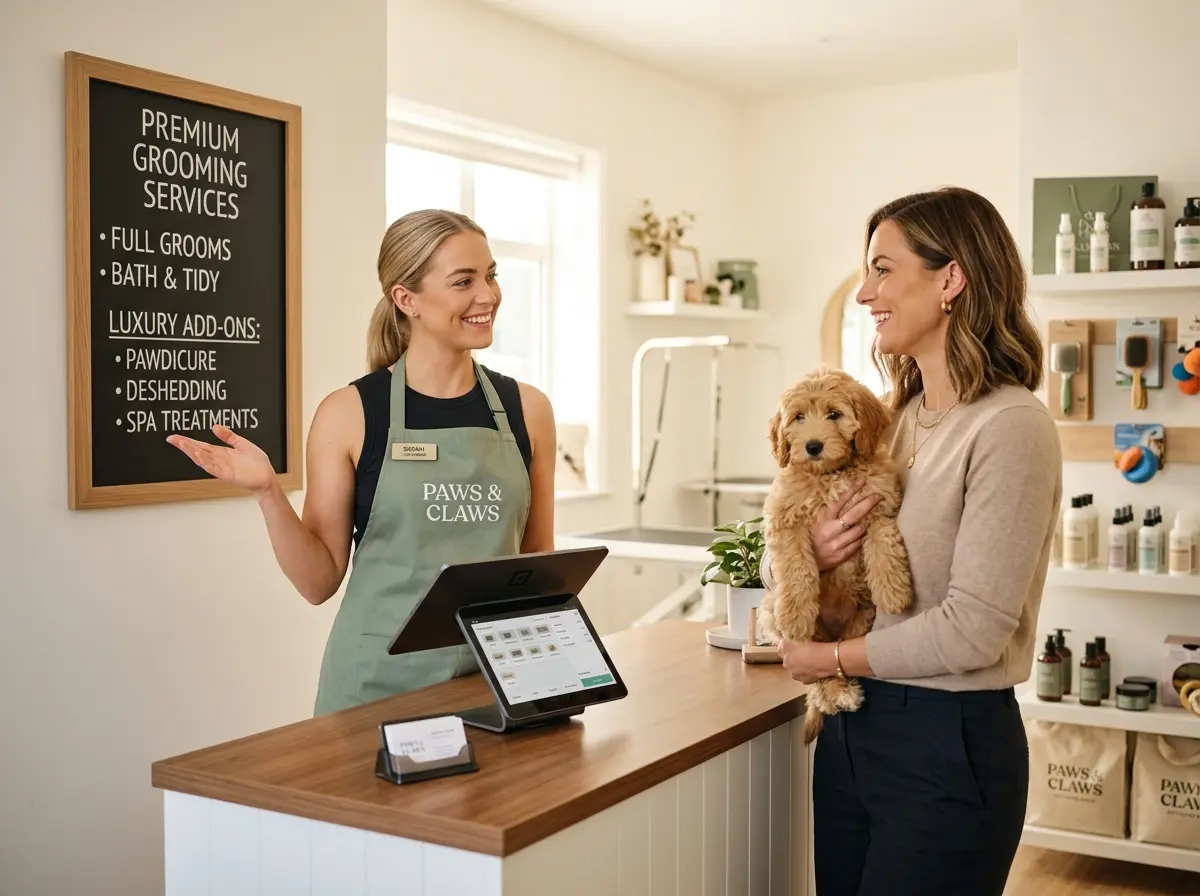
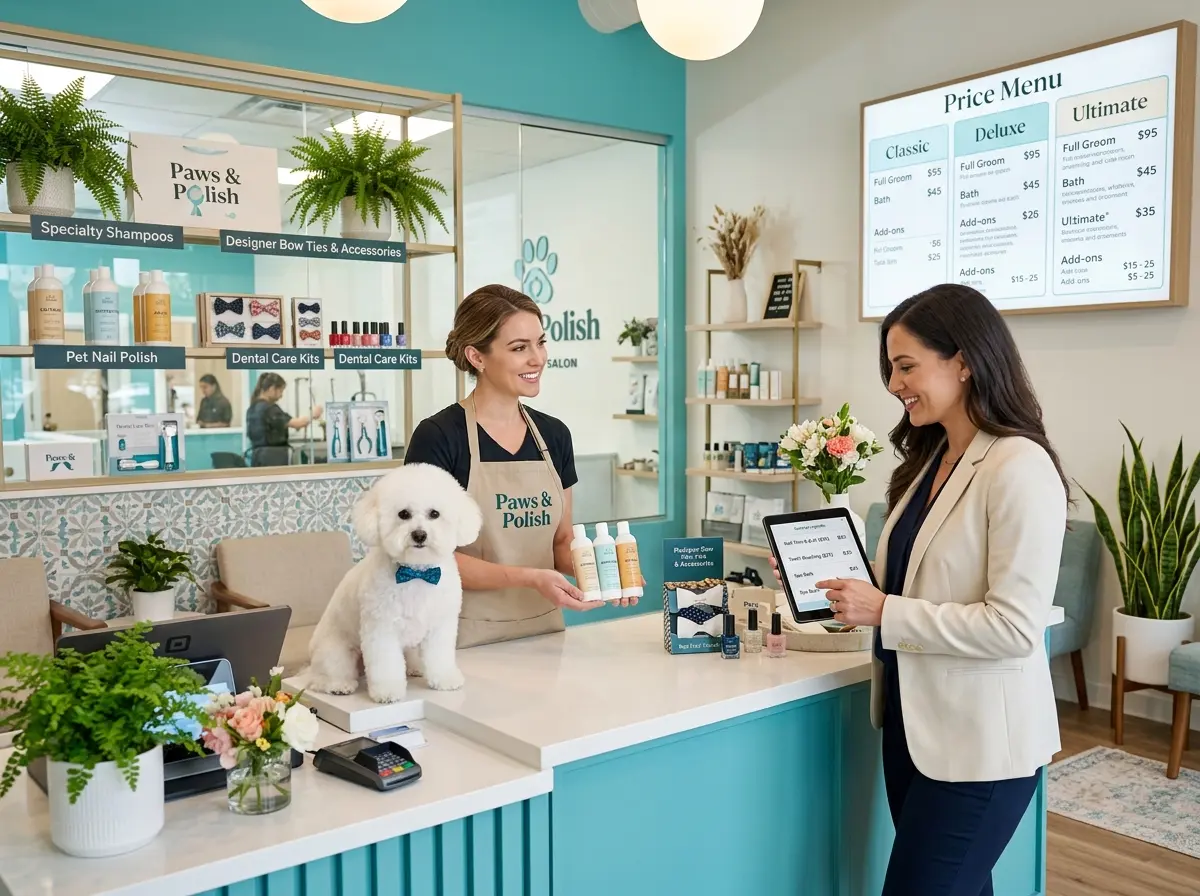
The upsell sequence doesn't begin when the groomer picks up the scissors. It begins the moment a customer walks through the door or calls to book. This grooming shop started greeting every customer with a warm, informative welcome that naturally surfaced the shop's current add-on services — things like teeth brushing, nail grinding, de-shedding treatments, and flea prevention rinses.
The key was framing. Instead of listing services like a menu nobody reads, the front desk (or in their case, an AI kiosk — more on that shortly) would mention services conversationally: "We're actually running a teeth brushing add-on this month for just $12 — most pet parents grab it while their pup is already here." That phrase, "while they're already here," is doing a lot of quiet lifting. It reduces friction by tying the upsell to something the customer is already committed to doing. No extra trip, no extra effort. Just a small decision.
Step 2 — The Mid-Visit Check-In (Where the Real Magic Happens)
While the pet was being groomed, the shop implemented a brief mid-visit touchpoint. If a groomer noticed something during the appointment — dry skin, excessive shedding, ear buildup — they'd send a quick message to the front desk, who would let the owner know. Something like: "Hey, Bella's coat is looking a little dry — we have a conditioning treatment we can add on for $15. Want us to go ahead?"
This approach works for a few reasons. First, it's personalized — you're not pitching a generic add-on, you're responding to something real about their pet. Second, it happens at a moment when the customer is already emotionally invested (their pet is literally in the back being pampered). The conversion rate on mid-visit check-ins like this can be surprisingly high — some grooming businesses report 30–40% acceptance rates when the offer is genuinely relevant and well-timed.
Step 3 — The Checkout Wrap-Up (Don't Leave Value Behind)
The final step is the checkout conversation. This is where most shops go completely silent on upselling, and it's arguably the biggest missed opportunity. At checkout, this shop trained staff to briefly mention two things: a product recommendation tied to what was observed during the groom (a specific shampoo, a brush, a dental chew), and the next appointment.
Rebooking at checkout isn't just about locking in future revenue — it also increases lifetime customer value significantly. Studies on service-based businesses show that customers who prebook their next appointment are 40–50% more likely to return than those who don't. That alone can transform your monthly revenue, entirely separate from any add-on sales.
How Technology Can Take the Pressure Off Your Team
Letting AI Handle the Opening Conversation
Here's a practical truth: your staff are busy. They're managing appointments, handling pets, answering phones, and trying to remember which dog is allergic to lavender. Expecting them to consistently execute a three-step upsell sequence on top of everything else is a tall order — and inconsistency is exactly what kills these programs before they gain traction.
This is where Stella comes in. Stella is an AI robot employee and phone receptionist that can greet every customer who walks in, mention current promotions and add-on services, and answer questions — all without pulling your groomers away from the actual grooming. For pet shops with a physical location, Stella stands inside the store as a friendly kiosk presence that engages customers the moment they arrive. For calls, she answers 24/7 and can naturally surface your current offerings before a customer even speaks to a human. When your front desk is juggling three things at once, Stella makes sure the welcome moment and the upsell conversation still happen — every single time, without fail.
Making It Stick: Training, Consistency, and Measuring What Matters
Training Your Team Without Making It Feel Like a Sales Boot Camp
The word "upsell" makes some staff uncomfortable — and honestly, understandably so. Nobody got into pet grooming because they wanted to be in sales. The reframe that works best is simple: position every add-on recommendation as a service to the pet owner, not a pitch. You're not trying to extract money. You're surfacing options they didn't know they had.
Role-play the three touchpoints during a brief team meeting. Keep the scripts short and conversational — two sentences max per recommendation. Practice until it feels natural rather than rehearsed. Most importantly, celebrate wins publicly. When a team member successfully introduces a new service to a customer who loves it, make a small deal out of it. Positive reinforcement works on humans, not just pets.
Tracking Revenue Per Visit (and Actually Using the Data)
You cannot improve what you don't measure. Before implementing any upsell sequence, establish your current average revenue per visit as a baseline. Track it weekly for at least a month before making changes, then track it consistently after. Look at which add-ons are getting accepted most frequently, which touchpoints are performing, and which staff members might need extra coaching or encouragement.
Break it down further if you can: revenue per visit by service type, by day of week, even by individual groomer. Patterns will emerge. Maybe your Saturday walk-in customers are far more likely to accept add-ons than weekday appointment clients. Maybe teeth brushing sells itself but conditioning treatments need a stronger explanation. The data will tell you — you just have to be listening.
Iterating Without Overthinking
The grooming shop at the center of this story didn't nail their upsell sequence on the first try. They tested different phrasing, experimented with timing, and dropped a few add-ons that simply weren't resonating. That's normal. Give any new process at least 60–90 days before drawing conclusions, and resist the urge to change five things at once. Adjust one variable at a time so you actually know what's moving the needle.
Revenue per visit is one of the most powerful levers in a service business because it doesn't require you to find new customers — it just requires you to do more for the ones already sitting in front of you. A 20% increase sounds modest until you do the math across a full year of appointments.
Quick Reminder About Stella
Stella is an AI robot employee and phone receptionist built for businesses like yours — she greets customers in-store, answers calls around the clock, promotes your current services and specials, and helps upsell without adding to your team's workload. At just $99/month with no upfront hardware costs, she's designed to be an easy, reliable addition that pays for itself quickly. Whether you're a grooming shop, a salon, or any other service business, Stella shows up every day ready to work — no training required, no bad days, no forgetting the script.
Start Simple, Stay Consistent, Watch the Numbers
Increasing revenue per visit by 20% doesn't require a business overhaul. It requires a thoughtful sequence, a team that's comfortable with it, and the discipline to execute it consistently. The three-step framework — welcome moment, mid-visit check-in, checkout wrap-up — works because it meets customers where they already are rather than chasing them somewhere new.
Here's where to start this week:
- Calculate your current average revenue per visit so you have a real baseline to beat.
- Choose two or three add-on services that are genuinely useful, easy to explain, and reasonably priced.
- Draft short, conversational scripts for each of the three touchpoints and share them with your team.
- Track weekly and review together as a team at the end of each month.
- Consider where technology can help — especially at the front door and on the phones, where consistency tends to break down first.
Your existing customers are already coming in. They already trust you with their pets. A well-timed, genuinely helpful recommendation isn't pushy — it's good service. And at 20% more revenue per visit, it's also just good business.