Your Waiting Room Is Talking — But Is It Saying Anything Useful?
Let's be honest: nobody loves waiting. Whether your patients are sitting in a medical office, your clients are cooling their heels at a law firm, or your customers are lounging in a salon chair waiting for their color to process, that stretch of idle time is universally... fine. Not great. Not terrible. Just fine. And "fine" is a missed opportunity.
Here's the thing most practice owners don't realize: the waiting room is one of the most underutilized marketing assets in the entire business. You have a captive audience — people who are literally already there, already bought into your brand enough to show up, and have nothing better to do than look at your walls. If those walls are covered in stock photos of smiling people and a potted plant from 2017, you're leaving serious money on the table.
The good news? Turning dead time into a genuine marketing opportunity doesn't require a Hollywood budget or a complete renovation. It requires strategy, intentionality, and a willingness to treat your waiting room like the revenue-generating space it can be.
Making the Physical Space Work Harder
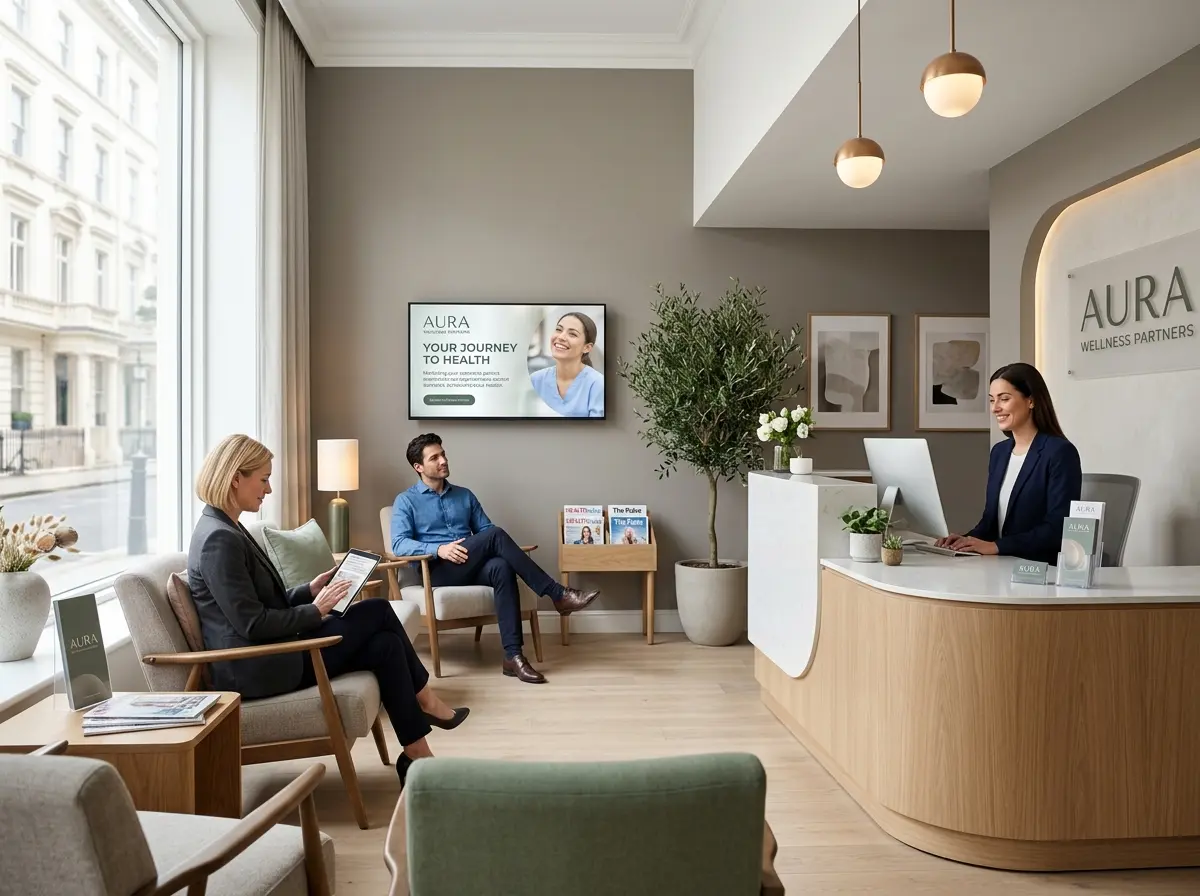
Before you can market anything in your waiting room, you need to make sure the environment itself is doing its job. Think of your waiting area as a brand ambassador that never clocks out. Every element — from the lighting to the reading material to the signage — communicates something about your practice. The question is whether that message is intentional or just... ambient.
Curated Signage and Educational Content
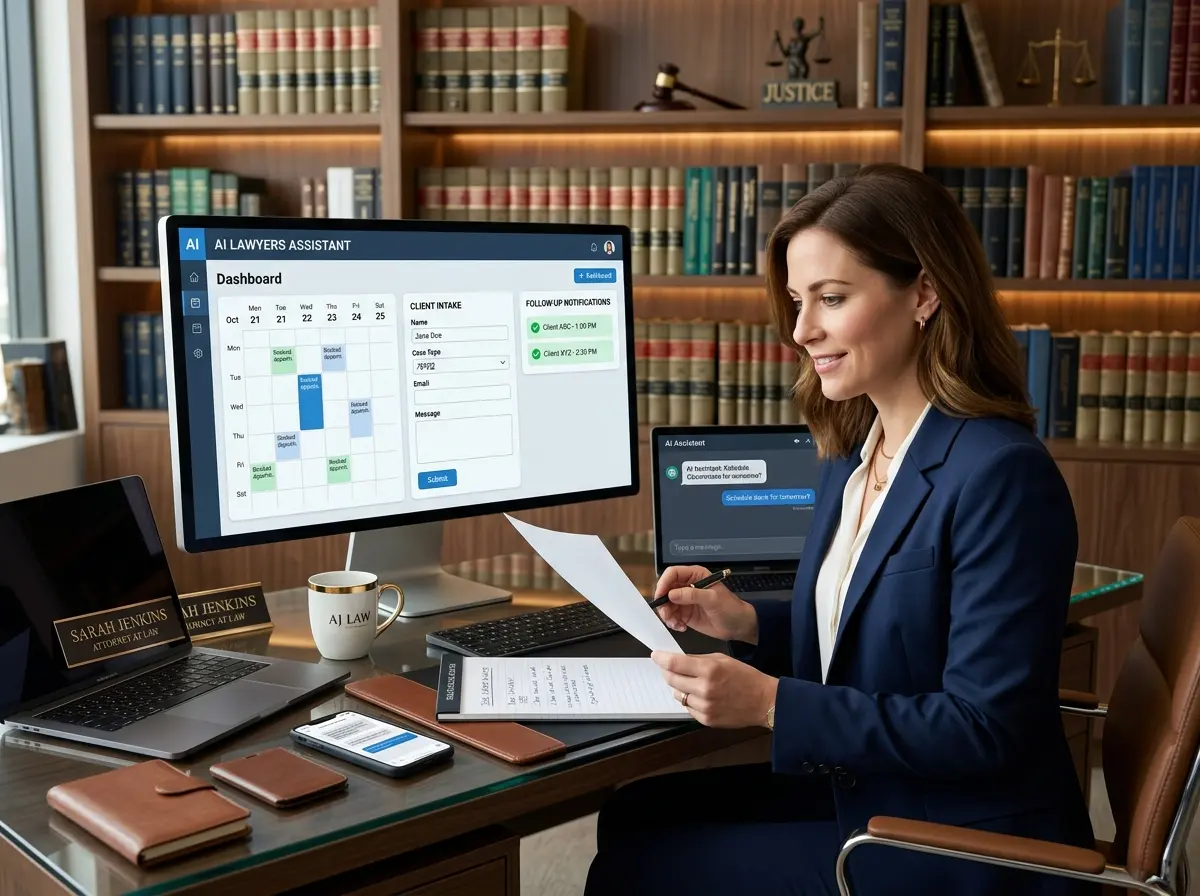
One of the most cost-effective upgrades you can make is replacing generic decor with educational, branded signage. If you run a medical or dental practice, this might mean posters or digital displays that walk patients through common procedures, debunk myths, or highlight seasonal health tips. A spa or salon can showcase product ingredients, treatment benefits, or before-and-after results. A law firm might display an FAQ about common legal questions your clients always ask anyway.
The goal is to position your practice as the expert before the appointment even starts. When your client walks into the room already informed, your staff spends less time on basics and more time on high-value conversation. Educated customers also tend to be more confident in their buying decisions — which means they're more likely to say yes to add-on services or upgraded packages.
Promotions, Packages, and the Art of the Soft Sell
Your waiting room is an ideal place to promote current specials — but there's a right way and a wrong way to do it. Plastering every surface with "BUY NOW" messaging will make your waiting room feel like a used car lot. Instead, aim for informative promotion: a tasteful display that explains a seasonal package, highlights a loyalty program, or introduces a new service with a brief description of who it's perfect for.
Consider a rotating digital display if your budget allows. These can cycle through testimonials, service spotlights, team introductions, and promotional offers without feeling pushy. Research from the Digital Signage Federation suggests that digital displays increase brand awareness by up to 47% — which, in a waiting room full of bored people with nowhere to go, is a remarkably easy win.
Technology That Engages (So Your Staff Doesn't Have To)
Here's a practical reality of running a practice: your front desk team is busy. They're checking people in, answering phones, handling paperwork, and somehow also expected to warmly engage every person who walks through the door with the energy of a morning talk show host. That's a lot to ask.
Let Smart Tools Pick Up the Slack
This is exactly where Stella — the AI robot employee and kiosk receptionist — fits naturally into a waiting room strategy. Stella stands in your space and proactively engages customers, answering questions about services, hours, policies, and current promotions without pulling a single human away from their work. She's consistent, always on-brand, and — crucially — she never has a bad day.
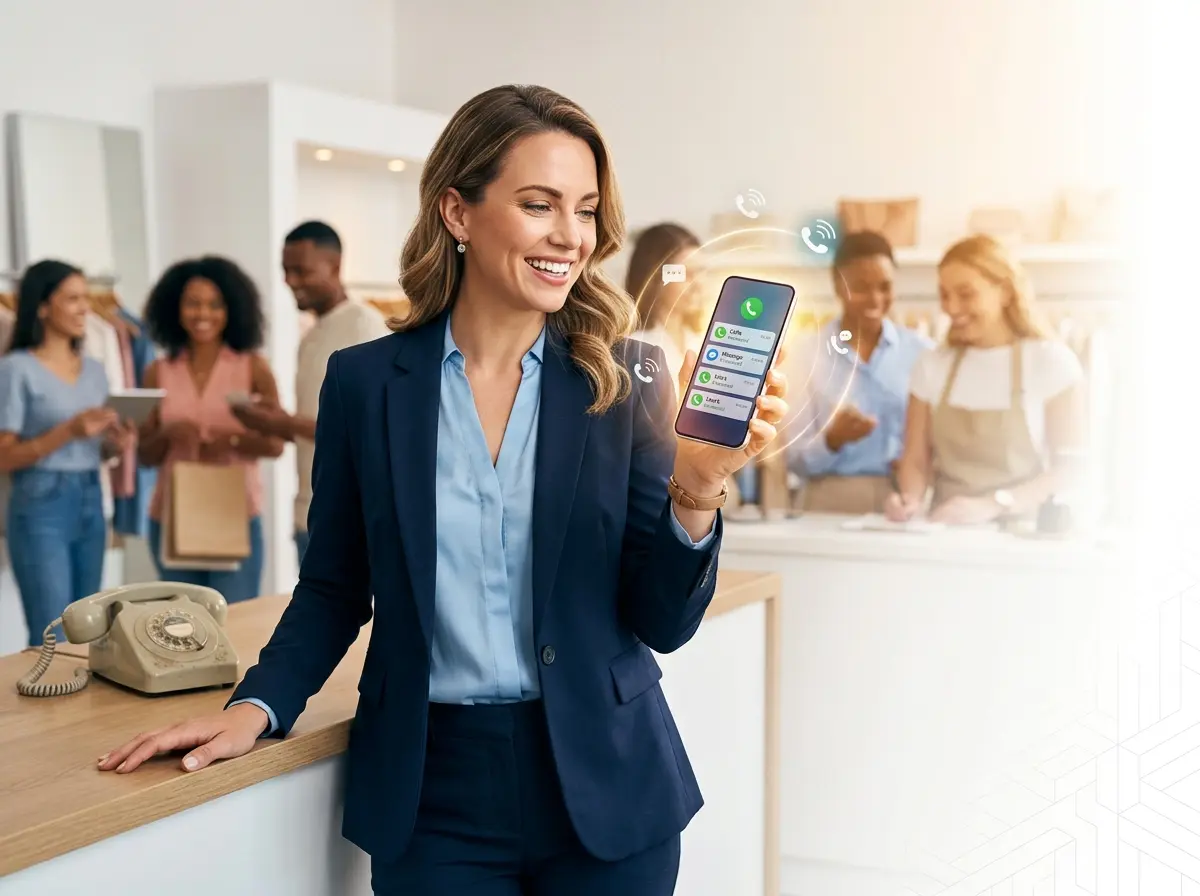
Beyond the in-person experience, Stella also handles your phone lines 24/7, so prospective clients who call after hours aren't greeted with a voicemail black hole. She can collect intake information conversationally, forward calls when needed, and log everything into her built-in CRM. For practices that want to track what questions customers are actually asking — and which promotions are generating real interest — that data is genuinely invaluable.
Engagement Strategies That Actually Work
Getting people to pay attention in a waiting room requires a bit of creativity. The goal isn't to overwhelm them with information — it's to create touchpoints that feel helpful, interesting, or even entertaining. Done right, these moments build trust and deepen the customer relationship before the appointment even begins.
Wi-Fi as a Marketing Channel
If you offer free Wi-Fi in your waiting area — and you should — consider using a branded landing page as the gateway. When clients connect, they're greeted with your logo, a brief welcome message, and perhaps a link to your current promotions or a short intake form. This is a lightweight but effective way to collect email addresses, drive social media follows, or introduce a referral program.
It's not intrusive, it's not pushy, and people are genuinely grateful for the Wi-Fi. That goodwill translates into a moment of receptivity that's rare and worth capturing. Several hospitality and retail brands have seen email list growth of 20–30% just from implementing a branded Wi-Fi gateway — a tactic that's surprisingly underused in professional practices.
Interactive Experiences and Feedback Loops
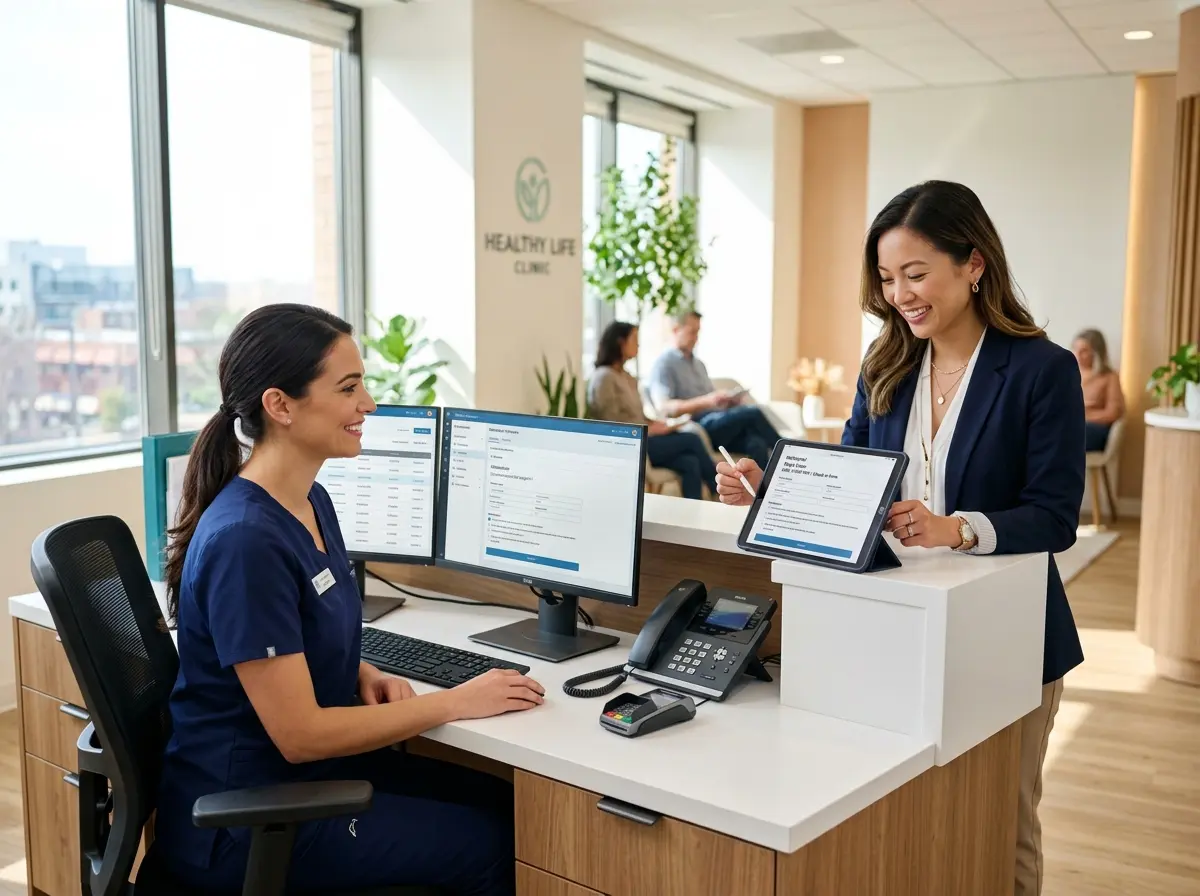
Waiting rooms don't have to be passive. A simple tablet kiosk that lets clients browse your service menu, read FAQs, or leave a quick review can transform dead time into active engagement. You can also use this touchpoint to run a short satisfaction survey, collect birthday information for a loyalty program, or prompt clients to refer a friend in exchange for a small incentive.
Feedback collected in the moment — while the experience is fresh and the client is already in your space — tends to be more detailed and honest than follow-up emails sent days later. Build that feedback loop into the waiting room experience and you'll have a continuous stream of insights to improve your service and your marketing.
Content That Builds Community
Consider a small display or bulletin board — physical or digital — that highlights community involvement, team spotlights, or client success stories (with permission, of course). People do business with people they trust, and trust is built through familiarity. When a new patient sees that your team volunteered at a local 5K, or that a long-term client just celebrated their tenth year with your practice, it reinforces that your business is part of something larger than a transaction.
This kind of content costs almost nothing to produce and has a surprisingly powerful effect on how clients perceive your brand. It's the difference between feeling like a vendor and feeling like a community anchor — and the latter commands significantly more loyalty and referrals.
Quick Reminder About Stella
Stella is an AI robot employee and phone receptionist built for businesses like yours. She greets customers in person, answers questions, promotes your services, and handles phone calls around the clock — all for $99/month with no upfront hardware costs. Whether your waiting room is full or your phone line is ringing after hours, Stella keeps your practice professional, responsive, and always on.
Stop Letting the Waiting Room Waste Your Marketing Budget
The waiting room experience is a microcosm of your entire brand. It communicates your professionalism, your values, and — if you're strategic about it — your full range of offerings. Clients who feel informed, engaged, and welcomed during that wait are more likely to say yes to additional services, more likely to refer friends, and more likely to come back.
Here's where to start:
- Audit your current waiting room with fresh eyes. Walk in as if you're a first-time client. What do you see? What do you feel? What's missing?
- Identify two or three high-margin services you could be promoting more effectively in your space and create simple, attractive signage around them.
- Implement a branded Wi-Fi gateway to start capturing email addresses and driving low-friction engagement.
- Add at least one interactive element — a tablet for reviews, a feedback kiosk, or a digital display — to give waiting clients something to do that benefits your business.
- Consider a smart engagement tool like Stella to handle in-person questions and after-hours calls so your team can focus on delivering excellent service.
The waiting room will never be anyone's favorite part of the appointment. But with a little intention, it can be one of your most effective marketing channels — one that works quietly in the background while your team focuses on what they do best. And honestly, that's worth more than any potted plant.