Your Customers Have No Idea What's Going on Under the Hood — And That's Your Problem
Here's a scenario that plays out in auto shops every single day: A customer drops off their car, you perform a thorough inspection, fix what they asked about, notice a few other things quietly brewing under the hood, and then hand them their keys with a verbal summary they'll forget by the time they hit the highway. Three months later, they're back — surprised that the issue you mentioned is now a full-blown repair bill. Cue the disappointed look. Cue the awkward conversation about how you did mention it. Cue the review that doesn't exactly reflect your five-star service.
The fix is simpler than you might think: send a vehicle health report after every service. Not just for the big jobs. Every. Single. Service. Oil change? Send a report. Tire rotation? Send a report. That guy who comes in every six months and insists nothing could possibly be wrong with his 2009 pickup with 180,000 miles? Especially send him a report.
Vehicle health reports are one of the highest-ROI habits an auto shop can develop, and yet most shops either skip them entirely or send them inconsistently. Let's talk about why that's leaving serious money — and customer loyalty — on the table.
The Business Case for Vehicle Health Reports
They Turn One-Time Visitors Into Loyal Customers
Customer retention is the lifeblood of any service-based business, and auto shops are no exception. According to industry research, acquiring a new customer costs five to seven times more than retaining an existing one. Yet many shops invest heavily in advertising to attract new faces while doing almost nothing to keep the ones they already have coming back.
A vehicle health report is a touchpoint. It says, "We looked at your car thoroughly, we documented what we found, and we care enough to share it with you." That kind of transparency builds trust in an industry where trust is notoriously hard to earn. Customers who receive detailed reports after each visit feel informed rather than sold to, and informed customers come back. They also refer their friends — because apparently telling someone "my mechanic actually explains everything and sends me a report" is a surprisingly powerful thing.
They Create a Natural Upsell Opportunity (Without the Pushy Sales Pitch)
No one likes being upsold at the counter when they're just trying to pay and leave. But a vehicle health report delivered via email or text? That's a different conversation entirely. The customer is at home, relaxed, and actually reading what you sent. When they see a note that says their brake pads are at 30% and their cabin air filter looks like it survived a small wildfire, they're far more likely to schedule a follow-up than they would have been in the rush of pickup.
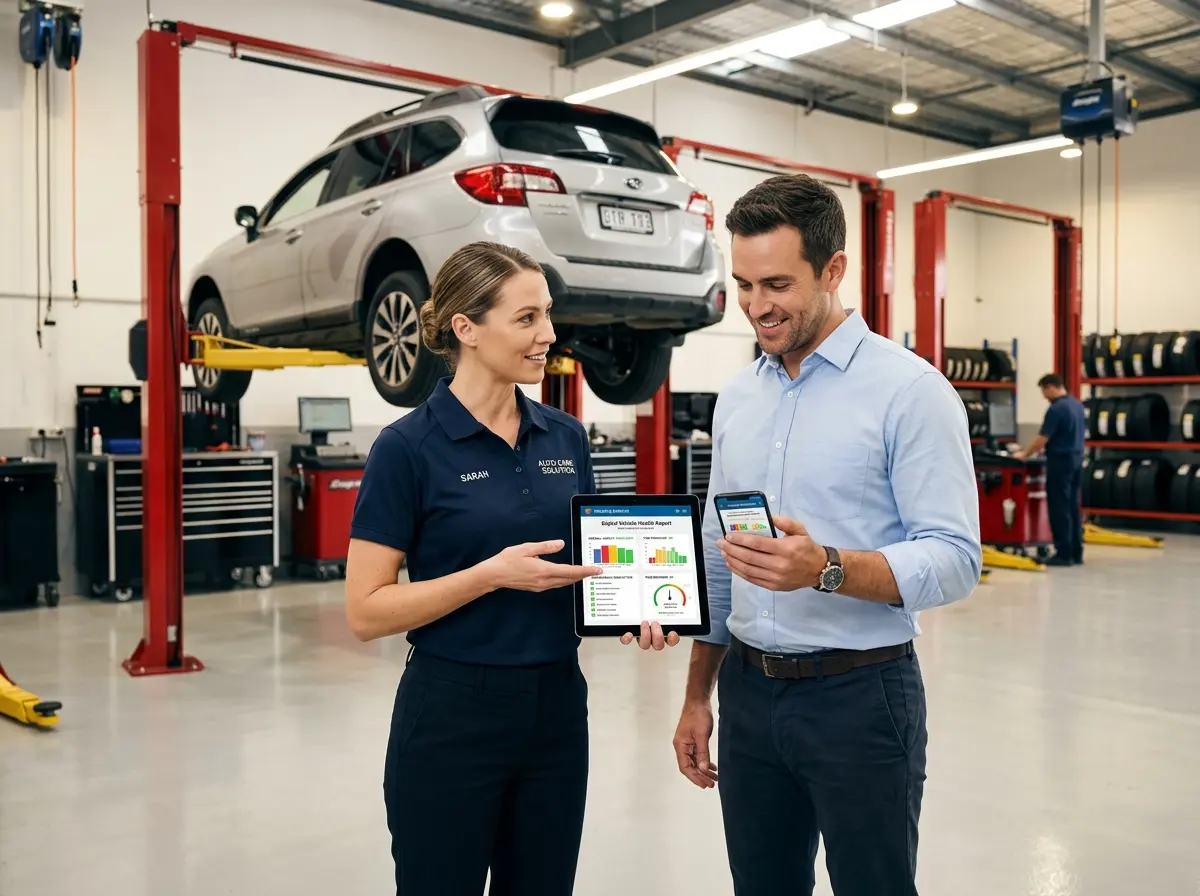
Include a simple rating system — green, yellow, red — for each component you inspect. Keep it visual. Keep it clear. And include a direct link to book the follow-up service right from the report. You've just turned a standard oil change into a pipeline for future revenue, and you didn't have to awkwardly hover near the register to do it.
They Protect You Legally and Professionally
Let's not overlook the practical, slightly unglamorous benefit: documentation protects you. If a customer later claims you missed something or that a problem existed before they brought the car in, a timestamped, detailed vehicle health report is your paper trail. It shows exactly what was inspected, what was found, and what was recommended. In an industry where he-said-she-said disputes can damage your reputation, having thorough records isn't just good service — it's good business sense.
How Technology (and the Right Team) Makes This Effortless
Automate the Follow-Up Before It Becomes an Afterthought
The biggest reason shops don't send vehicle health reports consistently is simple: it falls through the cracks. Technicians are busy, service advisors are juggling four conversations at once, and by the time the car is out the door, nobody's thinking about sending a follow-up email. This is exactly where having the right systems in place makes all the difference.
Most modern shop management software — platforms like Shop-Ware, Tekmetric, or Mitchell 1 — include built-in digital vehicle inspection tools that make generating and sending reports nearly automatic. If yours doesn't, it might be time for an upgrade. The goal is to make sending a report the path of least resistance, not an extra step someone has to remember.
Stella, the AI robot employee and phone receptionist, can support this process by handling front-of-house communication so your staff isn't stretched thin. Her in-store kiosk presence means she's greeting customers and answering questions the moment they walk in, freeing your service advisors to focus on the actual service experience. On the phone side, she answers calls 24/7 — so when a customer calls back with questions about their vehicle health report at 8pm on a Tuesday, she's got it covered. Her built-in CRM and intake forms also mean customer information is captured accurately from the first interaction, making it easier to send personalized reports and follow-ups without chasing down contact details.
What a Great Vehicle Health Report Actually Includes
The Non-Negotiables: What Every Report Should Cover
A vehicle health report isn't a novel — it should be clear, scannable, and genuinely useful to someone who doesn't know what a serpentine belt does. At minimum, every report should include the vehicle information (year, make, model, mileage), the services performed during the visit, and a condition summary of the key components your technician inspected. Use plain language. "Brake fluid is discolored and may need flushing soon" is more useful than "brake fluid condition: fair."
Include photos wherever possible. Modern digital inspection tools make it easy to attach images of worn parts, fluid conditions, or anything visually notable. A picture of a cracked belt or low tire tread is worth a thousand words — and it's far more persuasive than any verbal recommendation you could make at the counter.
The Finishing Touches That Separate Good From Great
The best vehicle health reports feel personal, not like a form letter. Address the customer by name. Reference their specific vehicle. If they mentioned they're planning a road trip, note which items should be addressed before long-distance driving. These small touches signal that you were paying attention, and they go a long way toward building the kind of loyalty that turns customers into advocates.
Close every report with a clear call to action. Whether it's a link to schedule their next appointment, a phone number to call with questions, or a limited-time discount on a recommended service, give them somewhere to go. A report that ends with no next step is a missed opportunity dressed up in a nice format.
Timing and Delivery: Get It Right
Send the report the same day as the service — ideally within an hour or two of pickup. The customer is still thinking about their car, the visit is fresh, and they're far more likely to open and read something that arrives promptly. Waiting until the next day (or worse, the next week) dramatically reduces engagement. Text delivery tends to outperform email for open rates, but offering both options lets customers choose what works for them. A quick text with a link to the full digital report is often the sweet spot.
Quick Reminder About Stella
Stella is an AI robot employee and phone receptionist designed to help businesses like auto shops run more smoothly. She greets customers in-store, answers phone calls around the clock, manages customer information through her built-in CRM, and keeps your front-of-house running professionally — all for just $99/month with no upfront hardware costs. If your team is too busy handling calls and walk-ins to focus on things like vehicle health reports and follow-up communication, Stella is worth a serious look.
Start Sending Reports — Your Future Self Will Thank You
Vehicle health reports aren't a luxury feature reserved for high-end dealerships. They're a straightforward, high-impact practice that any auto shop can implement with the right tools and a little consistency. They build trust, generate return visits, create upsell opportunities, and protect your shop from the kind of disputes that are nobody's idea of a good time.
Here's a practical place to start: if your current shop management software includes a digital inspection feature, turn it on this week and commit to using it on every vehicle for the next 30 days. If it doesn't, spend an afternoon researching platforms that do. Set a standard that every completed inspection generates a report, and that every report goes out the same day. Train your team on it. Track the follow-up bookings it generates.
The shops that win long-term aren't always the ones with the fanciest equipment or the biggest marketing budgets. They're the ones that communicate well, build trust consistently, and make every customer feel like their car — and their time — actually matters. A vehicle health report, sent after every service without exception, is one of the simplest ways to be that shop.
And honestly, if your competition still isn't doing this? You're very welcome for the advantage.